Open post

FORMATION FRIDAY – Jesus As a Leader – November 14, 2025

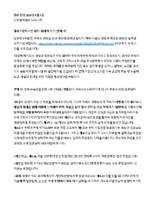
(en español abajo) Korean translation attached in a separate PDF.

Please share with your local fraternity

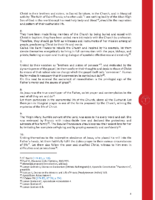
The Handbook for Servant Leadership, published by OFS-USA in 2010, contains a wealth of information that can guide us in being or becoming excellent servant leaders. This week we are inspired by our models: Jesus, Francis and Clare. (See Handbook for Secular Franciscan Servant Leadership pp. 4-7)

Jesus as a leader: points to ponder:

· Jesus tells us that “no pupil outranks his teacher” (Matthew 10:24).

o If we want to be followers, we must deny ourselves, take up our cross and follow (Luke 9 23).

o Through his strong appeal and quiet persuasion, he enlisted others in his mission.

· He was patient and attempted to foster collaboration among the disciples, binding them together through love and the Spirit.

· He prepared them to carry out his work.

· He taught them the meaning of servant leadership. After washing their feet, he said, “What I just did was to give you an example: as I have done, so you must do” (John 13:15).

· He makes it clear that true leadership is grounded in love, which results in service

· Jesus did not have the whole future planned. He gave Peter and the Apostles the keys to the kingdom, allowing the Church to unfold through the leadership of committed people.


St. Francis as a servant leader: Points to ponder

· “And after the Lord gave me some brothers, no one showed me what I had to do, but the Most High Himself revealed to me that I should live according to the pattern of the Holy Gospel.” (The Testament of St. Francis FA:ED Vol 1 124 )

o The brothers are all equal. Everyone follows Jesus.

o The leader is the servant of all—washes the feet of the others.

· “We must never desire to be above others, but, instead, we must be servants and subject to every human creature for God’s sake.” (Later Admonition and Exhortation To the Brothers and Sisters of Penance FA: ED Vol 1 48)

· “Let no one be called superior but let everyone in general be called a lesser brother. And let one wash the feet of the other.” (St. Francis of Assisi, The Earlier Rule, VI:3-4).

· “Let the one to whom obedience has been entrusted and who is considered the greater be the lesser and the servant of the other brothers.”(St. Francis of Assisi, Later Admonition and Exhortation, FA:ED Vol 1 42)

· “I did not come to be served, but to serve, says the Lord. Let those who are placed over others boast about that position as much as they would if they were assigned the duty of washing the feet of their brothers.” (Admonition #4 FA:ED Vol 1 130)


St. Clare as a servant leader: Points to ponder

· “Let whoever is elected reflect upon the kind of burden she has undertaken on herself and to Whom she must render an account of the flock committed to her. Let her also strive to preside over the others more by her virtues and holy behavior than by her office, so that, moved by her example, the sisters may obey her more out of love than out of fear.” CA:ED, 114 (Form of Life)

· Clare never hesitated to work right alongside the sisters taking some of the more distasteful tasks for herself.


Questions for discussion in a group or with a partner or to answer in your journal:

+After reading the quotes above, what stands out to you as the leadership style of Jesus, Francis, and Clare?

+As a present or future servant leader, why is it important that we “wash the feet” of others?

+Which of the quotes above presents the greatest challenge to you?

+Challenge: This week take each of the quotes above to prayer. Ask the Holy Spirit to strengthen your skills as a present or future servant leader. Think about the service you can provide to your fraternity and to the Order.


+++++++++++++++++++++


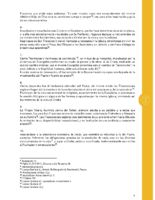
14 de noviembre de 2025 Por favor comparta con su fraternidad local.


El Manual para el liderazgo de servicio, publicado por OFS-USA en 2010, contiene una gran cantidad de información que puede guiarnos para ser o convertirnos en excelentes líderes servidores. Esta semana nos inspiramos en nuestros modelos: Jesús, Francisco y Clara. (Ver Manual para el Liderazgo de Servicio Franciscano Seglar, págs. 4-7 en inglés)


Jesús como líder: puntos para reflexionar


  • Jesús nos dice que “ningún alumno supera en rango a su maestro” (Mateo 10:24).
    • Si queremos ser seguidores, debemos negarnos a nosotros mismos, tomar nuestra cruz y seguir (Lucas 9, 23).
    • Mediante su fuerte llamamiento y su silenciosa persuasión, consiguió que otros se unieran a su misión.
  • Fue paciente e intentó fomentar la colaboración entre los discípulos, uniéndolos mediante el amor y el Espíritu.
  • Los preparó para realizar su obra.
  • Les enseñó el significado del liderazgo de servicio. Después de lavarles los pies, dijo: “Lo que acabo de hacer es darles ejemplo: como yo he hecho, así también ustedes hagan” (Juan 13:15).
  • Deja claro que el verdadero liderazgo se basa en el amor, que resulta en servicio.
  • Jesús no tenía todo el futuro planeado. Le dio a Pedro y a los Apóstoles las llaves del reino, permitiendo que la Iglesia se desarrollara a través del liderazgo de personas comprometidas.


San Francisco como líder servidor: puntos para reflexionar

  • “Y después que el Señor me dio algunos hermanos, nadie me mostró lo que tenía que hacer, sino que el Altísimo mismo me reveló que debía vivir según el modelo del Santo Evangelio”. (El Testamento de San Francisco)
    • Los hermanos son todos iguales. Todos siguen a Jesús.
    • El líder es el servidor de todos: lava los pies de los demás.
  • “Nunca debemos desear estar por encima de los demás, sino que debemos ser servidores y sujetos a toda criatura humana por amor de Dios”. (Admonición y exhortación posterior a los hermanos y hermanas de la Penitencia)
  • “Nadie sea llamado superior, sino que todos, en general, sean llamados hermano menor. Y que uno lave los pies del otro”. (San Francisco de Asís, La Regla anterior, VI:3-4).
  • “Aquel a quien se ha confiado la obediencia y es considerado mayor, sea el menor y el servidor de los demás hermanos.” ( San Francisco de Asís, Admonición y exhortación posteriores)
  • “No vine a ser servido, sino a servir, dice el Señor. Que los que están por encima de los demás se jacten de esa posición tanto como lo harían si se les asignara el deber de lavar los pies de sus hermanos”. (Admonición #4)


Santa Clara como líder servidora : puntos para reflexionar

· “Quien sea elegida reflexione sobre el tipo de carga que ha asumido sobre sí misma y a quién debe rendir cuentas del rebaño que le ha sido encomendado. Procure también presidir a las demás más con sus virtudes y santa conducta que con su oficio, para que, movidas por su ejemplo, las hermanas la obedezcan más por amor que por temor”. (Forma de vida)

· Clare nunca dudó en trabajar junto a las hermanas, encargándose ella misma de algunas de las tareas más desagradables.


Preguntas para discutir en grupo o con un compañero o para responder en su diario:


+Después de leer las citas anteriores, ¿qué destaca para usted como el estilo de liderazgo de Jesús, Francisco y Clara?

+Como líder servidor actual o futuro, ¿por qué es importante que “lavemos los pies” de los demás?

+¿Cuál de las citas anteriores presenta el mayor desafío para usted?

+Desafío: Esta semana lleve cada una de las citas anteriores a la oración. Pídale al Espíritu Santo que fortalezca sus habilidades como líder servidor actual o futuro. Piense en el servicio que puede prestar a su fraternidad y a la Orden.


Diane F. Menditto, OFS
Vice Minister, National Fraternity, Secular Franciscan Order USA
Go into the world and proclaim the good news.” National Theme 2025-2028all

What is Ours To Do? Canticle Reflections – Part 2

(This article originally appeared in the TAU-USA Summer 2025  Issue #116)

Canticle of the Creatures Reflections – Part 2

 Praise and bless my Lord and give Him thanks

and serve Him with great humility.

What is Ours To Do?

by Vickie Klick, OFS

Chair, NAFRA Centenary Task Force

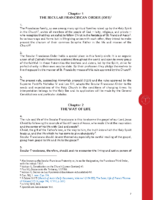
When I think of Francis’ Canticle of the Creatures, I most often think of the stanzas about the world around us. Less often, I think of the stanzas composed to encourage reconciliation and to honor Sister Bodily Death. However, until now I have largely overlooked the final stanza:

Praise and bless my Lord and give Him thanks

and serve Him with great humility.

This final exhortation brings us back to the opening lines of the Canticle:

Most high, all powerful, good Lord,

Yours are the praises, the glory, and the honor, and all blessing.

To You alone, Most High, do they belong,

and no human is worthy to mention Your name.

In the end, despite our unworthiness, Francis recognizes that we, like all the other creatures he mentions, must praise and bless the Lord – but we humans must go further. We need to give thanks, and we need to serve Him humbly.

Our praise and blessing are not just from our nature, as they are for other creatures, but they arise from our free will with the help of the Holy Spirit. (No one can say ‘Jesus is Lord’ except by the Holy Spirit. [1 Corinthians 12:3]) Our thanks and service are also freely chosen.

At one level, then, our response to this final stanza is obvious. How can we take it further and embed it more thoroughly into our daily lives – the way we live our Rule?

Our commitment to daily prayer helps ensure we praise and bless the Lord regularly. After I started writing this article, I added more thanksgiving to my daily prayer, starting (some days at least) before I get out of bed, and ending with some reflection on what I am thankful for during Evening Prayer. One of the beauties of our way of life, though, is that we can each adapt this exhortation to the rhythm and needs of our own lives.

In our humble service of the Lord, we emulate our Mother Mary. Mary’s first action after the Annunciation was to go in haste to serve her cousin, Elizabeth, in her miraculous pregnancy. It’s hard to imagine a more humble response to the momentous event that had just taken place in Mary’s life!

Taking the Visitation as an example, how can our actions each day help others become aware of Christ’s presence? (Art. 13 of the Rule points out that part of doing that is to be aware of “all people as a gift of the Lord and an image of Christ.”) This is a tall order, requiring that “great humility” that Francis mentioned.

In summary, this last stanza of the Canticle invites us to accept the challenge to join in with all of creation in our uniquely human response to the Lord’s goodness. Let us all take this challenge seriously as we strive to live the Gospel in the spirit of St. Francis.

St. Francis of Assisi statue at The Franciscan Renewal Center, Arizona

https://www.secularfranciscansusa.org/2025/11/what-is-ours-to-do-canticle-reflections-part-2/

Sister Bodily Death – Canticle of the Creatures Reflections – Part 2

Canticle of the Creatures Reflections – Part 2

(This article originally appeared in the TAU-USA Summer 2025  Issue #116)

 Praised be You, my Lord, through our Sister Bodily Death,

from whom no one living can escape.

Woe to those who die in mortal sin.

Blessed are those whom death will find in Your most holy will,

for the second death shall do them no harm.

Sister Bodily Death

by Justin Carisio, OFS

In Francis of Assisi, Writer and Spiritual Master, Thaddée Matura, OFM, observes that St. Francis “loved to write or have others write for him. He insisted on the preservation of what he wrote, and he called for the transmission, knowledge and putting into practice of his writings.”[1] Murray Bodo, OFM, reminds us that Francis’ “whole being was that of a poet…he walked and praised as a poet would as he followed Jesus.”[2]

In this calendar year 2025, we acknowledge Francis as writer and poet by celebrating the 8th centenary of his magnificent poem of praise, “The Canticle of the Creatures.” Because of our contemporary focus on care for creation and the designation of St. Francis as patron of ecology, much attention will be given to the first nine verses of the Canticle. These deal with inanimate creatures of the natural world. Brought into existence by our heavenly Father, each is called brother or sister by Francis. He announces their beauty and attributes. He proclaims that through the creatures, God is to be praised.

But the Canticle is about more than nature. It is “a poem of St. Francis’ soul.”[3] We see this nowhere more poignantly than in the final verses. Francis wrote verse 12 as he lay dying: “Praised be You, my Lord, through our Sister Bodily Death, / from whom no one living can escape.”[4]

Franciscans have a long-established custom of referring to “Sister Death.” Yet Francis did not speak of Sister Death in the Canticle. Writing in his Umbrian vernacular, he was quite intentional in naming this sister he was soon to meet: “Laudato si, mi Signore, per sora nostra Morte corporale.” He speaks of Sister Bodily Death.

Why belabor what appears to be an inconsequential point? Precisely because it is consequential.

Poets measure every word, and Francis wrote “Sister Bodily Death.” Nevertheless, Franciscans have often chosen to express this otherwise. Indeed, in the text of the Canticle in the English Omnibus of Sources – a mainstay reference for many years – the verse does read “All praise be yours, my Lord, through Sister Death.”[5] No mention of the body.

There may be other reasons why usage has favored the truncated Sister Death. Some of the early documents speak of the dying Francis welcoming Sister Death. In English at least, it comes more readily off the tongue when spoken. It is also less graphic than “Sister Bodily Death,” and thus less discomfiting.

Yet, it is likely Francis intended to be graphic. His images in the Canticle favor the bold and the descriptive. When he added this verse in his last days, he was blind and suffering physically. We must conclude he chose his words with care, saying exactly what he meant to say. Fortunately, the editors of Francis of Assisi: Early Documents chose an English translation that conveys the saint’s original words. That text now appears to be predominant, assuming online presentations of the Canticle are representative.

If we want to honor St. Francis’ great hymn of praise these 800 years later, perhaps we can make a resolution: Let us say consciously “Sister Bodily Death” henceforth. In so doing, we can lend renewed power to his poetic voice and show deep respect for the actual words he chose and which he intended us to know and repeat.

[1] Thaddée Matura, OFM, Francis of Assisi Writer and Spiritual Master, trans. by Paul Lachance, OFM (Cincinnati: Franciscan Media, 2005), xiii.

[2]  Murray Bodo, OFM, Poetry as Prayer Saint Francis of Assisi, (Boston: Pauline Books & Media, 2003), 56.

[3]  Murray Bodo, OFM, Poetry as Prayer Saint Francis of Assisi, (Boston: Pauline Books & Media, 2003), 56.

[4] St. Francis of Assisi, “The Canticle of the Creatures” in Francis of Assisi: Early Documents (FA:ED I), edited by Regis Armstrong, J. A. Wayne Hellmann, William J. Short (New York, London, and Manila: New City Press, 1999), 114.

[5] St. Francis of Assisi, “The Canticle of Brother Sun,” St. Francis of Assisi Writings and Early Biographies English Omnibus of the Sources for the Life of St. Francis, Marion A Habig, ed (Chicago: Franciscan Herald Press, 1983), 131.

https://www.secularfranciscansusa.org/2025/11/sister-bodily-death-canticle-of-the-creatures-reflections-part-2/

The Gospel Through a Franciscan Lens – Feast of the Dedication of the Lateran Basilica – Fr. Christopher

We, the Church, we are the Body of Christ, the Temple of God, the dwelling place of the Holy Spirit.   Your church, not of its bricks and mortar or architectural style, but of yourselves, “living stones” because of what flows from it, the Body of Christ, missionary disciples, sent into the world, sent into your community to be Christ’s living presence in the world.

Father’s Homily – video

Father’s Homily – text

https://www.secularfranciscansusa.org/2025/11/the-gospel-through-a-franciscan-lens-feast-of-the-dedication-of-the-lateran-basilica-fr-christopher/

Open post

FORMATION FRIDAY – A PRIVATE TALK WITH MYSELF – November 7, 2025

(en español abajo) Korean translation attached in a separate PDF. Please share with your local fraternity

The Handbook for Servant Leadership, published by OFS-USA in 2010, contains a wealth of information that can guide us in being or becoming excellent servant leaders. For the next few weeks we will focus on various portions of that handbook. We begin by preparing ourselves with an examination of our servant leader conscience.

A PRIVATE TALK WITH MYSELF


This private talk can be used to surface some of your inner feelings and give you an opportunity to reflect upon your own thoughts and actions. Take a few minutes to answer each question and just jot down a few words that will remind you of the thoughts and feelings that went through your head when you were responding to each question.


1. How often does my approach to another brother or sister in the fraternity result in reactions different from those I intend? Does my brother or sister seem to be put off by my approach or does he or she seem to back away from me and the situation? Why do I think this is so?


2. When I have a problem with a brother or sister in the fraternity, how often do I stop to think about my own actions and words? I may be contributing to the problem instead of to the solution. Do I need to change in this respect? How?


3. Do I tend to use labels and stereotypes as a substitute for seeking to understand? Do I look at every fraternity brother and sister as an individual with unique talents and gifts, or do I become angry because my brothers and sisters do not respond the way I think they should?


4. How do I try to solve fraternity problems? Do I always want to fix everything myself and prevent my brothers and sisters from becoming actively involved in the process of collaborative decision making?


5. Do I have a need to be in control and when things do not go according to my plans, do I have a tendency to blame my brothers and sisters in the fraternity?


6. Am I willing to talk with fraternity members about the impact their behavior has on other brothers and sisters in the fraternity? Can I share this information with constructive intent, in ways that minimize feelings of criticism and threat, and show concern for their feelings and needs? What do I need to work on here?


7. How open am I to receiving information about how my approaches affect my brothers and sisters in the fraternity? How can I increase my opportunities for this kind of learning?


8. What will I try to do differently next week and in the future in the way I relate to the brothers and sisters in my fraternity? What changes will increase my effectiveness with other fraternity members?


9. How can I use my leadership skills to become a servant leader for my fraternity?


10. What specific steps am I going to take to help my fraternity solve its problems?

For discussion in a group, with a partner, or to answer in your journal.

+ After thinking about each question above, which sets of questions did you find most challenging? Why?

+ Which sets of questions did you answer that show you are or can be effective as a servant leader? What are the characteristics that make you think this is true?

+ Which answers tell you that you have some work to do?

+ Challenge: Over the next several weeks, choose sets of questions that will help you to work on your servant leadership style and skills. Carry out any necessary changes.


+++++++++++++++++++++++++


Formación 7 de noviembre 2025 Por favor, comparta con su fraternidad local


El Manual para el Liderazgo de Servicio, publicado por OFS-USA en 2010, contiene una gran cantidad de información que puede guiarnos para ser o convertirnos en excelentes líderes de servicio. Durante las próximas semanas nos enfocaremos en varias partes de ese manual. Comenzamos preparándonos con un examen de nuestra conciencia de liderazgo de servicio.


UNA CHARLA PRIVADA CONMIGO MISMO


Esta charla privada se puede utilizar para sacar a la superficie algunos de sus sentimientos internos y darle la oportunidad de reflexionar sobre sus propios pensamientos y acciones. Tómese unos minutos para responder a cada pregunta y simplemente anote algunas palabras que le recordarán los pensamientos y sentimientos que pasaron por su mente cuando respondió a cada pregunta.


1. ¿Con qué frecuencia mi acercamiento a otro hermano o hermana en la fraternidad resulta en reacciones distintas de las que pretendo? ¿Mi hermano o hermana parece estar desanimado por mi enfoque o él o ella parece alejarse de mí y de la situación? ¿Por qué creo que esto es así?


2. Cuando tengo un problema con un hermano o hermana en la fraternidad, ¿con qué frecuencia me detengo a pensar en mis propias acciones y palabras? Puedo estar contribuyendo al problema en lugar de a la solución. ¿Necesito cambiar en este sentido? ¿Cómo?


3. ¿Tiendo a usar etiquetas y estereotipos como sustituto de tratar de entender? ¿Veo a cada hermano y hermana de la fraternidad como un individuo con talentos y dones únicos, o me enojo porque mis hermanos y hermanas no responden de la manera que creo que deberían?


4. ¿Cómo trato de resolver los problemas de la fraternidad? ¿Siempre quiero arreglar todo yo mismo y evitar que mis hermanos y hermanas se involucren activamente en el proceso de toma de decisiones colaborativa?


5. ¿Tengo la necesidad de tener el control y cuando las cosas no salen de acuerdo con mis planes, tengo una tendencia a culpar a mis hermanos y hermanas en la fraternidad?


6. ¿Estoy dispuesto a hablar con los miembros de la fraternidad sobre el impacto que su comportamiento tiene en otros hermanos y hermanas de la fraternidad? ¿Puedo compartir esta información con intención constructiva, de manera que minimice los sentimientos de crítica y amenaza, y muestre preocupación por sus sentimientos y necesidades? ¿En qué necesito trabajar aquí?


7. ¿Qué tan abierto estoy a recibir información sobre cómo mis enfoques afectan a mis hermanos y hermanas en la fraternidad? ¿Cómo puedo aumentar mis oportunidades para este tipo de aprendizaje?


8. ¿Qué trataré de hacer de manera diferente la próxima semana y en el futuro en la forma en que me relaciono con los hermanos y hermanas de mi fraternidad? ¿Qué cambios aumentarán mi efectividad con otros miembros de la fraternidad?


9. ¿Cómo puedo usar mis habilidades de liderazgo para convertirme en un líder servidor para mi fraternidad?


10. ¿Qué pasos específicos voy a tomar para ayudar a mi fraternidad a resolver sus problemas?


Para platicar en grupo, con un compañero o para responder en su diario.

+ Después de pensar en cada pregunta anterior, ¿qué conjuntos de preguntas le parecieron más desafiantes? ¿Por qué?

+ ¿Qué conjuntos de preguntas respondió que muestran que es o puede ser eficaz como líder servidor? ¿Cuáles son las características que le hacen pensar que esto es cierto?

+ ¿Qué respuestas le dicen que tiene trabajo que hacer?

+ Desafío: Durante las próximas semanas, elija conjuntos de preguntas que lo ayudarán a trabajar en su estilo y habilidades de liderazgo de servicio. Realice los cambios necesarios.


Diane F. Menditto, OFS
Vice Minister, National Fraternity, Secular Franciscan Order USA
Go into the world and proclaim the good news.” National Theme 2025-2028
Scroll to top
Juan de Padilla