God’s Mercy Revealed – OFS Rule Article 7

By Chris Leone, OFS
National Councilor, OFS-USA
.

Chris Leone, OFS (portrait)

Chris Leone, OFS National Councilor

God in his infinite mercy, understands that we will fall short, we will sin –  but he does not leave us in that sin.  Through the Sacrament of Reconciliation, we can be restored to love and friendship with God and receive the grace to mend our relationships with each other.

In my Diocese of Paterson, NJ, under a program called Welcome Home to Healing, every parish in the diocese offered the Sacrament of Reconciliation on Monday evenings during Lent.

Cardinal Timothy Dolan, the former Archbishop of the Archdiocese of New York, was fond of comparing Lent to spring training for professional baseball players.

His point was just as spring training prepares the major league baseball player for the challenges of the new season, Lent, the spring renewal of our Christianity, prepares us for the challenges of our spiritual lives.  The goal of Lent is to become like Jesus!

While Lent may only be a few weeks, Article 7 of our Rule reminds us that human frailty makes this turning toward God something we need to recognize and act upon daily.  Making frequent use of the wonderful Sacrament of Reconciliation will ensure that our Most High, glorious God will enlighten the darkness of our hearts and restore us to right relationship with Him.

OFS Rule Article 7:

United by their vocations as “brothers and sisters of penance,” and motivated by the dynamic power of the gospel, let them conform their thoughts and deed to those of Christ by means of that radical interior change which the gospel itself calls “conversion.”  Human frailty makes it necessary that this conversion be carried out daily.

On this road to renewal the sacrament of reconciliation is the privileged sign of the Father’s mercy and source of grace.

https://www.secularfranciscansusa.org/2026/04/gods-mercy-revealed-ofs-rule-article-7/

Doing our Little Bit for Justice

(This article originally appeared in the TAU-USA Winter 2026  Issue #118)

By Joe Makley, OFS • National JPIC Animator

I remember with great warmth a snowy 2:00 AM drive to pick up our daughter, Grace, at Holy Cross Church in Lewiston, Maine, where the bus had returned from the March for Life in Washington D.C.  She was less weary than the chaperones, and excited to share her adventures. It was around that same time my pastor, Father Conley, asked me to do a talk after Mass to support the diocese pro-life legislation. I said yes, and from the ambo, I noticed a friend in the front row whose body language suggested disapproval. I realized there could be a social cost for taking a public stand. My son, William, however, gave me the thumbs up.

Pictiure of a poster with a woodchuck and written on it - God is in every critter (even woodchucks) Defend CreationIn 2016 Our family attended a march in our state capital in support of protecting our climate and environment. I was grateful for the recent promulgation of Laudato Si, and the opportunity to promote it. The march included about 2000 people, which is a lot for Maine. If there were other Catholics, I couldn’t tell by their signs. Back at Church, I explained that it would have been okay for Catholics. It was mostly moms and kids with signs like “God loves woodchucks!” The blank responses told me America had a lot of work to do on Pope Francis’ vision of a Church awakened to an integral ecology.

In the summer of 2018, I heard a call from Father Sam Fuller, OFM Cap, who had become a pastor in Manchester, New Hampshire. He was helping to facilitate a public walk to shine a light on unjust deportation practices that were happening to his parishioners. I marched for one day. We stopped at a detention facility and prayed on the sidewalk, ending up at a lakeside park for lunch. There were a few honks of agreement from passing cars and a reporter from Telemundo, but no trouble from anyone. I spoke about this at a regional gathering. Afterward, at more than one table, I was approached by members who disagreed with advocacy for immigrants. It was another opportunity for that loving dialogue.

In 2023, I heard another call, this time from Suzanne, our diocesan Public Policy Director in Maine. There was an abortion-on-demand bill in committee, and she asked us to come down to the state house and testify in person. I met Franciscans I knew on every floor. On the fourth floor were tables to register. I looked over the balcony railing and saw the lines going down four floors of steps and out the door. They had to let them all testify. It took most of the night. I asked a clerk, “Have you ever seen anything like this?” “Nope,” he said.

Last month my wife, Patricia, and I, along with some folks from our parish cluster and Kay, our regional JPIC animator, answered a call to pray outside the Portland Jail, which had been contracted to hold ICE deportees. It was a beautiful service, without confrontation, sponsored by Pax Christi Maine. To me, it was because Jesus was in there. “I was a stranger and you welcomed me.” I was encouraged by the thought that our humble group’s voice was a little louder for the presence of Secular Franciscans.

If we don’t invite dialogue, we never overcome our distrust of one another. Whenever I feel even slightly uncomfortable in speaking publicly for justice, I remember the people who suffered greatly for the same cause. It was Thea Bowman who talked about just doing her “little bit… if we all just light a candle, we’d have a tremendous light.”

https://www.secularfranciscansusa.org/2026/03/doing-our-little-bit-for-justice/

The Gospel Through a Franciscan Lens – Palm Sunday (Reprise) – Fr. Christopher

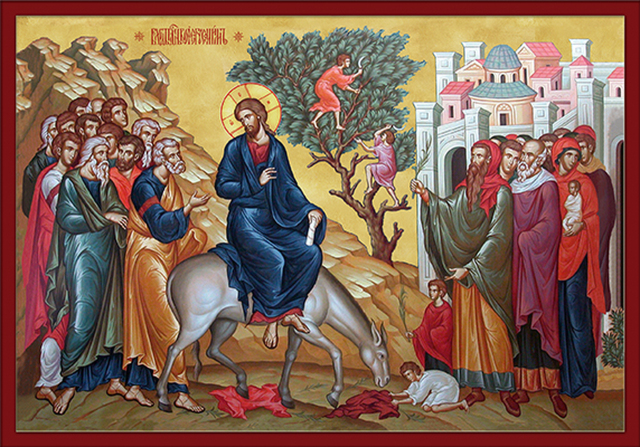
Father is traveling this weekend, so we are reprising last year’s Palm Sunday homily.

____________________________________________________________

Let us scatter the desires of our hearts, like so many garments at His feet, that He may direct his steps toward us, and make His dwelling with us.

Father’s Homily – video

Blessing of Palms

https://www.secularfranciscansusa.org/2026/03/the-gospel-through-a-franciscan-lens-palm-sunday-reprise-fr-christopher/

Open post

FORMATION FRIDAY- The OFS Rule: OFS Instrument of Conversion – March 27, 2026


The OFS Rule: OFS Instrument of Conversion (Week Six)

For the last five weeks we have been reading portions of the Rule at this link: https://ciofs.info/wp-content/uploads/2021/01/EN-OFS-Rule-s.pdf (You can download the PDF to your computer or tablet.)

We have focused on conversion, penance, prayer and action in our lives as Secular Franciscans. Now, in week 6 we focus on the heartbeat of the Order—FRATERNITY. The topics below will guide you as you write in your journal or discuss with your fraternity, a small group, or a prayer partner. We hope that this section will aid you in strengthening your understanding of our commitment to fraternity life.

Week Six: Please read Articles 20-26 of our Rule (Chapter 3: The Way of Life, Pages 11-13 of the PDF above.) [This section is also attached. Not on Facebook.]

Chapter Three describes for us the “heartbeat of the Order,” FRATERNITY. Fraternity is the essential characteristic that describes Secular Franciscan groups on all levels: local, regional, national, and international (Article 20.) In fraternity we experience relationship. We learn to trust and support one another. Here we learn about and strengthen our vocation and live out the Franciscan Charism, and, together, we reach out to others. Article 21 speaks of the servant leaders who work together to maintain fraternity life; Article 22 reminds us that our fraternities are established and guided by the authority of the Church. We, in turn, work to carry out the mission of the Church; Article 23 speaks of the importance of formation both for those who wish to enter the Order and those who have already been professed and the permanence of our commitment; Article 24 highlights the importance of fraternity life and gatherings; Article 25 speaks of our responsibility to support financially our own fraternity and the fraternities of higher levels; Finally, Article 26 speaks about our responsibility to seek suitable and well-prepared spiritual assistance. (Please read and think about these 7 articles before moving on to the questions.)

+Key Learnings: What are the four most important points (in your opinion) that you discovered as you read Articles 20-26?

+Living the OFS Rule: What about these articles presents a challenge for you to live out? Why?

+Conversion: The Holy Spirit speaks to each of us in a very personal way. As you read Articles 20-26, please explain how they helped you to understand the Order itself; how they touched and changed you and brought you closer to God.

+Discernment: What can you put into practice right away?

+Key Takeaways: Please list three key takeaways to living in fraternity that this portion of the Rule will help you to achieve.

+Challenge Yourself: Choose one of the takeaways as your personal challenge for this week and resolve to carry it out.

++++++++++++++++++++++++++++++

Formación 27 de marzo, 2026
Por favor comparta con su fraternidad local


La Regla OFS: Instrumento de Conversión OFS (Semana Seis)

Formation Friday es el producto del trabajo de la Comisión Nacional de Formación de la Orden Franciscana Seglar-EE.UU. Mantenga todas las citas y referencias intactas. (Esta declaración debe incluirse con cualquier publicación en correos electrónicos, sitios web o redes sociales).

Durante las últimas cinco semanas, hemos estado leyendo partes de la Regla en este enlace: https://ciofs.info/wp-content/uploads/2021/01/ES-Regla-OFS-s.pdf (Puede descargar el PDF a su computadora o tableta).

Nos hemos centrado en la conversión, la penitencia, la oración y la acción en nuestras vidas como franciscanos seglares. Ahora, en la semana 6 nos enfocamos en el latido del corazón de la Orden: LA FRATERNIDAD. Los temas a continuación lo guiarán mientras escribe en su diario o discute con su fraternidad, un grupo pequeño o un compañero de oración. Esperamos que esta sección le ayude a fortalecer su comprensión de nuestro compromiso con la vida de fraternidad.

Semana seis: lea los artículos 20 a 26 de nuestra Regla ( Capítulo 3: El estilo de vida, páginas 11 a 13 del PDF anterior). [Esta sección también se adjunta].

El capítulo tercero nos describe el “latido del corazón de la Orden,” la FRATERNIDAD . La fraternidad es la característica esencial que describe a los grupos franciscanos seglares en todos los niveles: local, regional, nacional e internacional (artículo 20 ). En la fraternidad experimentamos la relación. Aprendemos a confiar y apoyarnos unos a otros. Aquí aprendemos y fortalecemos nuestra vocación y vivimos el carisma franciscano y, juntos, nos acercamos a los demás. El artículo 21 habla de los líderes servidores que trabajan juntos para mantener la vida de fraternidad; el artículo 22 nos recuerda que nuestras fraternidades están establecidas y guiadas por la autoridad de la Iglesia. Nosotros, por nuestra parte, trabajamos para realizar la misión de la Iglesia; el artículo 23 habla de la importancia de la formación tanto de los que quieren entrar en la Orden como de los que ya han profesado y de la permanencia de nuestro compromiso; el artículo 24 destaca la importancia de la vida de fraternidad y de las reuniones; el artículo 25 habla de nuestra responsabilidad de sostener económicamente nuestra propia fraternidad y las fraternidades de otros niveles; Finalmente, el artículo 26 habla de nuestra responsabilidad de buscar una asistencia espiritual idónea y bien preparada. (Lea y piense en estos 7 artículos antes de pasar a las preguntas).

+Aprendizajes clave: ¿Cuáles son los cuatro puntos más importantes (en su opinión) que descubrió al leer los artículos 20-26 ?

+Viviendo la Regla OFS: ¿Qué pasa con estos artículos que presenta un desafío para que usted pueda vivirlo? ¿Por qué?

+Conversión: El Espíritu Santo nos habla a cada uno de nosotros de una manera muy personal. Mientras lee los artículos 20-26, explique cómo le ayudaron a comprender la Orden misma; cómo le tocaron y le cambiaron y lo acercaron a Dios.

+Discernimiento: ¿Qué puede poner en práctica de inmediato?

+Puntos clave: Enumere tres puntos clave para vivir en fraternidad que esta parte de la Regla le ayudará a lograr.

+ Desafíese a sí mismo: elija uno de los puntos como su desafío personal para esta semana y decida llevarlo a cabo.


++++++++++++++++++++++++++++++++

 

Diane F. Menditto, OFS
Vice Minister, National Fraternity, Secular Franciscan Order USA
 
“Go into the world and proclaim the good news.”
National Theme 2025-2028

Servant of God Adele Brice Update

March 23, 2026 update to a recent blog “Servant of God Adele Brice & Our Lady of Champion (WI, USA)”

From: https://championshrine.org/timeline/

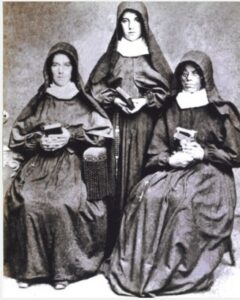
Adele and her companions form a community of Third Order Franciscans and begin to stabilize their missionary work in a farmhouse not far from the wood frame Chapel. Later in the year a school and convent are built of wood frame construction.

Update:

Based on a more complete biography of Adele Brice from the records at the National Shrine of Our Lady of Champion, we have confirmation that Adele & her group of “Sisters” were not canonically established as a religious Order but were a group of lay/secular women living a Franciscan life.  According to the terminology of that period in history, they were “Third Order” (our current Secular Franciscan Order).

Some Third Order/Secular Franciscan History:

In A Short History of the Third Order by Marion Habig, OFM & Mark Hegener, OFM (1963), Part 2 addresses the history of the Third Order of St. Francis in the USA from approximately the early 1900’s through the mid-1960’s.  In the Introduction to the book, the author cites two ancient philosophers concerning the importance of knowing one’s history: Cicero called history the “teacher of life” and Dryden rephrased this concept as “the most pleasant school of wisdom”.

  1. The authors frequently use the term Tertiary or tertiaries which is just a shortened form of “Third Order member(s)”.  The term Tertiary is still used but only rarely.
  2. While it’s probable that some Third Order Franciscans came to America when Franciscan friars traveled with the early explorers, the Third Order had little organization, uniform practices or recorded history till the late 19th – early 20th century.  What little they did have was predominantly in the hands of the friars & developed during a few national Congresses or Conventions under Franciscan friar leadership & then distributed to the Third Order fraternities.
  3. The General Constitutions of 1957 and new Ritual helped to facilitate this necessary unification. But along with this unification came a sense of being 2nd class Franciscan religious.  Although they didn’t take vows, Tertiaries were expected to practice the evangelical virtues of faith, hope and charity in a heroic way, have a regulated prayer life, take religious names (called each other Sister or Brother [chosen name]) & wear a “habit” daily which, over the years, went from a modified religious habit to a scapular and cord.
  4. The Second Vatican Council (early 1960’s) and Popes John XXIII and Paul VI (both of whom were Third Order Franciscans) encouraged all religious & lay Orders to “look to your roots” as a means to revitalize their Orders. These factors were the impetus for the Franciscan friars to encourage & support the lay Third Order leaders to honor the sacredness of their lay vocation; to assume responsibility for updating their governing documents to meet the needs of the times and to discern “what is ours to do” (which included changing the name of our Order to “The Secular Franciscan Order”).
  5. Frs. Habig & Hegener closed Part II with “the Third Order was founded to ‘satisfy a thirst for heroism’ in the hearts of people”.

Do you feel called to “satisfy a thirst for (personal spiritual) heroism”?  Are you living in such a way that you inflame a thirst for spiritual heroism in others?

Terri Leone, OFS

https://www.secularfranciscansusa.org/2026/03/servant-of-god-adele-brice-update/

Scroll to top
Juan de Padilla