We Are an Organic Union

Kathleen Molaro, OFS
National YouFra Commission Chair


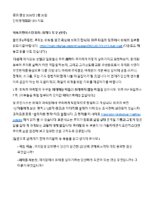
Kathleen Molaro photo

Kathleen Molaro, OFS National YouFra Commission Chair

As a young mom, I often felt overwhelmed with the myriads of daily tasks…everyday responsibilities that seemed to squelch my ability to connect my deepening faith with real life. I felt alone and detached from any understanding of what the priest meant about being Eucharist in the world!

I joined a women’s Bible study group led, coincidentally, by Secular Franciscans. I didn’t know that at the time, but I finally asked them about the funny crosses they wore. That’s when my journey began!

During initial formation, when we prayed and studied the Rule, I was struck by Article 2—especially the words “organic union.” What did that mean? The word organic implied, to me, living, breathing, and growing. If we’re an “organic union,” did that mean I would find that life and growth and connection I so craved? That I would build relationship with Christ and with others who shared my beliefs? Yes!

Article 2 continues, explaining that we are brothers and sisters, who strive for this holiness in our own secular state. I discovered through my fraternity brothers and sisters an understanding that service to my family was my way to live the gospel values and to give life to the gospels. Even the most ordinary tasks became acts of worship and reasons for gratitude and joy.

I still, thirty plus years later, live and grow and breathe my faith with the love and support of this beautiful organic union of Franciscans. Thomas of Celano describes the gift we received from Francis. This holy man of God “like a plenteous river of heavenly grace, watered with streams of gifts, he enriched the field of their hearts with flowers of virtue, for he was an excellent craftsman … To all he gave a norm of life, and he showed in truth the way of salvation in every walk of life.” (1 CEL 37)

OFS Rule; Article 2

The Secular Order holds a special place in this family circle. It is an organic union of all Catholic fraternities scattered throughout the world and open to every group of the faithful. In these fraternities the brothers and sisters, led by the Spirit, strive for perfect charity in their own secular state. By their profession they pledge themselves to live the gospel in the manner of St. Francis by means of this Rule approved by the Church.

General Constitutions.

3:3 The vocation to the OFS is a vocation to live the Gospel in fraternal communion.

https://www.secularfranciscansusa.org/2025/11/we-are-an-organic-union/

Enduring in Peace

Peace sign drawn in chalk

This Photo by Unknown Author is licensed under CCBY

(This article originally appeared in the TAU-USA Summer 2025  Issue #116)

By Joseph Makley, OFS

Justice, Peace and Integrity of Creation Commission Chair

The first time I heard about Father Louis Vitale, OFM, was when he joined the protests at Fort Benning’s infamous School of the Americas. As a fairly new Secular Franciscan, I was studying the Rule: “Let them individually and collectively be in the forefront in promoting justice by the testimony of their human lives and their courageous initiatives…” Father Louie spent six months in jail on two occasions for stepping past those gates at Fort Benning. A year in jail is something to be endured in peace.

Fort Benning did not have the School of the Americas when I first visited there in December 1969. It was a major training area for Vietnam-bound soldiers. I was in the car when my mother drove through those gates to take my older brother, Philip, back to the base after Christmas leave. I saw troops marching along the roads and heard their songs of bravado. I was a senior in high school with my own choices to make soon, and my mother, Elroyce, had to find a way to endure her son’s deployment in peace.

Father Louie had been busy long before the protests at SOA. He had led an impactful movement to stop nuclear testing for years and had co-founded Pace e Bene, an organization that provides training in nonviolence. As an air force veteran, he felt a special responsibility to bring his  love in action to military installations. In 2006, he was at Fort Huachuca, in Sierra Vista, Arizona, protesting the torture training manuals being produced there after 9/11. He was arrested, along with two others.

At the same time, down the road in Tombstone, my brother Philip, who had survived the war, was playing Doc Holiday in the gunfight recreations at the OK Corral. He was never the same after the war, but he had supported himself by driving deliveries for the Jacksonville school system. This was his retirement dream: to be a cowboy. He had serious health issues, but he always endured what came in peace. In August 2008, I travelled back to Tombstone to be with Philip, who was finally succumbing to the effects of his exposure to Agent Orange on the docks at Long Binh port. We celebrated his 60th Birthday and he died that fall.

It’s like Faulkner said, “The past is never dead; it’s not even past.” We all bear the wounds of every war that was ever fought. And Pope Francis never let us forget, “No more war. Never again war!” Father Louie worked for justice and human dignity, both of which are necessary for peace. He emptied himself for peace and for the movement of active non-violence. He endured long periods of incarceration in deep love and peace. Reading something he wrote gave me a clearer picture of how he experienced jail time:

“These days [in jail]

are a journey into a new freedom and a slow

transformation of being and identity: an invitation to

enter one’s truest self, and to follow the road of

prayer and nonviolent witness wherever it will

lead.” 1

So, enduring in peace doesn’t mean just to wait out periods of tribulation. It means to grow through them, to love through them, to continue to reach out toward all people of goodwill for the chance to establish a just peace in this temporal world.

1 Ken Butigan (2023, Sept. 6) Nonviolence in Action:

Remembering Louie Vitale. Pace e Bene Nonviolence Service.

Paceebene.org

https://www.secularfranciscansusa.org/2025/11/enduring-in-peace/

The Gospel Through a Franciscan Lens – All Souls Day – Fr. Christopher

All Saints and All Souls days are privileged moments for contemplation, taking a long, loving look at the real.  A long look: a sustained gaze, not a glance.  It requires time and focused attention, to settle down, not being in a hurry.  A loving look: this is tough, especially contemplating my own life when it’s easy to be judgmental than loving.  So, I do not judge because I need to be open to contemplation, without doing anything.  I look with expectation.

Father’s Homily – video

Father’s Homily – text

https://www.secularfranciscansusa.org/2025/11/the-gospel-through-a-franciscan-lens-solemnity-of-all-souls-fr-christopher/

Open post

FORMATION FRIDAY – Welcome, Sister Death – October 31, 2025

(en español abajo) Korean translation attached in a separate PDF.
Please share with your local fraternity

During the month of November, the entire Church prays for the dead. St. Francis meditated on Sister Death throughout his life. Toward the end of his earthly life, he spoke of Sister Bodily Death in the Canticle of the Creatures.

“Praised be You, my Lord, through our Sister Bodily Death, from whom no one living can escape.

Woe to those who die in mortal sin.

Blessed are those whom death will find in Your most holy will,

for the second death shall do them no harm.” [FA: ED vol 1, p. 158]

Our Rule and Constitutions ask us to remain in communion with our deceased brothers and sisters.

Rule, Article 19: Since they are immersed in the resurrection allof Christ, which gives true meaning to Sister Death, let them serenely tend toward the ultimate encounter with the Father.

Rule, Article 24: It should adopt appropriate means for growth in Franciscan and ecclesial life and encourage everyone to a life of fraternity42. This communion continues with deceased brothers and sisters through prayer for them.

GC, Article 27.2: Secular Franciscans should commit themselves to create in their environment and, above all, in their fraternities, a climate of faith and hope so that “Sister Death” may be regarded as a passage to the Father, and all may prepare themselves with serenity.


There is a tradition in the Catholic Church dating back to Pope Clement XII in 1736 who encouraged all Catholics to pray Psalm 130, also known as the “De Profundis” followed by the short prayer, “Eternal rest grant unto them, Oh Lord,…” for all of our deceased brothers and sisters in Christ.

Psalm 130 “De profundis clamavi ad te, Domine…”


I

Out of the depths I call to you, LORD; 2Lord, hear my cry! May your ears be attentive to my cry for mercy.

3If you, LORD, keep account of sins, Lord, who can stand? 4But with you is forgiveness and so you are revered.

II

5I wait for the LORD, my soul waits and I hope for his word.c 6My soul looks for the Lord more than sentinels for daybreak.

More than sentinels for daybreak, 7let Israel hope in the LORD, For with the LORD is mercy, with him is plenteous redemption, 8And he will redeem Israel from all its sins.

To ponder and discuss with a prayer partner or in fraternity throughout the month of November:

+How do you remember in prayer the deceased members of your family?

+How does your fraternity (local, regional, and national) remember our deceased members?

+Share some thoughts on how your local fraternity might celebrate a Rite of Remembrance for your deceased members.

Challenge: This month, pray the De Profundis (Psalm 130) for all those who have died, especially those who have no one to pray for them.

Formación 31 de octubre 2025 Por favor, compartir con la fraternidad local.

Durante el mes de noviembre toda la Iglesia ora por los difuntos. San Francisco meditó sobre la Hermana Muerte durante toda su vida. Hacia el final de su vida terrena habló de la Hermana Muerte Corporal en el Cántico de las Criaturas.

12Loado seas, mi Señor, por nuestra hermana la muerte corporal,
de la cual ningún hombre viviente puede escapar.

13¡Ay de aquellos que mueran en pecado mortal!:
bienaventurados aquellos a quienes encuentre en tu santísima voluntad,
porque la muerte segunda no les hará mal.

Nuestra Regla y Constituciones nos piden permanecer en comunión con nuestros hermanos y hermanas fallecidos.

Regla, Artículo 19: Insertos en la resurrección de Jesucristo, que da su verdadero sentido a la Hermana Muerte, se encaminen con serenidad al encuentro definitivo con el Padre.


Regla, Artículo 24: Para incrementar la comunión entre los miembros, el Consejo organice reuniones periódicas y encuentros frecuentes, incluso con otros grupos franciscanos, especialmente de jóvenes, adoptando los medios más adecuados para el crecimiento en la vida franciscana y eclesial, estimulando a todos a la vida de Fraternidad42.

Esta comunión se prolonga con los hermanos difuntos, ofreciendo sufragios por sus almas43.


GGCC, Artículo 27.2: Los franciscanos seglares comprométanse a crear en sus ambientes, y sobre todo en las Fraternidades, un clima de fe y de esperanza, para que “la hermana muerte” sea esperada como paso hacia el Padre y para que todos puedan prepararse con serenidad.


Hay una tradición en la Iglesia Católica que se remonta al Papa Clemente XII en 1736, quien animó a todos los católicos a rezar el Salmo 130, también conocido como “De Profundis”, seguido de la breve oración: “Concédeles el descanso eterno, oh Señor,… ”por todos nuestros hermanos y hermanas en Cristo fallecidos.

Psalm 130 “De profundis clamavi ad te, Domine…”

I
“Desde lo más profundo te invoco, Señor, ¡Señor, oye mi voz! Estén tus oídos atentos al clamor de mi plegaria.
Si tienes en cuenta las culpas, Señor, ¿quién podrá subsistir? Pero en ti se encuentra el perdón, para que seas temido.

II
Mi alma espera en el Señor, y yo confío en su palabra. Mi alma espera al Señor, más que el centinela la aurora.
Como el centinela espera la aurora, espere Israel al Señor, porque en él se encuentra la misericordia y la redención en abundancia: él redimirá a Israel de todos sus pecados.”

Para reflexionar y discutir con un compañero de oración o en fraternidad durante todo el mes de noviembre:

+¿Cómo recuerda en oración a los miembros fallecidos de su familia?

+¿Cómo recuerda su fraternidad (local, regional y nacional) a nuestros miembros fallecidos?

+Comparta algunas ideas sobre cómo su fraternidad local podría celebrar un Rito de Recuerdo de sus miembros fallecidos.


Desafío: Este mes, rece el De Profundis (Salmo 130) por todos los que han muerto, especialmente aquellos que no tienen a nadie que ore por ellos.

 
Diane F. Menditto, OFS
Vice Minister, National Fraternity, Secular Franciscan Order USA
Go into the world and proclaim the good news.” National Theme 2025-2028

Canticle of the Creatures Reflections – Part 2

(This article originally appeared in the TAU-USA Summer 2025  Issue #116)

Canticle of the Creatures Reflections – Part 2

Praised be You, my Lord, through those who give pardon

for Your love, and bear infirmity and tribulation

Finding Meaning in Suffering

by Sharon Winzeler, OFS

Communications Committee Chair

What do St. Francis of Assisi and Viktor Frankl, famous psychologist and survivor of four World War II concentration camps, have in common? They both realized that suffering could provide purpose and meaning in our lives.

As Francis said in the Canticle and Frankl said in his book Man’s Search for Meaning, when we approach suffering with a meaningful response, we affirm our humanity and our capacity for spiritual growth.

Both men knew that avoidance of suffering was futile. Francis shows us that it brings us closer to Jesus. Frankl reveals that suffering brings us closer to what matters in life. Both men testify that suffering brings growth in our spirituality. Jesus acknowledges that given the choice, we would avoid suffering, as recorded in Matthew 26:39. “My Father, if it is possible, let this cup pass from me; yet not as I will, but as you will.”

St. Francis reveals that those who forgive and suffer with love and patience are followers of Jesus and witnesses of God’s grace. Their actions – especially in painful or unjust situations – are powerful forms of worship and testimony to divine love. Jesus shows us the path to forgiveness in Luke 23:34: “Father, forgive them, for they know not what they do.”

Our Franciscan values of humility, compassion, and joyful acceptance of suffering as a path to union with God help us understand difficult times in life.

Frankl said that when faced with adversity, we have two choices. We can despair or we can create. When we create love, endurance, and forgiveness, we create meaning on a spiritual level, which is how Frankl identifies man’s search for meaning in life. It reflects Francis’s quest for closeness to God.

Viktor Frankl photo

In his studies, Frankl found the most profound reaction to adversity is doing the next best thing – forgiving or bearing trials and tribulations with acceptance and joy.

We don’t get to skip the hard parts of life, but we do have a choice on how we react to them. When we hurt, we can open ourselves to people and beauty. In other words, according to Frankl, we choose our attitude.

This choice is an extension of Francis’s definition of perfect joy. As Francis and Brother Leo were once walking in the cold, Francis said, “If we arrive at our friary and the porter refuses to let us in—calls us thieves, beats us, and leaves us out in the freezing night—and we bear this injustice patiently and with love, that is perfect joy.” Francis chose the attitude of perfect joy.

Frankl endured three years of unimaginable suffering and the loss of his family in the concentration camps and emerged with a profound sense of empathy and a mission to help others find meaning in their lives. He chose an attitude of compassion and purpose.

In his canticle, Francis shows us that pain and suffering present us with the ability to create a beauty that touches others and brings us closer to God and find purpose and meaning in our lives that Frankl’s studies say we need.

https://www.secularfranciscansusa.org/2025/10/canticle-of-the-creatures-reflections-part-2/

Scroll to top
Juan de Padilla