Since Lent is about to begin, we interrupt our series on the National Priorities for some Lenten inspiration. We hope the resources below will help everyone to focus on penance and conversion, which is so important in the life of a Secular Franciscan.
Secular Franciscans are called to Conversion
OFS Rule: Chapter 2: Art. 7
• United by their vocation as “brothers and sisters of penance,” and motivated by the dynamic power of the gospel, let them conform their thoughts and deeds to those of Christ by means of that radical interior change that the gospel itself calls “conversion.” Human frailty makes it necessary that this conversion be carried out daily.
• On this road to renewal the sacrament of reconciliation is the privileged sign of the Father’s mercy and the source of grace.
Also see Article 13 of the General Constitutions
Conversion is symbolized as a JOURNEY of TRANSFORMATION led by the Spirit of God
• Communal experience—encouragement and witness
• On-going process, celebrated in stages with Eucharist as highpoint
• Conversion is a lifetime experience of transformation
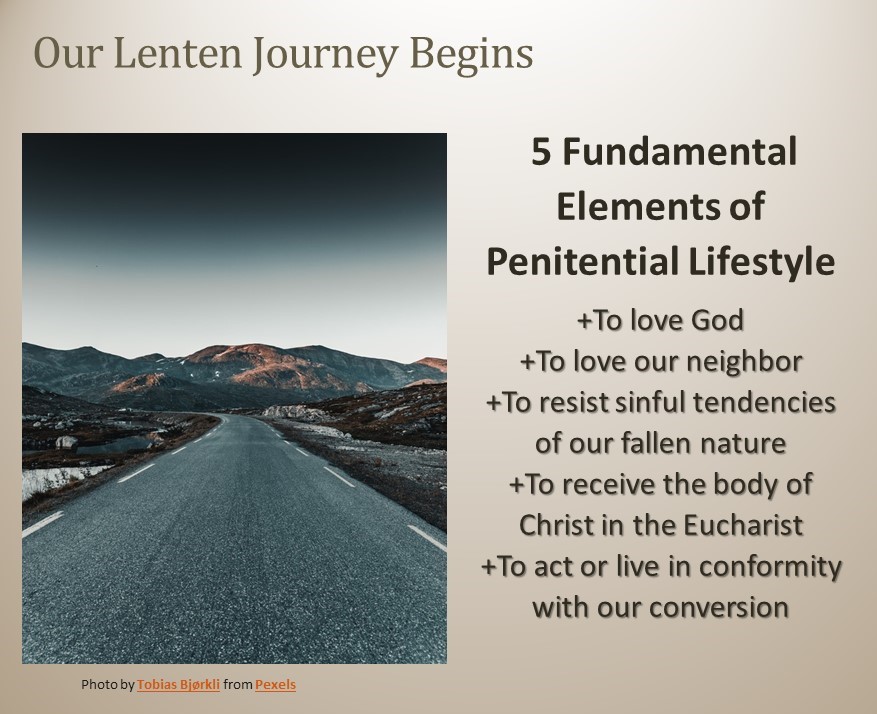
5 Fundamental Elements of Penitential Lifestyle
- To love God
- To love our neighbor
- To resist sinful tendencies of our fallen nature
- To receive the body of Christ in the Eucharist
- To act or live in conformity with our conversion
See FUN Manual -Penitence and Conversion
To discuss or to answer in your journal. How will we live our conversion?
• In what ways would you like to make progress spiritually during Lent? What do you want to improve in your relationship with God and with others?
• What is the meaning of the phrase, “that radical interior change which the gospel itself calls ‘conversion?’”
• What is the focus of the Sacrament of Reconciliation? How important is this for us as Secular Franciscans?
• After having viewed or read some of the resources below, what will you put into practice in your daily life?
Resources for Lent in English
https://weare.franciscan.university/lent/7-last-words/
From Franciscan University: The Seven Last Words (a collection of seven short videos on Forgiveness, Salvation, Relationship, Abandonment, Distress, Triumph, and Reunion.)
https://hallow.com/lent/
Many resources for Lent from Hallowhttps://www.youtube.com/watch?v=IH1CMXYPi_w&t=361s
Fr. Casey Cole, OFM, “Don’t Give Up Anything for Lent”
https://www.youtube.com/results?search_query=lent+bishop+barron
A selection of videos for Lent from Bishop Robert Barron
The Way of the Franciscans: A Prayer Journey through Lent (The Way of, 5)
by Father Daniel P. Horan Horan | Nov 18, 2021
The Passion and the Cross Paperback – December 1, 2015
by Ronald Rolheiser (Author)
The Last Words of Jesus: A Meditation on Love and Suffering
by Daniel P. Horan | Dec 8, 2013
++++++++++++++++
Por favor comparta con sus fraternidades
Dado que la Cuaresma está a punto de comenzar, interrumpimos nuestra serie sobre las Prioridades Nacionales para inspirarnos en la Cuaresma. Esperamos que los recursos a continuación ayuden a todos a centrarse en la penitencia y la conversión, tan importantes en la vida de un franciscano seglar.
Los franciscanos seglares están llamados a la conversión:
Regla OFS: Capítulo 2: Art. 7 7
• Unidos por su vocación como “hermanos y hermanas de la penitencia,” y motivados por el poder dinámico del evangelio, confórmense sus pensamientos y acciones a los de Cristo mediante ese cambio interior radical que el evangelio mismo llama “la conversión.” ” La fragilidad humana hace necesario que esta conversión se realice diariamente.
• En este camino hacia la renovación, el sacramento de la reconciliación es el signo privilegiado de la misericordia del Padre y la fuente de la gracia.
Véase también el artículo 13 de las Constituciones generales.
• La conversión se simboliza como una JORNADA de TRANSFORMACIÓN dirigida por el Espíritu de Dios.
• La experiencia comunitaria: aliento y testimonio.
• El proceso continuo, celebrado en etapas con la Eucaristía como punto culminante.
• La conversión es una experiencia de transformación por toda la vida.
5 elementos fundamentales del estilo de vida penitencial
1. Amar a Dios
2. Amar a nuestro prójimo
3. Evitar las tendencias pecaminosas de nuestra naturaleza caída.
4. Recibir el cuerpo de Cristo en la Eucaristía.
5. Actuar o vivir de conformidad con nuestra conversión.
Ver el manual FUN –“Penitence and Conversion”Para platicar o contestar en su diario. ¿Cómo viviremos nuestra conversión? (Para reflexionar y discutir)
• ¿En qué planea trabajar espiritualmente durante la Cuaresma? ¿Qué quiere mejorar en su relación con Dios y con los demás?
• ¿Cuál es el significado de la frase, “ese cambio interior radical que el mismo evangelio llama ‘conversión’?”
• ¿Cuál es el enfoque del Sacramento de la Reconciliación? ¿Qué importancia tiene esto para nosotros como franciscanos seglares?
• Después de haber visto o leído algunos de los recursos a continuación, ¿qué pondrá en práctica en su vida diaria?
Recursos en español para la cuaresma:
https://www.youtube.com/results?search_query=recursos+franciscanos+para+cuaresma
Varios videos con tema de cuaresma para los franciscanos
https://www.centrodelapostoladocatolico.org/recursos-de-cuaresma-y-pascua.html
Centro del apostolado católico (gran variedad de recursos)
Varios libros para cuaresma disponibles en Kindle
http://franciscanos.org/frandp/menup.html
Escritos de San Francisco, Sta. Clara, y otros. Artículos y recursos sobre asuntos franciscanos.
https://www.youtube.com/watch?v=s86iZbcA3uk
Los inicios de la Orden Franciscana
https://www.youtube.com/watch?v=Q5Kuzbz_D-E
Contexto de la teología franciscana
https://ciofs.info/es/library/official-documents/
Documentos de la orden (Regla, constituciones generales, etc.)
https://www.amazon.com/Los-Franciscanos-Seglares-invitaci%C3%B3n-Franciscana-ebook/dp/B01CEV085O
Los Franciscanos Seglares: Espíritu, Historia y Vocación: Una invitación a examinar la vida evangélica de la Orden Franciscana Seglar en la Iglesia y en el mundo. (Edición en español) Kindle Edition
Diane F. Menditto, OFSVice Minister, National Fraternity, Secular Franciscan Order USAListen – Discern – Go Forth National Theme 2022-2025
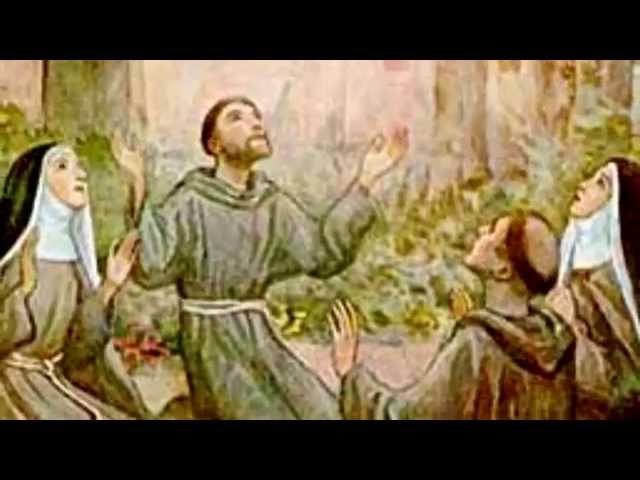


SHAPING THE FRANCISCAN FOOTPRINT – February 9 – February15 2023
Five Important Spiritual Thoughts from the Liturgy of the Word
…and follow up for the Secular Franciscan
February 9 – February 15
1 — “He has done all things well.” (Mk 7:37)
…Certainly, we admire the Lord; are we trying to think as he does?
2 – “We speak God’s wisdom.” (1 Cor 2:7)
…Am I conveying the wisdom of God in my speech?
3 — “My heart is moved with pity for the crowd.” (Mk 8:2)
…Is my heart being moved with care and concern for ALL others?
4 — “Watch out, guard against the leaven of the Pharisees and the leaven of Herod.” (Mk 8:15)
HYPOCRISY
“Beware
of the leaven–that is, the hypocrisy–of the Pharisees.” (Luke 12:1)
“This people honors me with their lips, but
their hearts are far from me.”(Mark 7:6)
“Watch out, guard against the leaven of the Pharisees and the leaven of Herod.”
(Mark 8:15)
“Woe to you,
scribes and Pharisees, you hypocrites.”(Matthew 23:13)
There was a popular song out a number
of years ago by the rock group Genesis that was entitled “Jesus He Knows Me.”
Some of the lyrics are these:Do you see the face on the TV screen, coming at you every Sunday? That
man is me. You buy a piece of paradise, you buy a piece of me. Don’t need to
believe in hereafter: just believe in me. ‘Cause Jesus he knows me and he knows
I’m right. I’ve been talking to Jesus all my life. I believe in the family with
my ever loving wife beside me, but she don’t know about my girlfriend. Won’t
find me practicing what I’m preaching, won’t find me making a sacrifice. But I
can get you a pocketful of miracles. I’ve found true happiness ‘cause I’m
getting richer day by day. If you wanna get closer to him, get on your knees
and start paying. [emphasis mine]It is a song obviously lashing out at TV evangelists especially with their pleas for money.
The song is not far from the thought of
Jesus concerning the evangelists of his day—the scribes and the Pharisees. But
it was not money they were after—it was power, power that came by way of honor and authority. And so Jesus
says:Do and observe all things whatsoever
they tell you, but do not follow their example. … All their works are performed to be seen.Or in other words: do not be hypocrites.
Hypocrisy is an interesting phenomenon
to talk about. It is an automatic trap or problem area for anyone who gives
direction to others: priests, ministers, teachers, parents, legislators, anyone
showing leadership of others. In our case, it is anyone who chooses to do
something good that others see, and therefore anyone going to Church. For
whatever reason, we go to Church, and in doing so, we say to the world: “I
believe in God through Jesus Christ.” We must listen to Jesus in the Gospel
today. It is possible to say ‘I believe’, and not put it into practice.We should be very interested in what we
say in Church. We say strong words during the service, words like, we believe,
we will, we do. We must truly listen to what we say and do. We
receive the Lord in the words of the Gospel and in the Eucharist. How can someone
receive the Lord and with the same mouth tear down someone else or allow foul
language to come out of it? How can someone receive the Lord and continue a
life-style that makes a shambles of a marriage or parenting? How can we miss
the sacredness of life itself by being bitter and angry most of the time? Or
refusing to see the good in life?How? — According to Jesus, we have
allowed religion to be nothing more than something to be seen or performed.What’s the antidote to hypocrisy, how
do we stay away from it? Jesus says:The greatest among you must be your servant.
Service—the way to keep ourselves from the hypocrisy of saying one thing and doing another is to
work on behalf of others. Serve people, give to them without expecting anything
in return, make others feel important because they are—really.By the very fact that we go to Church,
we are making a statement to the world outside that we believe in Jesus Christ.
We must realize that we could be hypocrites… or if we carry through, we could
be people who are helping this world.
5 – “He saw clearly.” (Mk 8:25)
…The blind man finally saw clearly. Is it clear to me that the Lord is truly acting in my life
Day 3 at The Q 2022
(This article originally appeared in the TAU-USA Fall 2022 Issue #107)
Day 3
Doug and Marion Clorey, OFS; Tim and Kathy Taormina, OFS;Lori Hinker, OFS

Continuing with the spirited theme of the Quinquennial, “JUBILEE! Rejoice in the Choice!,” five Secular Franciscans concluded the keynotes with a call to live our vocation.
Speaking in the final keynote were Doug and Marion Clorey, OFS, of Prince Edward Island, Canada, and Tim and Kathy Taormina, OFS, and Lori Hinker, OFS, of Apple Valley, Minn.
Doug Clorey, OFS, opened the talk by reminding the audience that although the Rule has changed over the years, its specific focus remains the same now as it was 800 years ago—observing the Gospel of our Lord Jesus Christ in the manner of St. Francis. “It is this foundation on which we go forward to build communities of caring and trusting encounter,” he said.
All spoke of the importance of the call to conversion that exists in the order.
Marion Clorey, OFS, emphasized the Franciscan themes of fraternity, simplicity, family and reconciliation, prayer, and peace. While all these are equally important, she said, fraternity drew her to the Order. “Reading Francis’ story, I felt a connection to him. His declaration ‘the Lord sent me brothers,’ as his way of describing the beginnings of fraternity resonated with me,” she said.
While a life of simplicity calls us to detach from material goods, it means more, especially considering Pope Francis’s Laudato Si. “The cry of the earth and the cry of the poor are inextricably linked. In more recent times, our local fraternity’s JPIC team has been challenging us to live more simply and to promote justice initiatives as suggested in Article 15.”
Lori Hinker, OFS, reminded Franciscans that Francis and Clare were young adults when they began their orders and that we need to reach out and encourage the youth and young adults among us. “In the United States, young adults are those young people from all cultural communities and abilities between ages 18 and 39 who are single or married, with or without children, divorced or widowed, and in college, working, unemployed, incarcerated or in the military. These young adults are indeed adults and are impacting the church and society today,” Lori read from the U.S. Conference of Catholic Bishops.
She said the enthusiasm of young people is contagious and reminiscent of the Franciscan call. “They ‘get it’ without too much explanation. They want to get their hands dirty and serve those in need. Remind you of anyone? St. Francis and St. Clare.”
She called on Franciscans to live out their vocations through the sacraments, their witness and personal invitation. By frequenting the sacraments, we remind ourselves that Christ is the center of our lives. The sacrament of Reconciliation also reminds us that we are not perfect.
Sharing our faith journey with family and friends, the young and old, is a way to witness, she said. While we are witnessing, we also can extend invitations to family and friends to attend our Franciscan gatherings. Lori became a Franciscan after an invitation from her parents, Tim and Kathy Taormina, OFS, who also spoke in the keynote.
Kathy Taormina, OFS, talked about the model of Francis leading others to God.
“As Francis lived his life and brothers gathered around him , common people were also attracted to his way of life. Were they already in penitential movement of the day? Possibly. Or maybe this was the first time they heard someone who looked like them, and probably dressed worse than they did, preach about a God who loved them just because he chose to do so.” He provided a strong example to follow on the pathway to Christ, including his love for the Eucharist, fervent prayer life, love of creation, life of penance and the ability to let go.
As God sent Francis into the world when it needed him, because of chaos and division of classes, He sends Franciscans to do the same, said Tim Taormina, OFS.
“As the Swiss mystic Father Zundel once said, ‘We carry in ourselves a treasure capable of changing the whole universe.’ Of course, he was speaking
of our Lord Jesus Christ, but does that quote not also reflect the vocation the Holy Spirit has given us and the profession we have attested to?”
Tim believes that the pandemic and the flexibility to communicate at times via Zoom is a sign of the flexibility of the Order. “No challenge can stop us from
being a viable order.” “Francis said, ‘He who works with his hands, and his head, and his heart is an artist.’ Let us be artists of awareness and communication.
The complete texts and video recordings of the keynote addresses can be found at https:// www.secularfranciscansusa.org/updates-from-the-q-august-3rd-through-7th-2022/
https://www.secularfranciscansusa.org/2023/02/13/day-3-at-the-q-2022/
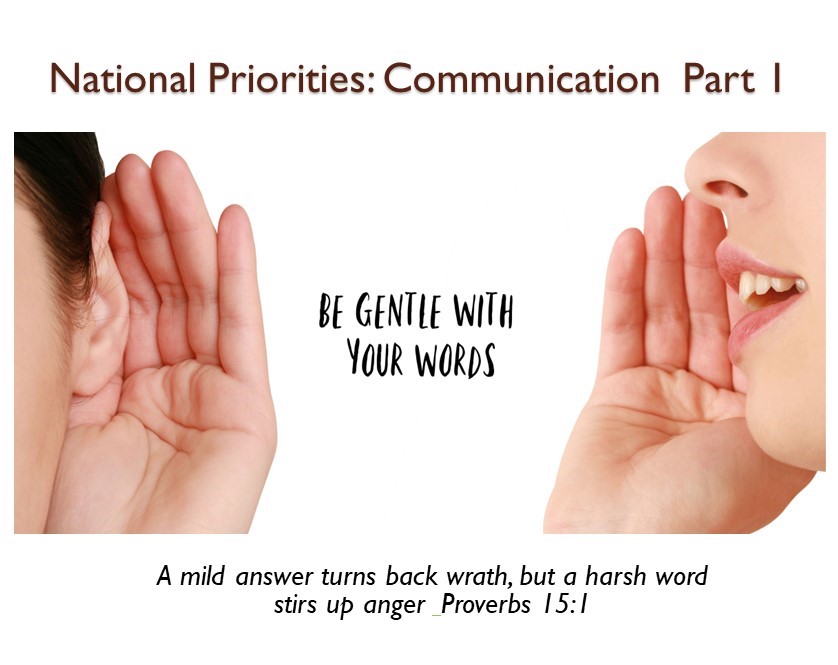
Formation Friday February 10, 2023
At our National Chapter in October 2022, the National Fraternity Council decided that the priorities for 2022-2025 will be Vocations, Communications, and Relationships. For the next several weeks, Formation Friday will explore each of the priorities.
Communications: Part 1
Prepared by Layna Maher, OFS, Chair, National Formation CommissionThis week Formation Friday is taking a look at communication from our perspective as Catholics and Secular Franciscans.
As Franciscans, we are called to share the Good News by the way we live and communicate with others. We first look to the way St. Francis lived as described to us by Thomas of Celano in The Life of Saint Francis.
The brothers who lived with him know
that daily, constantly, talk of Jesus was always on his lips,
sweet and pleasant Ez 33:32 conversations about Him,
kind words full of love.
Out of the fullness of the heart his mouth spoke. Mt 12:34
So the spring of radiant love that filled his heart within
gushed forth.
He was always with Jesus:
Jesus in his heart,
Jesus in his mouth,
Jesus in his ears,
Jesus in his eyes,
Jesus in his hands,
he bore Jesus always in his whole body.
Jesus and St. Francis are perfect models of gentleness. Jesus teaches us that gentleness reconciles and heals. St. Francis teaches us that gentleness opens the possibility for something radical and positive and holy. As Secular Franciscans we follow in the footsteps of St. Francis following Jesus. When we do this and live our Rule, we live with gentleness rooted in humility.
We also look to the Holy Spirit as a model of gentleness. During a 2017 visit to a parish in Rome, Pope Francis said, “The language of the Holy Spirit is sweet, and the Church calls him the ‘sweet guest of the soul’ because he is sweet and gives us sweetness. And respect. He always respects others. He teaches us to respect others.”
Gently and humbly seeking first to understand, then to be understood helps us to be respectful and see others as a gift of the Lord. As Franciscans, we open our hearts to be filled with the same radiant love that filled the heart of St. Francis. When our hearts are full, others will hear Jesus from the words of our mouths and see Jesus in the work of our hands.
From the OFS Rule: Article 13. As the Father sees in every person the features of his Son, the firstborn of many brothers and sisters, so the Secular Franciscans with a gentle and courteous spirit accept all people as a gift of the Lord and an image of Christ. A sense of community will make them joyful and ready to place themselves on an equal basis with all people, especially with the lowly for whom they shall strive to create conditions of life worthy of people redeemed by Christ.
Discuss with your fraternity or a prayer partner or comment in your journal.
Proverbs 15:1 A mild answer turns back wrath, but a harsh word stirs up anger
+ Reflect on your attitude and actions when you encounter someone with a different opinion or position. Is it an attitude of gentleness, or of wrath?
+ How do you seek to encounter Christ in those you do not agree with?
+ Think of a time you may not have reacted with gentleness to another. What could you have done differently? Is there an opportunity for reconciliation?
++++++++++++++++++++
Por favor compartir con su fraternidad local
En nuestro Capítulo Nacional en octubre de 2022, el Consejo Nacional de Fraternidad decidió que las prioridades para 2022-2025 serán Vocaciones, Comunicaciones y Relaciones. Durante las próximas semanas, el Formation Friday analizará cada una de las prioridades.
Comunicaciones: Parte 1
Preparado por Layna Maher, OFS, Presidenta, Comisión Nacional de FormaciónEsta semana, el Formation Friday analiza la comunicación desde nuestra perspectiva como católicos y franciscanos seglares.
Como franciscanos, estamos llamados a compartir la Buena Nueva a través de la forma en que vivimos y nos comunicamos con los demás. Primero miramos la forma en que vivió San Francisco como nos la describe Tomás de Celano en La vida de San Francisco.
FA:ED , vol. 1, 283 (En inglés)
Los hermanos que vivían con él saben
que diariamente, constantemente, hablar de Jesús estaba siempre en sus labios,
dulces y agradables Ez 33:32 conversaciones acerca de Él,
amables palabras llenas de amor.
De la plenitud del corazón habló su boca. Mateo 12:34
Así que el manantial de amor radiante que llenó su corazón dentro
brotó.
Siempre estuvo con Jesús:
Jesús en su corazón,
Jesús en su boca,
Jesús en sus oídos,
Jesús en sus ojos,
Jesús en sus manos,
llevó siempre a Jesús en todo su cuerpo.
Jesús y San Francisco son modelos perfectos de mansedumbre. Jesús nos enseña que la mansedumbre reconcilia y sana. San Francisco nos enseña que la mansedumbre abre la posibilidad de algo radical, positivo y santo. Como Franciscanos Seglares seguimos los pasos de San Francisco siguiendo a Jesús. Cuando hacemos esto y vivimos nuestra Regla, vivimos con mansedumbre enraizada en la humildad.
También miramos al Espíritu Santo como un modelo de mansedumbre. Durante una visita a una parroquia en Roma en 2017, el Papa Francisco dijo: “El lenguaje del Espíritu Santo es dulce, y la Iglesia lo llama el ‘dulce huésped del alma’ porque es dulce y nos da dulzura. Y respeto. Siempre respeta a los demás. Él nos enseña a respetar a los demás”.
Buscando con delicadeza y humildad a comprender primero y luego ser comprendidos nos ayuda a ser respetuosos y ver a los demás como un don del Señor. Como franciscanos, abrimos nuestros corazones para que se llenen del mismo amor radiante que llenó el corazón de San Francisco. Cuando nuestros corazones estén llenos, otros escucharán a Jesús de las palabras de nuestra boca y verán a Jesús en la obra de nuestras manos.
De la Regla OFS : Artículo 13. De la misma manera que el Padre ve en cada uno de los hombres los rasgos de su Hijo, Primogénito de muchos hermanos22, los Franciscanos seglares acojan a todos los hombres con ánimo humilde y cortés, como don del Señor23 e imagen de Cristo.
El sentido de fraternidad les hará felices de colocarse a la par de todos los hombres, especialmente con los más humildes, para los cuales se esforzarán en crear condiciones de vida dignas de criaturas redimidas por Cristo24.
Para platicar con su fraternidad o un compañero de oración o comentar en su diario.
Proverbios 15:1 La suave respuesta hace retroceder la ira, pero la palabra áspera hace subir la ira
+ Reflexione sobre su actitud y acciones cuando se encuentra con alguien que tiene una opinión o posición diferente a la suya. ¿Es su actitud una de mansedumbre o de ira?
+ ¿Cómo intenta encontrar a Cristo en aquellos con los que no está de acuerdo?
+ Piense en un momento en el que quizás no haya reaccionado con delicadeza a otro. ¿Qué podría haber hecho diferente? ¿Hay una oportunidad para la reconciliación?
Diane F. Menditto, OFSVice Minister, National Fraternity, Secular Franciscan Order USAListen – Discern – Go Forth National Theme 2022-2025
SHAPING THE FRANCISCAN FOOTPRINT – February 2 – February 8 2023
(pdf copy attached for printing)
Five Important Spiritual Thoughts from the Liturgy of the Word
…and follow up for the Secular Franciscan
February 2 – February 8
1 – “My eyes have seen your salvation.” (Lk 2:30)
…The Lord has been so good to us. We should thank Him often.
2 — “Come away by yourselves to a deserted place and rest a while.” (Mk 6:31)
PRAYER
“Come away by yourselves to a
deserted place and rest a while.”(Mark 6:31)
“Jesus spent the night in prayer to God.”
(Luke 6:12)
“Mary has chosen the better part and
it will not be taken from her.”(Luke 10:42)
“My house shall be a house of prayer.”
(Luke 19:46)
“Rising very early before dawn, he left and went off
to a deserted place, where he prayed.”(Mark 1:35)
The local Student Council was scheduled to provide the opening entertainment for a
leadership program that the Kansas State High School Activities Association was
sponsoring. It traditionally consisted of the band playing or a choral group. Instead,
they put their student council on stage, and acted as if we, the audience, were
the school, and they were having student council president elections. As I watched, I remember being totally lost as
to what they were doing.There were four candidates: an academic-type, a cheerleader-type, an athletic-type,
and an off-center-type. As they lined up across stage, there were nominating and acceptance speeches. Everyone invariably said that if they were
elected, they would listen and they promised great things for the students of the school.During the speeches, there was a young boy who wandered around the stage, looking at
each person. His hat was on crooked, and evidently confused. I thought he should
not have been in the skit, thinking that he was handicapped in some way, and
the group on stage seemed to be embarrassed by his presence. Everyone on stage pushed him away. He walked around the whole time of the
speeches, and finally, he was pushed off stage. Someone won the election. There was cheering, then sudden silence. The actors froze and the young man came back
on stage and said one line: “Even as they promised they would listen to me,
they pushed me away.”There is a great lesson there: before we act and do something for anyone, we have to
first of all listen.In one of the Gospels, Martha and Mary are both giving of themselves to Jesus. The reason why Jesus is partial to what Mary
did is the same lesson of the high school skit: Mary listened before she acted.
Martha was just the opposite—she was acting without listening first.The lesson is both a psychological and a spiritual one. If we truly want to serve someone, to give to
someone, we must listen first, then act. When we listen first, the other person is in
charge of the agenda. When we start doing right away, we may have missed what the other wants because we are merely
doing what we think the other wants. And therefore it is nothing more than what we
want.If we apply this psychological/spiritual principle to the spiritual life, we come up
with this: before we become a Christian who does things, we must become a
Christian who listens to Jesus’ ideas. If we do not do that, we run into contradictions. A person gives a lot of money to the Church or
a charitable cause, for example, while at the same time cheating or hurting
someone else; the married person professes to be a good follower of Jesus, but
at the same time, will only “selectively listen” to his/her spouse; or people
go to Mass, even daily Mass, and tear down another in their speech during the
day.Throughout the Gospels, we see Jesus himself in prayer several times, always with the idea of listening to his
Father.In the Gospel story of Martha and Mary, Jesus reminds Martha that Mary has chosen
the “better part” because she was able to listen to Jesus before she acted. That is a great thought for us as well.
3 — “You are the salt of the earth…You are the light of the world.” (Mt 5:13,14)
…Are we? [salt=knowledge of God; light=knowledge put into action]
4 – “This people honors me with their lips, but their hearts are far from me.” (Mk 7:6)
…Am I hypocritical in my life?
5 — “But what comes out of a person, that is what defiles.” (Mk 7:20)
…Especially in my speech. How is my speech toward others?