One Young Lady’s Faith Journey

(This article originally appeared in the TAU-USA Winter 2023 Issue #108)

By Kathleen Molaro, OFS

Franciscan Youth and Young Adult Commission Chair

LOGO - San Damiano Cross in center with Unite, Ignite, Invite and Secular Franciscan OrderWith her permission, I share with you a conversation I had with my young adult granddaughter.

We hadn’t been together in person for a while, and sat with a cup of tea, enjoying each other’s company.

Me: A while ago I talked to you when you were struggling with depression and  a lack  of enthusiasm for going to Church or even praying.

Sophia: I was going through a rough time. Going to Mass seemed like a burden, something I had to do. I didn’t believe I had any relationship with God. As a high schooler, I also felt a bit used. Our youth group was always being asked to set up chairs, serve at Church dinners, babysit, and that sort of thing. I really didn’t feel like I belonged in any meaningful way. There was something missing in my life, and I didn’t know what it was.

Walking together - ListeningMe: Now you seem focused and strong in your faith. What caused that change, do you think?

Sophia: I felt lost and alone when my family moved across the country. I had no friends, no school because I had just graduated from high school, and had a brand-new environment to get used to. Then COVID struck. The only socializing I had with people my age was online. When I shared my feeling of loss and confusion with a stranger in a blog, she encouraged me to pray for God’s will for my life. “God has a purpose for you,” she said. “Pray for Him to reveal it to you. You may be in for a surprise. There’s something waiting for you.” We had a simple conversation that I pondered for quite a while. That little comment stirred a change in me.

Me: Sometimes even little moments in our life  really transform us. Sounds like that was one of them! Did you have any other particular bigger incidents that influenced where you are now in your faith life?

Sophia: When my friend died in a car accident, I came to a point in my life where I had to make a choice. I could run from God and wallow in despair and anger, or I could seek God to help me through. I also really believed if I wanted to see my friend again someday in Heaven, I would need to live a worthy life and keep my eyes on the Kingdom! The conversation about purpose in life resurfaced in my heart. I chose the path toward God, and now I have a great desire to encourage others to walk the same path. Maybe purpose isn’t necessarily going to school or choosing a job or vocation. Instead, living with purpose might mean choosing a way of life… living with holy intention.

Me: Sounds like your “pondering” bore fruit and sent you on a search.

Sophia: It really did. I delved into many things. I started studying scripture by using Father Mike Schmitz’s Bible in a Year program. I Immersed myself in an on-line 14-part series about the Holy Spirit with Fr. Dave Pivonka. I learned to take Mass more seriously when my mom bought me an Every Sacred Sunday Mass Journal to use during the COVID shut down. Of course, I didn’t do all these things at once. But I just couldn’t get enough. I was so excited, I moved from one study to another.

Me: Did things get better when your Church reopened?

Sophia: My Church has a lot to offer, so I joined the Church choir and a few groups. At a women’s group, one day we were discussing how we share our faith with others. One of the other members asked me, “How do you share your faith with your friends? I imagine it’s different than for us older folks.” My answer was, “What friends? There’s no one my age in the Church. You are my people now, and I really appreciate how you accept me, love me, and listen to me even though I’m a good 30 years or more younger than everyone else.”

Me: So you enjoy your involvement?

Sophia: Certainly, and I know I’m growing closer and closer to God. I am respected as a valuable member of the community. I haven’t been asked to set up chairs in a long time! But I am a little frustrated that there’s no help for me to find other young people. I don’t know how to do that. There might be people my age I don’t know about, maybe even in the Catholic Churches nearby. I really wish there could be a young adult group.

Me: If there was such a group, what would it look like?

Sophia: I think it would be fairly simple. There are so many books and programs to use. We could invite speakers, even folks who could help us with life skills like budgeting or getting a job. The group could find social service projects to work on together and would benefit from lots of sharing and supporting one another in our journeys. We would pray and sometimes go to Mass together. We’d be able to run the group on our own once we have the support and gain leadership skills.

Me: So, back to how to find a purpose in life. What do you think it takes?

Sophia: Determination and follow through—we can’t just talk about it; I believe we need four things: We need to take action!

We need a consistent prayer life—we have to schedule in prayer time and remain faithful to it. It won’t just happen automatically.

We need each other. An inspiring and spiritually healthy community helps a lot, whether it’s people our age or not.

It’s imperative to develop a deep relationship with God. I probably should have said that first!

Sophia: And now, I have a question for you, Grandma. Aren’t these all the things you need too? Do we ever stop looking for purpose, a relationship with God, and a community to help us do all that?

Me: You’re right, Sophia. That’s why I hope we (older and younger) can walk together and bless each other in that journey. You’ve expressed many of the ideas our Youth and Young Adult Commission has discovered in our studying how to bring the Gospel to young people. Hearing from you has validated our work. Thanks for spending this time sharing with me.

You might consider a gift of the Every Sacred Sunday Mass Journal for a young person in your life Found at “https://everysacredsunday.com.”

One Young Lady’s Faith Journey

Open post

Formation Friday April 28, 2023 (Part 2-writings of Francis and Clare)

Please share with your local fraternity (en español abajo)

It is important that we get to know the many writings left to us by our founder. Franciscans are blessed to have many of St. Francis’s and St. Clare’s writings. By reading what they wrote, and praying as they prayed, we allow the Holy Spirit to strengthen our vocation and how we live the Franciscan Charism.

Three sets of rubrics or directives which accompany this text in the manuscript tradition suggest that the praises below were biblical passages used by the brothers before each hour of the Office.

https://www.franciscantradition.org/francis-of-assisi-early-documents/the-saint/writings-of-francis/the-undated-writings/the-praises-to-be-said-at-all-the-hours/177-fa-ed-1-page-161

The Praises To Be Said at All the Hours1

Holy, holy, holy Lord God Almighty, Is 6:3
Who is, and Who was, and Who is to come: Rv 4:8 a
And let us praise and glorify Him forever. Dn 3:57
2O Lord our God, You are worthy to receive
praise, glory and honor Rv 4:11 and blessing.
And let us praise and glorify Him forever. Rv 4:8
3The Lamb Who was slain is worthy to receive
power and divinity, wisdom and strength,
honor and glory and blessing. Rv 5:12
And let us praise and glorify Him forever. Rv 4:8
4Let us bless the Father and the Son with the Holy Spirit:b
And let us praise and glorify Him forever. Rv 4:8
5Bless the Lord, all you works of the Lord. Dn 3:57
And let us praise and glorify Him forever. Rv 4:8
6Sing praise to our God, all you His servants
and you who fear God, the small and the great. Rv 19:5
And let us praise and glorify Him forever. Rv 4:8
7Let heaven and earth praise Him Who is glorious. Ps 69:35 [Vulgate, Ps 68:35]
And let us praise and glorify Him forever. Rv 4:8
8Every creature in heaven, on earth and under the earth;
and in the sea and those which are in it. Rv 5:13
And let us praise and glorify Him forever. Rv 4:8
9Glory to the Father and to the Son and to the Holy Spirit.
And let us praise and glorify Him forever. Rv 4:8
10As it was in the beginning, is now, and will be forever.
And let us praise and glorify Him forever. Rv 4:8

Please read the praises above. Read through once. Then prayerfully consider each word and sentence a second time.

  • What do the words and phrases that St. Francis wrote about God tell you about his relationship with Him?
  • What do they tell you about his relationship with all of creation?
  • Choose four words or phrases that touch you deeply. Spend some time thinking about why you chose those words.
  • What do these praises, prayed daily, tell us about how St. Francis prayed?
  • How do you praise God each day? When do you praise him?
  • Personal challenge: See if you can write some praises of God that are personal to you.

+++++++++++++++++

Formation Friday 28 de abril, 2023 (Parte 2-los escritos de Francisco y Clara)
Por favor compartir con su fraternidad local

Es importante que conozcamos los muchos escritos que nos dejó nuestro fundador. Los franciscanos tienen la bendición de tener muchos de los escritos de San Francisco y Santa Clara. Al leer lo que escribieron y orar como ellos oraron, permitimos que el Espíritu Santo fortalezca nuestra vocación y cómo vivimos el carisma franciscano.

Tres juegos de rúbricas o directivas que acompañan este texto en la tradición manuscrita sugieren que las alabanzas a continuación eran pasajes bíblicos usados por los hermanos antes de cada hora del Oficio.

http://franciscanos.org/esfa/alhor.html

Alabanzas que se han de decir en todas las Horas

1Santo, santo, santo Señor Dios omnipotente, el que es y el que era y el que ha de venir (cf. Ap 4,8):
Y alabémoslo y ensalcémoslo por los siglos.

2Digno eres, Señor Dios nuestro, de recibir la alabanza, la gloria y el honor y la bendición (cf. Ap 4,11):
Y alabémoslo y ensalcémoslo por los siglos.

3Digno es el cordero, que ha sido degollado, de recibir el poder y la divinidad y la sabiduría y la fortaleza y el honor y la gloria y la bendición (Ap 5,12):
Y alabémoslo y ensalcémoslo por los siglos.

4Bendigamos al Padre y al Hijo con el Espíritu Santo:
Y alabémoslo y ensalcémoslo por los siglos.

5Criaturas todas del Señor, bendecid al Señor (Dan 3,57):
Y alabémoslo y ensalcémoslo por los siglos.

6Alabad a nuestro Dios, todos sus siervos y los que teméis a Dios, pequeños y grandes (cf. Ap 19,5):
Y alabémoslo y ensalcémoslo por los siglos.

7Los cielos y la tierra alábenlo a él que es glorioso (cf. Sal 68,35; Sal Rom):
Y alabémoslo y ensalcémoslo por los siglos.

8Y toda criatura que hay en el cielo y sobre la tierra, y las que hay debajo de la tierra y del mar, y las que hay en él (cf. Ap 5,13):
Y alabémoslo y ensalcémoslo por los siglos.

9Gloria al Padre y al Hijo y al Espíritu Santo:
Y alabémoslo y ensalcémoslo por los siglos.

10Como era en el principio y ahora y siempre y por los siglos de los siglos. Amén.
Y alabémoslo y ensalcémoslo por los siglos.

11Oración: Omnipotente, santísimo, altísimo y sumo Dios, todo bien, sumo bien, total bien, que eres el solo bueno (cf. Lc 18,19), a ti te ofrezcamos toda alabanza, toda gloria, toda gracia, todo honor, toda bendición y todos los bienes. Hágase. Hágase. Amén.

Por favor, lea los elogios de arriba. Léalos una vez. Luego, en oración, considere cada palabra y oración por segunda vez.

• ¿Qué le dicen las palabras y frases que San Francisco escribió sobre Dios acerca de su relación con Él?

• ¿Qué le dicen sobre su relación con toda la creación?

• Elija cuatro palabras o frases que le conmuevan profundamente. Dedique algo de tiempo a pensar por qué eligió esas palabras.

• ¿Qué nos dicen estas alabanzas, rezadas diariamente, acerca de cómo rezaba San Francisco?

• ¿Cómo alaba usted a Dios cada día? ¿Cuándo lo alaba?

• Desafío personal: vea si puede escribir algunas alabanzas a Dios que sean personales para usted.

 
Diane F. Menditto, OFS
Vice Minister, National Fraternity, Secular Franciscan Order USA
Listen – Discern – Go Forth National Theme 2022-2025
Open post

SHAPING THE FRANCISCAN FOOTPRINT – April 20 – April 26 2023

Shaping the Franciscan Footprint

Five Important Spiritual Thoughts from the Liturgy of the Word

…and follow up for the Secular Franciscan

April 20 – April 26


 1 — “But he said to them, “It is I. Do not be afraid.”  (Jn 6:20)

        Many of us have things that happened on important days that stand out in our minds. I never can go past an Easter without thinking of an Easter homily by my pastor when I was in high school on vacation from the seminary.  I was serving the Mass and the homily or lack of one, really made an impression on me, as it did on everyone in the Church. My pastor started the homily talking about the Resurrection, but almost immediately he broke down, obviously crying and very moved. This went on for about five minutes, trying to talk, then breaking down again. He could see that he was getting nowhere, so he gave up, and went on with the rest of the Mass, gaining control as he spoke the familiar words of the Mass.

        A number of people gathered around him after Mass to see if he was okay, and he was able to explain what had happened. He had been working with a young college student at a small college near him. The student had threatened suicide several times. My pastor had been called to him and, over a period of time, they had built up a good relationship. Then on Holy Saturday evening, the day before, the student had lost control and finally succeeded in taking his life. My pastor, as you would expect, was deeply hurt.

        One of things that is clear whenever we celebrate what might be called “highly positive” feasts like Easter or Christmas is the sharp contrast of what we celebrate and the negative realities of our world. Jesus’ Birth or Resurrection does not change negative realities.

        – we still have suicides;

        – we still have tragedies in our own country, often involving young people;

        – we still have terrorism, dangerous world situations and war;

        – we still have deaths and personal heartbreaks that can make many people bitter;

        – we still have the uncontrollable teenager, a spouse that does not care, parents who are old and difficult to take care of;

        – we still have families in trouble, people not getting along and kids getting hurt;

        – we still have people in pain who are hurting physically and psychologically.

They are negative situations that might be part of our lives right now.

        And yet we hear in the Gospels so many times in Jesus’s life, words that are as often as he tells us to have faith, the words, “Do not be afraid.”

        I call those difficult situations “messes.” Every family has a mess. No matter what family we are talking about, there is something that has disrupted the normal process of living. They are situations that people usually have absolutely no control over. They make people cry out, “I don’t deserve this.” “Why can’t my life be normal like everyone else’s?” “Why do these things happen to me?” They are real, and not funny in the least. They are messes, and messes “mess up” everything that is in the immediate area. No amount of soft talk or Christian celebration will ever be able to take them away.

        To understand these negative realities, it is good to look at our Christian lives as sort of a spiritual battle, a battle between dwelling in the positive with the hope of eternal life as given to us in the Resurrection. Or dwelling in the negative, allowing the negative realities to dominate our lives and thinking.

        The way to win the spiritual battle lies not in changing the negative facts because usually we cannot change the facts, but it lies in changing the person who encounters the facts—namely, us. One of the great spiritual truths of all times is very simply: we can change. The message of every Gospel account of the Resurrection: people changed as they understood what Jesus’ Resurrection meant. They were afraid before, but afterwards were not.

        If we manage to allow Jesus’s Resurrection or Birth to dominate our thinking, it gives rise to strong positive thinking, positive thinking that looks at personal tragedies and says: yes, I can deal with these—they are opportunities to grow, to work with life and make it more positive. And, we will change ourselves, and the positive will win the battle. And be able to understand why we should not be afraid.

2 – “With that their eyes were opened and they recognized him.” (Lk 24:31)

…Have we recognized the Lord working with us, even in the difficult moments?  He is.

3 — “This man never stops saying things…” (Acts 6:13)

…Stephen’s enemies saw that Stephen always spoke of the Lord. Do I speak of the Lord by my actions and words?

4 — They went forth and preached everywhere, while the Lord worked with them.” (Mk 16:20)

…As long as we do the preaching by our lives, the Lord will be with us.

 5 — “I am the bread of life; whoever comes to me will never hunger, and whoever believes in me will never thirst.” (Jn 6:35)

…Do my thoughts, words and actions show that I receive the Eucharist?

www.frmikescully.com

www.thegospelandme.com


Our Fraternity Gathering: Our Life!

(This article originally appeared in the TAU-USA Winter 2023 Issue #108)

by Francine Gikow, OFS

Frances speaking to the groupWhy is being in a fraternity so important? Short Answer: because it is our brothers and sisters who support and challenge us to live the LIFE of a Secular Franciscan. We cannot do it alone! We learn about ourselves and our charism by living in fraternity.  Living with the same people in fraternity for the rest of our lives (unless we relocate) challenges us to an ever-deepening relationship with others in a new family of faith. As family, our Constitutions outline this responsibility when it states: “The brothers and sisters are co-responsible for the life of the fraternity to which they belong…The sense of co- responsibility of the members requires personal presence, witness, prayer, and active collaboration….” (GC 30, 1-2-) Therefore, fraternity is all about relationships and responsibility. Without relationship, we do not have fraternity. Without responsibility, we do not have fraternity. We are co- responsible and co-accountable for our fraternity life. We must be participating “in fraternity” as Secular Franciscans―there are NO isolated members. It is a part of our charism, and it is what we promised at profession. We owe our brothers and sisters our presence. It is VITAL to our vocation.

Our fraternity is canonically established, which means that we are officially an arm of the Catholic Church―so we should be a role model or example of a “little church.” Fraternity is not a prayer group, a business meeting, or a sodality. We are an Order in the Church and have a different goal than any other parish group: our goal is to grow in holiness through living the Secular Franciscan life in fraternity.

To grow in holiness means we need a stable, committed (permanently professed) community of like-minded brothers and sisters to encourage us in our journey, challenge us to conversion and to accompany us in our sorrows and joys. In other words, we need a family! Since fraternity, and the ongoing Franciscan formation it provides, is crucial in our Secular Franciscan journey, we prioritize our attendance at gatherings before parish or other commitments.

There are four essentials that make up a Fraternity Gathering. They are:

  • A Communal Prayer Experience
  • Announcements (very short in length)
  • Ongoing Formation (This is the most important part of the gathering and should be given the longest time allotment,)
  • Social

(Please note: All four elements/parts should be present for most meetings except for an occasional celebration or feast.) A time schedule for the fraternity gathering ensures that all four elements are addressed and given their due. There should also be a balance between times for prayer, ongoing formation, business, and social interaction within the fraternity gathering.

The Fraternity Council is encouraged to develop a yearly formation plan or calendar of formation topics for each fraternity gathering. Topics and ideas can come from the CIOFS and National OFS websites, Papal encyclicals, Formation Fridays, TAU articles, Franciscan books, and the identified needs of the fraternity seen by the Council. The regional formation team can be invaluable in helping to locate resources and materials for a particular theme.

Let’s look at each element individually. The suggested time schedule identified in each section is for a two- hour gathering. Of course, if there is additional time available, segments can be lengthened accordingly. Ultimately, the fraternity council is responsible for developing an appropriate schedule for the gathering and adhering to it.

Ongoing Formation: (approx. 30-40 minutes)

Ongoing formation is considered the most important part of a fraternity gathering and is the only place where we are fed Franciscan and lay spirituality, as well as the Franciscan charism. Ongoing formation offers study and practice in the Secular Franciscan Way of Life and through its discussions, reflections, and the sharing of relationships, we develop a cohesiveness of mission in the fraternity’s ongoing formation. Attendance is crucial for each and every gathering, because we are, in a sense, feeding ourselves and others with “Franciscan food” in ongoing formation. When it’s absent, we starve!

Communal Prayer Time: (about 15-20 minutes)

Communal prayer times should be Franciscan in focus and could be taken from a selection of the Liturgy of the Hours or the Office of the Passion, intercessory prayer, a decade of the Crown rosary, Stations of the Cross, Gospel meditation, words of St. Francis or Clare, and many others. Prayer time is NOT a time for private devotions, or the latest trend in pious practices/activities. Please Note: Attending Mass as a fraternity is nice, but it is not a mandatory part of a fraternity’s prayer time.

Announcements: (usually 10 minutes or less)

Fraternity business should be the shortest portion of the fraternity gathering. Announcements of retreats, upcoming events, anniversaries, and deaths can be highlighted in the newsletter, with a short mention at the gathering. Fraternity apostolates and volunteer needs could be discussed with signup sheets available. CIOFS/ NAFRA/Regional News can be listed in the fraternity newsletter and briefly mentioned at the gathering.

The Social: (usually around 30 minutes)

This, too, is an essential part of the gathering. It provides a way to deepen relationships through sharing of personal news within the fraternity in a casual but caring environment. Every gathering should include time for the brothers and sisters to informally share among themselves and encounter each other. From experience, I realize that this element of the fraternity gathering is the most likely of all the elements to extend past its allotted time. It is important, however, that someone is assigned to monitor the time and announce the ending of the social in order to clean up and progress to another part of the gathering. Continued eating during prayer time and/or ongoing formation should be discouraged, because it distracts from prayer and the content of the ongoing formation.

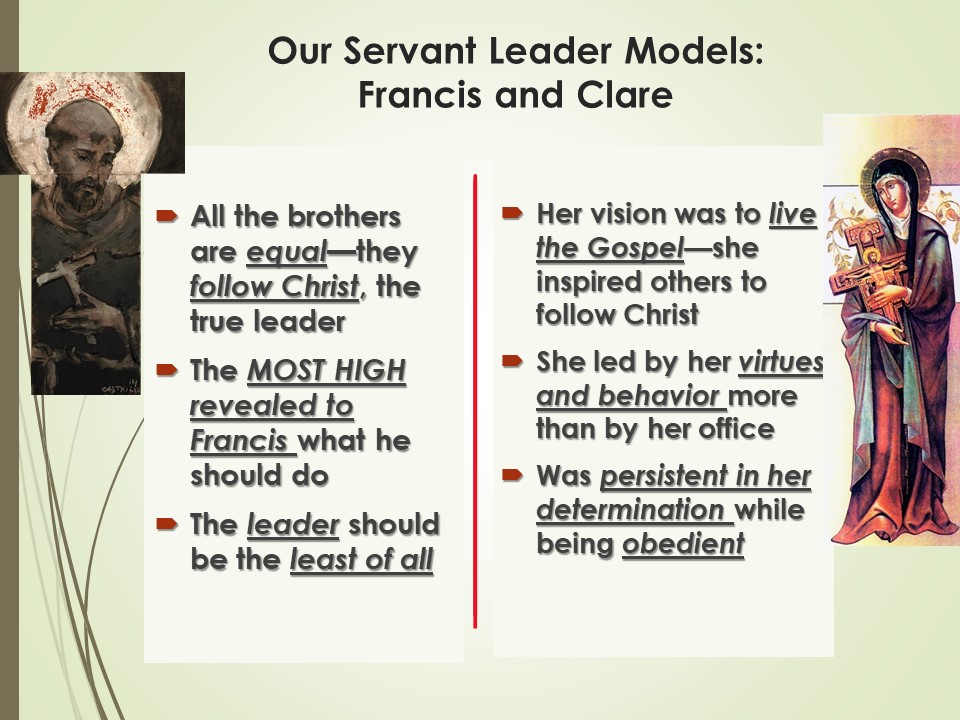
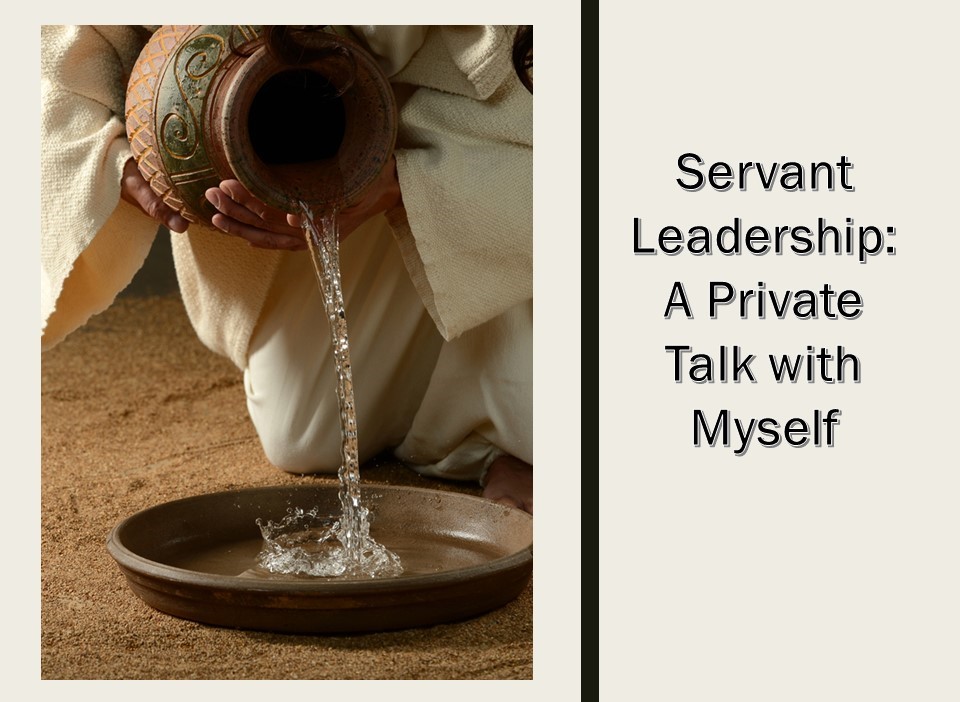
Needless to say, having a loving, active, joyful fraternity does not simply happen. It takes a lot of work!  Because we are a “gathering” not a meeting, we rely on the Holy Spirit guiding us. We are not a business, nor are we “run” like a business, but rather, we lead by consensus and by inspiration of the Holy Spirit. This is known as “servant leadership” in the Secular Franciscan Order. To be a servant leader in the order, is to first serve and animate (inspire) a fraternity. It is sacrificial in nature because it is a gift freely given to the fraternity with a generous spirit of service. The elected Council’s style of servant leadership – is NOT directing, but rather listening deeply and with compassion.

It is NOT “My way or the highway” but rather being open to new ideas/concepts.

IT is NOT power and control but rather valuing and encouraging the growth of others.

The “Ideal” Fraternity has:

  • the “anima” (or spirit) of the Franciscan Charism, which is JOY,
  • a cohesiveness of fraternal spirit and sharing,
  • a sincere love witnessed in personal interactions,
  • acceptance and warmth,
  • unity of purpose while accepting diversity in expression.

At our profession, we promised to “make the fraternity a genuine ecclesial assembly and a living Franciscan community” (OFS Ritual, p.22). Let us do what we have promised to do!

REFLECTION QUESTIONS:

  1. What inspired you in this article? Describe what inspired you and
  2. What are some “take aways” or ideas you want to remember?
  3. What idea or thought challenges you the most and why?
  4. What will you change in your Secular Franciscan life as a result of this article?

Our Fraternity Gathering: Our Life!

Open post

FORMATION FRIDAY- April 21, 2023

It is important that we get to know the many writings left to us by our founder. Franciscans are blessed to have many of St. Francis’s and St. Clare’s writings. By reading what they wrote, and praying as they prayed, we allow the Holy Spirit to strengthen our vocation and how we live the Franciscan Charism.

In 1224, after St. Francis had received the Sacred Stigmata on Mt. La Verna, he wrote the Praises of God. These are in his own handwriting. On the other side of that parchment, Francis wrote the Blessing for Bro. Leo who was with him on Mt. Laverna. (See graphic). You can read further background on this writing and read all the early documents at the link below.

https://franciscantradition.org/francis-of-assisi-early-documents/the-saint/writings-of-francis/the-praises-of-god-and-the-blessing/124-fa-ed-1-page-108

The Praises of God

1You are the holy Lord God Who does wonderful things. Ps 77:15 [Vulgate, Ps 76:15] a

2You are strong. You are great. Ps 86:10 [Vulgate, Ps 85:10] You are the most high.
You are the almighty king. You holy Father, Jn 17:11
King of heaven and earth. Mt 11:25

3You are three and one, the Lord God of gods; Ps 136:2 [Vulgate, Ps 135:2]
You are the good, all good, the highest good,
Lord God living and true. 1 Thes 1:9

4You are love, charity; You are wisdom, You are humility,
You are patience, You are beauty, You are meekness, Ps 71:5 [Vulgate, Ps 70:5]
You are security, You are rest,
You are gladness and joy, You are our hope, You are justice,
You are moderation, You are all our riches to sufficiency.

5You are beauty, You are meekness,
You are the protector, Ps 31:5 [Vulgate, Ps 30:5] You are our custodian and defender,
You are strength, Ps 43:2 [Vulgate, Ps 42:2] You are refreshment. 6You are our hope,
You are our faith, You are our charity,
You are all our sweetness, You are our eternal life:
Great and wonderful Lord, Almighty God, Merciful Savior
.

Please read the praises above. Read through once. Then prayerfully consider each word and sentence a second time.

  • What do the words and phrases that St. Francis wrote about God tell you about his relationship with Him?
  • Choose four words or phrases that touch you deeply. Spend some time thinking about why you chose those words.
  • How do these ideas about God reflect your personal relationship with Him?
  • How do these ideas inspire you to make changes in your own life in order to strengthen your relationship with God?
  • Personal challenge: In this season of rejoicing, choose a particular way you can strengthen your relationship with God. See if you can carry it out this week.

+++++++++++++++++

Formation Friday 22 de abril, 2022
Por favor compartir con su fraternidad local

Es importante que conozcamos los muchos escritos que nos dejó nuestro fundador. Los franciscanos tienen la bendición de tener muchos de los escritos de San Francisco y Santa Clara. Al leer lo que escribieron y orar como ellos oraron, permitimos que el Espíritu Santo fortalezca nuestra vocación y cómo vivimos el carisma franciscano.

En 1224, después de que San Francisco recibió los Sagrados Estigmas en el Monte La Verna, escribió las ALABANZAS DEL DIOS ALTÍSIMO. Estos son de su puño y letra. En el otro lado de ese pergamino, Francisco escribió la Bendición para el Hno. Leo que estaba con él en el monte Laverna. Puede leer más antecedentes sobre este escrito y leer todos los primeros documentos en el siguiente enlace: http://franciscanos.org/esfa/ald.html Aquí se encuentra la Bendición al Fray León: http://franciscanos.org/esfa/benl.html

Alabanzas del dios altísimo

Tú eres santo, Señor Dios único, que haces maravillas.

Tú eres fuerte, tú eres grande, tú eres altísimo, tú eres rey omnipotente, tú, Padre santo, rey del cielo y de la tierra.

Tú eres trino y uno, Señor Dios de dioses, tú eres el bien, todo el bien, el sumo bien, Señor Dios vivo y verdadero.

Tú eres amor, caridad; tú eres sabiduría, tú eres humildad, tú eres paciencia, tú eres belleza, tú eres mansedumbre, tú eres seguridad, tú eres quietud, tú eres gozo, tú eres nuestra esperanza y alegría, tú eres justicia, tú eres templanza, tú eres toda nuestra riqueza a satisfacción.

Tú eres belleza, tú eres mansedumbre; tú eres protector, tú eres custodio y defensor nuestro; tú eres fortaleza, tú eres refrigerio.

Tú eres esperanza nuestra, tú eres fe nuestra, tú eres caridad nuestra, tú eres toda dulzura nuestra, tú eres vida eterna nuestra: Grande y admirable Señor, Dios omnipotente, misericordioso Salvador.


Por favor, lea las alabanzas de arriba. Léalas una vez. Luego, en oración, considere cada palabra y oración por segunda vez.

• ¿Qué le dicen las palabras y frases que San Francisco escribió sobre Dios acerca de su relación con Él?

• Elija cuatro palabras o frases que te conmuevan profundamente. Dedique algo de tiempo a pensar por qué eligió esas palabras.

• ¿Cómo reflejan estas ideas acerca de Dios su relación personal con Él?

• ¿Cómo le inspiran estas ideas a hacer cambios en su propia vida para fortalecer su relación con Dios?

• Desafío personal: En esta temporada de regocijo, elija una manera particular en la que pueda fortalecer su relación con Dios. A ver si puede llevarlo a cabo esta semana.


Diane F. Menditto, OFS
Vice Minister, National Fraternity, Secular Franciscan Order USA
Listen – Discern – Go Forth National Theme 2022-2025
Scroll to top
Juan de Padilla