Are you filled with hope?

(This article originally appeared in the TAU-USA Winter 2025 Issue #114)

Jane DeRose-Bamman, OFS

Minister’s Message

It’s the beginning of 2025, and we are in the Jubilee Year of Hope. “Pilgrims of hope” is the theme. We are people of hope – never despairing. That is great news, and it is worth sharing.

Brian (co-minister) and I recently focused on ways to increase the number of people we serve with our business. The effort resulted in setting goals for reaching out daily to various clients, business partners, and individuals to see who we could assist with attaining the dream of home ownership. Next, we planted seeds by sharing our ideas with the various partners. Over the years, we have come to learn that the seeds we plant do not sprout immediately. We may not see results until months down the road, however we must sow seeds now to reap a harvest later.

Can we apply this approach to the Order as well? This is a great time to set goals for promoting vocations. Reach out to potential vocations or those who can spread the word.

Think about the last thing you shared with someone: maybe a joke, exciting news, or a fun fact – information you thought was interesting or useful. It was easy. Are you passionate about your Franciscan vocation? In this TAU-USA issue you’ll find practical ideas for spreading the word about our vocation. My challenge to you is to consider one thing you could do within 30 days of reading it.

Be prepared because the opportunity can arise without much warning. Think about how you learned about the Order and follow that process. Do what is most comfortable to you depending on your gifts. Once you decide on your method, translating it to vocation seed planting should be easy.

My favorite is responding when someone asks, “What’s that ‘T’ around your neck?” I ask whether they have heard about the Secular Franciscan Order. If time permits, I have my elevator speech ready (one minute or less) and my business card.

The Jubilee Year of Hope may be a great starter for conversations. Our efforts to plant seeds now with periodic watering allow the Master Gardener to reap the harvest in due time.

We are pilgrims of hope. Go forth filled with hope to attract new vocations.

https://www.secularfranciscansusa.org/2025/03/24/are-you-filled-with-hope/

Open post

Formation Friday – Focus on the Admonitions (#10) – March 21, 2025


Focus on the Admonitions (#10)

https://franciscantradition.org/francis-of-assisi-early-documents/the-saint/writings-of-francis/the-undated-writings/the-admonitions/148-fa-ed-1-page-132


[X. Castigating the Body]

1There are many people who, when they sin or are injured, frequently blame the enemy or their neighbor. Gn 3:12 Gn 3:13 2But it is not so, because each one has the enemy in his power, that is his body through which he sins.

3Blessed is the servant, Mt 24:46 then, who always holds captive the enemy delivered into his power and wisely safeguards himself from him; 4because, as long as he does this, no other enemy visible or invisible will be able to harm him.

From the Prologue to our Rule

1All those men and women who are not living in penance, 2who do not receive the Body and Blood of our Lord Jesus Christ, 3who practice vice and sin and walk after the evil concupiscence and the evil desires of their flesh, 4who do not observe what they have promised to the Lord, 5and who in their body serve the world and the cares of this life: 6They are held captive by the devil, whose children they are, and whose works they do (Jn 8:41) 7They are blind because they do not see the true light, our Lord Jesus Christ.”

11See you blind ones, deceived by your enemies: the flesh, the world and the devil, because it is sweet for the body to sin and it is bitter to serve God, 12for every vice and sin flow and proceed from the human heart (Mt 15:19, Mk 7:21) as the Lord says in the gospel. 13And you have nothing in this world or in that to come. 14And you think you will possess this world’s vanities for a long time, but you are deceived because a day and hour will come of which you give no thought, which you do not know, and of which you are unaware when the body becomes weak, death approaches, and it dies a bitter death.”

As you read Admonition X and the two paragraphs from the Prologue to our Rule (Concerning Those Who Do Not Do Penance), please consider the following questions. Record your thoughts in your journal or share them in a small group with other fraternity members.

+Blaming others has become the answer many in today’s society use when explaining why they have done something wrong. They say, “Yes, but…” Or “That’s how I was raised.” Or “No one told me/taught me.” Or “That’s just the way I am.”
–Explain the advice that St. Francis gives us on this topic in Admonition 10.
–How does he speak to us in the Prologue to our Rule to follow up on this advice?
–How often are we tempted to blame others for the wrongs we commit? Can you think of an example?
–Which Franciscan virtues can help us to avoid the temptation to blame others?
–What do I want to change about myself when it comes to blaming others?


+Conclude this meditation by praying the Litany of Humility: https://ascensionpress.com/pages/litany-of-humility?srsltid=AfmBOoq33XBUGsGwIET7ejM9j9GN6RrdnAALNDpYYvJabNPHcTW2jPP-

++++++++++++++++++

Formación 21 marzo, 2025

Enfoque en las admoniciones de San Francisco (Admonición X)
https://www.franciscanos.org/esfa/escritossf.html#adm

[Cap. X: Del castigo del cuerpo]

1Hay muchos que, cuando pecan o reciben una injuria, con frecuencia acusan al enemigo o al prójimo. 2Pero no es así, porque cada uno tiene en su poder al enemigo, es decir, al cuerpo, por medio del cual peca. 3Por eso, bienaventurado aquel siervo (Mt 24,46) que tiene siempre cautivo a tal enemigo entregado en su poder, y se guarda sabiamente de él; 4porque, mientras haga esto, ningún otro enemigo, visible o invisible, podrá dañarle.

http://franciscanos.org/esfa/adm-ae.html


Del Prólogo de nuestra regla


“Por el contrario, todos aquellos y aquellas que no viven en penitencia, ni reciben el cuerpo y la sangre de nuestro Señor Jesucristo, y viven en el vicio y el pecado, y van tras la mala concupiscencia (cf. Col 3,5) y los malos deseos de su carne (cf. Gál 5,16), y no cumplen lo que prometieron al Señor, y sirven corporalmente al mundo con los deseos carnales (1Pe 2,11) y con los afanes de este mundo (cf. Mt 13,22; Lc 21,34) y las preocupaciones de esta vida, engañados por el diablo, cuyos hijos son y cuyas obras hacen (cf. Jn 8,41), son unos ciegos (cf. Mt 15,14), pues no ven al que es la luz verdadera (cf. Jn 1,9), nuestro Señor Jesucristo.”


“Mirad, ciegos, engañados por vuestros enemigos, la carne, el mundo y el diablo, que al cuerpo le es dulce pecar y amargo servir a Dios; pues todos los vicios y pecados salen y proceden del corazón del hombre, como dice el Señor en el Evangelio (cf. Mc 7,21.23; Mt 15,18-19). Y nada tenéis en este mundo ni en el futuro. Pensáis poseer por mucho tiempo las vanidades de este mundo, pero estáis engañados, porque vendrán el día y la hora que no pensáis, que desconocéis e ignoráis (cf. Mt 24,44; 25,13): enferma el cuerpo, se acerca la muerte, y se muere así con muerte amarga (1Sam 15,32).”


Mientras lee la Admonición X y los dos párrafos del Prólogo de nuestra Regla (De los que no hacen penitencia), considere las siguientes preguntas. Escriba sus pensamientos en su diario o compártalos en un grupo pequeño con otros miembros de la fraternidad.


+Culpar a los demás se ha convertido en la respuesta que muchos en la sociedad actual utilizan para explicar por qué han hecho algo mal. Dicen: “Sí, pero…” o “Así me criaron.” O “Nadie me dijo/me enseñó.” O “Así soy yo.”

–Explique el consejo que nos da San Francisco sobre este tema en la Admonición 10.

–¿Cómo nos habla en el Prólogo de nuestra Regla para dar seguimiento a este consejo?

–¿Con qué frecuencia nos sentimos tentados a culpar a otros por los errores que cometemos? ¿Puede pensar en un ejemplo?

–¿Qué virtudes franciscanas pueden ayudarnos a evitar la tentación de culpar a los demás?

–¿Qué quiero cambiar de mí mismo cuando se trata de culpar a los demás?


+Concluya esta meditación rezando La Letanía de la humildad: https://www.ewtn.com/es/catolicismo/devociones/letanias-de-humildad-15167

 
Diane F. Menditto, OFS
Vice Minister, National Fraternity, Secular Franciscan Order USA
Listen – Discern – Go Forth National Theme 2022-2025

21st Q Meet the Keynote Speakers

(This article originally appeared in the TAU-USA Fall 2024 Issue #113)

Brother Bill Short, OFM

Bro. Bill Short, OFM

Director Collegium S. Bonaventurae-Frati Editori di Quaracchi Collegio S. Isidoro in Rome, Italy. Professor of Spirituality, Franciscan School of Theology.
Brother Bill was born and raised in Seattle, Washington. After graduating from the University of San Francisco, he entered the novitiate of the Franciscan Friars of St. Barbara Province, making his solemn profession of vows in 1978. After graduate studies in Berkeley and Rome, he was appointed to a teaching position at the Franciscan School of Theology, where he has subsequently served as Academic Dean and President.
In addition to his academic work, he is also an amateur winemaker, a native-plant gardener, and an interpreter – translator for many international Franciscan meetings.

Darleen Pryds, PhD

Darleen Pryds, PhD
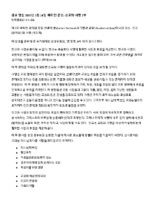
Associate Professor of Spirituality and History and Academic Director, MTS-Franciscan Theology online degree, at the Franciscan School of Theology. Acquisitions Editor, Franciscan Media.
Darleen Pryds is a laywoman who has been exploring the Franciscan spiritual tradition since she was a freshman in college. Since then, she has found her academic research on the lay Franciscan tradition buoys her faith. Her focus on lay Franciscans has analyzed the tradition of lay preaching as a form of “Somatic Theology,” or theology expressed through lived experience. You can find her research in her many books and articles. Currently, her work explores Franciscan Laity as Co-Creators of the Franciscan Tradition and Caregiving at the End of Life.

Father Wayne Hellmann, OFM Conv.

Darleen Pryds, PhD

Friar Wayne Hellmann is professor emeritus at Saint Louis University, where he had served for forty-five years. He had earned his Doctorate in Theology from Ludwig-Maximilians- Universität in Munich, Germany in 1974. He directed doctoral dissertations on themes within the Franciscan tradition and received many awards and other recognition during his distinguished academic career at Saint Louis University. He also served in leadership positions within his Conventual Province of Our Lady of Consolation, including that of Minister Provincial.
He served as co-editor of the three-volume series, Francis of Assisi: Early Documents (New City Press, 1999-2001) and also as co-editor for the first three volumes of Studies in Early Franciscan Sources (Franciscan Institute Press, St. Bonaventure University, 2011). These latter volumes offer scholarly essays on each of the writings of Francis and of Clare. In addition, he has written numerous articles and served as an editor for the Franciscan entries found in the new edition of the New Catholic Encyclopedia. For many summers over the last years, he taught early Franciscan sources at the Franciscan Institute at St. Bonaventure, New York. More recently he served as adjunct visiting professor at the Franciscan School of Theology in San Diego, California. Additionally, he has often lectured or conducted retreats for Franciscans in Europe, Africa, Asia and Australia.

https://www.secularfranciscansusa.org/2025/03/17/21st-q-meet-the-keynote-speakers/

Open post

FORMATION FRIDAY – Communion & Mission in Vatican II Documents – March 14, 2025


Please share with your local fraternity: Part 2

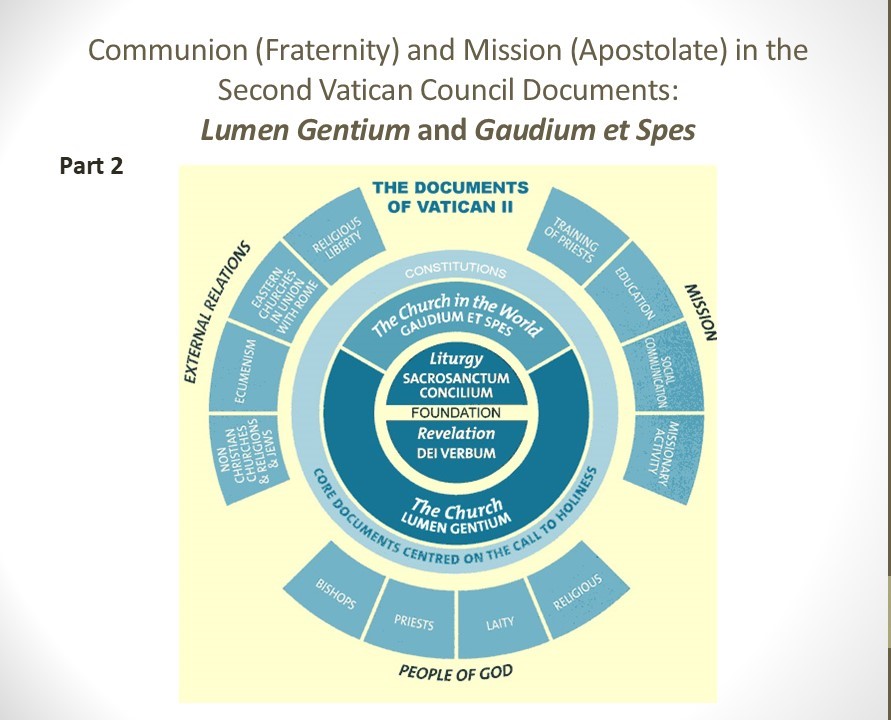
Communion (Fraternity) and Mission (Apostolate) in the Second Vatican Council Documents: Lumen Gentium and Gaudium et Spes
Thank you to Anne Mulqueen, OFS, National Formation Commission

Communion and mission are inseparable. Communion provides the love and support necessary for the mission of evangelization. An example of the complementary nature of communion and mission can be found in the Gospel of Matthew. The disciples, as a united body, were commissioned to… go and make disciples of all nations.
(Matthew 28:19)

A careful reading of these documents will show that communion and mission go hand in hand.

Mission is a vital aspect of the Church’s identity. Lumen Gentium emphasizes that the Church exists to evangelize and witness to the Gospel, while Gaudium et Spes asserts that the Church should be a transformative presence in the world. These documents encourage us to participate in apostolic activities and spread the Gospel in all areas of life, including family, work, and society. They emphasize the Church’s deep concern for all people, their joys, hopes, and anxieties, especially the poor and afflicted. Mission is rooted in the conviction that we are all created in God’s image and share a common destiny. Therefore, the Church, the People of God, is called to be a sign of unity and a promoter of human dignity and justice.

Communion and mission are two sides of the same coin. The gospel’s transformative teachings demand that we be actively involved in our secular circumstances and obey Christ’s call to serve. However, if we become so deeply involved in mission that we neglect communion (fraternity), we may experience burnout and discouragement. Communion provides the love and support necessary to fulfill the Church’s mission in the world.

If you decide to read and study these documents, I suggest you pay particular attention to these elements. The Church as a sacrament, a sign of communion with God and others

  • The People of God
  • The Laity
  • The Universal Call to Holiness
  • Mary and a Pilgrim Church
  • Zeal for evangelization

  • Dialogue between the Church and the World
  • Human Dignity
  • The Role of the Family
  • Social Justice
  • The Role of the Church in the Modern World


As members of the Church and the Secular Franciscan Order, we continue to live and work in the modern world. The insights of these Vatican II documents are relevant and guide our efforts to build a more just and compassionate society. We strive to build a fraternal and evangelical world and bring about the Kingdom of God
(Paraphrase of Article 14, OFS Rule).

If you are interested in reading these documents, you can do so on the Vatican website:Lumen Gentium: https://www.vatican.va/archive/hist_councils/ii_vatican_council/documents/vat-ii_const_19641121_lumen-gentium_en.html
Gaudium et Spes:
https://www.vatican.va/archive/hist_councils/ii_vatican_council/documents/vat-ii_const_19651207_gaudium-et-spes_en.html

For discussion: In light of these two documents and our Rule, how can you and your fraternity promote a more fraternal and evangelical world?

Formación 14 de marzo 2025 (en español abajo) Por favor, compartir con su fraternidad local

Comunión (Fraternidad) y Misión (Apostolado) en los Documentos del Concilio Vaticano II: Lumen Gentium y Gaudium et Spes Gracias a Anne Mulqueen, OFS, Comisión Nacional de Formación

Comunión y misión son inseparables. La comunión proporciona el amor y el apoyo necesarios para la misión de evangelización. Un ejemplo de la naturaleza complementaria de la comunión y la misión puede encontrarse en el Evangelio de Mateo. Los discípulos, como cuerpo unido, recibieron el encargo de… ir y hacer discípulos a todas las naciones. (Mateo 28:19)

Una lectura atenta de estos documentos mostrará que comunión y misión van de la mano.

La misión es un aspecto vital de la identidad de la Iglesia. Lumen Gentium subraya que la Iglesia existe para evangelizar y dar testimonio del Evangelio, mientras que Gaudium et Spes afirma que la Iglesia debe ser una presencia transformadora en el mundo. Estos documentos nos animan a participar en actividades apostólicas y a difundir el Evangelio en todos los ámbitos de la vida, incluidos la familia, el trabajo y la sociedad. Subrayan la profunda preocupación de la Iglesia por todas las personas, sus alegrías, esperanzas y angustias, especialmente por los pobres y afligidos. La misión se basa en la convicción de que todos hemos sido creados a imagen de Dios y compartimos un destino común. Por eso, la Iglesia, Pueblo de Dios, está llamada a ser signo de unidad y promotora de la dignidad humana y de la justicia.

Comunión y misión son dos caras de la misma moneda. Las enseñanzas transformadoras del Evangelio exigen que nos impliquemos activamente en nuestras circunstancias seculares y obedezcamos el llamado de Cristo a servir. Sin embargo, si nos implicamos tanto en la misión que descuidamos la comunión (fraternidad), podemos sufrir agotamiento y desánimo. La comunión proporciona el amor y el apoyo necesarios para cumplir la misión de la Iglesia en el mundo.

Si decide leer y estudiar estos documentos, le sugiero que preste especial atención a estos elementos. La Iglesia como sacramento, signo de comunión con Dios y con los demás
+El Pueblo de Dios
+Los laicos
+La llamada universal a la santidad
+María y una Iglesia peregrina
+El celo evangelizador

+El Diálogo entre la Iglesia y el mundo
+La Dignidad humana
+El papel de la familia
+La justicia social
+El papel de la Iglesia en el mundo moderno

Como miembros de la Iglesia y de la Orden Franciscana Seglar, seguimos viviendo y trabajando en el mundo moderno. Las ideas de estos documentos del Vaticano II son relevantes y guían nuestros esfuerzos para construir una sociedad más justa y compasiva. Nos esforzamos por construir un mundo fraterno y evangélico y por hacer realidad el Reino de Dios (paráfrasis del artículo 14 de la Regla de la OFS).

Si está interesado en leer estos documentos, puede hacerlo en el sitio web del Vaticano:
Lumen Getium: https://www.vatican.va/archive/hist_councils/ii_vatican_council/documents/vat-ii_const_19641121_lumen-gentium_sp.html

Gaudium et Spes: https://www.vatican.va/archive/hist_councils/ii_vatican_council/documents/vat-ii_const_19651207_gaudium-et-spes_sp.html


Para la discusión: A la luz de estos dos documentos y de nuestra Regla, ¿cómo pueden usted y su fraternidad promover un mundo más fraterno y evangélico?

Diane F. Menditto, OFS
Vice Minister, National Fraternity, Secular Franciscan Order USA
Listen – Discern – Go Forth National Theme 2022-2025

Regional Roundup

 (This article originally appeared in the TAU-USA Fall 2024 Issue #113)

In this issue, five of the 30 Regions are highlighted.

La Verna Region

La Verna Region consists of most of Wisconsin and the upper portion of Michigan and includes 18 established fraternities. At the time of regionalization, the members voted and chose the name because of the connection to St. Francis, especially to his receiving the stigmata.
The region includes fraternities in areas ranging from urban to rural and is located by the two largest lakes of the five Great Lakes: Lake Superior and Lake Michigan.
Our Lady of the Angels Region
Southern Westchester, Staten Island, and the borough of Manhattan, which are all in New York, as well as Central and Northern New Jersey, are all part of Our Lady of the Angels Region. Although it is one of the smallest regions by area, it is one of the largest in membership with 670 candidates and professed members.
When it was time to determine the name for the region, fraternities were invited to suggest names, and through a selection process, Our Lady of the Angels was chosen.

Tau Cross Region

Tau Cross on a burlap material backgroundThis is another region that is geographically small but includes 21 established fraternities. It covers the Bronx, Brooklyn, Queens, Nassau and Suffolk Counties on Long Island in New York. As one of the last regions to be established, its name was assigned to it.
Tau Cross Region includes the Archdioceses of New York, the Diocese of Brooklyn, and the Diocese of Rockville Centre. It is currently active in implementing the processes of Fraternal Accompaniment and cell creation to sustain the shrinking fraternities.

Our Lady of Guadalupe – Empress of the Americas Region

Our Lady of GuadalupeThe region covers all of New Mexico and part of Texas and includes 14 fraternities. When it was established, the council met in El Paso and chose its name. Since it shares borders with three states and Mexico, it is a diverse and bilingual region.

Santa Maria de las Montanas Region (Saint Mary of the Mountains Region)

Unlike the two previously mentioned New York regions, the Santa Maria de las Montanas Region covers five states: Colorado, Utah, Wyoming, South Dakota, and part of Nebraska! It includes 12 established fraternities and two emerging groups.
In 1993, World Youth Day was celebrated in Denver, Colorado, and is considered to have been a spiritual revolution. Since St. Pope John Paul II’s visit, the Augustine Institute, FOCUS Ministry, and two seminaries were all established in the state. The region was established on October 20, 1994.

https://www.secularfranciscansusa.org/2025/03/10/regional-roundup-2/

Scroll to top
Juan de Padilla