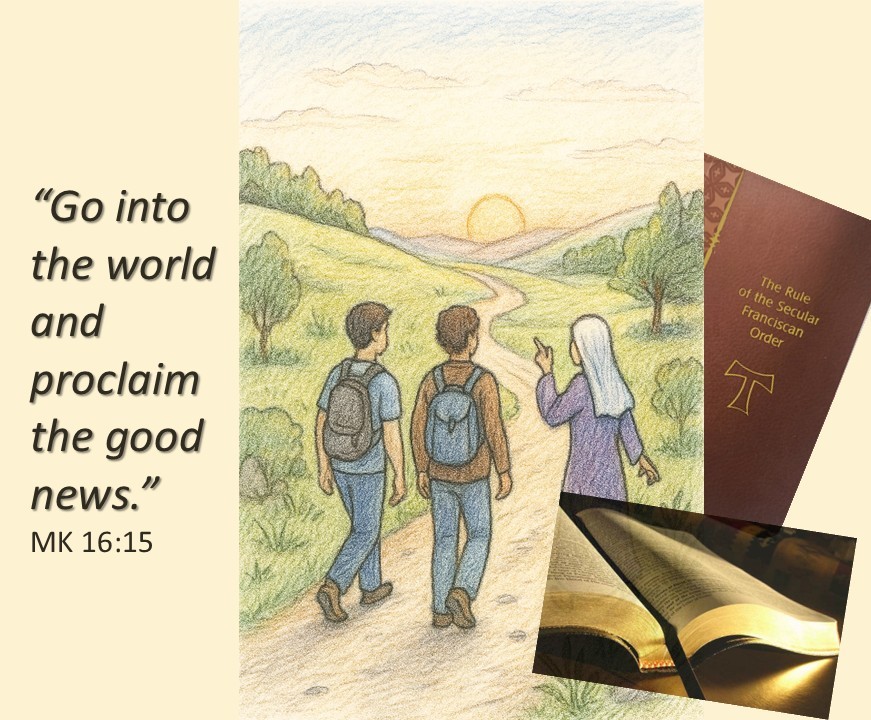
(en español abajo) Korean translation attached in a separate PDFReflection on the National Theme: “Go into the world and proclaim the Good News.” (Mk 16:15)At the OFS USA National Chapter held recently in Maryland, it was decided that the national theme for 2025-2028 will be “Go into the world and proclaim the Good News.” The National Priority for the same time period will be “Living the Gospel.”This week we give a broad overview of how the theme and priority line up with our Rule. Over the next three years, we will spotlight various aspects of both.As Secular Franciscans, we are invited to live the Gospel in our daily lives, embodying the teachings of Christ and St. Francis of Assisi. This theme encourages us to reflect on how we can actively engage in evangelization and witness to the Gospel through our actions and words.Building Relationships: The OFS Rule emphasizes the importance of building relationships based on love and respect. Article 13 of the Rule states, “As the Father sees in every person the features of his Son, the firstborn of many brothers and sisters, so the Secular Franciscans with a gentle and courteous spirit accept all people as a gift of the Lord and an image of Christ.” By fostering genuine connections with others, we create opportunities to share the Good News and invite others to experience the love of Christ.Engaging and Inspiring Others to Seek God: Article 6 of the Rule calls us to “go forth as witnesses and instruments of the Church’s mission among people, proclaiming Christ by their life and words.” Our lives should be a testament to our faith, inspiring others to seek God and explore their own spiritual journeys. Through our actions, we can demonstrate the transformative power of the Gospel and encourage others to embrace a life of faith.Forming Ourselves: The Rule also emphasizes the importance of ongoing formation and personal growth. Article 7 states, “United by their vocation as ‘brothers and sisters of penance,’ and motivated by the dynamic power of the Gospel, let them conform their thoughts and deeds to those of Christ by means of that radical interior change which the Gospel itself calls ‘conversion.'” By continually forming ourselves, with the help of the Spirit, in the teachings of Christ and the example of St. Francis, we become better equipped to share the Good News with authenticity and conviction.Attracting Others to Our Way of Life: Our way of life as Secular Franciscans should be attractive to others, drawing them to the beauty of the Gospel. Article 16 of the Rule encourages us to “esteem work both as a gift and as a sharing in the creation, redemption, and service of the human community.” By integrating our faith into our daily activities and demonstrating the joy and fulfillment that comes from living the Gospel, we can attract others to our way of life and inspire them to follow Christ.Rebuilding the Church: St. Francis was called to “rebuild my Church,” and this call extends to us as well. Article 14 of the Rule reminds us that “Secular Franciscans should devote themselves especially to careful reading of the gospel, going from gospel to life and life to the gospel.” By living out the Gospel in our communities and participating in the life of the Church, we contribute to its renewal and growth.Involved in the Activities and Challenges of the World: As Secular Franciscans, we are called to be actively involved in the world, addressing its challenges with faith and hope. Article 15 of the Rule states, “Let them individually and collectively be in the forefront in promoting justice by the testimony of their human lives and their courageous initiatives.” By integrating faith and action in our daily lives, nurturing hope, and sowing seeds of transformation, we can make a positive impact on the world and bring the Good News to those in need.The theme “Go into the world and proclaim the Good News” invites us to live out our vocation as Secular Franciscans with renewed zeal and commitment. By building relationships, engaging and inspiring others, forming ourselves with the help of the Holy Spirit, attracting others to our way of life, rebuilding the Church, and being involved in the activities and challenges of the world, we can effectively proclaim the Good News and fulfill our mission as followers of Christ and St. Francis.Inspired by the National Priorities and Theme task force. Other research was assisted by Microsoft Copilot.For discussion or to answer in your journal+Re-read the items listed above supporting our national theme. How can you and your fraternity carry outthese aspects of our theme and Rule?+Which other articles of our Rule encourage us to “go into the world and proclaim the Good News?”+Challenge: After discussion with your fraternity, suggest ideas for living the gospel and evangelizing others.Formación 10 de octubre 2025Reflexión sobre el tema nacional: «Vaya por todo el mundo y proclame la Buena Nueva» (Mc 16, 15).En el Capítulo Nacional de la OFS de EE. UU., celebrado recientemente en Maryland, se decidió que el tema nacional para 2025-2028 será «Id por todo el mundo y proclamad la Buena Nueva». La prioridad nacional para el mismo período será «Vivir el Evangelio». Esta semana ofrecemos una visión general de cómo el tema y la prioridad se alinean con nuestra Regla. Durante los próximos tres años, destacaremos diversos aspectos de ambos.Como franciscanos seglares, estamos invitados a vivir el Evangelio en nuestra vida cotidiana, encarnando las enseñanzas de Cristo y de San Francisco de Asís. Este tema nos anima a reflexionar sobre cómo podemos participar activamente en la evangelización y dar testimonio del Evangelio a través de nuestras acciones y palabras.Construir relaciones: La Regla de la OFS enfatiza la importancia de construir relaciones basadas en el amor y el respeto. El artículo 13 de la Regla dice: «Como el Padre ve en cada persona los rasgos de su Hijo, primogénito de muchos hermanos y hermanas, así los franciscanos seglares, con espíritu amable y cortés, aceptan a todas las personas como un don del Señor y una imagen de Cristo». Al fomentar conexiones genuinas con los demás, creamos oportunidades para compartir la Buena Nueva e invitamos a otros a experimentar el amor de Cristo.Involucrar e inspirar a otros a buscar a Dios: El artículo 6 de la Regla nos llama a «salir como testigos e instrumentos de la misión de la Iglesia entre los hombres, anunciando a Cristo con la vida y con las palabras». Nuestras vidas deben ser un testimonio de nuestra fe, inspirando a otros a buscar a Dios y a explorar sus propios caminos espirituales. A través de nuestras acciones, podemos demostrar el poder transformador del Evangelio y animar a otros a abrazar una vida de fe.Formarnos a nosotros mismos: La Regla también enfatiza la importancia de la formación continua y el crecimiento personal. El artículo 7 establece: «Unidos por su vocación de «hermanos y hermanas de penitencia» y motivados por el poder dinámico del Evangelio, que conformen sus pensamientos y acciones a los de Cristo mediante ese cambio interior radical que el Evangelio mismo llama «conversión»». Al formarnos continuamente, con la ayuda del Espíritu, en las enseñanzas de Cristo y el ejemplo de San Francisco, nos equipamos mejor para compartir la Buena Nueva con autenticidad y convicción.Atraer a otros a nuestro estilo de vida: Nuestro estilo de vida como franciscanos seglares debe ser atractivo para los demás, atrayéndolos a la belleza del Evangelio. El artículo 19 de la Regla nos anima a «estimar el trabajo como un don y como participación en la creación, la redención y el servicio de la comunidad humana». Al integrar nuestra fe en nuestras actividades diarias y demostrar la alegría y la plenitud que proviene de vivir el Evangelio, podemos atraer a otros a nuestro estilo de vida e inspirarlos a seguir a Cristo.Reconstruir la Iglesia: San Francisco fue llamado a «reconstruir mi Iglesia», y esta llamada se extiende también a nosotros. El artículo 4 de la Regla nos recuerda que «los franciscanos seglares deben dedicarse especialmente a la lectura atenta del Evangelio, pasando del Evangelio a la vida y de la vida al Evangelio». Al vivir el Evangelio en nuestras comunidades y participar en la vida de la Iglesia, contribuimos a su renovación y crecimiento.Implicados en las actividades y los retos del mundo: Como franciscanos seglares, estamos llamados a implicarnos activamente en el mundo, abordando sus retos con fe y esperanza. El artículo 15 de la Regla establece: «Que, individual y colectivamente, estén en primera línea en la promoción de la justicia mediante el testimonio de sus vidas humanas y sus valientes iniciativas». Al integrar la fe y la acción en nuestra vida cotidiana, alimentando la esperanza y sembrando las semillas de la transformación, podemos tener un impacto positivo en el mundo y llevar la Buena Nueva a los necesitados.El tema «Id por el mundo y proclamad la Buena Nueva» nos invita a vivir nuestra vocación como franciscanos seglares con renovado celo y compromiso. Al construir relaciones, involucrar e inspirar a otros, formarnos con la ayuda del Espíritu Santo, atraer a otros a nuestro estilo de vida, reconstruir la Iglesia y participar en las actividades y desafíos del mundo, podemos proclamar eficazmente la Buena Nueva y cumplir nuestra misión como seguidores de Cristo y San Francisco.Inspirado por el grupo de trabajo sobre Prioridades y Temas Nacionales. Otras investigaciones contaron con la ayuda de Microsoft Copilot.Para debatir o responder en tu diario+Vuelva a leer los puntos mencionados anteriormente que respaldan nuestro tema nacional. ¿Cómo pueden usted y su fraternidad llevar a cabo estos aspectos de nuestro tema y nuestra Regla?+¿Qué otros artículos de nuestra Regla nos animan a «salir al mundo y proclamar la Buena Nueva»?+Reto: Después de debatirlo con su fraternidad, sugiera ideas para vivir el Evangelio y evangelizar a los demás.Diane F. Menditto, OFSVice Minister, National Fraternity, Secular Franciscan Order USAListen – Discern – Go Forth National Theme 2022-2025
Relationships and the Church Universal
(This article originally appeared in the TAU-USA Summer 2025 Issue #116)
by Bret Thoman, OFS
“See what love the Father has bestowed on us
that we may be called the children of God.”
(1 John 3:1)
What does it mean to be a child of God? It means relating to God, to ourselves, and to others in a deeply sacred manner. It is a mature identity we assume when we become utterly convinced that we are sons or daughters of God the Father through adoption in Jesus Christ. We reach this new identity when we accept that we were created by God the Father, he loves us passionately, knows us intimately, and will provide for us in every circumstance.
This way of relating to others is especially dear to us as Secular Franciscans, in the example of our Seraphic Father. St. Francis, as we know, related to all people and all created things in a way that was fraternal. Believing in faith that all people (and all creation) were created by a loving Father, he could not help but see other people and created things as his brother or sister, that is, fraternally.
When we relate to God and others in this way, it changes everything. Because we have accepted that only God is omnipotent, we admit our limits. In the words of St. Francis, we recognize that “what we are before God, that we are, nothing more” – and I would add, “and nothing less.”
Consequently, we become gentler with ourselves. Moreover, we see others differently. We respond to them with more grace. We do not judge. We recognize that they, too, are fragile like us. It is easier to forgive, as we acknowledge that we are all wounded at some level.
When we recognize our sonship in God, we become aware of our place – the place he has provided for us. We are part of something much greater than ourselves.
This is certainly true regarding the Church universal. Since I was led to convert to Catholicism some thirty years ago, I have been deeply grateful for this gift.
So, when the recent papal conclave was underway, I deeply desired to be present. By chance (providentially?), the day I went to Rome was May 8th, the day the first US born pope was chosen.
We arrived a little after noon just after having missed the first wisp of black smoke rise from the chimney above the Sistine Chapel. While we waited for the next ballot, we entered St. Peter’s and walked down the right aisle, pausing at the tombs of Sts. John Paul II and John XXIII. My eyes welled with emotion as I considered the great pontiffs we have been blessed with in our lifetimes.
I continued past the magnificent Bernini canopy over the confessio and tomb of St. Peter, recalling St. Peter’s “confession” that Jesus is the Messiah. Then we continued along the left aisle, among more tombs of earlier popes and pontiffs. As I walked out of the Basilica, I felt so grateful to be part of our Roman Church, with so many diverse popes.
Finally, in the late afternoon, just as we were considering leaving St. Peter’s (it was getting late, and we had a 3-hour drive home) white smoke came out of the chimney. Just over an hour later, a pope born in the U.S. stepped out onto the balcony.
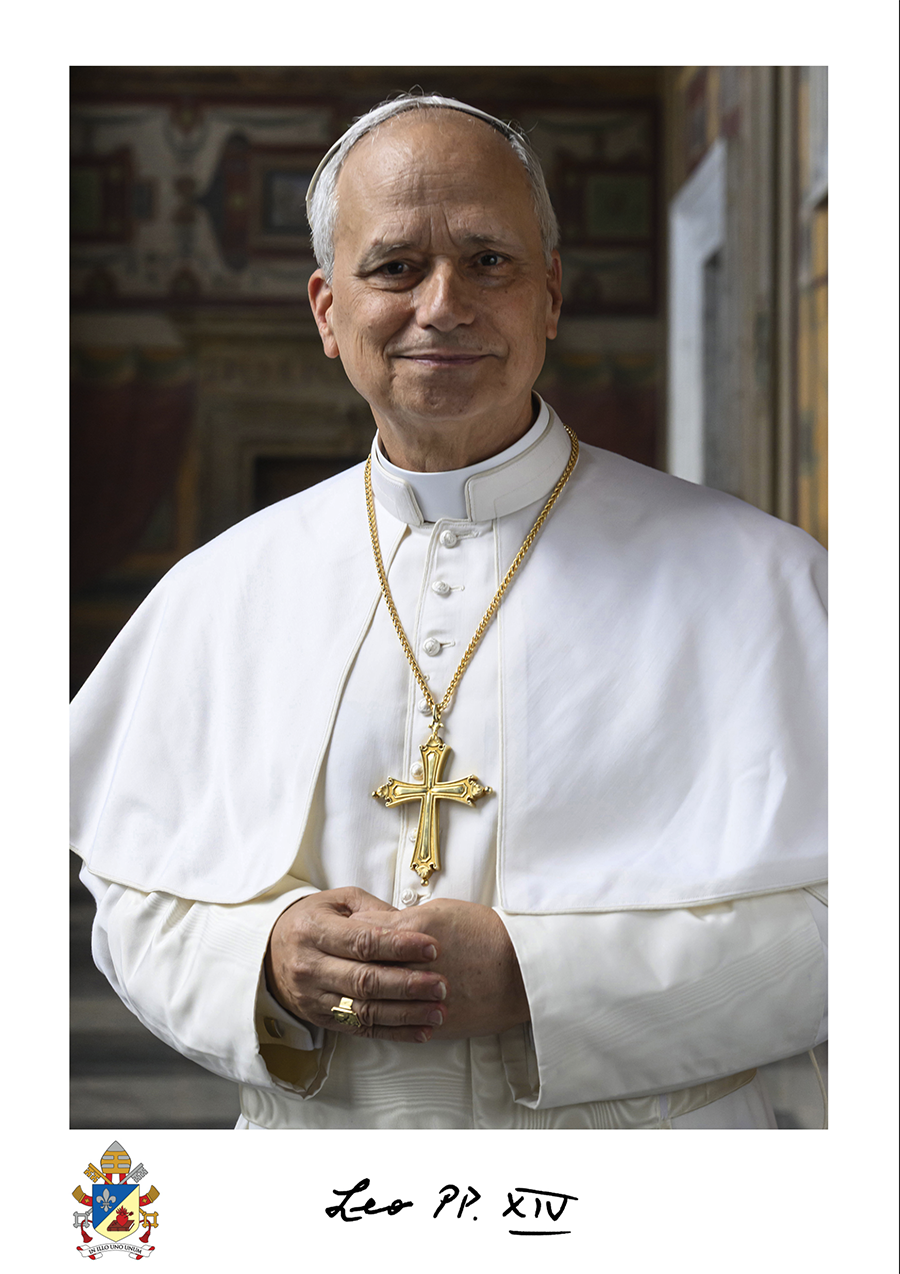
Pope Leo XIV – Signed Photo
There are some days we will never forget. That was one of them. I couldn’t have been more proud and grateful for the gift of our Church.
https://www.secularfranciscansusa.org/2025/10/relationships-and-the-church-universal/
Canticle of the Creatures Event Sunday, Oct. 5
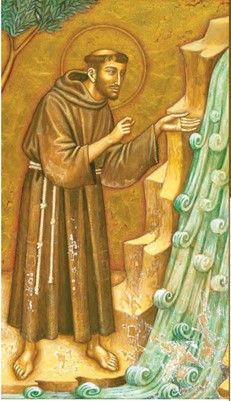 Registration remains open for the NAFRA Zoom event celebrating the 800th anniversary of St. Francis’s creation of the Canticle of the Creatures.
The celebration will begin Sunday, Oct. 5, at 3PM Eastern/2PM Central/1PM Mountain/Noon Pacific and last 60-75 minutes.
Plans include a talk on the writing of the Canticle by Justin Carisio, OFS, and a panel discussion on living the Canticle. Justin is a professional writer with a particular interest in the Early Documents, especially the writings of Francis.
Panelists include current National Vice Minister Diane Menditto, current International Councilor Mary Frances Charsky, and previous Regional Vice Minister and JPIC councilor for Mother Cabrini Regional Fraternity Mike Huck.
Registration will remain open until the event begins. Sign up for the online event at:
https://us02web.zoom.us/webinar/register/WN_llUdGnlSSw-8l8Q6fT1iyA
https://www.secularfranciscansusa.org/2025/10/canticle-of-the-creatures-event-sunday-oct-5/
We Are Family! OFS Rule Article 1
Jane DeRose-Bamman, OFS
National Minister
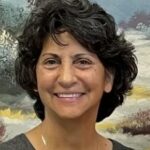
Jane DeRose-Bamman
National Minister
How large is your family? The size of my family has varied over the years. Biologically speaking, I was raised in a large family (seven children). Lots of cousins on both sides. In contrast, as an adult, my immediate family has only two.
My experience of Franciscan fraternity families has varied also. I professed while a member of a large fraternity (probably 80-100 people). I am now a member of a small fraternity with three professed and seven in formation.
The size of the family or fraternity does not matter. What matters is the connection, the relationships.
Article 1 of the OFS Rule states we are a part of a family. This family has an important role in the life and mission of the Church. 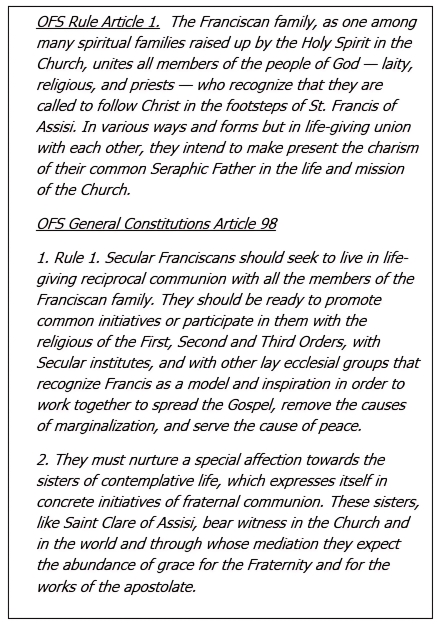
Each member has unique gifts and skills. We aren’t clones of each other. St. Francis stressed to his brothers that they were not to copy him, but rather seek what was theirs to do in following the teachings of Jesus Christ.
Article 98 of the OFS General Constitutions expounds on Article 1 of the OFS Rule.
We are called to live in life-giving reciprocal communion with all members of the Franciscan Family. Our family is LARGE – First, Second and Third Orders, Secular Institutes, other lay ecclesial groups who follow Christ in the footsteps of St. Francis. The Franciscan Family is called to work together to spread the Gospel, remove the causes of marginalization, and serve the cause of peace.
Let’s not get overwhelmed, rather let’s embrace the call to connect with our family and further these initiatives as the Holy Spirit is calling us to do. I look forward to building relationships and to hearing how others are doing the same.
Speaking of relationships, since we are family, I look forward to an invitation to come over for dinner soon.
https://www.secularfranciscansusa.org/2025/10/we-are-family/
¡Somos una familia! Artículo 1 de la Regla de la OFS
Jane DeRose-Bamman, OFS
Ministra Nacional
Jane DeRose-Bamman
Ministra Nacional
¿Cuántos miembros hay en su familia? El tamaño de mi familia ha variado a lo largo de los años. Desde el punto de vista biológico, crecí en una familia numerosa (siete hijos). Tengo muchos primos por ambas partes. Por el contrario, como adulto, mi familia inmediata solo tiene dos miembros.
Mi experiencia con las familias de la fraternidad franciscana también ha variado. Me profesé mientras era miembro de una fraternidad grande (probablemente entre 80 y 100 personas). Ahora soy miembro de una pequeña fraternidad con tres profesos y siete en formación.El tamaño de la familia o la fraternidad no importa. Lo que importa es la conexión, las relaciones.
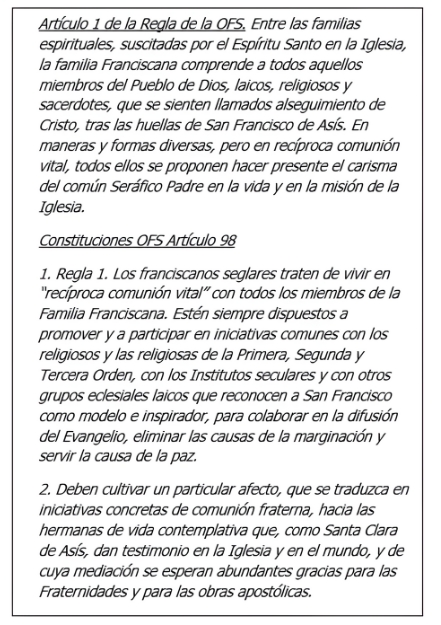 El artículo 1 de la Regla de la OFS establece que formamos parte de una familia. Esta familia tiene un papel importante en la vida y la misión de la Iglesia.
Cada miembro tiene dones y habilidades únicas. No somos clones unos de otros. San Francisco insistió a sus hermanos en que no debían imitarlo, sino buscar lo que les correspondía hacer siguiendo las enseñanzas de Jesucristo.
El artículo 98 de las Constituciones Generales de la OFS expone el artículo 1 de la Regla de la OFS.
Estamos llamados a vivir en comunión recíproca y vivificante con todos los miembros de la Familia Franciscana. Nuestra familia es GRANDE: Primera, Segunda y Tercera Orden, Institutos Seculares, otros grupos eclesiales laicos que siguen a Cristo tras las huellas de San Francisco. La Familia Franciscana está llamada a colaborar para difundir el Evangelio, eliminar las causas de la marginación y servir a la causa de la paz.
No nos sintamos abrumados, sino que aceptemos el llamado a conectarnos con nuestra familia y promover estas iniciativas, tal como nos lo pide el Espíritu Santo. Espero con interés establecer relaciones. y escuchar cómo otros están haciendo lo mismo.
Hablando de relaciones, ya que somos familia, espero recibir pronto una invitación para cenar.
https://www.secularfranciscansusa.org/2025/10/somos-una-familia/