Open post

Formation Friday December 25, 2020 (En español abajo)

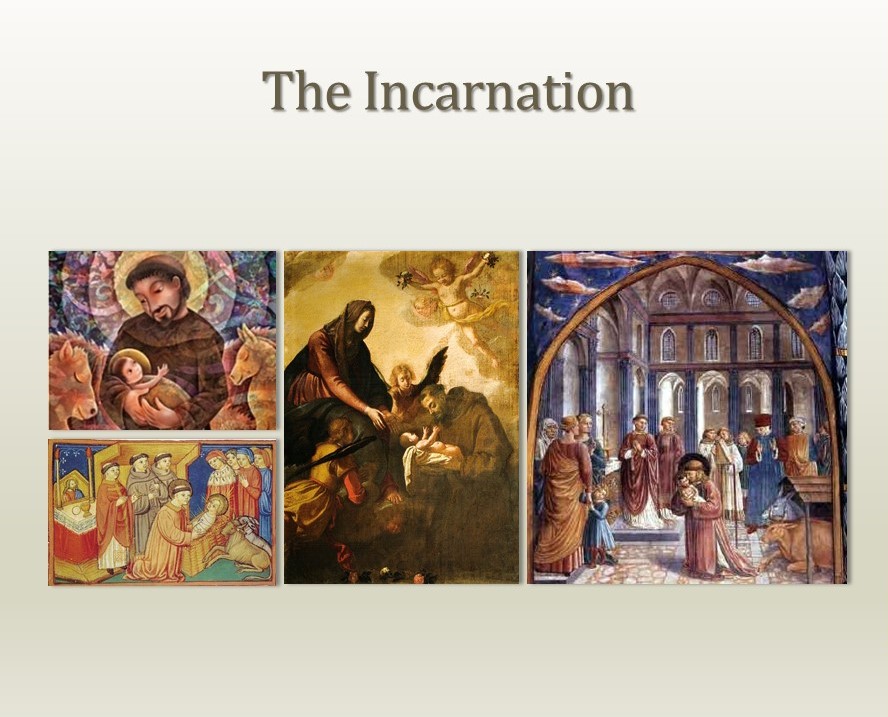
Dear Brothers and Sisters.  Hope that you are having a holy, happy Christmas.  Today’s formation lesson discusses Francis’ devotion to the Incarnation and the Humility of God.  Hope that you will share it with your fraternity.  Peace, Dona
+++++++++++++++++++++++++++++++++++++++++++++++
Christmas blessings!
 

St.
Francis’s devotion to and awe of the Incarnation and the humility of God is the
root to which Franciscans return as we pray. Especially at this time of year,
as we rejoice and give thanks for the birth of our Lord Jesus Christ, let’s
give some thought to why our belief in the Incarnation is crucial as Catholics
and as Franciscans.

Why did
the Word become flesh, why the Incarnation?

The
Catechism of the Catholic Church teaches us: The Word became flesh for us in
order to save us by reconciling us with God; the Word became flesh so we might
know God’s love: the Word became flesh to be our model of holiness; the Word
became flesh to make us “partakers of the divine nature” (See Catechism
of the Catholic Church 457-460)

Many of these same points were made by the great Franciscan
theologian, Bl. John Duns Scotus, who lived in the 12-13th
centuries. His ideas have become prominent in Franciscan theology. [Duns
Scotus]
“…argued that God’s supreme work, the Incarnation, had to be first
and foremost in God’s mind. It could not be dependent on or occasioned by any
action of humans, especially sin…Duns Scotus emphasized divine love. God is
love and created all life in order to communicate to creatures the fullness of
divine love. The Incarnate Word is the foundation of the creative plan of God,
the very reason for the existence of all creation.”  
(Kenneth R. Overberg, S.J., see below)


For a beautiful explanation of this Franciscan perspective, see Fr. Casey
Cole’s brief video:

https://www.youtube.com/watch?v=QscL5AIGBPs&t=3s


Questions to discuss or comment on in your journal.

1- How are we as Franciscans influenced by St. Francis’s
devotion to the Incarnation?

2. What are some of the writings of Francis and Clare that
show us the importance of this devotion?

3. How has viewing Fr. Casey’s video (link above) on the
Incarnation affected you?


Resources

Kenneth R. Overberg, S.J. The Incarnation: Why God Wanted to
Become Human.
Catholic
Update: Order here:
https://www.liguori.org/the-incarnation.html

You can order other individual copies of Catholic Update  here: https://www.liguori.org/catholic-update-newsletter-parish.html


+++++++++++++++

La devoción y el asombro de San Francisco por la
Encarnación y la humildad de Dios es la raíz a la que los franciscanos regresan
mientras oramos. Especialmente en esta época del año, mientras nos regocijamos
y damos gracias por el nacimiento de nuestro Señor Jesucristo, pensemos un poco
en por qué nuestra fe en la Encarnación es crucial como católicos y
franciscanos.

¿Por qué el Verbo se hizo carne, por qué la
Encarnación?

El Catecismo de la Iglesia Católica nos enseña: El
Verbo se hizo carne para nosotros para salvarnos reconciliándonos con Dios; el
Verbo se hizo carne para que pudiéramos conocer el amor de Dios: el Verbo se
hizo carne para ser nuestro modelo de santidad; el Verbo se hizo carne para
hacernos “partícipes de la naturaleza divina” (Ver Catecismo de la
Iglesia Católica 457-460)

Muchos de estos mismos puntos fueron señalados por el
gran teólogo franciscano, Bl. John Duns Scotus, que vivió entre los siglos XII
y XIII. Sus ideas se han vuelto prominentes en la teología franciscana. [Duns
Scotus] “… argumentó que la obra suprema de Dios, la Encarnación, tenía que
estar ante todo en la mente de Dios. No podía depender ni ser ocasionado por
ninguna acción humana, especialmente el pecado … Duns Scotus enfatizó el amor
divino. Dios es amor y creó toda vida para comunicar a las criaturas la
plenitud del amor divino. El Verbo Encarnado es el fundamento del proyecto
creativo de Dios, la razón misma de la existencia de toda la creación ”
.
(Kenneth R. Overberg, S.J., ver más abajo)

Para una hermosa explicación
de esta perspectiva franciscana, ver el P. Breve video (en inglés) de Casey
Cole:

https://www.youtube.com/watch?v=QscL5AIGBPs&t=3s


Preguntas para discutir o comentar en su diario.

1- ¿Cómo nos influye, como franciscanos,
la devoción de San Francisco a la Encarnación?

2. ¿Cuáles son algunos de los
escritos de Francisco y Clara que nos muestran la importancia de esta devoción?

3. ¿Cómo le afectó el video
del P. Casey sobre la Encarnación (enlace arriba)?


Recursos

Kenneth R. Overberg, S.J. La Encarnación: Por qué Dios
quiso hacerse humano.
Catholic
Update (English): Ordene aquí:
https://www.liguori.org/the-incarnation.html

Puede solicitar otras copias individuales de Catholic
Update aquí:
https://www.liguori.org/catholic-update-newsletter-parish.html

Este sitio también tiene muchos recursos en español.


Diane F. Menditto, OFS

Chair, National Formation Commission

Minister, Our Lady of the Angels Region

— 


WE ARE ONE

(This originally appeared in the Fall 2020 Issue of the TAU-USA #101)

What the Pandemic Can Teach Us About JPIC and Our Franciscan Lives

by Patricia Grace, OFS

JPIC Animator for the Saint Francis Region
Dear Sisters and Brothers,

I committed myself to social isolation on March 13, 2020. This date was late for some and early for others. On March 12, we had a family meeting, however, and decided that it was time for Grandmama, as my grandchildren call me, to go to her apartment, close the door, and stay there. I usually spend a few days a week with my grandchildren, so this was going to be hard. But I agreed. Catholic Charities, where I spend the other two and half days a week, closed its offices soon thereafter and asked us to continue to work remotely. Then my parish, then my Franciscan gatherings, then just about everything. I am sure you all walked this same path as one by one all that was familiar was closed.

I committed to social isolation until April 1, then May 1, then June 1. I will most likely still be isolating when this edition of our Joy of Francis is published. However, we are isolating in the age of the internet, and Go to Meeting, and Zoom, and a myriad of other programs that allow us to connect, to study, to work, and to pray. We had a National JPIC meeting scheduled for the first week in May in Chicago. We met, instead, by Zoom. Nearly 30 representatives from around the country discussed, prayed, and envisioned. During our times together, we found ourselves raising the topic of the pandemic and the effect it was having on our lives and the lives of people around the world. During the final session, one of our Franciscan sisters, Juliet Spohn Twomey, OFS, from Junipero Serra Fraternity, Monterey County, so eloquently called us to consider that we are at a critical time in our history. There is so much to learn from this pandemic. This article was inspired by her comment.

The COVID-19 pandemic has taught us that we are one world and one global family. What happened to people in Asia was soon felt in nearly every country in the world. We found ourselves tracking numbers of cases in countries some of us had never heard of and looking to medical researchers throughout the world for their suggested solutions. It also raised for me a sense of profound vulnerability. As San Diego shut its doors, my only view of this magnificent city by the sea was from a video created by a drone, documenting the silence on the beaches, in the hills surrounding us, through Balboa Park, and the harbor. Even the airport looked closed.

I realize now that when I first heard of the virus, I felt fairly secure that we in the U.S. had it covered. How surprised I was over the next weeks to see that we didn’t. The pandemic was unanticipated, and we were not prepared. Never have I questioned the ability to get health care in this fine and advanced country of ours. It is always there, available, and excellent, or at least for those of us with health insurance. Now even an insurance card did not ensure that one could get the medical care needed to combat the virus, despite the untiring efforts of all our doctors, nurses, and health care providers on the front lines. I grieve to think of those without insurance or easy access to medical facilities, or who live in fear of going to a 14 hospital because of all the identity questions that can be asked.

Food was no problem for me. My daughter and other young friends shopped for me. But, once again, I could afford to “stock up.” What about the mother with four children who lives paycheck to paycheck and now did not even have work? Or the father caring for his children or elderly parents not knowing when he was going to get laid off? The nursing home where I serve as a Eucharistic Minister closed its doors to all visitors. I took Easter cards with well wishes and information about accessing Mass on radio and television, handing it to the nice man at the door, both of us looking as if we were prepared for a space mission. Now we hear of outbreaks in nursing care facilities around the country.

The pandemic has taught us how any environmental or public health crisis falls most heavily on the poor. We can see why Laudato Si’, whose fifth anniversary we recently celebrated, teaches that Care for Our Common Home includes attention to social inequity as well as environmental degradation and calls upon us to consider all these factors as we strive to create global economic, political, and social systems that honor the dignity of every one of God’s created beings.

The pandemic can teach us that those who are the least protected are the most vulnerable. Outbreaks in prisons and detention facilities, as well as in nursing homes are recorded daily. Those of us near our southern border cannot imagine how the men, women, and children who came to the U.S. border seeking asylum and are currently housed in makeshift camps in Mexico are surviving. Many have been there for months. The courts have been closed for weeks and will open soon with an even larger backlog of cases.

Then we look up and see plant life that had been killed by pollution coming back to life. The air is cleaner and clearer. We can hear birds, not airplanes, see across canyons that had only harbored smog. The earth is breathing more easily again.

Can we accept what the pandemic is teaching? Can we see more that we are one human family? Can we embrace the universal kinship of all of creation that our Beloved Saint called us to embrace, respecting all creatures, animate and inanimate, which bear the imprint of the Most High? (Chapter Two, Article 18) Can we begin to see how we can strive to create conditions of life worthy of people redeemed by Christ for all who live? (Chapter Two, Article 13) What can the pandemic teach us about how to exercise our responsibilities as Secular Franciscans to build a more fraternal and evangelical world with a spirit of service motivating our actions? (Chapter Two, Article 14).

The pandemic can be the event that helps us see the interconnectedness of all that lives more clearly. Through it we see more profoundly the wounding effects of our modern lifestyle upon the natural world. The pandemic shines its light on the vulnerability of all of us and the double vulnerability of the poor, the elderly, and the marginalized.

I am certain we will get to the other side of this. My certainty rests in God. My prayer is that we get to the other side with a new vision, a deeper understanding, more compassion, and a fervent commitment to do all that we can individually, fraternally, and through our Order to care for the world and all within it. As our Franciscan sister said, this is a critical moment in history. God is calling us to open our eyes and ears and heart and do His Holy Will. Our Beloved Saint Francis is praying for us. Let us honor the trust given to us.

Peace and All Good,

Patricia

https://secularfranciscansusa.org/2020/12/21/we-are-one/

Open post

Formation Friday – O Antiphons and the Praises of God – December 18, 2020

Dear Brothers and Sisters,  

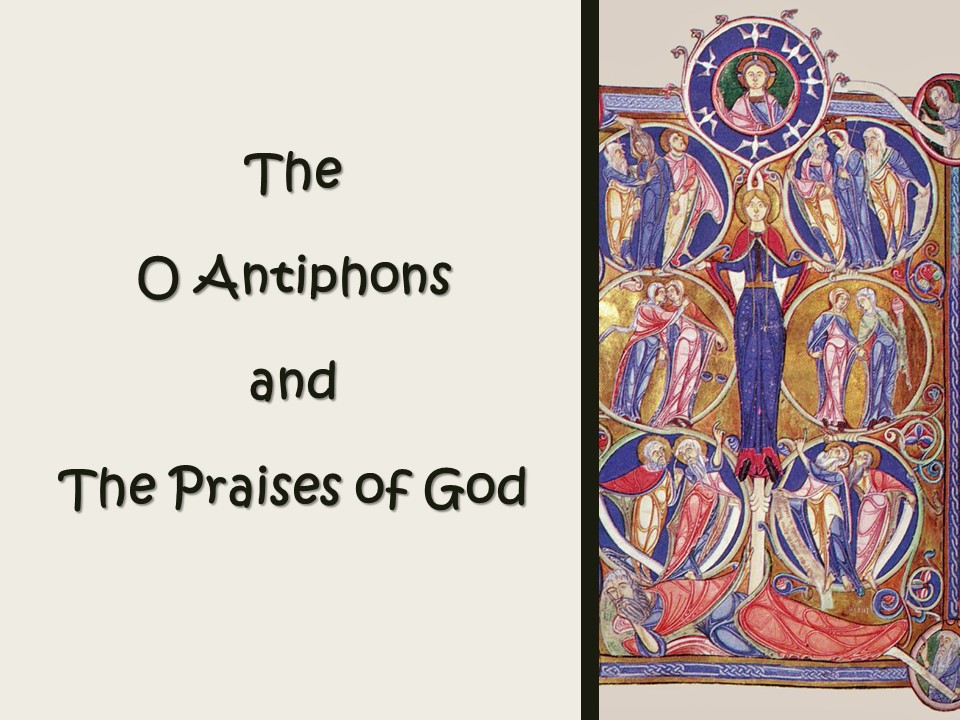
 Today our lesson focuses upon the relationship between the Praises of God and the O Antiphons.  This lesson includes information on the history of the O Aniphons and how to use them. Some of you may have begun saying the O Antiphons yesterday in the Liturgy of the Hours, but others can catch up on these beautiful prayers.  Have a Holy Advent Season,  Peace, Dona

+++++++++++++++++++++++++++++++++++++++++++++++++++++++++++++++++++++++++++++++++++++++++++++++++++++++++++

Did you ever notice the relationship between the Praises of God and the O Antiphons? Now might be a good time to take a look.

“Leo of Assisi, who was with Francis on LaVerna in the Fall of 1224, wrote in red ink on one side of this piece of parchment: ‘Two years before his death, the blessed Francis spent forty days on Mount LaVerna from the Feast of the Assumption of the holy Virgin Mary until the September Feast of Saint Michael, in honor of the Blessed Virgin Mary, the Mother of God, and the blessed Michael the Archangel. And the Lord’s hand was upon him. After the vision and message of the Seraph and the impression of Christ’s stigmata upon his body, he composed these praises written on the other side of this page and wrote them in his own hand, thanking God for the kindness bestowed on him.’”


The Praises of God – St. Francis of Assisi

You are the holy Lord God Who does wonderful things. 

You are strong. You are great. You are the most high.
You are the almighty king. You holy Father,
 
King of heaven and earth.
 

You are three and one, the Lord God of gods; 
You are the good, all good, the highest good,
Lord God living and true.
 

You are love, charity; You are wisdom, You are humility,
You are patience, You are beauty, You are meekness,
 
You are security, You are rest,
You are gladness and joy, You are our hope, You are justice,
You are moderation, You are all our riches to sufficiency.

You are beauty, You are meekness,
You are the protector,
 You are our custodian and defender,
You are strength,
 You are refreshment. 6You are our hope,
You are our faith, You are our charity,
You are all our sweetness, You are our eternal life:
Great and wonderful Lord, Almighty God, Merciful Savior
.

https://www.franciscantradition.org/francis-of-assisi-early-documents/the-saint/writings-of-francis/the-praises-of-god-and-the-blessing/125-fa-ed-1-page-109

 
About the O Antiphons 

https://www.usccb.org/prayer-and-worship/prayers-and-devotions/prayers/the-o-antiphons-of-advent

“The Roman Church has been singing the “O” Antiphons since at least the eighth century. They are the antiphons that accompany the Magnificat canticle of Evening Prayer from December 17-23. They are a magnificent theology that uses ancient biblical imagery drawn from the messianic hopes of the Old Testament to proclaim the coming Christ as the fulfillment not only of Old Testament hopes but present ones as well. Their repeated use of the imperative “Come!” embodies the longing of all for the Divine Messiah.”

 December 17: O Sapientia “O Wisdom, O holy Word of God, you govern all creation with your strong yet gentle care. Come and show your people the way to salvation.” (Antiphon: Canticle of Mary, Liturgy of the Hours)

“You are love, charity; You are wisdom,
You are patience, You are beauty, You are meekness,…” (From the Praises of God by St. Francis)

December 18: O 
Adonai “O sacred Lord of ancient Israel, who showed yourself to Moses in the burning bush, who gave him the holy law on Sinai mountain: come, stretch out your mighty hand to set us free. “You are the holy Lord God Who does wonderful things.”  (Antiphon: Canticle of Mary, Liturgy of the Hours)

You are strong. You are great. You are the most high.
You are three and one, the Lord God of gods; 
You are the good, all good, the highest good,
Lord God living and true…”  (From the Praises of God by St. Francis)


December 19: O Radix Jesse “O Flower of Jesse’s stem, you have been raised up as a sign for all peoples; kings stand silent in your presence; the nations bow down in worship before you. Come, let nothing keep you from coming to our aid.” (Antiphon: Canticle of Mary, Liturgy of the Hours)

“You are security, You are rest,
You are gladness and joy, You are our hope, You are justice,
You are moderation, You are all our riches to sufficiency.” (From the Praises of God by St. Francis)

December 20: O Clavis David “O Key of David, O royal Power of Israel, controlling at your will the gate of heaven: come, break down the prison walls of death for those who dwell in darkness and the shadow of death; and lead your captive people into freedom.”  (Antiphon: Canticle of Mary, Liturgy of the Hours)


 “You are the protector,  You are our custodian and defender,
You are strength…”  (From the Praises of God by St. Francis)


December 21: O Oriens “O Radiant Dawn, splendor of eternal light, sun of justice: come, shine on those who dwell in darkness and the shadow of death.” (Antiphon: Canticle of Mary, Liturgy of the Hours)

“You are beauty, You are meekness,
You are refreshment. 
6You are our hope,
You are our faith, You are our charity,…”  (From the Praises of God by St. Francis)


December 22: O Rex Gentium “O King of all the nations, the only joy of every human heart; O Keystone of the mighty arch of man, come and save the creature you fashioned from the dust.” (Antiphon: Canticle of Mary, Liturgy of the Hours)

“You are the almighty king. You holy Father,
 
King of heaven and earth.” (From the Praises of God by St. Francis)

December 23: O Emmanuel “ O Emmanuel, king and lawgiver, the desire of the nations, Savior of all people, come and set us free, Lord our God.  (Antiphon: Canticle of Mary, Liturgy of the Hours)

“You are all our sweetnessYou are our eternal life:
Great and wonderful Lord, Almighty God, Merciful Savior.” (From the Praises of God by St. Francis)


To discuss or comment on in your journal


+ How does the text of the “Praises of God” help you to see how St. Francis thinks about God?

+ Think about the praises—perhaps at Adoration—How do they influence your closeness to and relationship with God, Father, Son, and Holy Spirit?

+ Each day during the rest of Advent, take the O Antiphon for the day and think about it in light of the Praises of God. Discuss or comment on your prayer experience in your journal.


++++++++++++++++++++++++++++

 Recursos en español:

El Significado de las antífonas de la O y la Fiesta de la expectación del Parto
https://www.aciprensa.com/recursos/el-significado-de-las-antifonas-de-la-o-y-la-fiesta-de-la-expectacion-del-parto-1784

ALABANZAS DEL DIOS ALTÍSIMO
http://www.franciscanos.org/esfa/ald.html

 Para discutir o comentar en su diario

+ ¿Cómo le ayuda el texto de las “Alabanzas de Dios” para entender cómo piensa San Francisco sobre Dios?

+ Piense en las Alabanzas, tal vez durante la Adoración, ¿Cómo influyen en su cercanía y relación con Dios, Padre, Hijo y Espíritu Santo?

+ Cada día durante el resto del Adviento, piense en la “Antífona O” del día a la luz de las Alabanzas de Dios. Platique o comente sobre su experiencia de oración en su diario.


—  


Fratelli Tutti Resources – and more – now on OFS-USA Website!

Dear National OFS Family,

Advent Greetings of hope and peace!

Many of us watched on Oct. 3 as Pope Francis signed Fratelli Tutti at the Tomb of St. Francis.  This wonderful encyclical on fraternity and social friendship has great significance for all people, especially in these troubled times where we are experiencing such division. It also has great significance for all Franciscans.  “Fraternity” is such an important part of our charism, and this encyclical will help us live, and share, this Gospel value.

Good News!

We have just posted Fratelli Tutti on our OFS-USA website, along with an overview, summary, two study guides and a video reflection by Sr. Margaret Carney OSF.  These are all posted on our “Ongoing Formation Resources” page.

And more news!

Another document just posted to our “Ongoing Formation Resource” page is the Instrumentum Laboris for the 2021 General Chapter entitled Instrumentum Laboris 2020  This document has great importance for our worldwide Secular Franciscan Order.

Looking forward

Early in 2021 we will be urging local fraternities to study both Fratelli Tutti and Animate and Guide with Servant Leadership.  We are also considering hosting national Zoom gatherings for discussion of these documents.

What do you do now?

Please share this message– and start planning now to include a study of these documents in your local fraternities early in 2021.

Begin planning now.  More details coming this January!

https://secularfranciscansusa.org/2020/12/18/fratelli-tutti-resources-and-more-now-on-ofs-usa-website/

Regional Diversity Team

(This article originally appeared in the Fall 2020 Issue of the TAU-USA #101)

Shortly after the tragic death of George Floyd this past May, St. Joan of Arc Regional Minister Cherryle Fruge shared that her region had started a diversity team. The following is a report from Cherryle about this effort: 

 The idea of developing a Diversity Team began so we could do a process of elimination to dissect the roots of racism that falls under the umbrella of All Violence. The agenda for the first Zoom gathering was to find out “Who We Are” by each telling our story. “Have you ever been discriminated against or shunned on your Franciscan Journey. Have you experienced discrimination within the Order?”

We needed to first work “within” before we could work outward – ruling out if there were any issues within the Order concerning racism or discrimination of any kind to all people of diverse cultures. If there is a problem within the Family, we have to work on addressing the dysfunction, educate and reconcile our differences so we can begin healing the wounds from the inside out. Once the wholeness of our self returns, only then can we more fully understand how to educate with love and compassion in the world in which we live.

I am happy to say that everyone on the team said that the Order “felt like home” and being in fraternity sustained them. Since there are no issues within the Order in our region, our focus moved to educate ourselves on the Beatitudes of Good Communication amongst all people. I heard a quote that went something like this: “You are the other part of me, I don’t yet understand.” We need to learn from each other. This is why learning and practicing mindful dialogue is so important with all people, because we don’t understand each other and what life is like from the perspective of other cultures. We are now working “outward” to help make this happen.

Cherryle Fruge, OFS, St Joan of Arc Regional Fraternity

Note:     Banner by Deacon Patrick depicts the Mission Statement of the SJA Region Diversity Team: Like Francis’ Mission, Go Rebuild Our Church, We believe as we work inward to rebuild ourselves then we will understand how to work outward to rebuild God’s Church in the world – One Living Stone at a time.

https://secularfranciscansusa.org/2020/12/14/regional-diversity-team/

Scroll to top
Juan de Padilla