The OFS-USA National Fraternity has recently published “From Gospel to Life,” the OFS Rule with Commentary. This occasional series highlights the Prologue (See November 17th and 24th) and the articles of the Rule, the commentary, and questions based on this publication for fraternity discussion. You may order “Gospel to Life” at this link: https://www.secularfranciscansusa.org/wp-content/uploads/Order-Form_October_2023rev.pdf
Rule of the Secular Franciscan Order
Chapter 2 Articles 6-7Article 6: They have been made living members of the Church by being buried and raised with Christ in baptism; they have been united more intimately with the Church by profession. Therefore, they should go forth as witnesses and instruments of her mission among all people, proclaiming Christ by their life and words.
Called like Saint Francis to rebuild the Church and inspired by his example, let them devote themselves energetically to living in full communion with the pope, bishops, and priests, fostering an open and trusting dialogue of apostolic effectiveness and creativity.10
Article 7:
United by their vocation as “brothers and sisters of penance,”11 and motivated by the dynamic power of the gospel, let them conform their thoughts and deeds to those of Christ by means of that radical interior change which the gospel itself calls “conversion.” Human frailty makes it necessary that this conversion be carried out daily.12
On this road to renewal the sacrament of reconciliation is the privileged sign of the Father’s mercy and the source of grace. 13
Commentary
Article 6: Sharing Christ’s mission through life in the Church is the third point developed on the meaning of gospel living (6). By word and example the Secular Franciscans bring to those around them the living Christ they have experienced. As it were, they become a living gospel for all to read. This evangelization is based on obedience to the Holy Spirit, who inspires and forms the Church, the body of Christ. So, the Secular Franciscans foster an openness to the Spirit and creatively exercise their mission. Furthermore, they hear the call of the Spirit through loyalty, frank dialogue, and cooperation with legitimate Church authority. This obedience makes ministry authentic and consistent without stifling their creativity.
Article 7: The next section of the rule (7 and 8) explains the personal disposition or preconditions (conversion and worship) necessary for achieving the union with Jesus Christ and with one’s neighbor described above.
An ongoing change of heart or a continual spiritual renewal is the first condition (7) for modeling one’s own thought and deeds on those of Christ. As Francis himself points out in his letter used as the prologue, if we all love the Lord with all we are, build a eucharistic community, and remove those things that prevent such a union, we become one with him, fulfill the father’s will, and project his image onto the world. Thus, our daily conversion becomes a primary means for putting on Christ and conforming ourselves to him. The sacrament of reconciliation, then, is a privileged means and practical assistance for achieving this objective.
For discussion with a partner, in a group, or to comment on in your journal:
+Re-read article 6 and the commentary:
–How do we, as Secular Franciscans help to rebuild the Church?
–How do we respond to what the Holy Spirit asks of us?+Re-read article 7 and the commentary:
–How do you seek conversion of heart each day? What tips would you give a new member?
–What is the value of the Sacrament of Reconciliation for us as Secular Franciscans?
Formación 16 de febrero, 2024 Por favor, comparta con su fraternidad local
La Fraternidad Nacional OFS-USA ha publicado recientemente “Del Evangelio a la Vida”, la Regla de la OFS con comentario. (Publicada en inglés y español) Esta serie ocasional que destacará el Prólogo (véase 17 y 24 de noviembre) y varios artículos de la Regla, el comentario y las preguntas para la discusión de la fraternidad. Se puede pedir “Evangelio a la vida” en español en este enlace:
https://www.secularfranciscansusa.org/wp-content/uploads/Order-Form_October_2023rev.pdf
Regla de la Orden Franciscana Seglar
Capítulo 2 Artículos 6-7
Artículo 6: Sepultados y resucitados con Cristo en el Bautismo, que los hace miembros vivos de la Iglesia, y a ella más estrechamente vinculados por la Profesión, háganse testigos e instrumentos de su misión entre los hombres, anunciando a Cristo con la vida y con la palabra.
Inspirados en San Francisco y con él llamados a reconstruir la Iglesia, empéñense en vivir en plena comunión con el Papa, los Obispos y los Sacerdotes, en abierto y confiado diálogo de creatividad apostólica10.
Artículo 7: Como “hermanos y hermanas de penitencia,”11 en virtud de su vocación, impulsados por la dinámica del Evangelio, conformen su modo de pensar y de obrar al de Cristo, mediante un radical cambio interior, que el mismo Evangelio denomina con el nombre de “conversión;” la cual, debido a la fragilidad humana, debe actualizarse cada día12.
En este camino de renovación, el Sacramento de la Reconciliación es signo privilegiado de la misericordia del Padre y fuente de gracia13.
Comentario
Artículo 6: Compartir la misión de Cristo a través de la vida en la Iglesia es el tercer punto desarrollado sobre el significado de vivir el evangelio (6). Con la palabra y el ejemplo, los franciscanos seglares llevan a quienes los rodean al Cristo vivo que han experimentado. Por así decirlo, se convierten en un evangelio vivo para que todos lo lean. Esta evangelización se basa en la obediencia al Espíritu Santo, que inspira y forma la Iglesia, cuerpo de Cristo. Así, los franciscanos seglares fomentan la apertura al Espíritu y ejercen creativamente su misión. Además, escuchan el llamado del Espíritu a través de la lealtad, el diálogo franco y la cooperación con la autoridad legítima de la Iglesia. Esta obediencia hace que el ministerio sea auténtico y coherente sin sofocar su creatividad.
Artículo 7: La siguiente sección de la regla (7 y 8) explica la disposición personal o las condiciones previas (conversión y adoración) necesarias para lograr la unión con Jesucristo y con el prójimo descrita anteriormente.
Un continuo cambio de corazón o una continua renovación espiritual es la primera condición (7) para modelar el pensamiento y las obras propias en las de Cristo. Como el mismo Francisco señala en su carta utilizada como prólogo, si todos amamos al Señor con todo lo que somos, construimos una comunidad eucarística, y eliminamos aquellas cosas que impiden tal unión, nos hacemos uno con él, cumplimos la voluntad del padre, y proyectamos su imagen en el mundo. Así, nuestra conversión diaria se convierte en un medio primordial para revestirnos de Cristo y conformarnos con él. El sacramento de la reconciliación es, por lo tanto, un medio privilegiado y una ayuda práctica para alcanzar este objetivo.
Para discutir con un compañero, en un grupo o para comentar en su diario:
+Releer el artículo 6 y el comentario:
–¿Cómo ayudamos nosotros, como franciscanos seglares, a reconstruir la Iglesia?
–¿Cómo respondemos a lo que el Espíritu Santo nos pide?
+Leer de nuevo el artículo 7 y el comentario:
–¿Cómo busca usted cada día la conversión del corazón? ¿Qué consejos le daría a un nuevo miembro?
–¿Cuál es el valor del Sacramento de la Reconciliación para nosotros como Franciscanos Seglares?
Diane F. Menditto, OFSVice Minister, National Fraternity, Secular Franciscan Order USAListen – Discern – Go Forth National Theme 2022-2025
Voices of Gospel Living: Privilege
NEC Councilor Cherryle Fruge sent this beautiful reflection to one of her fraternities. It is shared here to remind us of the wonderful presence of God in our lives as we continue to listen for the voices of Gospel living.
By Cherryle Fruge, OFS
 Cherryle Fruge
Dear Beloved People of God,
I apologize for my absence. I am getting far behind on a writing project that I had promised to have completed by the end of January. Please pray for me.
Since I could not be present, I wanted to leave a part of me with you… the musings within my heart. This morning something caught my attention on the second mystery of the Seven Joys of Mary. It occurred at the visitation between Mary and Elizabeth.
I thought of the word, “privilege.” I am a slow learner trying to understand certain words, but I remember the first time the word “privilege” flowed out of my mouth.
It was an honor to even express it, namely because I sensed without a doubt, what I was saying was influenced by God’s grace and in the presence of the Holy Spirit. That humbling moment helped me to understand what a privilege it was to speak in the presence of our Lord.
With the thought of that profound experience, I came back to what Elizabeth must have felt when Mary, the mother of Jesus, came to visit … how powerful do you think this privilege was?
The privilege was so powerful that it caused the baby in her womb to leap.
This is Leap Year and as we approach that extra day on Feb. 29 I urge you to pay close attention to what might cause your soul to leap as you come to encounter the crucified Jesus, and the results of His resurrection.
It might be very worthwhile to journal when you discover that privileged moment in His presence.
Please know that when I am with all of you, my soul leaps with joy, because I see Jesus present in you!!
His peace be with you,
Cherryle
His humbled little spiritual assistant
https://www.secularfranciscansusa.org/2024/02/16/34055/
Seek with Encounters, Dialogue with Others
(This article originally appeared in the TAU-USA Fall 2023 Issue #110)
National Ecumenical/Interfaith Committee 
by Ron Lacey, OFS
One of the greatest joys at the recent National Chapter, for me, was meeting in person two of my fellow Ecumenical/Interfaith Committee members, Donna Hollis, and Carolyn Townes, as well as our friend Fr. Masud ibn Syedullah, who attended the Chapter as an observer on behalf of the Third Order Society of St Francis (TSSF). I was especially grateful that Fr. Masud shared with me some of the history of the founding of the Joint Committee on Franciscan Unity – and the role he played in the founding. I also enjoyed learning about his ministry in Hyde Park, NY, and his parish’s intimate connection with the Roosevelts.
 100vw, 232px” data-recalc-dims=”1″></p>
<p id=) from right to left, Ron Lacey, OFS; Donna Hollis, OFS; Fr. Masud Syedullah, TSSF
from right to left, Ron Lacey, OFS; Donna Hollis, OFS; Fr. Masud Syedullah, TSSF
I couldn’t help thinking how our meeting – an Anglican priest at the Chapter of a Catholic order – would have been, for far too long, unthinkable. Until people did think of it! And then these people acted on it: Roman Catholic Secular Franciscans reached out to the Anglican TSSF and the Order of Ecumenical Franciscans and asked for dialogue. Meetings were held, and five principles of Franciscan unity, across our denominations, were discovered: baptism, charism, call, Christo-centrism, and the prophetic voice. The Joint Committee on Franciscan Unity was founded, and in time the Order of Lutheran Franciscans joined. “How blessed it is when brothers and sisters dwell together in unity,” (Ps 133:1).
It may not seem very big, noticeably big, but in fact, as Pope Francis reminds us in his encyclical Fratelli Tutti: “If we want to encounter and help one another, we have to dialogue. Persistent and courageous
dialogue does not make headlines, but quietly helps the world to live much better than we imagine,”
(198). We must all create processes – indeed, a culture – of encounter. In such a culture, “we, as a people, should be passionate about meeting others, seeking points of contact, building bridges, planning a project that includes everyone,” (216). Processes of encounter will “build a people that can accept differences,” (217). It’s hard to imagine anything the world needs more right now than building bridges and accepting differences! This is especially incumbent upon people of faith. Christians “need to find occasions to speak with one another and to act together for the common good and the promotion of the poor,” (282).
If you have not already done so, please spend some time with Fratelli Tutti. Maybe read it with your Fraternity, or start a reading group in your parish, or just read it by yourself. It beautifully articulates the vision of a culture of encounter, with helpful suggestions to create processes of encounter.
Fratelli Tutti may also be useful in addressing the important subject of anti-racism, something that was discussed at length at our National Chapter. Not being racist is not the same thing as being anti-racist. Anti-racism is an active and definitive stand against racism, including systemic and institutional racism, which can be all too easy for majority-culture people like me to overlook. Anti-racism is the intentional work for inclusion, respect, and a more just world. We need reminders.
One may wonder what anti-racism has to do with ecumenism. For starters, they both grow out of loving and honest encounters, and they are both aimed at creating and fostering further encounter and dialogue. Pope Francis doesn’t go out on a limb when he says: “Jesus never promoted violence or intolerance,” (238). But he reminds us that society – of which our Order is a little piece, our Church a bigger piece – is a family, and “the joys and sorrows of each of its members are felt by all. That is what it means to be a family!” (230). “There is no end to the building of a country’s social peace; rather, it is an open-ended endeavor, a never-ending task that demands the commitment of everyone and challenges us to work tirelessly to build the unity of the nation,” (232).
https://www.secularfranciscansusa.org/2024/02/12/seek-with-encounters-dialogue-with-others/
The Gospel Through a Franciscan Lens – 6th Sunday in Ordinary Time – Fr. Christopher
 Fr. Christopher Panagoplos, TOR, reminds us in his most recent homily for Sunday, February 11th, 2024, the 6th Sunday in Ordinary Time, that Jesus can heal our sinfulness just as he healed the leprosy of the unfortunate man in today’s gospel.
“Jesus knows this law as well as any other rabbi of His day. But He chooses to break the law in a most deliberate and decisive way—He actually stretches out His hand and touches the leper who came for a cure. Touches him. Inexcusable! Irresponsible! But it works! Jesus’ tender touch makes the leper clean—without the benefit of Dial, Tide, or Suave.”
Read the full text of this Sunday’s homily here: 5th Sunday in Ordina6th Sunday in Ordinary Time – Fr. Christopher (text)
View his homily here: 6th Sunday in Ordinary Time – Fr. Christopher (video)
https://www.secularfranciscansusa.org/2024/02/10/the-gospel-through-a-franciscan-lens-6th-sunday-in-ordinary-time-fr-christopher/
Formation Friday – The Rule – The Conversion Process – February 9, 2024
We have interrupted our series on the Rule with commentary for some Lenten inspiration. We publish the resources below each year in hopes that they will help everyone to focus on penance and conversion, so important in the life of a Secular Franciscan.
Thank you to the National Formation Commission for collaborating on this piece.
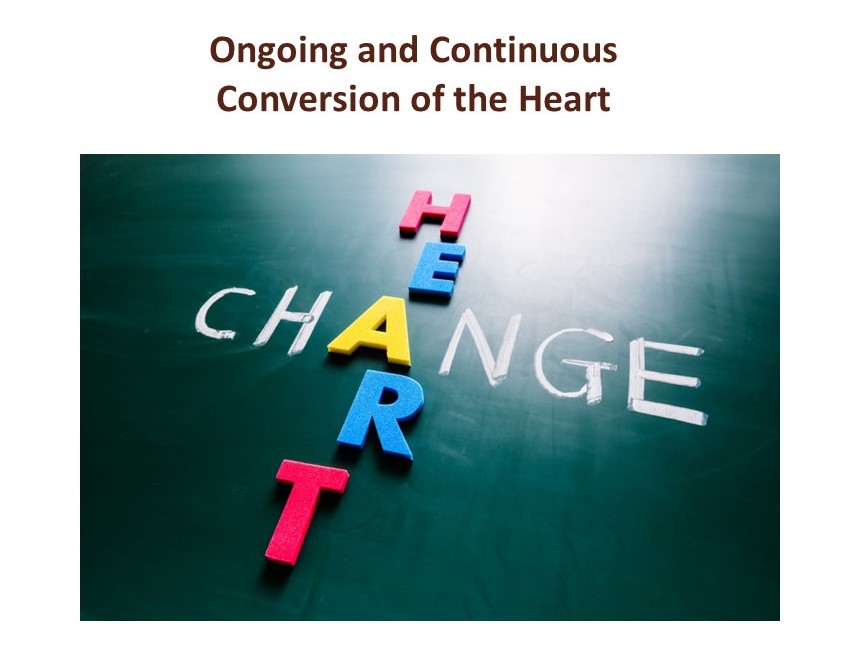
The Conversion Process: Ongoing and continuous conversion of the heart
For each week of Lent focus on one action item below that you would like to cultivate in a special way as part of your Lenten journey.
1. Make an act of reparation or a modification of behavior to show sorrow for sin.
2. Be willing to recognize and accept suffering as the consequence of separating myself from God. (Offer sufferings for the benefit of others.)
3. Commit to a plan for prayer, fasting, almsgiving. (See: Joel 2:12-18)
4. Intentionally evangelize a lukewarm or nonbeliever.
5. Ask the Holy Spirit to make me aware of a specific moral shortcoming and for the grace to change.
6. Consciously live the Beatitudes.
7. Seek personal conversion through deeper prayer.
8. Radically commit to the Gospel life centered on the person of Jesus.
9. Savor God’s mercy, experiencing the love of God which unceasingly calls us back to Himself.
10. Accept myself as I am now and strive to reach a deeper level of conversion.
11. Journal on my spiritual journey made up of failures and falls and also made up of new beginnings, new discoveries.
12. Use St. Francis’s paraphrase of the Lord’s Prayer for meditation.
https://www.franciscantradition.org/francis-of-assisi-early-documents/the-saint/writings-of-francis/the-undated-writings/a-prayer-inspired-by-the-our-father/174-fa-ed-1-page-158
Questions for discussion or to answer in your journal.
+Explain how you plan to carry out the items you chose from the list above.
+Which of all the statements above might be most beneficial to your personal conversion?
+Which of the statements are the most challenging for you?
++++++++++++++++++++
Formación 9 de febrero, 2024 (Por favor compartir con la fraternidad local)
El proceso de conversión: La conversión continua y permanente del corazón
Interrumpimos nuestra serie sobre la Regla y el comentario para inspirarnos en la Cuaresma. Esperamos que los recursos a continuación que publicamos cada año ayuden a todos a centrarse en la penitencia y la conversión, tan importantes en la vida de un franciscano seglar.
Gracias a la Comisión Nacional de Formación por colaborar en esta pieza.
Para cada semana de Cuaresma, concéntrese en un elemento de acción a continuación que le gustaría cultivar de una manera especial como parte de su jornada de Cuaresma.
1. Hacer un acto de reparación o una modificación de comportamiento para mostrar dolor por el pecado.
2. Estar dispuesto a reconocer y aceptar el sufrimiento como consecuencia de separarse de Dios. (Ofrezca sufrimientos en beneficio de otros).
3. Comprometerse a un plan de oración, ayuno, limosna. (Ver: Joel 2: 12-18)
4. Evangelizar intencionalmente a un tibio o no creyente.
5. Pídale al Espíritu Santo que lo haga consciente de una deficiencia moral específica y que tenga la gracia de cambiar.
6. Viva conscientemente las Bienaventuranzas.
7. Busque la conversión personal a través de una oración más profunda.
8. Comprometerse radicalmente con la vida evangélica centrada en la persona de Jesús.
9. Saborear la misericordia de Dios, experimentar el amor de Dios que incesantemente nos llama a Él.
10. Aceptarme tal como soy ahora y esforzarme por alcanzar un nivel más profundo de conversión.
11. Escribir un diario sobre mi jornada espiritual compuesto de fracasos y caídas y también compuesto de nuevos comienzos, nuevos descubrimientos.
12. Utilizar la paráfrasis de San Francisco del Padre Nuestro para la meditación.
http://franciscanos.org/esfa/exppn.html
Preguntas para platicar o para responder en su diario.
+ Explique cómo planea realizar los elementos que eligió de la lista anterior.
+ ¿Cuál de todas las declaraciones anteriores podría ser más beneficiosa para su conversión personal?
+ ¿Cuáles de las afirmaciones son las más desafiantes para usted?
Diane F. Menditto, OFSVice Minister, National Fraternity, Secular Franciscan Order USAListen – Discern – Go Forth National Theme 2022-2025form