Please share with your local fraternity (en español abajo) Korean translation is attached in a separate PDF.
Frequently Asked Questions answered by our General Constitutions (GC): For the next several weeks we will take a look at some questions given in the 2010 edition of the Handbook for Servant Leadership. The same questions often arise on our councils and in our fraternities. Becoming familiar with the Constitutions is very helpful in addressing issues that arise in fraternities at all levels. For the complete, latest translation of the entire document, visit: https://ciofs.info/library/official-documents/ or https://www.secularfranciscansusa.org/the-general-constitutions-of-the-secular-franciscan-order-2000/
+ Who is responsible for formation and entrance into the Order? [GC Article 37]
1. Rule 23. Membership in the Order is attained through a time of initiation, a time of formation, and the Profession of the Rule.
2. The journey of formation, which should develop throughout life, begins with entrance into the fraternity. Mindful that the Holy Spirit is the principal agent of formation and always attentive to collaboration with Him, those responsible for formation are: the candidate, the entire Fraternity, the Council with the Minister, the Teacher of Formation (formator), and the Spiritual Assistant.
3. The brothers and sisters are responsible for their own formation, developing in an ever more perfect way the vocation received from the Lord. The Fraternity is called to help the brothers and sisters on this journey by means of a warm welcome, prayer, and example.
4. The National and Regional Councils, by common agreement, are expected to develop and adopt means of formation, adapted to the local situations and offered as a help to those responsible for formation in the individual Fraternities.
After reading Article 37, please discuss the following with your fraternity members.
+What do you remember about your time of initial formation?
–If you are now an aspirant or a candidate, share the highlights of your formation with the professed members.
–If you are a professed member, how does the present initial formation program compare with what you experienced?
+Explain why the Holy Spirit is the principal agent of formation.
+What are some ways that we can be responsible for our own formation? Give examples of how the members of your fraternity help to “form” you?
+Has your fraternity/region reached out to the regional or national formation teams for assistance? National and regional formation teams are happy to give help, talks, and general encouragement.
+ What are the conditions, process, and responsibilities for entrance into the Order? [GC Article 39]
1. Rule 23. The request for admission to the Order is presented by the aspiring member to the Minister of a local or personal Fraternity by a formal act, in writing if possible.
2. Conditions for admission are: to profess the Catholic faith, to live in communion with the Church, to be of good moral standing, and to show clear signs of a vocation.
3. The Council of the Fraternity decides collegially on the request, gives a formal answer to the aspiring member, and communicates this to the Fraternity.
4. The rite of admission is performed according to the Ritual27. The act is to be registered and preserved in the records of the Fraternity.
After reading article 39, please discuss the following questions:
+Why is #2 above so important for those who wish to be admitted to the Order (and also for professed members)?
+Read the Rite of Admission in the Ritual (also available on pages 7-11 of the PDF at this link: https://ciofs.info/wp-content/uploads/2021/01/EN-OFS-Ritual-s.pdf )
–What stands out to you about the commitment we make when we are admitted to the Order?
Formación 16 agosto, 2024 (Compartir con su fraternidad local.) Preguntas frecuentes #3
Preguntas Frecuentes Respondidas por nuestras Constituciones Generales (CG): Durante las próximas semanas echaremos un vistazo a algunas preguntas dadas en la edición 2010 del Manual para el Liderazgo de Servicio. Las mismas preguntas surgen a menudo en nuestros consejos y en nuestras fraternidades. Familiarizarse con las Constituciones es muy útil para abordar los problemas que surgen en las fraternidades a todos los niveles. Para obtener la traducción completa y más reciente del documento completo, visite: https://ciofs.info/wp-content/uploads/2021/01/ES-Constituciones-generales-OFS-s.pdf
+ ¿Quién es el responsable de la formación y el ingreso en la Orden? [CCGG Artículo 37]
1. Regla 23. La inserción en la Orden se realiza mediante un tiempo de iniciación, un tiempo de formación y la Profesión de la Regla.
2. Desde el ingreso en la Fraternidad se inicia el camino de formación, que debe desarrollarse durante toda la vida. Teniendo presente que el Espíritu Santo es el principal agente de la formación, y atentos siempre a colaborar con Él, los responsables de la formación son: el propio candidato, la Fraternidad entera, el Consejo con el Ministro, el Maestro de formación y el Asistente.
3. Los hermanos son responsables de su formación para acrecentar cada vez más la vocación recibida del Señor. La Fraternidad está llamada a ayudar a los hermanos en este camino con la acogida, la oración y el ejemplo.
4. Corresponde a los Consejos nacionales y regionales, de común acuerdo, la elaboración y adopción de medios de formación adecuados a las situaciones locales, como ayuda a los responsables de la formación de cada Fraternidad.
Después de leer el Artículo 37, por favor discuta lo siguiente con los miembros de su fraternidad.
+¿Qué recuerda usted de su época de formación inicial?
–Si ahora es un aspirante o un candidato, comparta los aspectos más destacados de su formación con los miembros profesos.
–Si usted es un miembro profeso, ¿cómo se compara el actual programa de formación inicial con lo que usted vivió? +Explique por qué el Espíritu Santo es el principal agente de formación.
+¿Cuáles son algunas maneras en que podemos ser responsables de nuestra propia formación? ¿Dé ejemplos de cómo los miembros de su fraternidad ayudan a “formarlo/la”?
+¿Su fraternidad/región se ha puesto en contacto con los equipos de formación regionales o nacionales para pedir ayuda? Los equipos nacionales y regionales de formación están dispuestos a dar ayuda, charlas y aliento general.
+ ¿Cuáles son las condiciones, el proceso y las responsabilidades para ingresar en la Orden? [CCGG Artículo 39]
1. Regla 23. La petición de admisión a la Orden es presentada por el aspirante al Ministro de una Fraternidad local o personal con un acto formal y, si puede ser, por escrito.
2. Las condiciones para la admisión son: profesar la fe católica, vivir en comunión con la Iglesia, tener una buena conducta moral, mostrar signos claros de vocación.
3. El Consejo de la Fraternidad decide colegialmente sobre la petición y da respuesta formal al aspirante y lo comunica a la Fraternidad.
4. El rito de admisión se desarrolla conforme al Ritual. El acto es registrado y conservado en el archivo de la Fraternidad.
Después de leer el artículo 39, sírvase analizar las siguientes preguntas:
+¿Por qué el #2 anterior es tan importante para aquellos que desean ser admitidos a la Orden (y también para los miembros profesos)?
+Leer el Rito de Admisión disponible en las páginas 7-11 del PDF en este enlace: https://ciofs.info/wp-content/uploads/2021/01/ES-Ritual-OFS-s.pdf
–¿Qué le llama la atención del compromiso que asumimos cuando somos admitidos en la Orden?
Diane F. Menditto, OFSVice Minister, National Fraternity, Secular Franciscan Order USAListen – Discern – Go Forth National Theme 2022-2025
Reflecting on Mary, Our Mother and Model
(This article originally appeared in the TAU-USA Summer 2024 Digital Issue #112)
By Layna Maher, OFS
National Formation Commission Chair
 Think back to your profession and recall the words that you said as the Minister held your hands and you made your profession promise.
I, by the grace of God, renew my baptismal promises and consecrate myself to the service of his Kingdom. Therefore, in my secular state I promise to live all the days of my life the Gospel of our Lord Jesus Christ in the Secular Franciscan Order by observing its rule of life. May the grace of the Holy Spirit, the intercession of the Blessed Virgin Mary and our holy father St. Francis, and the fraternal bonds of community always be my help, so that I may reach the goal of perfect Christian love.
Our OFS Rule provides guidance for how we are to live each day and act in every situation. Article 9 tells us how we are to appreciate and respect Mary, our mother and model in life.
The Virgin Mary, humble servant of the Lord, was open to His every word and call. She was embraced by Francis with indescribable love and declared the protectress and advocate of his family. The Secular Franciscans should express their ardent love for her by imitating her complete self-giving and by praying earnestly and confidently. OFS Rule Article 9
St. Francis’ love and devotion to the Blessed Mother is evident from the earliest days.
Thomas of Celano, the first to write a life of Saint Francis, describes how St. Francis rebuilt the church of Saint Mary of the Portiuncula in Chapter IX of the First Book.
“When the holy man of God saw it SO ruined, he was moved by piety because he had a warm devotion to the Mother of all good and he began to stay there continually.” (FA:ED vol.1, 201)
Saint Bonaventure shares with us that Saint Francis “…embraced the mother of the Lord Jesus with an inexpressible love since she made the Lord of Majesty a brother to us and, through her, we have obtained mercy.” (FA:ED vol. 2, 598)
We can turn to the early documents to read the words of St. Francis himself in his Salutation of the Blessed Virgin Mary.
Hail, O Lady,
Holy Queen,
Mary, holy Mother of God,
Who are the Virgin made Church,
chosen by the most Holy Father in heaven
whom he consecrated with His most holy
beloved Son
and with the Holy Spirit the Paraclete,
in whom there was and is
all fullness of grace and every good.
Hail His Palace!
Hail His Tabernacle!
Hail His Dwelling!
Hail His Robe!
Hail His Servant!
Hail His Mother!
And hail all You holy virtues
which are poured into the hearts of the faithful
through the grace and enlightenment of the
Holy Spirit,
that from being unbelievers,
You may make them faithful to God.
(FA:ED, vol. 1, 163)
Take time to ponder the words of this beautiful salutation and pray with gratitude for Mary, our mother and model, that gave us Jesus as our brother.
What qualities or attributes of Mary most move you? How do you imitate those qualities and attributes in your daily life? How are you saying yes?
https://www.secularfranciscansusa.org/2024/08/12/re%ef%ac%82ecting-on-mary-our-mother-and-model/
The Gospel Through a Franciscan Lens – 19th Sunday in Ordinary Time – Fr. Christopher

Fr. Christopher invites us to consider the many kinds of hunger we experience, and how we might be “bread for others”:
“There are many kinds of hunger: . . . hunger for food and drink that offers physical sustenance; the hunger for justice and freedom; a hunger for friendship and recognition and personal dignity; a hunger for purpose in life, and for hope in the future. And, there are many kinds of nourishment, and many ways of being bread or sustenance for others.”
Read the full text of Fr. Christopher’s homily here:
We are reprising Fr. Christopher’s homily from 2021 on today’s readings.
View and listen to Fr. Christopher’s homily here.
https://www.secularfranciscansusa.org/2024/08/10/the-gospel-through-a-franciscan-lens-19th-sunday-in-ordinary-time-fr-christopher/
Formation Friday August 9, 2024 Frequently Asked Questions #2
Please share with your local fraternity (en español abajo) Korean translation attached in a separate PDF.
Frequently Asked Questions answered by our General Constitutions (GC): For the next several weeks we will take a look at some questions given in the 2010 edition of the Handbook for Servant Leadership. The same questions often arise on our councils and in our fraternities. Becoming familiar with the Constitutions is very helpful in addressing issues that arise in fraternities at all levels. For the complete, latest translation of the entire document, visit: https://ciofs.info/library/official-documents/ or https://www.secularfranciscansusa.org/the-general-constitutions-of-the-secular-franciscan-order-2000/
+ What is the purpose of fraternity? [GC Article 28]
1. The Fraternity of the OFS finds its origin in the inspiration of Saint Francis of Assisi…[See complete document]
2. Rule 20. “The OFS is divided into fraternities of various levels.” Its purpose is to promote, in an orderly form, union and mutual collaboration among the brothers and sisters and their active and communal presence in both the local and the universal Church. [See complete document]
3. [See complete document]
+ What responsibilities do members have to their fraternities? [GC Article 30]
1. The brothers and sisters are co-responsible for the life of the Fraternity to which they belong and for the OFS as the organic union of all Fraternities throughout the world.
2. The sense of co-responsibility of the members requires personal presence, witness, prayer, and active collaboration, in accordance with each one’s situation and possible obligations for the animation of the Fraternity.
3. Rule 25. In a family spirit, each brother and sister should make a contribution to the Fraternity fund, according to each one’s means, to provide the financial means needed for the life of the Fraternity and for its religious, apostolic, and charitable works. The brothers and sisters will also provide the means necessary for supporting the activities and the operations of the Fraternities at higher levels, both by their financial assistance and by their contributions in other areas as well.
+What kind of leadership is expected of the minister and councilors? [Articles 31 and 32]
Article 31
1. Rule 21. “On various levels, each Fraternity is animated and guided by a Council and Minister (or President).” [See complete document]
2. The office of Minister or Councilor is a fraternal service, a commitment to hold oneself available and responsible in relation to each brother and sister and to the Fraternity so that each one may realize his or her own vocation and each Fraternity may be a true community, ecclesial and Franciscan, actively present in the Church and in society.
3. The leaders of the OFS at every level must be perpetually professed, convinced of the validity of the Franciscan evangelical way of life, attentive to the life of the Church and of society with a broad and encompassing vision, open to dialogue, and ready to give and receive help and collaboration.
4. [See complete document.]
Article 32
1. The Ministers and Councilors should live and foster the spirit and reality of communion among the brothers and sisters, among the various fraternities, and between them and the Franciscan family. They should, above all, cherish peace and reconciliation in and around the fraternity.
2. Rule 21. The Ministers’ and Councilors’ task to lead is temporary. [See complete document.]
After having read the complete articles mentioned above, please comment on the following:
+How does your fraternity and its members “live up to” what is described in articles 28 and 30? What is most challenging?
+Describe the leadership in your fraternity. Do the Minister and Councilors exemplify articles 31 and 32? How?
+What would be the ideal servant leadership team for your fraternity?Formación 9 agosto, 2024 (Compartir con su fraternidad local.) Preguntas frecuentes #2
Preguntas Frecuentes Respondidas por nuestras Constituciones Generales (CG): Durante las próximas semanas echaremos un vistazo a algunas preguntas dadas en la edición 2010 del Manual para el Liderazgo de Servicio. Las mismas preguntas surgen a menudo en nuestros consejos y en nuestras fraternidades. Familiarizarse con las Constituciones es muy útil para abordar los problemas que surgen en las fraternidades a todos los niveles. Para obtener la traducción completa y más reciente del documento completo, visite: https://ciofs.info/wp-content/uploads/2021/01/ES-Constituciones-generales-OFS-s.pdf
+¿Cuál es el propósito de la fraternidad? [GGCC Artículo 28]
1. La Fraternidad de la OFS tiene su origen en la inspiración de San Francisco de Asís,… [Vea el documento completo]
2. Regla 20. “La OFS se divide en Fraternidades, de diversos niveles”, con el fin de promover de forma ordenada la unión y la colaboración mutua entre los hermanos y su presencia activa y comunitaria, tanto en la Iglesia particular como en la Iglesia universal. [Vea el documento completo]
3. Vea el documento completo
+ ¿Qué responsabilidades tienen los miembros para con sus fraternidades? [GGCC Artículo 30]
1. Los hermanos son corresponsables de la vida de la Fraternidad a la que pertenecen y de la OFS como unión orgánica de todas las Fraternidades extendidas por el mundo.
2. El sentido de corresponsabilidad de los miembros exige la presencia personal, el testimonio, la oración, la colaboración activa, según las posibilidades de cada uno y los eventuales compromisos para la animación de la Fraternidad.
3. Regla 25. Con espíritu de familia, cada hermano deposite en la caja de la Fraternidad una aportación, según sus posibilidades, con el fin de facilitar los recursos financieros necesarios para la vida de la Fraternidad y para sus obras de culto, apostolado y caridad. Los hermanos, además, proveerán al financiamiento de las actividades y de las obras de las Fraternidades de nivel superior con otras aportaciones económicas.
¿Qué tipo de liderazgo se espera del ministro y del consejero? [Artículos 30 y 31]
Art. 31
1. Regla 21. “En los diferentes niveles, cada Fraternidad es animada y guiada por un Consejo y un Ministro (o Presidente)”. [Vea el documento completo.].
2. El oficio de Ministro o de Consejero es un servicio fraterno, un compromiso de disponibilidad y responsabilidad respecto a los hermanos y a la Fraternidad, para que cada uno se realice en su vocación y cada Fraternidad sea una verdadera comunidad eclesial franciscana, activamente presente en la Iglesia y en la sociedad.
3. Los Responsables de la OFS de cada nivel sean hermanos profesos perpetuos, convencidos de la validez de la vida evangélica franciscana, atentos, con visión amplia y generosa, a la vida de la Iglesia y de la sociedad, abiertos al diálogo, dispuestos a dar y recibir ayuda y colaboración.
4. [Vea el documento completo.]
Art. 32
1. Los Ministros y Consejeros vivan y promuevan el espíritu y la comunión entre los hermanos, entre las diversas Fraternidades y entre éstas y la Familia Franciscana. Procuren, por encima de todo, la paz y la reconciliación en el ámbito de la Fraternidad.
2. Regla 21. El oficio de guía de los Ministros y Consejeros es temporal. [Vea el documento completo.]
Después de haber leído los artículos completos mencionados anteriormente, comente lo siguiente:
+¿Cómo su fraternidad y sus miembros “cumplen” lo que se describe en los artículos 28 y 30? ¿Qué es lo más difícil? +Describa el liderazgo de su fraternidad. ¿El Ministro y los Consejeros ejemplifican los artículos 31 y 32? ¿Cómo?
+¿Cuál sería el equipo de liderazgo de servicio ideal para su fraternidad?
Diane F. Menditto, OFSVice Minister, National Fraternity, Secular Franciscan Order USAListen – Discern – Go Forth National Theme 2022-2025
A Mutual Embrace
(This article originally appeared in the TAU-USA Summer 2024 Digital Issue #112)
by Fr. John De La Riva, OFM Cap.
President-in-turn, National Conference of Spiritual Assistants
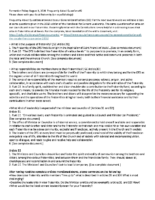
 I write to you as I am gazing on a nicely framed picture depicting the familiar portrayal of St. Francis embracing our crucified Lord Jesus. In an irresistible bond of loving gaze and opened armed embrace, the “little poor man” is drawn into the love of the “God-man.” This mystical encounter is set within the imagery of Calvary. It is a setting that calls to mind the exclamation of St. Paul when he says, “as for me life is Christ and him Crucified.” This statement expresses an understanding of the means and purpose, that St. Paul, St. Francis, and each Christian must embrace if we are to “live on” in the love of the Savior.
A general focal point of theme for the articles of this TAU-USA issue is “WE ARE LOVE.” As for myself (and perhaps for you), this declaration is exhilarating, and at the same time, intimidating as it draws us to recall that we are “earthen vessels” that God providentially designs to be the home of His indwelling love. “WE ARE LOVE” draws me to identify qualities of God’s love that transform and perfect our love to a higher love. I see our Christian love being incarnational – an indwelling, sacrificial, and life-giving oblation.
It is in the truth of Christ’s divine initiative, like the figurative arm (unrestrained by the nail of cross) that Jesus extends to St. Francis, that we all find our ability to persevere in hope and love beyond any burden of our imperfections. The first letter of John reminds and encourages us when it states: “We love because He loved us first.” Yes, this gift of Divine love not only defuses any debilitating scrutiny of unworthiness, but ignites a bold confidence of self-donation in love. And so, like St. Francis, we can increasingly open wide our hearts in mutual embrace with Christ.
How often do we take time to ponder and to relish the action of Christ’s love engaging and embracing us? It is in this ever-clearer self-awareness that is born of the Spirit that we are set afire with a love that is fruitful whether we are in stillness of presence or obvious in action.
The Franciscan family is easily inspired to new heights of devotion by the fiery exclamation of St. Francis when he said: “My God and My All!” To strive to be whole and holy is the most natural and supernatural of desires and strivings for the follower of Christ. The freedom of sanctifying grace, time and again, will enable us to be unimpeded by moment of fault so to continually arise in greater integrity and generosity of love.
As I reflected on the theme statement: “WE ARE LOVE,” I thought it necessitates an on-going choice of will – NOW, in the present moment, to conform to the Will of God who is love. This declaration demands by its integrity, that we do not “rest on the laurels” of what we were in love nor rest content with the presumption of what we will be in love. On the contrary, we plant our feet so to speak in an intentional present moment of commitment to set our gaze on what stands before us in person and circumstance and say “yes” to love as we are loved by God. Let us remember that what we want to be, we should do (now), and what we do, we will become.
What is the scope for this “Being” love? We know well the fundamental call to “love God with your whole mind, heart, and soul, and to love your neighbor as yourself.” The Letter of St. James warns us to remember that “to say we love God yet to hate our neighbor makes us liars.” There is no true love of God if it betrays a love of neighbor. Oh, the challenge we can find in our brother or sister (and ourselves). We can easily recall our Lord instructing us that we are called to a greater love: A love that reaches beyond that of family and friend (“for even the pagan loves those who love them”) on toward the enemy and persecutor. The sacrifice and cross of true love await us all to beckon and encourage us to trust the many means and ways of its presence – to open our hearts, with a bold abandon, to the dictates of the Holy Spirit.
Considering the necessity of our love being freely sacrificial, in an oblation of self for the “other,” I recalled a spiritual counsel from a Franciscan Tertiary of the 18th century, named St. Benedict Joseph Labre. St. Benedict was of noble birth but chose an itinerant life of voluntary poverty – a beggar who made the streets of Rome, Italy, his pilgrim way of silent prayer, fasting, and penance. Although known to seldom speak, when he did, it was worth the hearing.
He was asked one day how our love should be to achieve sanctity and his reply was: “To properly love, one must have three hearts. The first must be a heart of fire toward God so as to think and speak only of God, accepting hardships with demands by its integrity, that we do not “rest on the laurels” of what we were in love nor rest content with the presumption of what we will be in love. On the contrary, we plant our feet so to speak in an intentional present moment of commitment to set our gaze on what stands before us in person and circumstance and say “yes” to love as we are loved by God. Let us remember that what we want to be, we should do (now), and what we do, we will become.
What is the scope for this “Being” love? We know well the fundamental call to “love God with your whole mind, heart, and soul, and to love your neighbor as yourself.” The Letter of St. James warns us to remember that “to say we love God yet to hate our neighbor makes us liars.” There is no true love of God if it betrays a love of neighbor. Oh, the challenge we can find in our brother or sister (and ourselves). We can easily recall our Lord instructing us that we are called to a greater love: A love that reaches beyond that of family and friend (“for even the pagan loves those who love them”) on toward the enemy and persecutor. The sacrifice and cross of true love await us all to beckon and encourage us to trust the many means and ways of its presence – to open our hearts, with a bold abandon, to the dictates of the Holy Spirit.
Considering the necessity of our love being freely sacrificial, in an oblation of self for the “other,” I recalled a spiritual counsel from a Franciscan Tertiary of the 18th century, named St. Benedict Joseph Labre. St. Benedict was of noble birth but chose an itinerant life of voluntary poverty – a beggar who made the streets of Rome, Italy, his pilgrim way of silent prayer, fasting, and penance. Although known to seldom speak, when he did, it was worth the hearing.
He was asked one day how our love should be to achieve sanctity and his reply was: “To properly love, one must have three hearts. The first must be a heart of fire toward God so as to think and speak only of God, accepting hardships with resignation, and to submit in everything to His holy will. The second must be a heart of flesh, toward our neighbor, that will move us to help him in all his needs by instruction, advice and prayer; to have compassion for the poor sinners and for the souls in purgatory so that the Lord will grant them eternal rest. The third must be a heart of bronze toward oneself, that will make us hate all kinds of sensuality, resist self-love without rest, mortify the body, and subdue the wicked tendencies of perverted nature. With these three hearts love makes us deserving of the reward of the life to come.”
Looking once again upon the devotional picture of St. Francis and our Crucified Lord, both with arms outstretched in mutual embrace, I am comforted and encouraged to answer the call to be love. For this Calvary setting which the world associates with humiliation, suffering, weakness and defeat, rather reminds the Christian of the power of love for the other, a love that can sow the seeds of new life from the blood of selfless sacrifice and self-donation. This greater love is not the stuff of dream or fantasy. This love is the light that casts out the darkness of our imperfect and broken world. It is here and now at the crossroads of our life with each other that our Lord seeks to dwell in love.
https://www.secularfranciscansusa.org/2024/08/05/a-mutual-embrace/