Formation Commission – The Light of the World: We Are Called to See It and Be It

(This article originally appeared in the TAU-USA Summer 2022 Issue #106)

The Light of the World:

We Are Called to See It and Be It

LaynaMaher, OFS National Formation Commission

God Creating Light In the beginning, when God created the heavens and the earth–and the earth was without form or shape, with darkness over the abyss and a mighty wind sweeping over the waters–Then God said: Let there be light, and there was light. God saw that the light was good (Genesis 1:1-4).

The creation story begins with the goodness of light. Light was God’s first gift to each of us. The birth of Jesus was announced to us with the light of a star. We read of light in many stories in scripture, in both the Old Testament and the New Testament. In fact, if you looked for the word light in the Bible, you would see the word light mentioned well over 200 times. Light surely is something important for us to recognize, study, and ponder.

Light symbolizes the many wonderful characteristics of God. Light is also a symbol for awareness, knowledge, goodness, and understanding. We are each called by name (Isaiah 43:1) into the light and to shine the light from God into the world. We are called to be witnesses (Isaiah 43:10) to the world.

Our Rule clearly outlines our Secular Franciscan way of life to do just that. The three chapters in our OFS Rule clearly guide us on understanding the Secular Franciscan Order, our Way of Life, and our Life in Fraternity. We hear St. Francis speak of light in his Earlier Exhortation to the Brothers and Sisters of Penance (The first version of the Letter to the Faithful), the Prologue to our OFS Rule. St. Francis advises us in the words “All those, however, who are not living in penance…. They are blind because they do not see the true light, our Lord Jesus Christ”  (1 FA:ED, pg. 50). We are called to see the true light and to live in the light. We have been given the gift of our Franciscan vocation and the love and support of our Franciscan family to assist us as we live our Rule. Let us recall these words said at profession, “Therefore, in my secular state I promise to live all the days of my life the gospel of our Lord Jesus Christ in the Secular Franciscan Order by observing its rule of life.” The Rule lights the path for us as we strive to live out the promise we make.

We can each light the way for others with our actions by living the gospel. To live the gospel, we must know the gospel. OFS Rule, Article 4 states “The rule and life of the Secular Franciscans is this: to observe the gospel of our Lord Jesus Christ by following the example of Saint Francis of Assisi, who made Christ the inspiration and the center of his life with God and people. Christ, the gift of the Father’s love, is the way to him, the truth into which the Holy Spirit leads us, and the life which he has come to give abundantly. Secular Franciscans should devote themselves especially to careful reading of the gospel, going from gospel to life and life to the gospel.” Christ is the Light of the world. The Gospel gives us so many wonderful examples of how to reflect the light and love of Christ into the world.

We look to the words of Jesus in the Gospel of Matthew 5:13-16, the Similes of Salt and Light. 13“You are the salt of the earth. But if salt loses its taste, with what can it be seasoned? It is no longer good for anything but to be thrown out and trampled underfoot. 14You are the light of the world. A city set on a mountain cannot be hidden. 15Nor do they light a lamp and then put it under a bushel basket; it is set on a lampstand, where it gives light to all in the house. 16Just so, your light must shine before others, that they may see your good deeds and glorify your heavenly Father.” We then ask ourselves, what flavor am I bringing into the world? Am I bringing the light and love or darkness and condemnation?

We can turn to the Parable of the Lamp in Mark 4:21, where we again hear Jesus talk about a lamp, saying “Is a lamp brought in to be placed under a bushel basket or under a bed, and not to be placed on a lampstand?” We see the Parable of the Lamp again in Luke 8:16 “No one who lights a lamp conceals it with a vessel or sets it under a bed; rather, he places it on a lampstand so that those who enter may see the light.” Jesus shared this parable with us to tell us that because we have received the Gospel, we have an obligation to live it and share it with others.

In the Gospel of John, we hear these words from Jesus: “I am the light of the world. Whoever follows me will not walk in darkness but will have the light of life” John 8:12, and “I came into the world as light, so that everyone who believes in me might not remain in darkness” John 12:46.

We are blessed with many more recent words of guidance and goodness. In Lumen Gentium, Light of the Nations, Chapter IV, The Laity, we read we are called by God…”led by the spirit of the Gospel they may work for the sanctification of the world from within as a leaven. In this way they may make Christ known to others, especially by the testimony of a life resplendent in faith, hope and charity. Therefore, since they are tightly bound up in all types of temporal affairs it is their special task to order and to throw light upon these affairs in such a way that they may come into being and then continually increase according to Christ to the praise of the Creator and the Redeemer.” We ask ourselves, are our lives bringing God’s love and compassion into the affairs of our lives? Or are we bringing darkness and condemnation?

In Caritas In Veritate, In Charity and Truth, Benedict XVI, expanded on charity as he wrote “Truth is the light that gives meaning and value to charity. That light is both the light of reason and the light of faith….” Coherence… means dynamic faithfulness to a light received. The Church’s social doctrine illuminates with an unchanging light the new problems that are constantly emerging.” We then ask ourselves, are we bringing the truth of God’s love and compassion into charitable works with problems we see appearing? Or are we bringing darkness and condemnation?

Pope Francis tells us in chapter III of his encyclical Laudato Si, On Care for Our Common Home, “May the power and the light of the grace we have received also be evident in our relationship to other creatures and to the world around us. In this way, we will help nurture that sublime fraternity with all creation which Saint Francis of Assisi so radiantly embodied.” We are challenged again, and ask ourselves are we living in a way brings love and compassion to care for God’s creation? Or are we bringing darkness and condemnation?

We can turn to the Holy Spirit, our advocate, to light the way, to inflame and light our heart on fire with the love of God. As believers, we trust we are “a chosen race, a royal priesthood, a holy nation, a people of his own, so that you may announce the praises” of him who called you out of darkness into his wonderful light” 1 Peter 2:9.

We can choose to be the light in the way we live and respond to others, our fraternity, and all of creation. We can choose love and compassion or darkness and condemnation. When we choose to look and listen with empathy and understanding, offering compassion instead of condemnation, we can be the light. As we submit ourselves as servants of Christ, we can allow the light from the love of God, our creator, to illumine our eyes to see the beauty of creation and the goodness that God created in the world. As disciples of Jesus, following in the footsteps of St. Francis, we can shine that light into the world and illuminate everywhere we go and everything we do with the love and compassion of God. We can study our Rule article by article to examine our lives and ask what we are bringing. A few years ago, our national theme was “See Christ! Be Christ!” Today we are challenged to “See the Light and Be the Light” until our last day, when Night will be no more, nor will they need light from lamp or sun, for the Lord God shall give them light, and they shall reign forever and ever Revelation 23:5.

https://www.secularfranciscansusa.org/2022/09/26/formation-commission-the-light-of-the-world-we-are-called-to-see-it-and-be-it/

Open post

FORMATION FRIDAY – Our Call as Priest, Prophet & King and our RULE – September 23, 2022

At the time of our Baptism, we are called to be Priest, Prophet, and King along with our Lord Jesus Christ. This applies to every Catholic. We find the following in the Catechism of the Catholic Church:

Baptism makes us members of the Body of Christ. … “to be a holy priesthood” (1 Peter 2:5). By Baptism they share in the priesthood of Christ, in his prophetic and royal mission. They are “a chosen race, a royal priesthood, a holy nation, God’s own people …” (1 Peter 2:9). Baptism gives a share in the common priesthood of all believers (CCC, 1267, 1268).

Christ, high priest and unique mediator, has made of the Church “a kingdom, priests for his God and Father” (Revelation 1:6, see 5:9–10; 1 Peter 2:5,9). … The faithful exercise their baptismal priesthood through their participation, each according to his own vocation, in Christ’s mission as priest, prophet, and king (CCC, 1546).

“Profession in the Secular Franciscan Order reinforces our Baptismal promises. Our call to the Franciscan way of life points out the path for us to follow. This baptismal source of unity reaches beyond the boundaries of states, languages, cultures, and social classes. We are one in Christ. We are called to spread the Gospel and influence the world and the Church with the Gospel of Jesus flavored by our Franciscan spirit.” (Franciscan Journey p.48)

How is our call to be Priest, Prophet, and King made clear by our Rule?

+Priest: the link between God and human beings; harmony; peacemaking; prayer and sacramental life; relationship with Christ; bring this to the larger community through example.

We find this in numerous places in our Rule and Constitutions–Rule : Article 5; Article 8; Article 10; Article 11; Article 12; Article 19 ; Constitutions : Article 2.1 ; Article 3.2, 3.3 ; Article 8 ; Article 10 ; Article 11 ; Article 12.3 ; Article 13 ; Article 14

+Prophet: speaks the truth about God in words, actions, and personal example; and speaks of the signs of the times—through a Catholic (and in our case Franciscan lens); We are responsible for our own ongoing formation as Catholics and Franciscans; Scripture, the writings of Francis, Clare, and Bonaventure; the writings of the great Catholic theologians; we also have the opportunity to learn within our fraternities.

Rule and Constitutions–Rule: Article 4; Article 6; Article 13; Constitutions: Article 8.2; Article 9.2; Article 12 ; Article 15

+King: sees the talents of the community and directs those talents toward God; is willing to be a servant leader; understands that we are all called and encourages those in his or her care to fulfill their vocation.

Rule and Constitutions–Rule : Article 15; Article 16; Article 17; Article 18; Article 21 ; Article 24 ; Constitutions : Article 1 5; Articles 17-27

As you can see, our Rule and Constitutions reaffirm and strengthen our call to fulfill the role of Priest, Prophet, and King in our daily lives as Secular Franciscans. Please read the articles mentioned above (you may be able to find even more that apply.) After reading the articles (available here in English: https://ciofs.info/library/official-documents/ ), answer the following in your journal or with a prayer partner:

+How do you live out the call to be “Priest, Prophet, and King?”
+In what ways does our Rule help us to move in the right direction?
+Which parts of this call are most comfortable for you? Which do you find most challenging?

+++++++++++++++++++++++++++++++++++++++++

Nuestro llamado como Sacerdote, Profeta, y Rey y nuestra Regla
25 de septiembre de 2022 (Por favor, comparta con su fraternidad local)

En el momento de nuestro Bautismo, somos llamados a ser Sacerdote, Profeta, y Rey junto con nuestro Señor Jesucristo. Esto se aplica a todos los católicos. Encontramos lo siguiente en el Catecismo de la Iglesia Católica:

El bautismo nos hace miembros del Cuerpo de Cristo. … “para ser un sacerdocio santo” (1 Pedro 2:5). Por el bautismo participan del sacerdocio de Cristo, de su misión profética y real. Son “linaje escogido, real sacerdocio, nación santa, pueblo adquirido por Dios…” (1 Pedro 2:9). El bautismo da una participación en el sacerdocio común de todos los creyentes (CIC, 1267, 1268).

Cristo, sumo sacerdote y único mediador, ha hecho de la Iglesia “un reino de sacerdotes para su Dios y Padre” (Apocalipsis 1:6, ver 5:9–10; 1 Pedro 2:5,9). … Los fieles ejercen su sacerdocio bautismal mediante su participación, cada uno según su propia vocación, en la misión de Cristo como sacerdote, profeta y rey (CIC, 1546).

“La profesión en la Orden Franciscana Seglar refuerza nuestras promesas bautismales. Nuestro llamado al estilo de vida franciscano nos indica el camino a seguir. Esta fuente bautismal de unidad va más allá de las fronteras de los estados, lenguas, culturas, y clases sociales. Somos uno en Cristo. Estamos llamados a difundir el Evangelio e influir en el mundo y la Iglesia con el Evangelio de Jesús con sabor a nuestro espíritu franciscano.” (Jornada franciscana p.48)

¿Cómo se manifiesta en nuestra Regla nuestro llamado a ser Sacerdote, Profeta, y Rey?

+Sacerdote : vínculo entre Dios y el hombre; armonía; pacificación; oración y vida sacramental; relación con Cristo; llevar esto a la comunidad en general a través del ejemplo personal.

Encontramos esto en numerosos lugares en nuestra Regla y Constituciones–Regla: Artículo 5; artículo 8; artículo 10; artículo 11; artículo 12; artículo 19; Constituciones: Artículo 2.1; Artículo 3.2, 3.3; artículo 8; artículo 10; artículo 11; Artículo 12.3; Artículo 13; Artículo 14

+Profeta: dice la verdad acerca de Dios en palabras, acciones y ejemplo personal; y habla de los signos de los tiempos, a través de un lente católico (y en nuestro caso franciscano); Somos responsables de nuestra propia formación permanente como católicos y franciscanos; La escritura, los escritos de Francisco, Clara, y Buenaventura; los escritos de los grandes teólogos católicos; también tenemos la oportunidad de aprender dentro de nuestras fraternidades.

Regla y Constituciones–Regla: Artículo 4; artículo 6; artículo 13; Constituciones: Artículo 8.2; Artículo 9.2; artículo 12; Artículo 15

+Rey: ve los talentos de la comunidad y dirige esos talentos hacia Dios; está dispuesto a ser un líder servidor; entiende que todos estamos llamados y alienta a quienes están bajo su cuidado a cumplir su vocación.

Regla y Constituciones–Regla: Artículo 15; artículo 16; artículo 17; artículo 18; artículo 21; artículo 24; Constituciones: Artículo 1 5; Artículos 17-27

Como pueden ver, nuestra Regla y Constituciones reafirman y fortalecen nuestro llamado a cumplir el papel de Sacerdote, Profeta, y Rey en nuestra vida diaria como Franciscanos Seglares. Lea los artículos mencionados anteriormente (es posible que pueda encontrar más que se apliquen). Después de leer los artículos, (disponibles aquí en español: https://ciofs.info/es/library/official-documents/ ), responda a las siguientes preguntas en su diario o con un compañero de oración:

+¿Cómo vives la llamada a ser “ Sacerdote, Profeta y Rey ”?
+¿De qué manera nuestra Regla nos ayuda a avanzar en la dirección correcta?
+¿Qué partes de esta llamada te resultan más cómodas? ¿Cuál encuentras más desafiante?


Diane F. Menditto, OFS

Chair, National Formation Commission

Formation Director, Our Lady of the Angels Region
Formation Director, St. Francis Fraternity, Hackensack, NJ
Open post

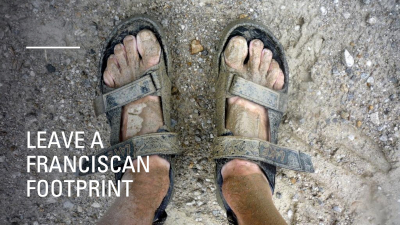
SHAPING THE FRANCISCAN FOOTPRINT – September 15 – September 21 2022

(PDF article attached for printing)


Five Important Spiritual Thoughts from the Liturgy of the Word

…and follow up for the Secular Franciscan

September 15 – September 21


1 — “Woman, behold your Son.” (John 19:26)**

…Am I truly following “Mary’s prime directive” to study carefully the attitude of Jesus and adopt it in my life?


2 –“Accompanying him were the Twelve and some women.” (Lk 8:1-2)**

GOD DON’T MAKE JUNK

To Jesus, everyone is important.

We must all listen to that teaching. In the Gospels, Jesus is actually making everyone think by getting them to look closely at what they were doing.

Evil does not like that. The devil, or Satan, or however we look at the dark side of life would much rather cause dissension and chaos by making us feel that we are better than someone else and hiding the fact from ourselves.

That fact—that everyone is important—was brought home to me in a striking way a number of years ago. Thinking that I knew something about his school, the administrator of a school asked me to speak to his teenagers about rock music. Since I had done it a number of times in other schools, I said “yes” to his request. The administrator met me at the door, and I realized immediately that it was not a regular school at all. I noticed first of all that there were severely handicapped young people in wheelchairs around the hallway. Then he took me to a ward, a very big room, with portable beds around the walls, and nothing in the main body of the room. My talk on leadership and music involves activity, eye-contact, and there was nothing like that. I was totally distressed and embarrassed, completely out of sync with what I wanted to do. I rushed through the presentation, and afterwards, wanted to get out of there as quickly as I could, knowing that I had failed in my efforts miserably.

But before I left, the administrator told me that one of the young people wanted to talk to me, and so I followed him to a little alcove where there were five or six young people in wheelchairs who could not talk at all. They were in front of computers, and the way they “talked” was by using a head band with a pointer, hitting the computer and writing to me what they wanted to say. The young man realized how uncomfortable I was, and he wrote his message: “Thank you for coming. Don’t feel bad. Remember—God don’t make junk.” It was difficult to keep from crying: here was a person whom many in our society consider “junk” telling me that just because I did not think that I did well on a program, that I was not junk.

God don’t make junk. From the most insignificant person who died during this minute to the child who was just conceived by a man and a woman, everyone is important because God don’t make junk.

One of the movies that I think everyone should see is “Seabiscuit,” the story of a horse who could have been junk, and turned out to be a magnificent animal. One line keeps going through the movie that is very apropos here and something that we can learn from: “You don’t throw away a whole life just because it’s banged up a little.”


3 — You cannot serve both God and mammon.” (Lk 16:13)**

…Has the things of this world taken on more importance for me than the things of heaven?


4 — “My mother and my brothers are those who hear the word of God and act on it.” (Lk 8:21)**

…For a Franciscan, a daily reading of Scripture is a must.


5 — He who shuts his ear to the cry of the poor will himself also call and not be heard. (Proverbs 21:13)

…Francis was concerned about the poor around him; am I as concerned as I should be about the poor around me?

JPIC – When Violence is the Way, We Must Choose and Show Another Way

(This article originally appeared in the TAU-USA Summer 2022 Issue #106)

by Carolyn D. Townes, OFS, National Animator

“Mindful that we are bearers of peace, which must be built up unceasingly, we should seek out ways of unity and fraternal harmony through dialogue, trusting in the presence of the divine seed in everyone and in the transforming power of love and pardon. Messengers of perfect joy in every circumstance, we should strive to bring joy and hope to others.” OFS Rule, Art. 19
This year has been a year of unspeakable violence – mass shootings, bombings and war, divisions in hearts, minds, and speech. Where has civility gone? What has become of compassion and respect? What has happened to protecting the young, the innocent, the poor, and the marginalized? When did we become so desensitized to the plight of those who are suffering or abandoned? When has caring for our fellow human beings become a political statement instead of an act of good will? And more importantly, why have we allowed this to become the norm?

Once upon a time, a person’s word was their bond, their pledge of honor. It was all that was needed for many transactions in this world – a handshake, a knowing smile, a heartfelt agreement. Those were also the days when everyone looked out for the children – all the children, anyone’s children. And the children knew other eyes were on them – looking out for them, protecting them, watching over them. Except in certain remote places, this is no longer the case. Today, children do not honor mother or father, let alone other elders. And the elders? They are too busy doing what they need to do to survive themselves, so they have no time to look after their own children, let alone someone else’s children.

In those days when a person’s word meant something, there was also more conversation, less debate, and more dialogue. Debate is more about winning and making the other person wrong than about having a healthy dialogue and sharing ideas. Where have those days gone? Why do I need to make you wrong rather than just understand your point of view? When we make others wrong, we do violence to them. We also do ourselves a disservice, because we lose out on the opportunity to learn from them, and thus to grow.

As a grief counselor and a full-time caregiver, I have learned the importance of listening to understand, instead of listening to respond or rebut. The most important thing we can do is listen to another person. We don’t have to have the answers. In fact, more often than not, they already know the answer. They just need to get out of their own heads and talk it out with an empathetic, listening soul. If that is all we give someone who is suffering, we have given the greatest of gifts.

One of my favorite stories about Saint Francis was when he and his brother friar were going to a neighboring town to preach. They walked through the town greeting the people, listening to their stories and hardships, sharing thoughtful words and prayers. By the time they got to the edge of town, the friar questioned Father Francis about preaching. He thought they were going to preach to the townspeople. Father Francis assured his brother that they did – by their actions. The words often attributed to Francis, “Preach the Gospel at all times; and if necessary, use words,” speak to this little story beautifully.

As Franciscans, we are not called to fix our brothers and sisters, but to love and listen to them. When we can love and listen, we allow the Holy Spirit to do whatever fixing is needed. We do not know the heart and mind of another, but the Holy Spirit does. We must be humble enough to allow the space for the Holy Spirit to do the work. That is not our responsibility. This is a liberating feeling. Imagine! I don’t have to have all the answers. I don’t have to fix my brothers and sisters. I don’t have to do the job of the Holy Spirit. All that is mine to do is to love and to listen. May the Lord continue to grant you peace as you be peace to others.

https://www.secularfranciscansusa.org/2022/09/19/jpic-when-violence-is-the-way-we-must-choose-and-show-another-way/

Open post

FORMATION FRIDAY – The Stigmata of St. Francis – September 17, 2022


The Stigmata of St. Francis

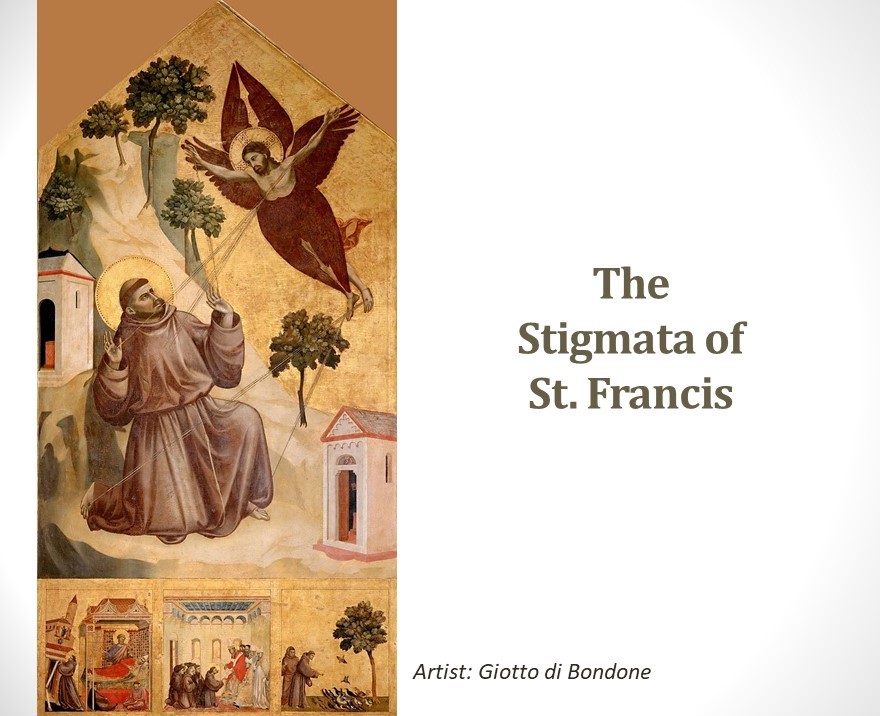
+ St. Francis received the Stigmata around the feast of the Triumph of the Holy Cross in
September of 1224–two years before his death.
+He was praying on Mt. La Verna preparing for the feast of St. Michael the Archangel. Brother Leo was nearby.
+While praying, He asked God for two things. One, to let him experience the suffering Christ endured on the Holy Cross and two, for him to experience the love in which He did it.
+ Shortly thereafter, Francis saw a Seraph with six wings. (Seraphs are angels of the highest order who are closest to God and most passionate in praising Him.) Between the wings was the image of a crucified man. When the vision disappeared, Francis was marked with the wounds of Christ. (St. Francis’s encounter with the Seraph and his passion in praising the Father has caused the Franciscan Order to be called the Seraphic Order and Francis our Seraphic Father.
+ We celebrate the Feast of the Stigmata on September 17th
+ St. Francis is the first person in recorded Christian history to receive the Stigmata.

The Stigmata: Inspiration for our spiritual lives as Franciscans

The marks in our lives:
–What does it mean to be marked?
–What marks us in our lives?
–As Catholics, how are we marked?
–How do the things that mark us, help us to move forward in our spiritual lives?

Now, Gaze at the Cross:
–As we gaze at the wounds of Christ, what comes to mind?
–As we consider what Jesus suffered for us, how do we respond?
–As we contemplate Jesus’s willingness to die for us, what are we willing to do for our brothers and sisters?
–As we imitate Jesus in our lives, how are we willing to use our lives in the service of others?

Prayer to the Five Wounds of the Lord prayed by St. Clare of Assisi
https://www.franciscantradition.org/clare-of-assisi-early-documents/related-documents/franciscan-documents/the-prayer-to-the-five-wounds-of-the-lord/599-ca-ed-1-page-422

Prayer of Pope St. John Paul II (On a visit to Mt. La Verna in 1983)

O St Francis, stigmatized on La Verna, the world longs for you, that icon of the crucified Jesus.
It has need of your heart, open to God and to others; of your bare, wounded feet, of your pierced hands raised in supplication.
It longs for your voice so frail yet forceful with the power of the Gospel.
Francis, help the people of this age to recognize the evil of sin and to seek purification from it in penance.
Help them to become free from the very structures of sin that oppress today’s society.
Rekindle in the consciousness of those in government an urgent need for peace between nations and peoples.
Instil in young people your freshness of life that is capable of withstanding the snares of the many cultures of death.
To those injured by every type of evil teach, O Francis, the joy of being able to forgive.
To all those crucified by suffering, hunger and war, reopen the doors of hope. Amen.

+++++++++++++++++++++++

Los estigmas de San Francisco

+ San Francisco recibió los estigmas en torno a la fiesta del Triunfo de la Santa Cruz en septiembre de 1224, dos años antes de su muerte.
+ Estaba orando en el monte La Verna preparándose para la fiesta de San Miguel Arcángel. El hermano Leo estaba cerca.
+ Mientras oraba, le pidió a Dios dos cosas. Una, dejarle experimentar el sufrimiento que Cristo soportó en la Santa Cruz y dos, que experimentara el amor en el que lo hizo.
+ Poco después, Francisco vio un Serafín con seis alas. (Los serafines son ángeles del orden más alto que están más cerca de Dios y más apasionados en alabarlo.) Entre las alas estaba la imagen de un hombre crucificado. Cuando la visión desapareció, Francisco quedó marcado con las llagas de Cristo. (El encuentro de San Francisco con el Serafín y su pasión por alabar al Padre ha hecho que la Orden Franciscana sea llamada Orden Seráfica y Francisco nuestro Seráfico Padre.
+ Celebramos la Fiesta de los Estigmas el 17 de septiembre
+ San Francisco es la primera persona en la historia cristiana registrada en recibir los estigmas.

Los estigmas: inspiración para nuestra vida espiritual como franciscanos

Las marcas en nuestras vidas:
-¿Qué significa estar marcado?
-¿Qué nos marca en nuestra vida?
-Como católicos, ¿cómo estamos marcados?
– ¿Cómo nos ayudan las cosas que nos marcan a avanzar en nuestra vida espiritual?

Ahora, mirar la cruz:
– Al contemplar las heridas de Cristo, ¿qué nos viene a la mente?
-Al considerar lo que Jesús sufrió por nosotros, ¿cómo respondemos?
Al contemplar la disposición de Jesús a morir por nosotros, ¿qué estamos dispuestos a hacer por nuestros hermanos y hermanas?
Al imitar a Jesús en nuestra vida, ¿cómo estamos dispuestos a usar nuestra vida al servicio de los demás?

Oración a las cinco llagas del Señor–oración de santa Clara de Asís (en inglés)
https://www.franciscantradition.org/clare-of-assisi-early-documents/related-documents/franciscan-documents/the-prayer-to-the-five-wounds-of-the-lord/599-ca-ed-1-page-422

Oración del Papa San Juan Pablo II (En una visita al Monte La Verna en 1983)
Oh, San Francisco, estigmatizado en La Verna, el mundo te anhela, ese icono de Jesús crucificado.
Necesita tu corazón, abierto a Dios ya los demás; de tus pies descalzos y heridos, de tus manos traspasadas alzadas en súplica.
Anhela tu voz tan frágil pero contundente con el poder del Evangelio.
Francisco, ayuda a la gente de esta época a reconocer la maldad del pecado y a buscar la purificación de él en la penitencia.
Ayúdalos a liberarse de las mismas estructuras del pecado que oprimen a la sociedad actual.
Reavivar en la conciencia de los gobernantes una urgente necesidad de paz entre naciones y pueblos.
Inculca en los jóvenes tu frescura de vida que es capaz de resistir las trampas de las muchas culturas de la muerte.
A los heridos por todo tipo de mal, enséñales, oh Francisco, la alegría de poder perdonar.
A todos los crucificados por el sufrimiento, el hambre y la guerra, reabre las puertas de la esperanza. Amén.

 
Diane F. Menditto, OFS

Chair, National Formation Commission

Formation Director, Our Lady of the Angels Region
Formation Director, St. Francis Fraternity, Hackensack, NJ
 
Scroll to top
Juan de Padilla