Open post

SHAPING THE FRANCISCAN FOOTPRINT – November 17 – November 23 2022

(pdf copy attached for printing)

Five Important Spiritual Thoughts from the Liturgy of the Word

…and follow up for the Secular Franciscan

November 17 – November 23


1 — “If this day
you only knew what makes for peace.”
(Lk 19:42)**

…Do others consider me a peaceful person?


2 – “He said to me,
‘Take and swallow it.’”
(Rev 10:9)

Extended meditation:

Why are Jesus’s words so important?

Before we even answer that question, we have to clarify “Jesus’s words.” First of all, we must be certain that they
are his words. The Gospels give us the
words, and although sometimes there must be scholarly study with regard to the
words, most of the time they can easily be understood. Mark Twain famously said, “
Most people are bothered by those passages of
Scripture they do not understand, but the passages that bother me are those I
do understand.”

Secondly, Jesus’s words come through
others. For example, we must listen to
the words that come from the Hebrew Scriptures, words often spoken as a
foundation for Jesus’s words in the Gospel.
Also, we must hear the words of preachers of Jesus’s words who were
speaking of what Jesus said and their application to our lives, namely the
words of the New Testament Scriptures.

The General Instruction on the Roman
Liturgy says this about the first part of the Mass called the Liturgy of the
Word:

The
Liturgy of the Word is to be celebrated in such a way as to promote meditation,
and so any sort of haste that hinders recollection must clearly be avoided.
During the Liturgy of the Word, it is also appropriate to include brief periods
of silence, accommodated to the gathered assembly, in which, at the prompting
of the Holy Spirit, the word of God may be grasped by the heart and a response
through prayer may be prepared. It may be appropriate to observe such periods
of silence, for example, before the Liturgy of the Word itself begins, after
the first and second reading, and lastly at the conclusion of the homily
.

Periods of silence in which “at the prompting of the Holy Spirit, the word of God may
be grasped by the heart” is suggested by the document. The words of Jesus and about Jesus must be
the guide that the Christian accepts in order to live in our world. That is, the beginning of a good life comes
from words, words that we think about in “the heart.”

Of course, thinking about those words is only the beginning. “The heart” must direct those words to
“living,” in action. Francis of Assisi famously spoke that fact at one time:
“It is no use
walking anywhere to preach unless our walking is our preaching,” which has been
roughly translated: “Preach the Gospel at all times; and if necessary, use words.”


3 – My house shall be a house of prayer.” (Lk 19:46)**

…Can I make my prayer schedule/life a little better than it is?


4 — “Jesus,
remember me when you come into your kingdom.”
(Lk 23:42)**

…This should be a daily prayer, and a daily challenge to deserve the kingdom.


5 — “I tell you truly, this poor widow put in
more than all the rest.
(Lk 21:3)**

…Do we give of ourselves completely to the Lord?


Open post

FORMATION FRIDAY – The OFS USA National Theme for 2022 to 2025 is, “Listen, Discern, Go forth.” – November 18, 2022

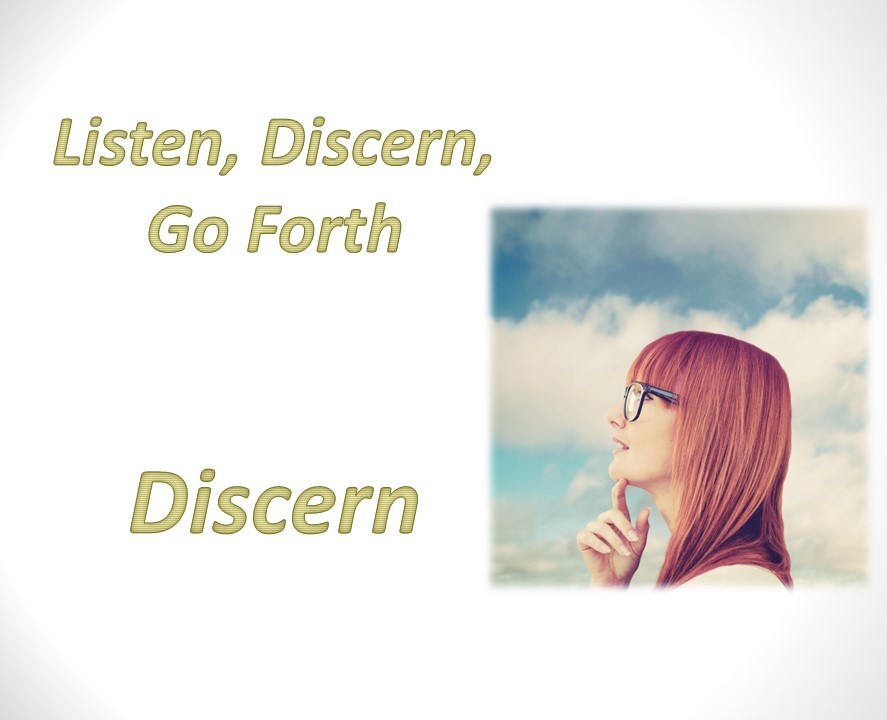
The OFS USA National Theme for 2022 to 2025 is, “Listen, Discern, Go forth.


For our second installment, “Discern,” we have invited Anne Mulqueen, OFS, Spiritual Assistant to the National Formation Commission, to reflect on Discernment. Thank you, Anne!


Discernment

Seeking God’s Guidance


The purpose of spiritual discernment is that … you may be filled with the knowledge of God’s will through all spiritual wisdom and understanding Colossians 1:9


The word discernment comes from the Latin discernere, which means to distinguish or to discriminate among various options. Spiritual discernment is not the same as decision-making. We come to decision-making intellectually by weighing options, but to discern spiritually, we must listen and align our responses and decisions in accord with God’s desire and will for our lives.


God wants to speak to us. In fact, God is speaking all the time. We need to discover how to hear God’s voice. God speaks through Scripture, other people, nature, experiences, our intellect, events and endless other ways. To discern the true voice of the Almighty, we must enter into communion with Him through prayer, solitude and the desire for God’s will alone. When we read a portion of Scripture that speaks to us in a special way, it may well be His voice. In John 10:27, Jesus says, My sheep hear my voice; I know them, and they follow me.


Discernment is both a gift and a skill. The desire to seek God’s counsel comes first from God. Discernment is one of the supernatural gifts of the Holy Spirit available to all Christians. It works best in conjunction with her sisters, Wisdom and Knowledge. Discernment is not only a gift, but also a skill that can be developed by prayer and practice. Over time we can learn to identify the “voices” we hear. Some come from our egos, some come from culture, and some simply from what we want to hear. And because God has given us the great gift of free will, sometimes we listen to the other voices and are deaf to the voice of God.


So, as we sift through all the thoughts and information with which the world and our own self-interest bombard us, we realize that discernment is not easy. It takes faith, prayer and determination to distinguish the voice of the Holy Spirit from distractions. Remember, God’s leading will never contradict Scripture.


Discernment from on high is confirmed in many ways. Sometimes we receive a similar message from other sources or persons. And sometimes, if we missed it the first time, we will hear the same message again. We may feel a sense of joy, clarity, and peace when our insights are in line with the will of God. We might have an “aha” moment, a mystical moment, when what we “hear” can only be described as supernatural.


We can never be absolutely certain of our discernment, but we can move forward, asking God to continue to guide us and to correct any missteps along the way. It takes trust to step out in faith and follow the leading of the Holy Spirit as we journey into the heart of God.


For discussion or to comment on in your journal:


The word question is related to the word quest. Please consider these questions as a quest to hear God’s voice.


1. Have you ever made an intentional attempt to discern God’s guidance and direction before making a crucial, life-altering decision? Did you receive the direction you sought? If you did, how did God speak to your heart?


2. God often uses other people to confirm His voice. Think of the people you would most likely turn to when you need to make a difficult personal decision. What is it about them that makes you turn to them?


3. Take a pen and paper; recall and write down an event in your life when you felt the hand of God guiding you to something new and perhaps frightening. Were you willing to go forward without fully knowing where the path would lead? Journal about the experience.


++++++++++++++++++++++++++++++++++++++++++++++++++


Formation Friday 18 de noviembre de 2022 (In English abajo) Por favor comparta con su fraternidad local


El tema nacional de la OFS USA para 2022 a 2025 es “Escuchar, discernir, seguir adelante .


Para nuestra segunda entrega, “Discernir,” hemos invitado a Anne Mulqueen, OFS, Asistente Espiritual de la Comisión Nacional de Formación, a reflexionar sobre el Discernimiento. ¡Gracias, Anne!


Discernimiento

Buscando la guía de Dios


El propósito del discernimiento espiritual es que … sean llenos del conocimiento de la voluntad de Dios mediante toda sabiduría e inteligencia espiritual … Colosenses 1:9


La palabra discernimiento proviene del latín discernere, que significa distinguir o discriminar entre varias opciones. El discernimiento espiritual no es lo mismo que la toma de decisiones. Llegamos a la toma de decisiones intelectualmente sopesando las opciones, pero para discernir espiritualmente, debemos escuchar y alinear nuestras respuestas y decisiones de acuerdo con el deseo y la voluntad de Dios para nuestras vidas.


Dios quiere hablarnos. De hecho, Dios está hablando todo el tiempo. Necesitamos descubrir cómo escuchar la voz de Dios. Dios habla a través de la Sagrada Escritura, otras personas, la naturaleza, las experiencias, nuestro intelecto, eventos y un sinfín de otras formas. Para discernir la verdadera voz del Todopoderoso, debemos entrar en comunión con Él a través de la oración, la soledad y el deseo de la sola voluntad de Dios. Cuando leemos una porción de las Escrituras que nos habla de una manera especial, bien puede ser Su voz. En Juan 10:27, Jesús dice: “Mis ovejas oyen mi voz; Yo las conozco y ellas me siguen.”


El discernimiento es tanto un don como una habilidad. El deseo de buscar el consejo de Dios viene primero de Dios. El discernimiento es uno de los dones sobrenaturales del Espíritu Santo al alcance de todo cristiano. Funciona mejor en conjunto con sus hermanas, Sabiduría y Conocimiento. El discernimiento no es solo un don, sino también una habilidad que puede desarrollarse mediante la oración y la práctica. Con el tiempo podemos aprender a identificar las “voces” que escuchamos. Algunos provienen de nuestros egos, algunos provienen de la cultura y otros simplemente de lo que deseamos escuchar. Y debido a que Dios nos ha dado el gran don del libre albedrío, a veces escuchamos las otras voces y somos sordos a la voz de Dios.


Así que, a medida que revisamos todos los pensamientos e información con los que el mundo y nuestro propio interés nos bombardean, nos damos cuenta de que el discernimiento no es fácil. Se necesita fe, oración y determinación para distinguir la voz del Espíritu Santo de las distracciones. Recuerden, la dirección de Dios nunca contradirá las Escrituras.


El discernimiento de lo alto se confirma de muchas maneras. A veces recibimos un mensaje similar de otras fuentes o personas. Y a veces, si nos lo perdimos la primera vez, volveremos a oír el mismo mensaje. Podemos sentir una sensación de alegría, claridad y paz cuando nuestras percepciones están en línea con la voluntad de Dios. Podríamos tener un momento “ajá,” un momento místico, cuando lo que “escuchamos” solo puede describirse como sobrenatural.


Nunca podemos estar absolutamente seguros de nuestro discernimiento, pero podemos seguir adelante, pidiéndole a Dios que nos siga guiando y corrigiendo cualquier error en el camino. Se necesita confianza para dar un paso de fe y seguir la dirección del Espíritu Santo mientras caminamos hacia el corazón de Dios.


Para discusión o para comentar en su diario:

Por favor considere estas preguntas como una búsqueda para escuchar la voz de Dios.


  1. ¿Alguna vez ha hecho Ud. un intento intencional de discernir la guía y dirección de Dios antes de tomar una decisión crucial que le cambiara la vida? ¿Recibió la dirección que buscaba? Si así pasó, ¿cómo habló Dios a su corazón?


  1. Dios a menudo usa a otras personas para confirmar Su voz. Piense en las personas a las que probablemente acudiría cuando necesite tomar una decisión personal difícil. ¿Qué ofrecen ellos que le hace volverse hacia ellos?


  1. Coja un lápiz y papel; Recuerde y escriba un evento en su vida cuando sintió la mano de Dios guiándole hacia algo nuevo y quizás aterrador. ¿Estaba dispuesto a seguir adelante sin saber completamente a dónde le llevaría el camino? Describa la experiencia en su diario.



Diane F. Menditto, OFS
Vice Minister, National Fraternity, Secular Franciscan Order USA
Listen – Discern – Go Forth National Theme 2022-2025
Open post

SHAPING THE FRANCISCAN FOOTPRINT – November 10 – November 16 2022


(PDF copy is attached for printing)


Five Important Spiritual Thoughts from the Liturgy of the Word

…and follow up for the Secular Franciscan

November 10 – November 16


1 — “Behold, the Kingdom of God is among you.” (Lk 17:21)**

Extended meditation:

When Christian people are asked about
the most important thing that Jesus said while on earth, they usually refer to
virtues such as love, peace, forgiveness, etc.
But upon study of Jesus’s words, the most important image that Jesus
used was the image of the Kingdom of God.

It seems that what Jesus wanted most of
all during his ministry here on earth is to establish this Kingdom of God. According to the Catechism, that Kingdom
refers to what will happen with we cooperate with the grace of the Spirit to
make everything holy in our society and culture, culminating in the eternal
life that Jesus promised.

It did not work out that way, of
course, because of the opposition that Jesus faced during his ministry. But he did begin the process, and it has
continued over the ages to be known as the Church. It should be the Church’s goal to bring everyone
to cooperate with the Spirit, and consequently enjoy both a holy life here and
eternal life hereafter.

But has the Church done that? And in particular have we cooperated in
bringing about such an end.

This allegory about the Church should
lead us to understand our role a little more.

On a dangerous seacoast where shipwrecks
often occur there was once a crude little lifesaving station. The building was
just a hut, and there was only one boat, but the few devoted members kept a
constant watch over the sea, and with no thought for themselves, went out day
and night tirelessly searching for the lost. This wonderful little station
saved many lives, so that it became famous.

Some of those who were saved, and
various others in the surrounding area, wanted to become associated with the
station and give of their time and money for the support of its work. New boats
were bought and new crews trained. The little lifesaving station grew.

Presently, some members became unhappy
that the building was so crude, so simple. Gradually, beds replaced cots and
good furniture appeared in the enlarged building.

The station itself came to be decorated
beautifully, and was used as a club. The members became less interested in
going to sea on lifesaving missions, so lifeboat crews were hired to do that
work, especially when the people whose lives were saved were people who were
different from the people of the station.

Soon, there was a split in the club
membership. Those members who wanted lifesaving to be its primary purpose were
voted down by the others. They were told that if they wanted to save lives,
they could begin their own station down the coast—which they did.

As the years went by, the new station
experienced the same changes that had occurred in the old. It evolved into a
club, and yet another lifesaving station was founded.

History continued to repeat itself, and if
you visit the seacoast today, you will find a number of exclusive clubs along
the shore.

Shipwrecks are still frequent in those waters, but
most of the people drown
.

We are part of the Kingdom of God, the “life-saving station”
that Jesus established. Perhaps we should be better “life-savers” than we are.


2
– “When the Son of Man comes, will he find faith on earth?”
(Lk 18:8)**

…How strong is my faith?


3
“Lord, please let me see.”
(Lk 18:41)**

…What should I see in the sense of what the Lord wants for me to understand in my life?


4 – “Day and night they do not stop exclaiming: ‘Holy, holy, holy is the Lord God
almighty.’”
(Rev 4:8)

…Do I spend time of praise to God, for example, for creation, for my living, for the great things in my life?


5 – “‘Well done, good servant! You have been faithful in this very
small matter.’”
(Lk 19:17)

…Am I as faithful as I should be in my spiritual activities?

Sharing A Formation Idea

(This Article originally appeared in the TAU-USA Summer Issue #106)

Fraternity Life Can Be Puzzling

Puzzles of Ideas or a Picture of your Fraternity

Putting together a puzzle is a fun fraternity project―and if the puzzle is one that reflects your fraternity or your council, it can provide important insights.

Did you know you can purchase a blank jigsaw puzzle with all white pieces that you can write or draw on? You can also order a jigsaw puzzle that has a custom image. Both types come in various sizes with various number of pieces. You can easily search for these on the internet.

As your fraternity or council gathers, give each member a piece of the puzzle, or several pieces, depending on the size of the puzzle and the group. If it’s a blank puzzle, each one can decorate their piece with words or images that say something about themselves, or what gift they receive from the fraternity. If you choose to order a puzzle with an image, you might choose a group photo of your fraternity or an image that reflects the gift of diversity.

Combine this activity with a reflection on how we are all one in Christ, or how we should celebrate our diversity and what gifts we each bring, and you’ll be providing your fraternity with a fun―and meaningful―formation session.

https://www.secularfranciscansusa.org/2022/11/14/sharing-a-formation-idea/

Open post

FORMATION FRIDAY – OFS National Theme for 2022-2025 is “Listen, Discern, Go Forth”, November 11, 2022

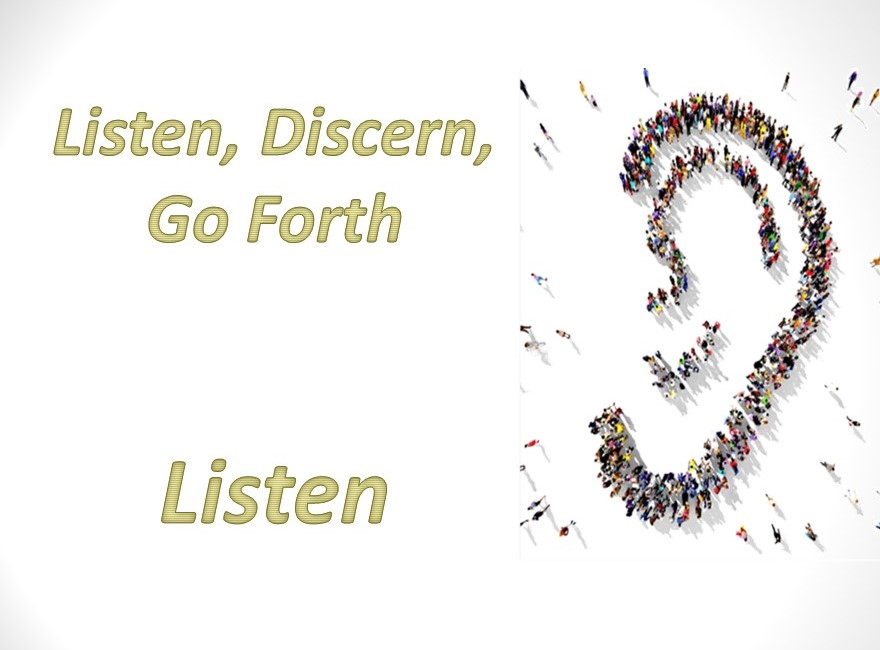
The OFS USA National Theme for 2022 to 2025 is, “Listen, Discern, Go forth.” We were inspired by a lecture given by Fr. Thomas Nairn who paraphrased Pope John XXIII. Hear his talk in English here: https://www.youtube.com/watch?v=QG6t90WrmIA&t=605s

For the next three weeks, Formation Friday will look at each of these words from our perspective as Catholics and Secular Franciscans.

LISTEN:

What does it mean to listen? It is the time to “see” and “understand.”

When we listen, we not only hear what someone is saying, but we gain an understanding of why they are saying it.

When we think of listening, we often jump immediately to the idea of listening to someone talking. Stop for a minute. In order to be good Franciscan listeners, we need to prepare ourselves.

  • Silence comes first.
  • Listen to the Holy Spirit by keeping an open mind and heart in order to hear the whisper of the Spirit.
  • Listen to Jesus in Sacred Scripture and to the voices of the Prophets and the chroniclers of his life
  • Gaze on the cross of our Lord Jesus. (St. Clare shows us the way, “Gaze, Consider, Contemplate, Imitate.”)
  • Listen to the voices of St. Francis and St. Clare as they speak to us through their writings and example.
  • Secular Franciscans, Listen to the wisdom of our Rule and Constitutions.

NOW we are ready to listen:

  • to our brothers and sisters without thinking of our own agendas
  • to the signs of the times
  • in order to hear cry of the poor and the vulnerable at every stage of life

How do we do this?

  • Find times to be alone in prayer—adoration, silent prayer in any quiet spot
  • Read Scripture every day.
    • Take note of how Jesus listened to his mother at Cana; to the men walking on the road to Emmaus; to the woman at the well; to Martha and Mary; to the Gerasene demoniac; to the Centurion whose servant had died; to Pontius Pilate.
  • Make ongoing formation—personally and with the fraternity— a priority by using the writings of Francis and Clare and other Franciscan sources.
    • Francis listened to Jesus from the Cross, to the plight of the lepers and the poor, to his brothers, to the Church
    • Clare listened to the promptings of the Spirit; to Francis; to her sisters; to the Church.
  • Cherish your fraternity as a place to practice listening:
    • to one another –at gatherings, on the phone, in written emails or notes.
  • Recognize the importance of listening sessions on all levels of Fraternity.

Recognize the Impediments to Listening:

  • Interrupting during a group discussion (a good suggestion—use mutual invitation)
  • Thinking about my response while the other person is talking
  • Being distracted (put down the electronics)
  • Not being truly present to the other (perhaps I have already made my decision, and I stop listening. Perhaps I want to solve the other person’s problem, and when they don’t follow my advice, I lose interest. Perhaps there’s “nothing in it” for me.

Just getting ready to listen takes time, but it’s well worth it because it recharges our spiritual life and our relationships.

Questions for discussion or to answer in your journal:

+What improvements can you make to how you listen to others? Individually? In a group?

+How can your fraternity be a good place to learn how to listen?

+In reading Scripture or the writings of Francis and Clare, share how their way of listening to others can be applied to us.

Thank you, Chris Leone and the Our Lady of the Angels Regional Executive Council for an excellent discussion on this topic.

Next week we will take a look at discernment.

++++++++++++++++++++++++++++++++++++++++++++++++++++++++++++++

El tema nacional de la OFS de EE. UU. para 2022 a 2025 es “Escuchar, discernir, seguir adelante .” Nos inspiró una conferencia dada por el p. Thomas Nairn, quien parafraseó al Papa Juan XXIII. Escuche su charla en inglés aquí: https://www.youtube.com/watch?v=QG6t90WrmIA&t=605s

Durante las próximas tres semanas, Formation Friday analizará cada una de estas palabras desde nuestra perspectiva como católicos y franciscanos seglares.

ESCUCHAR :

¿Qué significa escuchar? Es el momento de “ver” y “comprender.”

Cuando escuchamos, no solo escuchamos lo que alguien está diciendo, sino que comprendemos por qué lo está diciendo.


Cuando pensamos en escuchar, a menudo saltamos inmediatamente a la idea de escuchar a alguien que habla. Deténgase por un minuto. Para ser buenos oyentes franciscanos, necesitamos prepararnos.

  • El silencio es lo primero.
  • Escuchar al Espíritu Santo manteniendo una mente y un corazón abiertos para escuchar el susurro del Espíritu.
  • Escuchar a Jesús en la Sagrada Escritura y las voces de los Profetas y los cronistas de su vida
  • Contemplar la cruz de nuestro Señor Jesús. (Sta. Clara nos muestra el camino, “Mirar, Considerar, Contemplar, Imitar”).
  • Escuchar las voces de San Francisco y Santa Clara mientras nos hablan a través de sus escritos y su ejemplo.
  • Franciscanos Seglares, escuchen la sabiduría de nuestra Regla y Constituciones.


AHORA estamos listos para escuchar:

  • a nuestros hermanos y hermanas sin pensar en nuestras propias agendas
  • a los signos de los tiempos
  • el clamor de los pobres y vulnerables en cada etapa de la vida


Cómo hacemos esto?

  • Encuentre momentos para estar solo en oración: adoración, la oración en silencio en cualquier lugar tranquilo
  • Lea las Escrituras todos los días.
    • Tome nota de cómo Jesús escuchó a su madre en Caná; a los hombres que iban por el camino de Emaús; a la mujer junto al pozo; a Marta y a María; al endemoniado gadareno; al centurión cuyo criado había muerto; a Poncio Pilato.


  • Haga de la formación permanente, personal y con la fraternidad, una prioridad utilizando los escritos de Francisco y Clara y otras fuentes franciscanas.
    • Francisco escuchó a Jesús desde la Cruz, a la situación de los leprosos y de los pobres, a sus hermanos, a la Iglesia
    • Clara escuchó los impulsos del Espíritu; a Francisco; a sus hermanas; a la Iglesia. 
  • Aprecia tu fraternidad como un lugar para practicar la escucha:
    • entre sí, en reuniones, por teléfono, en correos electrónicos o notas escritas. 
  • Reconocer la importancia de las sesiones de escucha en todos los niveles.


Reconocer los impedimentos para escuchar:

  • Interrumpir durante una discusión grupal (una buena sugerencia: use una invitación mutua)
  • Pensar en mi respuesta mientras la otra persona está hablando
  • Estar distraído (suelten los aparatos electrónicos)
  • No estar realmente presente para el otro (quizás ya tomé mi decisión y dejo de escuchar. Quizás quiero solucionar el problema de la otra persona, y cuando no sigue mi consejo, pierdo el interés. Quizás no gano nada en este encuentro.


Simplemente prepararse para escuchar toma tiempo, pero vale la pena porque recarga nuestra vida espiritual y las relaciones interpersonales.


Preguntas para discutir o responder en tu diario:

+¿Qué mejoras puede hacer en la forma en que escucha a los demás? ¿Individualmente? ¿En un grupo?

+¿Cómo su fraternidad puede ser un buen lugar para aprender a escuchar?

+Al leer las Escrituras o los escritos de Francisco y Clara, comparta cómo su forma de escuchar a los demás se puede aplicar a nosotros.


Gracias, Chris Leone y el Consejo Ejecutivo Regional de Our Lady of the Angels por una excelente discusión sobre este tema.


La próxima semana echaremos un vistazo al discernimiento.


Diane F. Menditto, OFS
Vice Minister, National Fraternity, Secular Franciscan Order USA
Listen – Discern – Go Forth National Theme 2022-2025


Scroll to top
Juan de Padilla