Open post

Formation Friday – 2/12/2021 – Preparing for the 2021 General Chapter

     We will soon have some Lenten information coming from the region but today, we share a topic from the National Formation Commission.  
The NFC is now preparing us for the coming 2021 General Chapter whose theme is “Animate and Guide with Servant Leadership”.  The attached document discusses our responsibility to work to support our leaders as a team and also the responsibility of our leaders to serve all with humility.  We are asked to reflect upon ourselves, our fraternity and region.  Do we support and cooperate with each other in our respective roles?  These are important matters to consider with prayer and discernment, especially during Lent.   
There is a link to a 15 page report as well as a download for the same document.  There is another title page download as well – that one is only 1 page.  Peace, Dona
+++++++++++++++++++++++++++++++++++++++++++++++++++++++++++++++++++++ +++++++++++++++++++++++++++++++++++++++++++++++++++++++++++++

Instrumentum Laboris—Part 1 Animate and Guide with Servant Leadership   February 12, 2021

Please share with your local fraternities

These posts (1-3) are intended to serve as a summary and guide to this important document. It is also intended to assist in individual study of the document and in presentations made to our fraternities.
We encourage you to read the entire document at this link:
https://secularfranciscansusa.org/wp-content/uploads/Instrumentum-Laboris-2020.docx


·        Instrumentum Laboris means “Working Instrument.”

·        Usually refers to a Vatican document produced before a Synod

·        In our case it is a document produced by our International Presidency (CIOFS) in preparation for the triennial Chapter

o   “This Instrumentum Laboris should serve as preparation for the celebration of the 2021 General Chapter, which constitutes the highest governing body of our OFS.”

·        Theme for the General Chapter of 2021: “Animate and Guide with Servant Leadership”

·        In the OFS our brothers and sisters have to be properly served and formed in order to strengthen our vocation

·        Councils must be “responsible servants” who know their jobs

·        Each member must remember their commitment to work as a team alongside the servant leaders

·        The leadership style chosen by St. Francis for his brothers is modeled on the service of Jesus—“…you must wash each other’s feet.”

·        “… the greatest among you must behave as if he were the youngest, the leader as if he were the one who serves.” (Luke 22:25-26)

·        To be a servant-leader, in the image and likeness of Christ, the fundamental attitude of listening and discerning is essential.

o   Listening to God through prayer

o   Listening to the members, especially those in difficulty

o   Discerning through dialog

o   Discerning the Divine Will in the signs of the times

·        St. Francis desired that Ministers would be servants to the brothers so that the brothers could talk to them [the Ministers] and truly treat them as brothers. This takes humility.

·        Our style of service is that exemplified by the washing of the feet.

·        Service is based on fraternity and fraternal relationships.

·        This style of leadership requires “prophetic creativity” for the realization of the Secular Franciscan life.

·        Both individuals and the entire fraternity act according to the Gospel and the Magisterium of the Church.

·        The responsibility to animate and guide our fraternities (at whatever level) requires leadership based on FRATERNAL SERVICE, in which we bear each other’s burdens.

·        Our service mirrors Jesus’s service—he gave his life for others

o   For us as servant leaders this implies renunciation, humiliation, and suffering.

o   Our brothers and sisters are not objects to be dominated—they are to be carried—they weigh down on the shoulders of others.


Questions for discussion or to answer in your journal.

+ How does the Council in your fraternity exemplify the characteristics given above?

+ If you are, or aspire to be, a servant leader in the OFS, how do you (or will you) live up to what is asked?

+ How can this type of leadership be lived out in the world outside of the Order?

To be continued on February 19th


+++++++++++++++++++++++++++++++++


Instrumentum Laboris — Primera parte  Animar y guiar: Liderazgo de servicio 12 de febrero de 2021

Comparte con sus fraternidades locales.


Estas publicaciones (1-3) están destinadas a servir como resumen y guía de este importante documento. También está destinado a ayudar en el estudio individual del documento y en las presentaciones realizadas a nuestras fraternidades. Le animamos a leer el documento completo en este enlace:

https://secularfranciscansusa.org/wp-content/uploads/ES-Instrumentum-Laboris.pdf


• Instrumentum Laboris significa “Instrumento de trabajo”.

• Generalmente se refiere a un documento del Vaticano elaborado antes de un Sínodo.

• En nuestro caso es un documento elaborado por nuestra Presidencia Internacional (CIOFS) en preparación para el Capítulo trienal

o “Este Instrumentum Laboris debe servir de preparación para la celebración del Capítulo General 2021, que constituye el máximo órgano de gobierno de nuestra OFS”.


• Tema para el Capítulo General de 2021: “Animar y Guiar con Liderazgo de Servicio”

• En la OFS nuestros hermanos y hermanas deben ser debidamente atendidos y formados para fortalecer nuestra vocación.

• Los concejales deben ser “servidores responsables” que conozcan su trabajo

• Cada miembro debe recordar su compromiso de trabajar en equipo junto con los líderes de servicio.

• El estilo de liderazgo elegido por San Francisco para sus hermanos se inspira en el servicio de Jesús: “… deben lavarse los pies unos a otros”.

• “… el más grande entre ustedes debe comportarse como si fuera el menor, el líder como si fuera el que sirve”. (Lucas 22: 25-26)

• Para ser un líder-servidor, a imagen y semejanza de Cristo, es fundamental la actitud fundamental de escuchar y discernir.

o Escuchar a Dios a través de la oración

o Escuchar a los miembros, especialmente a los que tienen dificultades

o Discernir a través del diálogo

o Discernir la Divina Voluntad en los signos de los tiempos

• San Francisco deseaba que los Ministros fueran servidores de los hermanos para que los hermanos pudieran hablar con ellos [los Ministros] y tratarlos verdaderamente como hermanos. Esto requiere humildad.

• Nuestro estilo de servicio es el ejemplificado por el lavado de pies.

• El servicio se basa en la fraternidad y las relaciones fraternales.

• Este estilo de liderazgo requiere “creatividad profética” para la realización de la vida franciscana seglar.

• Tanto las personas como toda la fraternidad actúan según el Evangelio y el Magisterio de la Iglesia.

• La responsabilidad de animar y guía a nuestras fraternidades (a cualquier nivel) requiere un liderazgo basado en el SERVICIO FRATERNO, en el que llevamos las cargas de los demás.

• Nuestro servicio refleja el servicio de Jesús: dio su vida por los demás

o Para nosotros, como líderes servidores, esto implica renuncia, humillación y sufrimiento.

o Nuestros hermanos y hermanas no son objetos para ser dominados, deben ser cargados, pesan sobre los hombros de otros.


Preguntas para platicar o para responder en su diario.


+ ¿Cómo ejemplifica el Concilio en su fraternidad las características dadas arriba?

+ Si usted es, o aspira a ser, un líder servidor en la OFS, ¿cómo llega (o llegará) a la altura de lo que se le pide?

+ ¿Cómo se puede vivir este tipo de liderazgo en el mundo fuera de la Orden?


Continuará el 19 de febrero

 
Diane F. Menditto, OFS
Chair, National Formation Commission
Minister, Our Lady of the Angels Region


Open post

FORMATION FRIDAY – February 5, 2021


Dear Brothers and Sisters,   This week our formation lesson will help us focus this Lent upon ongoing conversion.  I like the simplicity of the plan below.  Peace, Dona

_________________________________________________________________________________-


The Conversion Process: Ongoing and continuous conversion of the heart

For each week of Lent focus on one action item below that, you would like to cultivate especially as part of your Lenten journey.


1.     Make an act of reparation or a modification of behavior to show sorrow for sin.

2.     Be willing to recognize and accept suffering as the consequence of separating yourself from God. (Offer sufferings for the benefit of others.)

3.     Commit to a plan for prayer, fasting, almsgiving. (See: Joel 2:12-18)

4.     Intentionally evangelize a lukewarm or nonbeliever.

5.     Ask the Holy Spirit to make me aware of a specific moral shortcoming and for the grace to change.

6.     Consciously live the Beatitudes.

7.     Seek personal conversion through deeper prayer.

8.     Radically commit to the Gospel life centered on the person of Jesus.

9.     Savor God’s mercy, experiencing the love of God which unceasingly calls us back to Himself.

10. Accept me as I am now and strive to reach a deeper level of conversion.

11. Journal on my spiritual journey made up of failures and falls and also made up of new beginnings, new discoveries.

      12. Use St. Francis’s paraphrase of the Lord’s Prayer for meditation.


Questions for discussion or to answer in your journal.

+Explain how you plan to carry out the items you chose from the list above.

+Which of all the statements above might be most beneficial to your personal conversion?

+Which of the statements are the most challenging for you?


Thank you to the National Formation Commission for collaborating on this piece.


++++++++++++++++++++


El proceso de conversión:

Conversión continua y continua del corazón


Para cada semana de Cuaresma, concéntrese en un elemento de acción a continuación que le gustaría cultivar de una manera especial como parte de su jornada de Cuaresma.


1. Hacer un acto de reparación o una modificación de comportamiento para mostrar dolor por el pecado.

2. Estar dispuesto a reconocer y aceptar el sufrimiento como consecuencia de separarse de Dios. (Ofrezca sufrimientos en beneficio de otros).

3. Comprometerse a un plan de oración, ayuno, limosna. (Ver: Joel 2: 12-18)

4. Evangelizar intencionalmente a un tibio o no creyente.

5. Pídale al Espíritu Santo que lo haga consciente de una deficiencia moral específica y que tenga la gracia de cambiar.

6. Viva conscientemente las Bienaventuranzas.

7. Busque la conversión personal a través de una oración más profunda.

8. Comprometerse radicalmente con la vida evangélica centrada en la persona de Jesús.

9. Saborear la misericordia de Dios, experimentar el amor de Dios que incesantemente nos llama a Él.

10. Aceptarme tal como soy ahora y esforzarme por alcanzar un nivel más profundo de conversión.

11. Escribir un diario sobre mi jornada espiritual compuesto de fracasos y caídas y también compuesto de nuevos comienzos, nuevos descubrimientos.

12. Utilizar la paráfrasis de San Francisco del Padre Nuestro para la meditación.


Preguntas para platicar o para responder en su diario.


+ Explique cómo planea realizar los elementos que eligió de la lista anterior.

+ ¿Cuál de todas las declaraciones anteriores podría ser más beneficiosa para su conversión personal?

+ ¿Cuáles de las afirmaciones son las más desafiantes para usted?


Gracias a la Comisión Nacional de Formación por colaborar en esta pieza.

 
Diane F. Menditto, OFS
Chair, National Formation Commission
Minister, Our Lady of the Angels Region


Open post

FORMATION FRIDAY – January 29, 2021 – Journaling

Dear Brothers and Sisters, 
Today’s lesson discusses Journaling.  A journal is a ‘Tool’ to keep track of our spiritual life and a way to mark our journey.  Starting a spiritual journal could be a great way to start LENT!
  1. It helps us to know ourselves better.
  2. It provides a vehicle for saying  HELP and THANK YOU.
  3. It helps us organize our thoughts and understand what they mean.
  4. It enables us to take time out regularly to make sense of our lives
  5. It provides the space and time to see what God is saying to us through all the events in our lives.
  6. It encourages us to spend more time with Scripture and to record our insights.
  7. It records our personal relationship with God and provides a way for God to speak to our hearts.
  8. If you write in your journal often your journal will reveal trends or clear words from the Lord that have the potential of changing your heart.
  9. A journal grows more powerful as it is used.  The more we journal the more it reveals to us.
Please share with your fraternities.  Peace, Dona
++++++++++++++++++++++++++++++++++++++++++++++++++++++++++++++++++++++++++++
Spiritual Journal writing

The purpose of journal writing is…

·         for discovery- not a justification for “my way.”

·        It is a source of growth-not for standing still.

·        It helps to clarify our thoughts, wishes, responses, and prayers.

·        It is a tool for helping us realize and meet the questions of our lives.

·        It can assist you in seeing possibilities and choices

·        It helps us in finding patterns of our responses and choices- some of which may be automatic in the way we respond

General directions in journal writing

·        Journal writing is NOT an autobiography. It is ideas, dialog with God, reactions to situations, etc.

·        A spiritual journal is for you alone! If you have the expectation that someone will see the contents of your journal, your writing will change to meet another’s expectations. It is for your eyes only!

·        Good journal writing is a dialog with God. That means it can be prayer at times but many times, we tell God our inmost secrets and then wait to listen.

·        We must be brutally honest in our writings. There is no one to impress. God knows all and loves us furiously. We just have to sometimes peel off our layers of defense and trust in Him.

·        Review and re-read your entries periodically to find commonalities and to look at yourself dispassionately when you are not in that moment, crisis, or emotionally involved.

·        If journaling about scripture or another occurrence in your life, identify the “hot button” issue or what triggers a response from you and bring that to prayer and your journal. Try to find out, the “why” you react the way you do, what its meaning for you, and how you respond.

·        Share with your Spiritual Advisor/Director the issues that you find difficult in your journal.

What you need:

·        an empty notebook or journal. Find something without pictures, quotes, etc to distract you. The plainer the better. Keep the notebook securely so that no one but you has access to you.

·        a pen

·        a quiet place for a quiet time when you are fresh and not tired.

·        a bible or spiritual classic

·        a safe place to keep your journal since it is “for your eyes only.”

Process: Pray, Write, Read, Reflect

·        In quiet/collect yourself to be open to hear God’s responses to you.

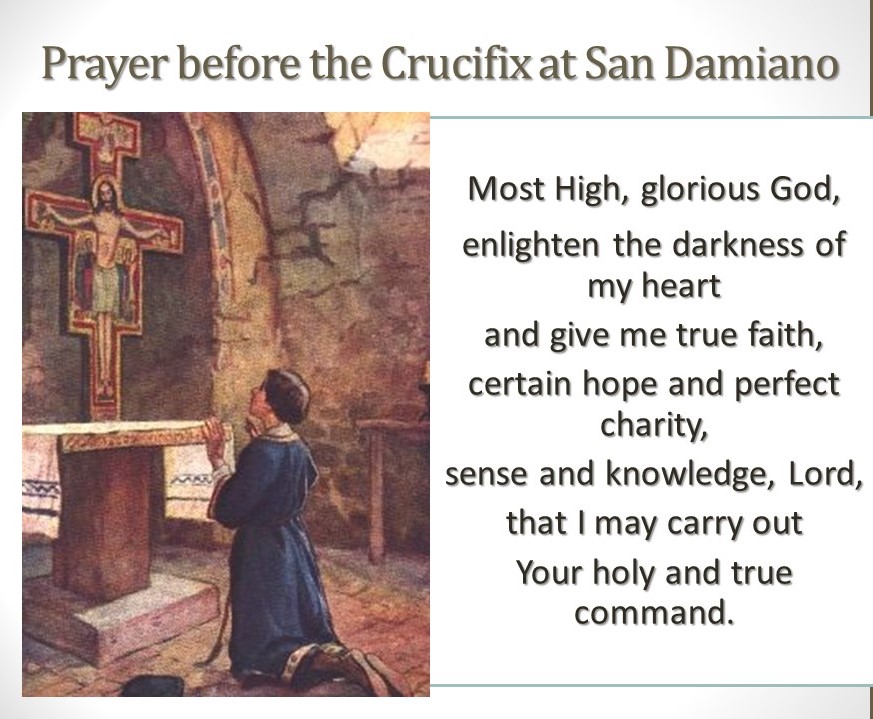
·        Begin with a prayer (I suggest Francis’ Prayer before the Crucifix prayed slowly and quietly followed by your own request to the Holy Spirit to guide you.)

·        Then just write. Write what troubles you, what excites you, what surprises you, your thoughts. Share with God.

·        Don’t worry about grammar, spelling, or handwriting. This is between you and God.

·        Reflect on older writings periodically. Bring to prayer.


For Further Reference:

http://www.pauline.org/Pauline-Books-Media-Blog/ArticleID/2960/How-to-Keep-a-Spiritual-Journal-like-the-Saints-Did

https://fscaston.org/journaling/ 

Harry J. Cargas and Radley, Roger J. “Keeping a Spiritual Journal.” Garden City,  N.Y.:Doubleday and Co. 1981. (This book is out of print)

Examples of Spiritual Journals:

Gabrielle Bossis’  He and I;

Gaston Courtois’ When the Lord Speaks to Your Heart

Helena Burns’ He Speaks to You;

Jean LaFrance’s Pray to Your Father in Secret

The Autobiography of a Soul

Interior Castle

Divine Mercy in My Soul


Thank you to
Francine Gikow, ofs

National Formation Commission-OFS USA


++++++++++++++++++++


Redacción de diarios espirituales


El propósito de escribir un diario es …

• Para el descubrimiento, no una justificación para “mi manera” de hacer las cosas

• Es una fuente de crecimiento, no para quedarse quieto.

• Ayuda a aclarar nuestros pensamientos, deseos, respuestas y oraciones.

• Es una herramienta para ayudarnos a darnos cuenta de y afrontar las preguntas de nuestra vida.

• Puede ayudarlo a ver posibilidades y opciones.

• Nos ayuda a encontrar patrones de nuestras respuestas y opciones, algunas de las cuales pueden ser automáticas en la forma en que respondemos.


Instrucciones generales en la escritura de un diario

• Escribir un diario NO es escribir una autobiografía. Son ideas, diálogo con Dios, reacciones a situaciones, etc.

• ¡Un diario espiritual es sólo para usted! Si tiene la expectativa de que alguien vea el contenido de su diario, su escritura cambiará para cumplir con las expectativas de otra persona. ¡Es solo para sus ojos!

• La buena redacción de un diario es un diálogo con Dios. Eso significa que a veces puede ser oración, pero muchas veces le contamos a Dios nuestros secretos más íntimos y luego esperamos escuchar.

• Debemos ser brutalmente honestos en nuestros escritos. No hay nadie a quien impresionar. Dios lo sabe todo y nos ama con furia. A veces tenemos que quitarnos nuestras capas de defensa y confiar en Él.

• Revise y relea sus escritos periódicamente para encontrar puntos en común y para mirarse desapasionadamente cuando no se encuentre en esa situación, crisis o esté involucrado emocionalmente.

• Si está escribiendo en un diario sobre las Escrituras u otro acontecimiento en su vida, identifique el problema del “tema candente” o lo que desencadena una respuesta suya y llévelo a la oración y a su diario. Trate de averiguar el “por qué” reacciona de la forma en que lo hace, cuál es su significado para usted y cómo responde.

• Comparta con su Consejero / Director espiritual los temas que encuentre difíciles en su diario.


Que necesita:

• un cuaderno o diario en blanco. Encuentre algo sin imágenes, citas, etc. que le distraigan. Cuanto más sencillo, mejor. Mantenga seguro el diario para que nadie más que usted tenga acceso.

• un bolígrafo

• un lugar tranquilo para momentos de tranquilidad cuando no esté cansado.

• una biblia o un escrito espiritual clásico

• un lugar seguro para guardar su diario, ya que es “solo para sus ojos.”


Proceso: rezar, escribir, leer, reflexionar


• En silencio, compórtese para estar abierto a escuchar las respuestas de Dios.

• Empiece con una oración (Sugiero la oración de Francisco ante crucifijo. Reza lenta y silenciosamente seguida de su propia solicitud al Espíritu Santo para que lo guíe).

• Entonces simplemente escriba. Escriba lo que le preocupa, lo que le emociona, lo que le sorprende, sus pensamientos. Comparta con Dios.

• No se preocupe por la gramática, la ortografía ni la caligrafía. Esto es entre usted y Dios.

• Reflexione periódicamente sobre los escritos más pasados. Llévelos a la oración.


Recursos:

https://pezdepapel.com/2020/como-llevar-un-diario-espiritual/

Ejemplo de un diario espiritual: El Castillo interior de Santa Teresa de Jesús
http://www.cervantesvirtual.com/obra-visor/el-castillo-interior-o-las-moradas–0/html/                                                                            


Gracias a
Francine Gikow, ofs

National Formation Commission-OFS USA


Diane F. Menditto, OFS

Chair, National Formation Commission

Minister, Our Lady of the Angels Region


Open post

FORMTION FRIDAY – 1/22/2021 – Litany & Exam of Conscience Part 2 attachment

Dear Brothers and Sisters,  What a great time to review our lives and our commitment to the Secular Franciscan way of life.  This year, Lent begins on Ash Wednesday, February 17th.  Forty more days to meditate and joyfully grow closer to Our Lord.

Today we celebrate our nation’s first National Sanctity of Human Life Day.  
“Every human life is a gift to the world. Whether born or unborn, young or old, healthy or sick, every person is made in the holy image of God. The Almighty Creator gives unique talents, beautiful dreams, and a great purpose to every person. On National Sanctity of Human Life Day, we celebrate the wonder of human existence and renew our resolve to build a culture of life where every person of every age is protected, valued, and cherished.”  President Donald J. Trump
Let us pray for respect for all life from conception to natural death.  Please share with your fraternity.  
Peace, Dona
++++++++++++++++++++++++++++++++++++++++++++++++++++++++++++++++++++++++++++++++++++++++++++++++++ 

Taking Stock #4  [Continued from January 15, 2021]


A Litany and Examination of Conscience based on the Rule of the Secular Franciscan Order


Response: Lord, have mercy.


21. For the times I did not simplify my own material needs after Christ’s example of poverty…R:


22. For the times I failed to be a good steward of God’s gifts…R:


23. For the times I did not believe that living the Beatitudes would make me happy…R:


24. For the times I have not embraced my vocation with purity of heart…R:


25.For the times I have not gently and courteously welcomed every person as a gift from the Lord and as an image of Christ…R:


26. For the times I have not wanted to place myself on an equal basis with all people…R:


27. For the times I have lacked a sense of community and chosen isolation…R:


28. For the times I have not strived to create better conditions of life for the lowly and needy…R:


29. For the times I have lacked a spirit of selfless service…R:


30. For the times I have not used my talents to build the Kingdom of God…R:


31. For the ways I failed to promote justice both privately and publicly…R:


32. For the times when I have failed to make choices in harmony with my faith…R:


33. For the times I have not esteemed work both as a gift and as a sharing in the creation, redemption, and service of the

human community by bringing the love of Christ to the marketplace…R:


34. For the times I have not cultivated a spirit of peace, fidelity, and respect for life in my family…R:


35. For the times as husband and wife we have not borne witness to the love of Christ for His Church to our children…R:


36. For the times I have not shown respect for all God’s creatures …R:


37. For the times I have not encouraged the proper use and protection of natural resources- . .R:


38. For the times I have not been a peacemaker, seeking ways of unity and harmony through dialogue…R:


39. For the times I have not been a messenger of perfect joy, striving to bring joy and hope to others…R:


40. For the ways I have failed to approach Sister Death with peace…R:


Thank you to Judith W. Tyrrell, OFS, for permitting us to use her work

St. Margaret of Cortona Region

Private message us for information on how to order extra copies


+Which articles of the Rule correspond to each line of the litany?

+Choose two or three of the items above each day and make them the center of your prayer.

+How does our Rule inspire us to daily conversion?

+Come back to this litany throughout 2021. How are you changing in your life as a Catholic and as a Franciscan?


 +++++++++++++++++++++++++++++++++++++++++++++++++++++++++++++++++++++++++++++++

Letanía y examen de conciencia basados en la Regla de la Orden Franciscana Seglar

[Continuación del 15 de enero de 2021]


Respuesta: Señor, ten piedad.


21. Por las veces en que no simplifiqué mis propias necesidades materiales siguiendo el ejemplo de pobreza de Cristo … R:


22. Por las veces que fallé en ser un buen administrador de los dones de Dios … R:


23. Por las veces que no creía que vivir las Bienaventuranzas me haría feliz … R:


24. Por las veces que no he abrazado mi vocación con pureza de corazón … R:


25. Por las ocasiones cuando no he acogido gentil y cortésmente a cada persona como un don del Señor y como una imagen de Cristo … R:


26. Por las veces no he querido colocarme en igualdad de condiciones con todas las personas … R:


27. Por las veces que me ha faltado un sentido de comunidad y he elegido el aislamiento … R:


28. Por las veces que no me he esforzado por crear mejores condiciones de vida para los humildes y necesitados … R:


29. Por las veces que me ha faltado un espíritu de servicio desinteresado … R:


30. Por las veces que no he usado mis talentos para construir el Reino de Dios … R:


31. Por las formas en que fracasé en promover la justicia tanto en privado como en público … R:


32. Por los momentos en que no he podido tomar decisiones en armonía con mi fe … R:


33. Por las veces que no he estimado el trabajo como un don y como una participación en la creación, redención y servicio de la comunidad humana llevando el amor de Cristo al mercado … R:


34. Por las veces que no he cultivado un espíritu de paz, fidelidad y respeto por la vida en mi familia … R:


35. Porque las veces que como esposo y esposa no hemos dado testimonio del amor de Cristo por Su Iglesia a nuestros hijos … R:


36. Por las veces que no he mostrado respeto por todas las criaturas de Dios … R:


37. Por las veces que no he fomentado el buen uso y protección de los recursos naturales-. .R:


38. Por las veces que no he sido un pacificador, buscando caminos de unidad y armonía a través del diálogo … R:


39. Por las veces que no he sido un mensajero de la alegría perfecta, esforzándome por llevar la alegría y esperanza a los demás … R:


40. Por las formas en que no he podido acercarme a la Hermana Muerte con paz … R:


Gracias a Judith W. Tyrrell, OFS, por darnos permiso para usar su trabajo.

Región de Santa Margarita de Cortona

Mensaje privado para obtener información sobre cómo solicitar copias adicionales


Preguntas para platicar o comentar en su diario.


+ ¿Qué artículos de la Regla corresponden a cada línea de la letanía?

+ Elija dos o tres de los elementos anteriores cada día y conviértalos en el centro de su oración.

+ ¿Cómo nos inspira nuestra Regla a la conversión diaria?

+ Regrese a esta letanía a lo largo de 2021. ¿Cómo está cambiando en su vida como católico y como franciscano?


Diane F. Menditto, OFS

Chair, National Formation Commission

Minister, Our Lady of the Angels Region


Open post

FORMATION FRIDAY – January 15, 2021 – Litany and Examination of Conscience

Dear Brothers and Sisters, 

Today’s formation lesson comes at an important time when the world seems so unsettled.  Let us bring peace to our hearts and souls with an examination of conscience based on the Rule of the Franciscan Order.  Let’s get to confession and start the New Year striving to be closer to God.  Please share with your fraternities.  Peace, Dona  (there is an attachment)

_____________________________________________________________________


A Litany and Examination of Conscience based on the Rule of the Secular Franciscan Order


Thank you to Judith W. Tyrrell, OFS, for permitting us to use her work

St. Margaret of Cortona Region

Private message for information on how to order extra copies


Response: Lord, have mercy.


1. For all the ways have brought division to my family, my community, my parish, or my fraternity…R:


2. For all the ways have not been life-giving, making present the charism of St. Francis to my family, friends, and fraternity brothers and sisters…R:


3. For all the ways I have not appreciated the unique gifts of each individual…R:


4. For all the ways I have failed to strive for holiness…R:


5. For the times I have not looked to St. Francis as a model and source of inspiration…R:


6. For the times I did not strive for perfect charity…R:


7. For the ways I did not live the Gospel in the manner of St. Francis, from Gospel to life and life to the Gospel…R:


8. For the times that Christ-the Way, the Truth, and the Life-has not been the center of my life…R:


9. For the times I have not been alive with the Spirit of St. Francis …R:


10. For the times the Eucharist has not been my key encounter with the living Christ, after the example of St. Francis…R:


I l. For the times I have not looked for Christ in the Scriptures, in the Eucharist, in the Sacrament of Reconciliation, and other

Sacraments and in my brothers and sisters…R:


12. For the times I have not proclaimed Christ by my life and my words…R:


13. For the times I have not responded to the call to ..rebuild the Church”…R:


14. For the ways I have not lived in full communion with the pope, bishops, and priests…R:


I5. For the times I have stifled the interior call to conversion…R:


16. For the times I have neglected the source of grace and mercy in the Sacrament of Reconciliation…R:


17. For the times I have failed to worship the Father in prayer…R:


18. For the times I have not shown my love for Mary by imitating her self-giving and confident prayer…R:


19. For the times I have not faithfully fulfilled the duties of my state of life…R:


20. For the times I did not witness like the poor and crucified Christ in difficulties and persecution…R:


To be continued on January 22, 2021


Questions for discussion or to comment on in your journal.


+Which articles of the Rule correspond to each line of the litany?

+Choose two or three of the items above each day and make them the center of your prayer.

+How does our Rule inspire us to daily conversion?

+Come back to this litany throughout 2021. How are you changing in your life as a Catholic and as a Franciscan?


 ++++++++++++++++++++++++++++++++++++++++++++++++++++++++++++++++++++++++++++++++++++++++++


Letanía y examen de conciencia basados en la Regla de la Orden Franciscana Seglar


Gracias a Judith W. Tyrrell, OFS, por darnos permiso para usar su trabajo.

Región de Santa Margarita de Cortona

Mensaje privado para obtener información sobre cómo solicitar copias adicionales


Responder: Señor, ten piedad.


1. Por todas las formas en que he traído división a mi familia, mi comunidad, mi parroquia o mi fraternidad … R:


2. Por todas las formas en que no he sido vivificante, haciendo presente el carisma de San Francisco a mi familia, amigos y hermanos y hermanas de la fraternidad … R:


3. Por todas las formas en que no he apreciado los dones únicos de cada individuo … R:


4. Por todas las formas en que he fallado en esforzarme por la santidad … R:


5. Por los tiempos cuando no he visto a San Francisco como modelo y fuente de inspiración … R:


6. Por los tiempos en que no luché por la caridad perfecta … R:


7. Por las formas en que no viví el Evangelio a la manera de San Francisco, pasando del Evangelio a la vida y de la vida al Evangelio… R:


8. Por las veces que Cristo—“Camino, Verdad y Vida”–no ha sido el centro de mi vida … R:


9. Por los tiempos que no he estado vivo con el Espíritu de San Francisco … R:


10. Por las veces que la Eucaristía no ha sido mi encuentro clave con el Cristo vivo, a ejemplo de San Francisco … R:


11. Por las veces que no he buscado a Cristo en las Escrituras, en la Eucaristía, en el Sacramento de la Reconciliación y otros

Sacramentos y en mis hermanos y hermanas … R:


12. Por las veces que no he proclamado a Cristo con mi vida y mis palabras … R:


13. Por las veces que no he respondido al llamado de .. reconstruir la Iglesia “… R:


14. Por las formas en que no he vivido en plena comunión con el Papa, los obispos y los sacerdotes … R:


I5. Para las veces que he reprimido la llamada interior a la conversión … R:


16. Por las veces que he descuidado la fuente de la gracia y la misericordia en el Sacramento de la Reconciliación … R:


17. Por las veces que no he adorado al Padre en la oración … R:


18. Por las veces que no he mostrado mi amor a María imitando su oración de entrega y confianza … R:


19. Por las veces que no he cumplido fielmente los deberes de mi estado de vida … R:


20. Por las veces no presencié como el Cristo pobre y reconciliado en las dificultades y persecuciones … R:


Continuará el 22 de enero de 2021


Preguntas para platicar o comentar en su diario.


+ ¿Qué artículos de la Regla corresponden a cada línea de la letanía?

+ Elija dos o tres de los elementos anteriores cada día y conviértalos en el centro de su oración.

+ ¿Cómo nos inspira nuestra Regla a la conversión diaria?

+ Regrese a esta letanía a lo largo de 2021. ¿Cómo está cambiando en su vida como católico y como franciscano?

 
Diane F. Menditto, OFS

Chair, National Formation Commission

Minister, Our Lady of the Angels Region



Scroll to top
Juan de Padilla