Open post

FORMATION FRIDAY – Liturgical Prayer for Secular Franciscans – September 10, 2021

Dear Brothers and Sisters,  

Today’s lesson is about Liturgical Prayer for Secular Franciscans.  This is such an important topic and is a review of a previous Formation Friday a couple of years ago.  According to the RULE and Constitution, we should pray some form of liturgical prayer each day.  Hope you enjoy reading about this topic and will find renewed joy in prayer.  Be sure to watch the Youtube video on the link at the bottom of this email.  Peace, Dona

+++++++++++++++++++++++++++++++++++++++++++++++++++++++++++++++++++++++++++++++++++++++++++++++++++++++++++++++++++++++

Liturgical Prayer for Secular Franciscans

Because the topic is so important, this week we offer a repeat of a Formation Friday from December 2019.

Here are the references from the Essential Documents of the Secular Franciscan Order-

Rule:

Article 8. As Jesus was the true worshipper of the Father, so let prayer and contemplation be the soul of all they are and do. Let them participate in the sacramental life of the Church, above all the Eucharist. Let them join in liturgical prayer in one of the forms proposed by the Church, reliving the mysteries of the life of Christ.

This is further explained in the General Constitutions:

Article 14.The brothers and sisters, as well as the fraternities, should adhere to the indications of the Ritual concerning the different forms of participating in the liturgical prayer of the Church, giving priority to the celebration of the Liturgy of the Hours.


Here is the reference from the Ritual (See Essential Documents of the Secular Franciscan Order, Appendix Part III, pp. 39-40 or the Brown USA Ritual Appendix II pp. 103-104):

Part Three

Liturgical Prayer

For the Members of the Secular Franciscan Order

26. According to the OFS Rule (art. 8), the members of the Secular Franciscan Order are to join in liturgical prayer in one of the forms proposed by the Church, reliving the mysteries of Christ.

27. These prayers may be:

a. Morning and evening prayer from The Liturgy of the Hours, either in common or in private. These celebrations are to be preferred at the fraternity meeting.

b. A shortened form of The Liturgy of the Hours according to forms adapted to the local Churches.

c. The Little Office of the Blessed Virgin Mary.

d. The Office of the Passion written by St. Francis of Assisi

e. The office of the twelve Our Fathers in one of its many versions that have been enriched with short biblical readings and also adapted to the structure of The Liturgy of the Hours, especially since this form of prayer still thrives in many parts of the world and is a useful way of praying in everyday circumstances.

[in the brown USA Ritual, there are two other items:]

·        Other forms of liturgical prayer are approved by the spiritual assistant or by one’s spiritual director, as long as they contain psalms (or their equivalent), Scripture readings, and prayers.

·        Special Prayer forms for the liturgical seasons, for example, a) The Way of the Cross during Lent (with Scripture readings), b) The Rosary or Franciscan Crown during May and October (with Scripture readings.)


Possibilities for the Liturgy of the Hours


+Shorter Christian Prayer*

+Christian Prayer*


+Four volume breviary*

+I-breviary (app)


+Divine Office.org (app and website)


*If you are new to this form of prayer and choose to use one of these books, have someone help you learn to use it.

You might be interested in this video about the LOH on YouTube. https://youtu.be/Z-uLI7husAs


Questions for discussion or to answer in your journal:

+Do you pray the Liturgy of the Hours? Which hours do you pray? Why are these hours important to you?

+If not, which of the alternatives above do you pray?

+Why are these forms of prayer important to us as Secular Franciscans?


+++++++++++++++++++

Oración litúrgica por los franciscanos seglares

Debido a que el tema es tan importante, esta semana ofrecemos una repetición de un viernes de formación a partir de diciembre de 2019.

De acuerdo con nuestra Regla y Constituciones, debemos rezar alguna forma de oración litúrgica todos los días. Aquí están las referencias de los Documentos Esenciales de la Orden Franciscana Seglar:

Regla:

Artículo 8. Como Jesucristo fue el verdadero adorador del Padre, del mismo modo los Franciscanos seglares hagan de la oración y de la contemplación el alma del propio ser y del propio obrar14. Participen de la vida sacramental de la Iglesia, especialmente de la Eucaristía, y asóciense a la oración litúrgica en alguna de las formas propuestas por la misma Iglesia, reviviendo así los misterios de la vida de Cristo.


Esto se explica con más detalle en las Constituciones Generales:

Artículo 14.4- Los hermanos y las Fraternidades aténganse a las indicaciones del Ritual en lo referente a las distintas formas de asociarse a la oración litúrgica de la Iglesia, privilegiando la celebración de la Liturgia de las Horas14.

Aquí está la referencia del Ritual (Ver Documentos Esenciales de la Orden Franciscana Seglar, Apéndice Parte III, págs. 39-40 o el Apéndice II del Ritual de USA págs. 103-104):

Parte tres

Oración litúrgica

Para los miembros de la Orden Franciscana Seglar

26. Según la Regla OFS (art. 8), los miembros de la Orden Franciscana Seglar deben unirse en la oración litúrgica en una de las formas propuestas por la Iglesia, reviviendo los misterios de Cristo.

27. Estas oraciones pueden ser:

una. Oración matutina y vespertina de la Liturgia de las Horas, ya sea en común o en privado. Estas celebraciones se prefieren en el encuentro de la fraternidad.

B. Una forma abreviada de la Liturgia de las Horas según formas adaptadas a las Iglesias locales.

C. El Oficio de la Santísima Virgen María.

D. El Oficio de la Pasión escrito por San Francisco de Asís

E. El oficio de los doce Padre Nuestros en una de sus muchas versiones que se han enriquecido con breves lecturas bíblicas y también se han adaptado a la estructura de la Liturgia de las Horas, especialmente porque esta forma de oración todavía prospera en muchas partes del mundo y es una forma útil de rezar en las circunstancias cotidianas.

[en el ritual marrón de EE. UU., hay otros dos elementos:]

• Otras formas de oración litúrgica aprobadas por el asistente espiritual o por el director espiritual, siempre que contengan salmos (o su equivalente), lecturas bíblicas y oraciones.

• Formas especiales de oración para los tiempos litúrgicos, por ejemplo: a) El Vía Crucis durante la Cuaresma (con lectura de las Escrituras), b) El Rosario o Corona Franciscana durante mayo y octubre (con lecturas de las Escrituras).

Posibilidades para la liturgia de las horas

+ Oración cristiana más corta *

+ Oración cristiana *

+ Breviario de cuatro volúmenes *

+ I-breviario (aplicación)

+ Divine Office.org (aplicación y sitio web)


* Si es nuevo en esta forma de oración y elige usar uno de estos libros, pídale a alguien que lo ayude a aprender a usarlo.

Puede que le interese este video sobre la LOH en YouTube. https://youtu.be/Z-uLI7husAs


Preguntas para platicar o para responder en su diario:

+ ¿Reza la Liturgia de las Horas? ¿A qué horas rezas? ¿Por qué estas horas son importantes para usted?

+ Si no es así, ¿cuál de los suplentes de arriba reza?

+ ¿Por qué estas formas de oración son importantes para nosotros como franciscanos seglares?


Diane F. Menditto, OFS
Chair, National Formation Commission
Minister, Our Lady of the Angels Region
 
 
Open post

FORMATION FRIDAY – Focus Upon the Admonitions (2 & 3) – September 3, 2021

Dear Brothers and Sisters,
Today’s lesson cover St. Francis’ Admonitions 2 and 3, that deal with obedience, self will, and humility. Though they may sound like a simple topics, these Admonitions have started many discussions among the formators. It is suggested that your fraternity members journal and contemplate the questions before beginning your discussion.
A link to the Franciscan Tradition site which offers much on Francis and Franciscan theology. Peace, Dona
++++++++++++++++++++++++++++++++++++++++++++++++++++++++++++++++++++++++++++++++++++++++++++++++
 
 
[II. The Evil of Self-Will]
  • 1The Lord said to Adam: Eat of every tree; you may not eat, however, of the tree of the knowledge of good and evil. Gn 2:16 Gn 2:17
  • He was able to eat of every tree of paradise because he did not sin as long as he did not go against obedience.
  • For that person eats of the tree of the knowledge of good who makes his will his own and, in this way, exalts himself over the good things the Lord says and does in him.
  • And so, through the suggestion of the devil and the transgression of the command, it became the apple of the knowledge of evil.
  • Therefore it is fitting that he suffer the punishment.
 
[III. Perfect Obedience]
  • The Lord says in the Gospel: Whoever does not renounce all that he possesses cannot be my disciple; Lk 14:33
  • and: Whoever wishes to save his life must lose it. Lk 9:24
  • A person who offers himself totally to obedience in the hands of his prelate leaves all that he possesses and loses his body.
  • And whatever he does and says which he knows is not contrary to his will is true obedience, provided that what he does is good.
  • And should a subject see that some things might be better and more useful for his soul than what a prelate commands, let him willingly offer such things to God as a sacrifice; and, instead, let him earnestly strive to fulfill the prelate’s wishes.
  • For this is loving obedience because it pleases God and neighbor. 1 Pt 1:22
  • If the prelate, however, commands something contrary to his conscience, even though he may not obey him, let him not, however, abandon him.
  • And if he then suffers persecution from others, let him love them all the more for the sake of God. 1 Jn 3:15 1 Jn 3:16
  • For whoever chooses to suffer persecution rather than wish to be separated from his brothers truly remains in perfect obedience because he lays down his life for his brothers. Jn 15:13
  • In fact, there are many religious who, under the pretext of seeing things better than those which the prelate commands, look back, Lk 9:62 and return to the vomit Prv 26: of their own will
  • These people are murderers 2 Pt 2:22 and, because of their bad example, cause many to lose their souls
 
Questions to discuss or to comment on in your journal.
 
+ Come, Holy Spirit! Open my mind and heart as I contemplate Admonition II.
  1. -As Secular Franciscans, we do not promise “obedience” as such. However, how does sacrificing our own will help us to live out our Rule?
  2. –When do I have the most difficulty following the directives of my lawful superiors?
 
+ Come, Holy Spirit! Open my mind and heart as I contemplate Admonition III.
  1. –How is obedience related to simplicity and humility?
  2. –What are some ways that I can seek to have a well-informed conscience?
  3. –How does having trust in the Lord help me to let go of my own will?
++++++++++++++++++++++++++++++++++++++++++++++++++++++++++++++++++++++++++++++++++++++++
Enfoque en las admoniciones de San Francisco (Admoniciones II y III)
 
Cap. II: Del mal de la propia voluntad
 
1Dijo el Señor a Adán: Come de todo árbol, pero del árbol de la ciencia del bien y del mal no comas (cf. Gén 2,16.17). 2Podía comer de todo árbol del paraíso, porque, mientras no contravino a la obediencia, no pecó. 3Come, en efecto, del árbol de la ciencia del bien, aquel que se apropia su voluntad y se enaltece del bien que el Señor dice y obra en él; 4y así, por la sugestión del diablo y la transgresión del mandamiento, vino a ser la manzana de la ciencia del mal. 5De donde es necesario que sufra la pena.
 
Cap. III: De la perfecta obediencia
 
1Dice el Señor en el Evangelio: El que no renuncie a todo lo que posee, no puede ser discípulo mío (Lc 14,33); 2y: El que quiera salvar su vida, la perderá (Lc 9,24). 3Deja todo lo que posee y pierde su cuerpo el hombre que se ofrece a sí mismo todo entero a la obediencia en manos de su prelado. 4Y todo lo que hace y dice que él sepa que no es contra la voluntad del prelado, mientras sea bueno lo que hace, es verdadera obediencia. 5Y si alguna vez el súbdito ve cosas mejores y más útiles para su alma que aquellas que le ordena el prelado, sacrifique voluntariamente sus cosas a Dios, y aplíquese en cambio a cumplir con obras las cosas que son del prelado. 6Pues ésta es la obediencia caritativa (cf. 1 Pe 1,22), porque satisface a Dios y al prójimo.
7Pero si el prelado le ordena algo que sea contra su alma, aunque no le obedezca, sin embargo no lo abandone. 8Y si a causa de eso sufriera la persecución de algunos, ámelos más por Dios. 9Pues quien sufre la persecución antes que querer separarse de sus hermanos, verdaderamente permanece en la perfecta obediencia, porque da su vida (cf. Jn 15,13) por sus hermanos. 10Pues hay muchos religiosos que, so pretexto de que ven cosas mejores que las que les ordenan sus prelados, miran atrás (cf. Lc 9,62) y vuelven al vómito de la propia voluntad (cf. Prov 26,11; 2 Pe 2,22); 11éstos son homicidas y, a causa de sus malos ejemplos, hacen que se pierdan muchas almas.
Preguntas para platicar o responder en su diario
 
+ ¡Ven, Espíritu Santo! Abre mi mente y corazón mientras contemplo la Admonición II.
— Como franciscanos seglares, no prometemos “obediencia” como tal. Sin embargo, ¿cómo el sacrificio de nuestra propia voluntad nos ayudará a vivir nuestra Regla?
–¿Cuándo tengo más dificultades para seguir las directivas de mis superiores legales?
 
+ ¡Ven, Espíritu Santo! Abre mi mente y mi corazón mientras contemplo la Admonición III.
— ¿Cómo se relaciona la obediencia con la sencillez y la humildad?
–¿Cuáles son algunas de las formas en las que puedo buscar para tener una conciencia bien informada?
— ¿Cómo me ayuda el tener confianza en el Señor a dejar ir mi propia voluntad?
 
 
Diane F. Menditto, OFS

Chair, National Formation Commission

Minister, Our Lady of the Angels Region
Open post

FORMATION FRIDAY – Franciscan Spirituality in 7 Steps – August 29, 2021

Dear Brothers and Sisters, 

I remember attending the “Q” in Chicago many years ago.  Sr. Illia Dileo, the featured speaker, spoke about Franciscan Spirituality.  Her talk was so inspiring.  I thought how could anyone not want to be a Franciscan!  It is so much about LOVE and how much God has given to us.  

++++++++++++++++++++++++++++++++++++++++++++++++++++++++++++++++++++++++++++++++++++++++++++++++++++++++++++++++++++++++++++++++++++++++++++++++++++++++++++++++
 

Franciscan Spirituality in Seven Steps

“Franciscans view the world and God’s creative presence in a particular way. How we understand this and our relationship to God is at the heart of what we call Franciscan spirituality. The following are key themes in Franciscan theology (how we understand God) and consequently in Franciscan spirituality (how we relate to God). We owe this understanding to the experience of St. Francis first, then to his followers throughout the ages, particularly St. Clare.

1.God is absolute love, being, and creativity. Creation is dependent upon God to exist.

No created thing exists because of its own capacity to be; only God is capable of being without depending on something else. The development of created things through time reflects God’s inexhaustible ability to be creative and to remain the source of demonstrated love.

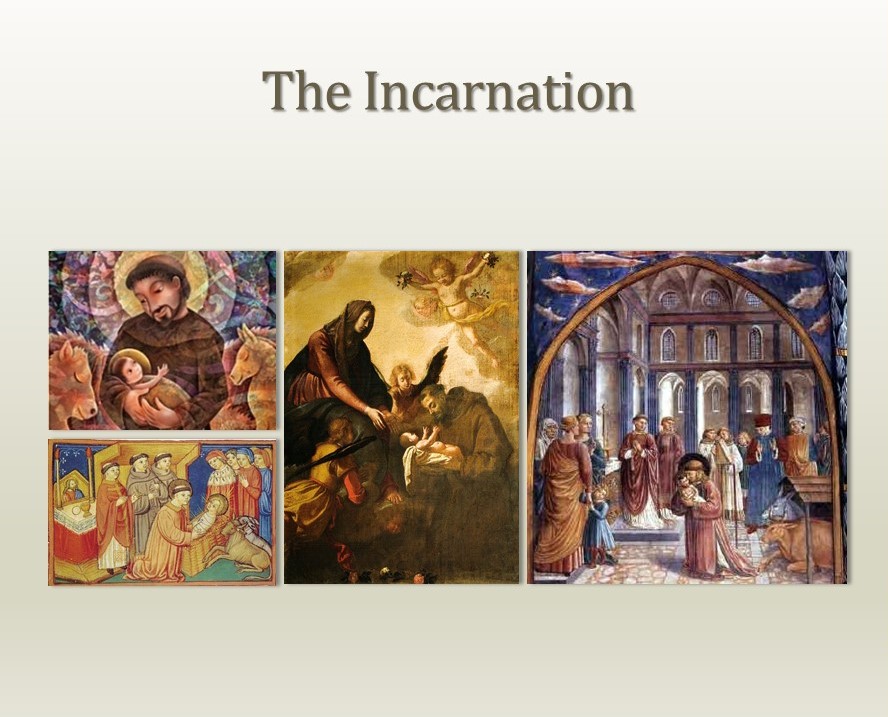
2.God has freely chosen incarnation (taking on human form) before the human choice for sin.

Jesus Christ comes to us because God loves us, not because we sin. Because of sin, Jesus comes in a particular way out of free will, not because a particular method of human behavior is needed to save us. God can simply will salvation because God is always free. Christ chooses to be with us physically now through the Eucharist until he comes again. This is reflective of God’s willingness to be with us in humble ways and to nourish us physically and spiritually.

3.Christmas is of primary importance to us.

Easter is the outcome of Christmas. The Incarnation is the greatest thing God could do for creation. The death of Jesus on the cross remains a mystery because even given human sin, God was not constrained to act in this unbelievable self-sacrificial way. It was done to attract us to divine love.

4.Christ is the perfect image of who God is for creation.

He is the mirror of who and what all humanity and created things are meant to be. Creatures participate in this perfection to the capacity of their natures. Humans can choose to not participate in Christ. Mary is the human person who has most perfectly chosen to participate in imaging God, both physically and spiritually.

5.Every creature is unique, gifted, and living in relationship.

No human life is a mistake, because everyone is uniquely gifted. The relationships of life are meant to be deepened according to the nature of the creature. This reflects the nature of God, who lives in Trinity and is therefore capable of the greatest depth of relationship.

6.Nothing humans have the ability to do has the capacity to make God do something.

God is always freely choosing love for humanity, even when we don’t see that the choice is the best. Our knowledge is too limited by space and time, while God is not limited by them. We all remain poor at God’s table because God doesn’t owe us anything.

7.Mercy, forgiveness and justification are God’s actions.

They do not result from our actions. We work on our salvation while recognizing that even our capacity to want to do good comes as a gift from God. We must do what we can – the freedom to choose comes from God – but realize that God is behind the ability to do good. God respects our freedom so much that he asks us to cooperate with him.”

This material appears in the FUN Manual chapter: Franciscan Theology, Tradition and Spirituality pp.16-17 of 30, with credit to Fr. Joe Schwab, OFM.

For discussion or to comment on in your journal

+ Each day, choose one of the statements above and spend time thinking about it.
–What influence does it have on your spiritual life?
–How does it affect how you live your Franciscan life?
–How do these statements affect your relationship with God the Father, Son, and Holy Spirit?

++++++++++++++++++

La espiritualidad franciscana en siete pasos

“Los franciscanos ven el mundo y la presencia creativa de Dios de una manera particular. Cómo entendemos esto y nuestra relación con Dios está en el corazón de lo que llamamos la espiritualidad franciscana. Los siguientes son temas claves en la teología franciscana (cómo entendemos a Dios) y, en consecuencia, en la espiritualidad franciscana (cómo nos relacionamos con Dios). Debemos este entendimiento a la experiencia de San Francisco primero, luego a sus seguidores a lo largo de los tiempos, particularmente a Santa Clara.

1. Dios es amor, ser, y creatividad absolutos. La creación depende de Dios para existir.

Ninguna cosa creada existe por su propia capacidad de ser; sólo Dios es capaz de ser sin depender de otra cosa. El desarrollo de las cosas creadas a través del tiempo refleja la inagotable capacidad de Dios para ser creativo y seguir siendo la fuente del amor demostrado.

2. Dios ha elegido libremente la encarnación (tomando forma humana) antes que la elección humana por el pecado.

Jesucristo viene a nosotros porque Dios nos ama, no porque pecamos. Debido al pecado, Jesús viene de una manera particular por libre albedrío, no porque se necesite un método particular de comportamiento humano para salvarnos. Dios puede simplemente querer la salvación, porque Dios siempre es libre. Cristo elige estar con nosotros físicamente ahora a través de la Eucaristía hasta que regrese. Esto refleja la voluntad de Dios de estar con nosotros de manera humilde y de nutrirnos física y espiritualmente.

3. La Navidad es de suma importancia para nosotros.

La Pascua es el resultado de la Navidad. La Encarnación es lo más grande que Dios pudo hacer por la creación. La muerte de Jesús en la cruz sigue siendo un misterio, porque incluso dado el pecado humano, Dios no se vio obligado a actuar de esta manera increíble de autosacrificio. Se hizo para atraernos al amor divino.

4. Cristo es la imagen perfecta de quién es Dios para la creación.

Él es el espejo de quién y qué deben ser toda la humanidad y las cosas creadas. Las criaturas participan de esta perfección en la capacidad de su naturaleza. Los humanos pueden optar por no participar en Cristo. María es la persona humana que más perfectamente ha elegido participar en la imagen de Dios, tanto física como espiritualmente.

5. Cada criatura es única, talentosa y vive en relación.

Ninguna vida humana es un error, porque todos tienen dones únicos. Las relaciones de la vida están destinadas a profundizarse de acuerdo con la naturaleza de la criatura. Esto refleja la naturaleza de Dios, que vive en la Trinidad y, por lo tanto, es capaz de una relación más profunda.

6. Nada de lo que los seres humanos tienen la capacidad de hacer tiene la capacidad de hacer que Dios haga algo.

Dios siempre elige libremente el amor por la humanidad, incluso cuando no vemos que la elección es la mejor. Nuestro conocimiento está demasiado limitado por el espacio y el tiempo, mientras que Dios no está limitado por ellos. Todos seguimos siendo pobres en la mesa de Dios, porque Dios no nos debe nada.

7. La misericordia, el perdón y la justificación son acciones de Dios.

No son el resultado de nuestras acciones. Trabajamos en nuestra salvación, al tiempo que reconocemos que incluso nuestra capacidad de querer hacer el bien es un regalo de Dios. Debemos hacer lo que podamos, la libertad de elegir viene de Dios, pero debemos darnos cuenta de que Dios está detrás de la capacidad de hacer el bien. Dios respeta tanto nuestra libertad que nos pide que cooperemos con él ”.

Este material aparece en el capítulo del Manual FUN: Teología Franciscana, Tradición y Espiritualidad pp.16-17 de 30, con crédito al P. Joe Schwab, OFM.

Para platicar o comentar en su diario
+ Cada día, elija una de las afirmaciones anteriores y dedique tiempo a pensar en ella.
– ¿Qué influencia tiene en tu vida espiritual?
– ¿Cómo afecta la forma en que vives tu vida franciscana?
– ¿Cómo afectan estas declaraciones su relación con Dios Padre, Hijo y Espíritu Santo?

Diane F. Menditto, OFS

Chair, National Formation Commission

Minister, Our Lady of the Angels Region
Open post

FORMATION FRIDAY – Profession before the Rite – Part 2 – August 20,2021

Dear Brothers and Sisters, 

Many of you attended the Summer Gathering at the Spiritual Life Center in Wichita earlier this month.  One of the highest-rated events at the Summer Gathering is the Renewal of our Profession at the Sunday Mass.  This renewal helps us to recall our initial calling and the reason we chose to commit to the Secular Franciscan Order.  You may find today’s lesson relevant not only to the Candidates who are preparing to profess but also to yourself.  It always helps to reflect on our spiritual life and how we can help to improve, enrich our families, our fraternities, and the world.  If there were ever a time when the world needed people who strive to live the Gospel in this life, it would be now.  Peace, Dona


++++++++++++++++++++++++++++++++++++++++++++++++++++++++++++++++++++++++++++++++++++++++
Before Commitment to the Gospel Way of Life (Part 2)
 
Throughout the period of initial formation, inquirers and candidates are “trying on” the life of a Secular Franciscan. We come to know that we are not members of a club, but part of a very special way of life. Inquiry and candidacy help us to discern whether or not we can commit to live as a Secular Franciscan for the rest of our lives.
 
On page 5 of the Ritual used in the United States, section 3.32, explains the “normative elements of the profession rite which express the nature of permanent commitment to the gospel life:”
 
a) “the renewal of one’s consecration and promises at Baptism and Confirmation. This means dedicating oneself to God through his people with all the consequences flowing from it, up to the present moment, to live in union with God and to hold firm to his plan of salvation, by means of a consecration that is to be lived in the world (or as diocesan clergy).
b) “the desire to live the gospel by following St. Francis of Assisi;
c) “definitive incorporation into the Secular Franciscan Order, which is the harmonious union of all the members who promise to live the gospel after the example of St. Francis of Assisi while remaining in their secular vocation either as laity or clergy;
d) “the desire to live in the world and for the world. In this regard, profession aims to be a gospel leaven and also a commitment to collaborate in building a more fraternal world. Members of the diocesan clergy by their profession confirm the appropriate pledges and promises of their specific episcopal, presbyteral or diaconal vocation.
e) “the desire to live the gospel for the whole of one’s life. This dimension is the expression of a person’s generosity in sharing the fullness of one’s innermost being, and also the acceptance of the risks that are inseparable from any human choice that is so permanent and important.
f) “the candidate’s confidence, supported by the help of the SFO [OFS] Rule and the fraternity. The candidate will feel led and helped by the Rule approved by the Church and will experience the joy of sharing the journey of gospel life with the other members, from whom one can receive something and to whom a person can give something. Being incorporated into the local fraternity, which is an integral part of the Church, the candidate will contribute toward rebuilding the whole Church.”
 
Questions for discussion or to answer in your journal:
 
Think about the nature of our commitment to the gospel way of life outlined above. Then, on pages 21-22 of the Ritual, read the questioning, each answered with, “Yes, this is what I want.” Also on pages 23-24, read the actual promise that you made or will make at Profession.
 
• If you are about to be professed, can you answer “yes,” not just for today, but for always?
• What life circumstances might have an effect on these promises years from now?
• Are you prepared to stand firm in what you promised?
 
++++++++++++++++
 
Comparta con su fraternidad local.
 
Antes del compromiso a vivir siguiendo el Evangelio (Parte 2)
 
A lo largo del período de formación inicial, los candidatos están “probando” la vida de un franciscano seglar. Llegamos a saber que no somos miembros de un club, sino parte de una forma de vida muy especial. La investigación (Inquiry) y la candidatura nos ayudan a discernir si podemos comprometernos a vivir como franciscanos seglares por el resto de nuestras vidas.
 
En la página 5 del Ritual (en inglés) usado en los Estados Unidos, la sección 3.32, explica los “elementos normativos del rito de profesión que expresan la naturaleza del compromiso permanente con la vida del evangelio;”
 
a) “la renovación de la propia consagración y promesas en el Bautismo y la Confirmación. Esto significa dedicarse a Dios a través de su pueblo con todas las consecuencias que de él se derivan, hasta el momento presente, para vivir en unión con Dios y mantenerse firme en su plan de salvación, mediante una consagración que ha de ser vivido en el mundo (o como clero diocesano).
b) “el deseo de vivir el Evangelio siguiendo a San Francisco de Asís;
c) “la incorporación definitiva a la Orden Franciscana Seglar, que es la unión armoniosa de todos los miembros que prometen vivir el Evangelio a ejemplo de San Francisco de Asís, permaneciendo en su vocación seglar como laicos o como clero;
d) “el deseo de vivir en el mundo y para el mundo. En este sentido, la profesión pretende ser levadura evangélica y también compromiso para colaborar en la construcción de un mundo más fraterno. Los miembros del clero diocesano por su profesión confirman los juramentos y promesas correspondientes de su vocación episcopal, presbiteral o diaconal específica.
e) “el deseo de vivir el evangelio durante toda la vida. Esta dimensión es la expresión de la generosidad de la persona al compartir la plenitud de su ser más íntimo, y también la aceptación de los riesgos que son inseparables de cualquier elección humana tan permanente e importante.
f) “la confianza del candidato, apoyada por la ayuda de la Regla OFS y de la Fraternidad. El candidato se sentirá guiado y ayudado por la Regla aprobada por la Iglesia y experimentará la alegría de compartir el camino de la vida evangélica con los demás miembros, de quienes se puede recibir algo y a quienes se puede dar algo. Al incorporarse a la fraternidad local, que es parte integral de la Iglesia, el candidato contribuirá a la reconstrucción de toda la Iglesia.”
 
Preguntas para platicar o para responder en su diario:
 
Piense en nuestro compromiso con el estilo de vida del Evangelio que se describió anteriormente. Luego, en las páginas 21-22 del Ritual (en inglés), lea el interrogatorio, a cada pregunta se responde: “Sí, esto es lo que quiero.” También en las páginas 23-24, lea la promesa que usted hizo o hará en el momento de su Profesión.
 
• Si está a punto de profesar, ¿puede responder “sí”, no sólo por hoy, sino para siempre?
• ¿Qué circunstancias de la vida podrían tener un efecto sobre estas promesas dentro de unos años?
• ¿Está preparado para mantenerse firme en lo que prometió?
 
 
Diane F. Menditto, OFS

Chair, National Formation Commission

Minister, Our Lady of the Angels Region


Open post

FORMATION FRIDAY – Before Commitment to the Gospel Way of Life – August 12, 2021

 
Dear Brothers and Sisters,  
Today’s lesson asks us to focus upon our commitment to the OFS, as a Candidate and as a Professed individual. Please consider the questions below and think about your own commitment to Living the Gospels Life. (There is an attachment to this email) Peace, Dona
 

+++++++++++++++++++++++++++++++++++++++++++++++++++++++++++++++++++++++++

Before Commitment to the Gospel Way of Life (Part 1)


As part of the Pathway to Profession, candidates are asked to write a letter requesting profession to the council of their local fraternity. The questions below can be given to the candidates to think about and incorporate in their letters. They are also valuable for all of us to take stock of our commitment as Secular Franciscans.


As you use the questions, if you are professed, look back over your years since profession. If you are in initial formation, think about how far you have come, and how far you still have to go.


These questions appear in The Franciscan Journey on pp. 234-235.


For discussion or to answer in your journal.


• How have your relationships with people changed? (During your years as a Secular Franciscan or during your period of initial formation)

• What changes have you made in your prayer life?

• What changes have you achieved in regard to serving the poor and growing in a sense of stewardship?

• How have personal changes (as an OFS) affected your family life? Church life? Single/married life? Work life?

• How can the structures of our Secular Franciscan life (Rule and Constitutions) help you to strengthen your relationship with God and the fraternity?

• What qualities are you developing in order to show a Franciscan spirit in dealing with other people?

• What is the goal of a call to the OFS? How does profession affect society and the larger church?

• How has the formation process (initial and ongoing) helped you in preparing for profession?

• What suggestions do you have to strengthen your fraternity’s formation program?

• What are your hopes for ongoing formation for your fraternity?

• At this point, how do you feel about making profession? For those who are recently or long-ago professed, what significance did profession have for you then and now?


Next week, part two will explore the Rite of Profession in the Ritual.


+++++++++++

Antes del compromiso con el estilo de vida del Evangelio (Parte 1)


Como parte del Camino a la Profesión, se les pide a los candidatos que escriban una carta solicitando la profesión al consejo de su fraternidad local. Las preguntas a continuación se pueden dar a los candidatos para que las piensen e incorporen en sus cartas. También son valiosos para todos nosotros para hacer un balance de nuestro compromiso como franciscanos seglares.


A medida que utilice las preguntas, si es profeso, repase los años transcurridos desde su profesión. Si está en formación inicial, piense en lo lejos que has llegado y lo que te queda por recorrer.


Refiérase a las preguntas que aparecen en las páginas 250-251 de La jornada franciscana.

Para platicar o para responder en su diario.


• ¿De qué forma ha cambiado su relación con las demás personas? (Durante sus años como Franciscano Seglar o durante su período de formación inicial)

• ¿Qué cambios ha hecho en su vida de oración?

• ¿Qué cambios ha logrado con respecto al servicio de los pobres y su crecimiento en el sentido de administrador?

• ¿De qué forma afectaron sus cambios personales a su vida en familia? ¿Su vida en la iglesia? ¿Su vida de soltero o casado? ¿Su vida en el trabajo?

• ¿Cómo pueden las estructuras de nuestra vida franciscana seglar (Regla y Constituciones) ayudarlo a fortalecer su relación con Dios y la fraternidad?

• ¿Qué cualidades está desarrollando para mostrar un espíritu franciscano al tratar con otras personas?

• ¿Cuál es el objetivo de una llamada a la OFS? ¿Cómo afecta la profesión a la sociedad y a la iglesia en general?

• ¿Cómo le ha ayudado el proceso de formación (inicial y permanente) en su preparación para la profesión?

• ¿Qué sugerencias tienes para fortalecer el programa de formación de tu fraternidad?

• ¿Cuáles son sus esperanzas de formación permanente para su fraternidad?

• En este punto, ¿cómo se siente al hacer profesión? Para aquellos que han profesado recientemente o hace mucho tiempo, ¿qué significado tuvo la profesión para usted entonces y ahora?


La semana que viene, la segunda parte explorará el Rito de Profesión en el Ritual.


Diane F. Menditto, OFS

Chair, National Formation Commission

Minister, Our Lady of the Angels Region

 
Scroll to top
Juan de Padilla