Formation Friday is the work product of the National Formation Commission of the Secular Franciscan Order-USA. Please keep all citations and references intact. (This statement should be included with any posts in emails, on websites, or on social media.)
For the 6 Fridays of Lent, we will read and meditate on our Rule. Each week, we ask that you read a portion of the Rule at this link: OFS RULE (You can download the PDF to your computer or tablet.)
The reflections and questions that follow will focus on how our Rule asks us to live, the role that conversion and penance play in our lives, and our mission as members of the Church of Christ. The topics below will guide you as you write in your journal or discuss with your fraternity, a small group, or a prayer partner. We hope that this series will aid you in strengthening your vocation and provide opportunities for daily conversion.
Week Two: Please read Articles 1-5 of our Rule (Chapter 1: The Secular Franciscan Order–Articles 1-3; and the first portion of Chapter 2: The Way of Life, Pages 8-9 of the PDF above.) [This section is also attached.]
Chapter One of the Rule has only three articles, but it plants us firmly in the Franciscan family. It tells us that our Rule is approved by the Holy See and that we are linked down through the centuries to all those who have formed part of the three orders founded by St. Francis in the 12th century. Chapter Two is the longest section of the Rule because it talks about our way of life, how we are to pray; how we are to strive for daily conversion; how we are to follow in the footsteps of St. Francis in showing that the gospel can be lived. This is our Franciscan spiritual roadmap as we follow in the footsteps of St. Francis. Articles 4 and 5 call our attention to living the Gospel and much more. (Please read and think about these 5 articles before moving on to the questions.)
+Key Learnings: What are the four most important points (in your opinion) that you discovered as you read Articles 1-5?
+Living the OFS Rule: What about these articles presents a challenge for you to live out? Why?
+Conversion: The Holy Spirit speaks to each of us in a very personal way. As you read Articles 1-5, please explain how they touched and changed you and brought you closer to God.
+Discernment: What can you put into practice right away?
+Key Takeaways: Please list three key takeaways to living as a Franciscan that this portion of the Rule will help you to achieve.
+Challenge Yourself: Choose one of the takeaways as your personal spiritual challenge for this week and resolve to carry it out.
++++++++++++++++++++++++++++++
Por favor comparta con su fraternidad local
La Regla OFS: Instrumento de Conversión OFS (Semana Dos) Muchos documentos adjuntos. Por favor, descargue los que necesite.El Viernes de Formación es el producto del trabajo de la Comisión Nacional de Formación de la Orden Franciscana Seglar-EE.UU. Mantenga todas las citas y referencias intactas. (Esta declaración debe incluirse con cualquier publicación en correos electrónicos, sitios web o redes sociales).
Para los seis viernes de Cuaresma, leeremos y meditaremos en nuestra Regla. Cada semana, le pedimos que lea una parte de la Regla en este enlace: REGLA EN ESPAÑOL (Puede descargar el PDF a su computadora o tableta).
Las reflexiones y preguntas que siguen se centrarán en cómo nuestra Regla nos pide que vivamos, el papel que la conversión y la penitencia juegan en nuestras vidas y nuestra misión como miembros de la Iglesia de Cristo. Los temas a continuación lo guiarán mientras escribe en su diario o discute con su fraternidad, un grupo pequeño o un compañero de oración. Esperamos que esta serie les ayude a fortalecer su vocación y les brinde oportunidades para la conversión diaria.
Semana Dos: Lea los Artículos 1-5 de nuestra Regla (Capítulo 1: La Orden Franciscana Seglar – Artículos 1-3 ; y la primera parte del Capítulo 2: El Camino de la Vida, páginas 8-9 del PDF anterior). [Esta sección también se adjunta.]
Capítulo uno de la Regla tiene sólo tres artículos, pero nos sitúa firmemente en la familia franciscana . Nos dice que nuestra Regla está aprobada por la Santa Sede y que estamos vinculados a lo largo de los siglos a todos los que han formado parte de las tres órdenes fundadas por San Francisco en el siglo XII. El capítulo dos es el apartado más largo de la Regla porque habla de nuestro modo de vida, de cómo debemos orar; cómo debemos luchar por la conversión diaria; cómo debemos seguir los pasos de San Francisco para mostrar que el evangelio se puede vivir. Esta es nuestra hoja de ruta espiritual franciscana mientras seguimos los pasos de San Francisco. Los artículos 4 y 5 llaman nuestra atención a vivir el Evangelio y mucho más. (Lea y piense en estos 5 artículos antes de pasar a las preguntas).
+Aprendizajes clave : ¿Cuáles son los cuatro puntos más importantes (en su opinión) que descubrió al leer los artículos 1-5 ?
+Viviendo la Regla OFS : ¿Qué es lo que le presenta un desafío para que usted pueda vivir estos artículos? ¿Por qué?
+Conversión: El Espíritu Santo nos habla a cada uno de nosotros de una manera muy personal. Mientras lee los artículos 1-5, explique cómo le impresionaron y cambiaron y cómo lo acercaron a Dios.
+Discernimiento: ¿Qué puede poner en práctica de inmediato?
+Puntos clave: Enumere tres puntos clave para vivir como franciscano que esta parte de la Regla le ayudará a lograr.
+ Desafíese a si mismo: elija uno de los puntos anteriores como su desafío espiritual personal para esta semana y decida llevarlo a cabo.
Diane F. Menditto, OFSChair, National Formation Commission
Formation Director, Our Lady of the Angels Region
Formation Director, St. Francis Fraternity, Hackensack, NJ
Category: Formation Friday
FORMATION FRIDAY – The OFS Rule: OFS Instrument of Conversion (Week One) – March 4, 2022
Please share with your local fraternity (There are a number of attachments. Download the ones you need!)
The OFS Rule: OFS Instrument of Conversion (Week One)Formation Friday is the work product of the National Formation Commission of the Secular Franciscan Order-USA. Please keep all citations and references intact. (This statement should be included with any posts in emails, on websites, or on social media.)For the 6 Fridays of Lent, we will read and meditate on our Rule. Each week, we ask that you read a portion of the Rule at this link: OFS RULE (You can download the PDF to your computer or tablet.)The reflections and questions that follow will focus on how our Rule asks us to live, the role that conversion and penance play in our lives, and our mission as members of the Church of Christ. The topics below will guide you as you write in your journal or discuss with your fraternity, a small group, or a prayer partner. We hope that this series will aid you in strengthening your vocation and provide opportunities for daily conversion.WEEK ONE: Please read the Prologue to our Rule (both sections) Concerning Those Who Do Penance and Concerning Those Who Do Not Do Penance. Pages 6-7 of the PDF at the link above. (This section is also attached.)St. Francis speaks directly to us in the Prologue to our Rule. The earliest version of “The First Letter to the Faithful” (the Earlier Exhortation) is housed in a library in the city of Volterra in Italy. Therefore, it is often called the “ Volterra Letter.” You can read the letter on the FRANCISCAN INTELLECTUAL TRADITION WEBSITE website. Francis talks to us about the joy we will have if we live a life of penance and what we will suffer if we do not. Both portions of the Prologue encourage us to examine our lives as Catholics and Franciscans and to make changes where needed.(Before proceeding to the questions, read and consider both sections of the Prologue.)+Key Learnings: What are the four most important points (in your opinion) that you discovered as you read the Prologue?+Living the OFS Rule: What about the Prologue presents a challenge for you to live out? Why?+Conversion: The Holy Spirit speaks to each of us in a very personal way. As you read the Prologue, please explain how it touched and changed you and brought you closer to God.+Discernment: What can you put into practice right away?+Key Takeaways: Please list three key takeaways to living as a Franciscan that this portion of the Rule will help you to achieve.+Challenge Yourself: Choose one of the takeaways as your personal spiritual challenge for this week and resolve to carry it out.Formation Friday 4 de marzo, 2022La Regla OFS: Instrumento de Conversión OFS (Semana Uno)“Formation Friday” es el producto del trabajo de la Comisión Nacional de Formación de la Orden Franciscana Seglar-EE.UU. Mantenga todas las citas y referencias intactas. (Esta declaración debe incluirse con cualquier publicación en correos electrónicos, sitios web o redes sociales).Para los 6 viernes de Cuaresma, leeremos y meditaremos en nuestra Regla. Cada semana, le pedimos que lea una parte de la Regla que aparece en este enlace: REGLA OFS (Puede descargar el PDF a su computadora o tableta).Las reflexiones y preguntas que siguen se centrarán en cómo nuestra Regla nos pide que vivamos, el papel que la conversión y la penitencia desarrollan en nuestras vidas y nuestra misión como miembros de la Iglesia de Cristo. Los temas a continuación lo guiarán mientras escribe en su diario o discute con su fraternidad, un grupo pequeño o un compañero de oración. Esperamos que esta serie les ayude a fortalecer su vocación y les brinde oportunidades para la conversión diaria.SEMANA UNO: Por favor, lea el Prólogo de nuestra Regla (ambas secciones) “Los que hacen penitencia” y “Los que no hacen penitencia.” Páginas 6-7 del PDF anterior. (Esta sección también se adjunta).San Francisco nos habla directamente en el Prólogo de nuestra Regla. La primera versión de “La Primera Carta a los Fieles” (la Exhortación Anterior) se encuentra en una biblioteca en la ciudad de Volterra en Italia. Por lo tanto, a menudo se la llama la “Carta de Volterra.” Puede leer la carta en el sitio web FRANCISCANOS.ORG Francisco nos habla de la alegría que tendremos si vivimos una vida de penitencia y lo que sufriremos si no lo hacemos. Ambas partes del Prólogo nos animan a examinar nuestras vidas como católicos y franciscanos y a hacer cambios donde sea necesario.(Antes de continuar con las preguntas, lea y considere ambas secciones del Prólogo al enlace de arriba).+Aprendizajes clave: ¿Cuáles son los cuatro puntos más importantes (en su opinión) que descubrió al leer el Prólogo?+Viviendo la Regla OFS: ¿Qué pasa con el Prólogo que presenta un desafío para que lo vivas? ¿Por qué?+Conversión: El Espíritu Santo nos habla a cada uno de nosotros de una manera muy personal. Mientras lee el Prólogo, explique cómo lo tocó y lo cambió y lo acercó a Dios.+Discernimiento: ¿Qué puedes poner en práctica de inmediato?+Puntos clave: Enumere tres puntos clave para vivir como franciscano que esta parte de la Regla le ayudará a lograr.+Desafíese a usted mismo: Elija uno de los puntos clave como su desafío espiritual personal para esta semana y decida llevarlo a cabo.Diane F. Menditto, OFSChair, National Formation Commission
Formation Director, Our Lady of the Angels Region
Formation Director, St. Francis Fraternity, Hackensack, NJ
FORMATION FRIDAY – FOCUS UPON PENANCE & CONVERSION – February 25, 2022
Secular Franciscans are called to conversion: (First appeared in 2020)
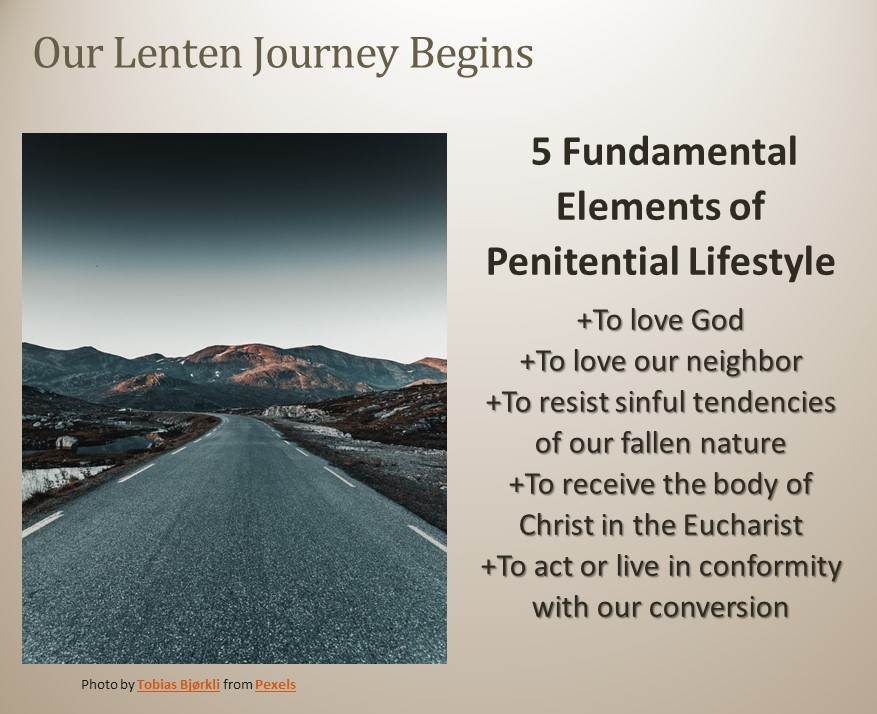
OFS Rule: Chapter 2: Art. 7• United by their vocation as “brothers and sisters of penance,” and motivated by the dynamic power of the gospel, let them conform their thoughts and deeds to those of Christ by means of that radical interior change which the gospel itself calls “conversion.” Human frailty makes it necessary that this conversion be carried out daily.• On this road to renewal the sacrament of reconciliation is the privileged sign of the Father’s mercy and the source of grace.Also see Article 13 of the General ConstitutionsConversion is symbolized as a JOURNEY of TRANSFORMATION led by the Spirit of God• Communal experience—encouragement and witness• On-going process, celebrated in stages with Eucharist as highpoint• Conversion is a lifetime experience of transformation5 Fundamental Elements of Penitential Lifestyle1. To love God2. To love our neighbor3. To resist sinful tendencies of our fallen nature4. To receive the body of Christ in the Eucharist5. To act or live in conformity with our conversionSee FUN Manual -Penitence and ConversionTo discuss or to answer in your journal. How will we live our conversion?• In what ways would you like to make progress spiritually during Lent? What do you want to improve in your relationship with God and with others?• What is the meaning of the phrase, “that radical interior change which the gospel itself calls ‘conversion?’”• What is the focus of the Sacrament of Reconciliation? How important is this for us as Secular Franciscans?• After having viewed or read some of the resources below, what will you put into practice in your daily life?Photo Photo by Tobias Bjørkli from PexelsResources for Lent in EnglishFrom Franciscan University: The Seven Last Words (a collection of seven short videos on Forgiveness, Salvation, Relationship, Abandonment, Distress, Triumph, and Reunion.)by Father Daniel P. Horan Horan | Nov 18, 2021by Ronald Rolheiser (Author)by Daniel P. Horan | Dec 8, 2013++++++++++++++++Por favor comparta con sus fraternidades“Formation Friday” es el producto del trabajo de la Comisión Nacional de Formación de la Orden Franciscana Seglar-EE.UU. Mantenga todas las citas y referencias intactas. (Esta declaración debe incluirse con cualquier publicación en correos electrónicos, sitios web o redes sociales).Los franciscanos seglares están llamados a la conversión:Regla OFS: Capítulo 2: Art. 7 7• Unidos por su vocación como “hermanos y hermanas de la penitencia,” y motivados por el poder dinámico del evangelio, confórmense sus pensamientos y acciones a los de Cristo mediante ese cambio interior radical que el evangelio mismo llama “la conversión.” ” La fragilidad humana hace necesario que esta conversión se realice diariamente.• En este camino hacia la renovación, el sacramento de la reconciliación es el signo privilegiado de la misericordia del Padre y la fuente de la gracia.Véase también el artículo 13 de las Constituciones generales.• La conversión se simboliza como una JORNADA de TRANSFORMACIÓN dirigida por el Espíritu de Dios.• La experiencia comunitaria: aliento y testimonio.• El proceso continuo, celebrado en etapas con la Eucaristía como punto culminante.• La conversión es una experiencia de transformación por toda la vida.5 elementos fundamentales del estilo de vida penitencial1. Amar a Dios2. Amar a nuestro prójimo3. Evitar las tendencias pecaminosas de nuestra naturaleza caída.4. Recibir el cuerpo de Cristo en la Eucaristía.5. Actuar o vivir de conformidad con nuestra conversión.Ver el manual FUN –“Penitence and Conversion”Para platicar o contestar en su diario. ¿Cómo viviremos nuestra conversión? (Para reflexionar y discutir)• ¿En qué planea trabajar espiritualmente durante la Cuaresma? ¿Qué quiere mejorar en su relación con Dios y con los demás?• ¿Cuál es el significado de la frase, “ese cambio interior radical que el mismo evangelio llama ‘conversión’?”• ¿Cuál es el enfoque del Sacramento de la Reconciliación? ¿Qué importancia tiene esto para nosotros como franciscanos seglares?• Después de haber visto o leído algunos de los recursos a continuación, ¿qué pondrá en práctica en su vida diaria?Recursos para la cuaresmaDiane F. Menditto, OFSChair, National Formation Commission
Formation Director, Our Lady of the Angels Region
Formation Director, St. Francis Fraternity, Hackensack, NJDon’t Give Up Anything For LentLOS INICIOS DE LA ORDEN FRANCISCANA SEGLARcontexto de la teología franciscana

FORMATION FRIDAY – FOCUS UPON ADMONITIONS (#10) – Feburary 18, 2022
Please share with your fraternities (En español abajo) 2 attachments
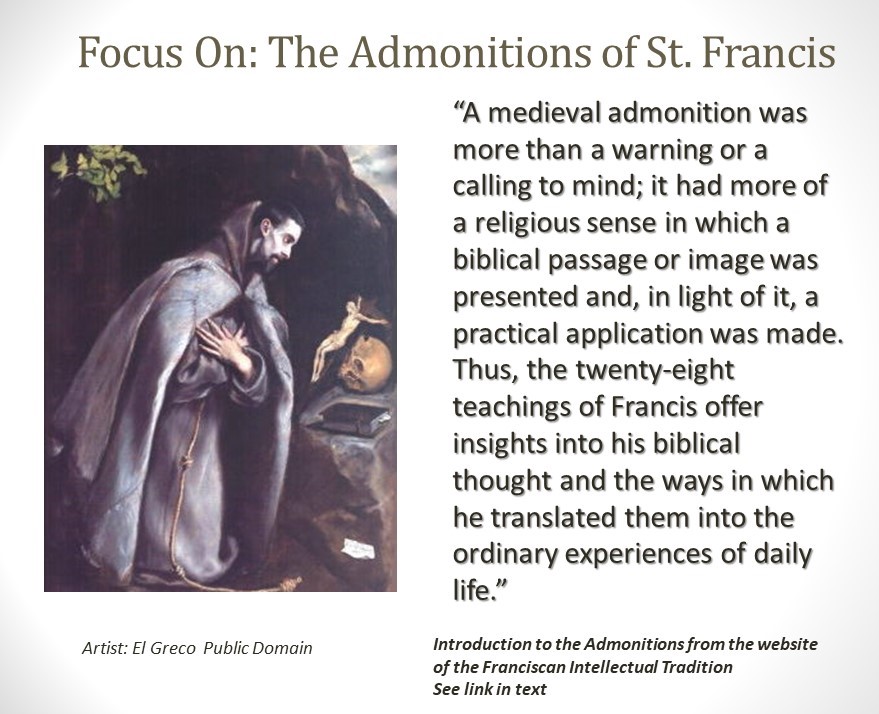
Formation Friday is the work product of the National Formation Commission of the Secular Franciscan Order-USA. Please keep all citations and references intact. (This statement should be included with any posts in emails, on websites, or on social media.)Focus on the Admonitions (#10)[X. Castigating the Body]1There are many people who, when they sin or are injured, frequently blame the enemy or their neighbor. Gn 3:12 Gn 3:13 2But it is not so, because each one has the enemy in his power, that is his body through which he sins.3Blessed is the servant, Mt 24:46 then, who always holds captive the enemy delivered into his power and wisely safeguards himself from him; 4because, as long as he does this, no other enemy visible or invisible will be able to harm him.From the Prologue to our Rule“1All those men and women who are not living in penance, 2who do not receive the Body and Blood of our Lord Jesus Christ, 3who practice vice and sin and walk after the evil concupiscence and the evil desires of their flesh, 4who do not observe what they have promised to the Lord, 5and who in their body serve the world and the cares of this life: 6They are held captive by the devil, whose children they are, and whose works they do (Jn 8:41) 7They are blind because they do not see the true light, our Lord Jesus Christ.”“11See you blind ones, deceived by your enemies: the flesh, the world and the devil, because it is sweet for the body to sin and it is bitter to serve God, 12for every vice and sin flow and proceed from the human heart (Mt 15:19, Mk 7:21) as the Lord says in the gospel. 13And you have nothing in this world or in that to come. 14And you think you will possess this world’s vanities for a long time, but you are deceived because a day and hour will come of which you give no thought, which you do not know, and of which you are unaware when the body becomes weak, death approaches, and it dies a bitter death.”As you read Admonition X and the two paragraphs from the Prologue to our Rule (Concerning Those Who Do Not Do Penance), please consider the following questions. Record your thoughts in your journal or share them in a small group with other fraternity members.+Blaming others has become the answer many in today’s society use when explaining why they have done something wrong. They say, “Yes, but…” Or “That’s how I was raised.” Or “No one told me/taught me.” Or “That’s just the way I am.”–Explain the advice that St. Francis gives us on this topic in Admonition 10.–How does he speak to us in the Prologue to our Rule to follow up on this advice?–How often are we tempted to blame others for the wrongs we commit? Can you think of an example?–Which Franciscan virtues can help us to avoid the temptation to blame others?–What do I want to change about myself when it comes to blaming others?++++++++++++++++++Enfoque en las admoniciones de San Francisco (Admonición X)[Cap. X: Del castigo del cuerpo]1Hay muchos que, cuando pecan o reciben una injuria, con frecuencia acusan al enemigo o al prójimo. 2Pero no es así, porque cada uno tiene en su poder al enemigo, es decir, al cuerpo, por medio del cual peca. 3Por eso, bienaventurado aquel siervo (Mt 24,46) que tiene siempre cautivo a tal enemigo entregado en su poder, y se guarda sabiamente de él; 4porque, mientras haga esto, ningún otro enemigo, visible o invisible, podrá dañarle.Del Prólogo de nuestra regla“Por el contrario, todos aquellos y aquellas que no viven en penitencia, ni reciben el cuerpo y la sangre de nuestro Señor Jesucristo, y viven en el vicio y el pecado, y van tras la mala concupiscencia (cf. Col 3,5) y los malos deseos de su carne (cf. Gál 5,16), y no cumplen lo que prometieron al Señor, y sirven corporalmente al mundo con los deseos carnales (1Pe 2,11) y con los afanes de este mundo (cf. Mt 13,22; Lc 21,34) y las preocupaciones de esta vida, engañados por el diablo, cuyos hijos son y cuyas obras hacen (cf. Jn 8,41), son unos ciegos (cf. Mt 15,14), pues no ven al que es la luz verdadera (cf. Jn 1,9), nuestro Señor Jesucristo.”“Mirad, ciegos, engañados por vuestros enemigos, la carne, el mundo y el diablo, que al cuerpo le es dulce pecar y amargo servir a Dios; pues todos los vicios y pecados salen y proceden del corazón del hombre, como dice el Señor en el Evangelio (cf. Mc 7,21.23; Mt 15,18-19). Y nada tenéis en este mundo ni en el futuro. Pensáis poseer por mucho tiempo las vanidades de este mundo, pero estáis engañados, porque vendrán el día y la hora que no pensáis, que desconocéis e ignoráis (cf. Mt 24,44; 25,13): enferma el cuerpo, se acerca la muerte, y se muere así con muerte amarga (1Sam 15,32).”Mientras lee la Admonición X y los dos párrafos del Prólogo de nuestra Regla (De los que no hacen penitencia), considere las siguientes preguntas. Escriba sus pensamientos en su diario o compártalos en un grupo pequeño con otros miembros de la fraternidad.+Culpar a los demás se ha convertido en la respuesta que muchos en la sociedad actual utilizan para explicar por qué han hecho algo mal. Dicen: “Sí, pero…” o “Así me criaron.” O “Nadie me dijo/me enseñó.” O “Así soy yo.”–Explique el consejo que nos da San Francisco sobre este tema en la Admonición 10.–¿Cómo nos habla en el Prólogo de nuestra Regla para dar seguimiento a este consejo?–¿Con qué frecuencia nos sentimos tentados a culpar a otros por los errores que cometemos? ¿Puede pensar en un ejemplo?–¿Qué virtudes franciscanas pueden ayudarnos a evitar la tentación de culpar a los demás?–¿Qué quiero cambiar de mí mismo cuando se trata de culpar a los demás?
Diane F. Menditto, OFSChair, National Formation Commission
Formation Director, Our Lady of the Angels Region
Formation Director, St. Francis Fraternity, Hackensack, NJ
 Admonitions-10.pdf
FORMATION FRIDAY, Wonder About Angels? – February 11, 2022
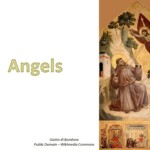
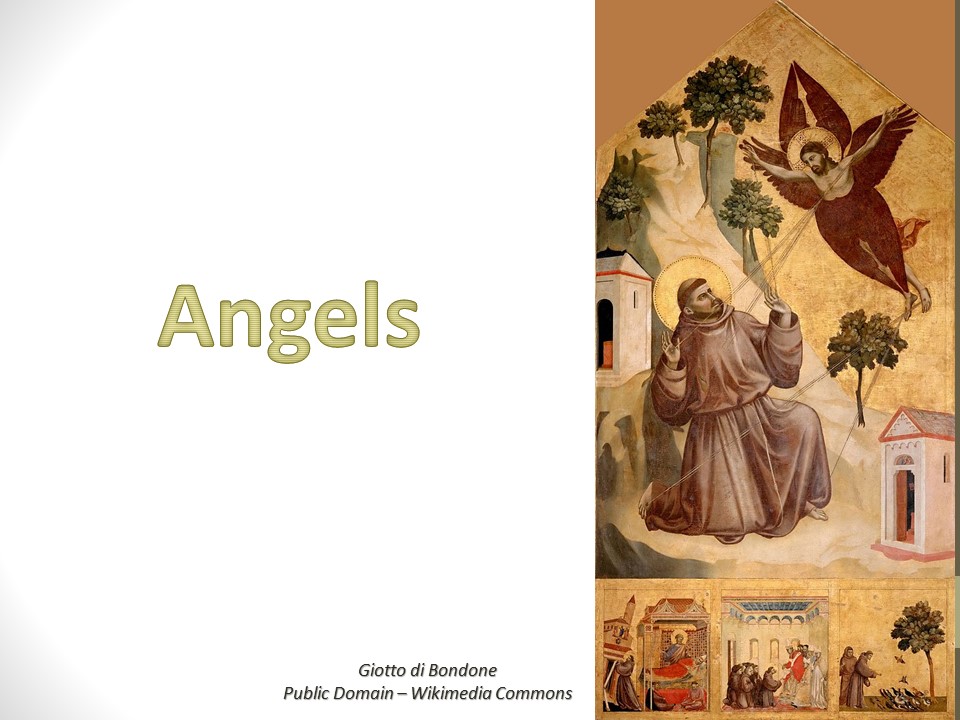
Formation Friday is the work product of the National Formation Commission of the Secular Franciscan Order-USA. Please keep all citations and references intact. (This statement should be included with any posts in emails, on websites, or on social media.)Do you ever wonder about angels?• The existence of the spiritual, non-corporeal beings that Sacred Scripture usually calls “angels” is a truth of faith. The witness of Scripture is as clear as the unanimity of Tradition. (CCC 328 )• St. Augustine says: “‘Angel’ is the name of their office, not of their nature…..'”188 (CCC 329)• With their whole beings the angels are servants and messengers of God. Because they “always behold the face of my Father who is in heaven” they are the “mighty ones who do his word, hearkening to the voice of his word”.189 (CCC 329)• As purely spiritual creatures angels have intelligence and will: they are personal and immortal creatures, surpassing in perfection all visible creatures, as the splendor of their glory bears witness.190 (CCC 330)• Angels have been present since creation and throughout the history of salvation, announcing this salvation from afar or near and serving the accomplishment of the divine plan: … (CCC 332)• From its beginning until death, human life is surrounded by their watchful care and intercession.202 “Beside each believer stands an angel as protector and shepherd leading him to life.”203 Already here on earth the Christian life shares by faith in the blessed company of angels and men united in God. (CCC 336)For complete entries see # s 328-336 in the Catechism of the Catholic Church.CCC is online at CATECHISM OF THE CATHOLIC CHURCH (searchable)• Traditionally the angels are classified into what are called nine “choirs” or “ranks.” This division is based on nine names of angels found in Sacred Scripture. This is an accepted Catholic belief but is not dogma. The names do not appear in the Catechism. According to these rankings, only Archangels and “regular” angels have contact with humans. Two of the exceptions to this are: a Seraph touched a burning ember to the lips of the Prophet Isaiah, and St. Francis was visited in a vision by a Seraph on Mt. La Verna.(See Aleteia: ALETEIA: CHOIRS OF ANGELS )• St. Thomas Aquinas devotes an entire question to the angels in the Summa Theologiae. (See New Advent: https://www.newadvent.org/summa/1108.htm )• The names of the nine choirs of angels are: Seraphim, Cherubim, Thrones, Dominions, Virtues, Powers, Archangels, Principalities, Angels. (For a description of each choir see Catholic.org CATHOLIC.ORG: CHOIRS OF ANGELS)• In case you were wondering—”The Bible and the Church recognize seven archangels, although just three are known by name, Michael, Gabriel, and Raphael.” Other, non-biblical sources mention four other names, but they are not recognized by the Church.• The highest order of angels is the SERAPHIM. This is particularly significant for Franciscans.• The Seraphim are closest to God, and they praise him day and night. Seraphim means “the burning ones.”• St. Francis was visited by a Seraph in a vision on Mt. La Verna. This is why he is called our Seraphic Father.• Thomas of Celano mentions the six wings of the Seraph.• In The Soul’s Journey Into God, St. Bonaventure uses “the imagery of the six wings of the Seraph as indicators and reminders of the comprehensive and full spirituality of St. Francis, and of anyone who would follow his inspiration.” (see link below)• Read a full description of St. Bonaventure’s explanation of the six wings of the Seraph in an excellent article on “The Seraphic Vision on Mt. La Verna” by Fr. John Sullivan, OFM, (topic 18) on the OFS-USA website here: OFS-USA WEBSITE ARTICLE BY FR. JOHN SULLIVAN, OFMQuestions for discussion or to answer in your journal.+ Think about angels. What role do they play in your life?+ Read the article about “The Seraphic Vision on Mt. La Verna.” Think about St. Francis’s vision of the Seraph. What did you learn about this experience? What effect does seeing this event in the life of St. Francis more clearly have on your spiritual life?++++++++++++++++++++++++Por favor-compartir con la fraternidad localFormation Friday es el producto del trabajo de la Comisión Nacional de Formación de la Orden Franciscana Seglar-EE.UU. Mantenga todas las citas y referencias intactas. (Esta declaración debe incluirse con cualquier publicación en correos electrónicos, sitios web o redes sociales).¿Alguna vez se ha preguntado acerca de los ángeles?• La existencia de los seres espirituales, incorpóreos, que la Sagrada Escritura suele llamar “ángeles”, es una verdad de fe. El testimonio de la Escritura es tan claro como la unanimidad de la Tradición. (CIC 328 )• San Agustín dice: “‘Ángel’ es el nombre de su oficio, no de su naturaleza…”188 (CIC 329)• Con todo su ser, los ángeles son servidores y mensajeros de Dios. Porque ellos “miran siempre el rostro de mi Padre que está en los cielos” son los “poderosos que cumplen su palabra, escuchando la voz de su palabra”.189 (CIC 329)• Como criaturas puramente espirituales, los ángeles tienen inteligencia y voluntad: son criaturas personales e inmortales, superando en perfección a todas las criaturas visibles, como lo atestigua el esplendor de su gloria.190 (CIC 330)• Los ángeles han estado presentes desde la creación y a lo largo de la historia de la salvación, anunciando esta salvación de lejos o de cerca y sirviendo a la realización del plan divino: … (CIC 332)• Desde su comienzo hasta la muerte, la vida humana está rodeada por su cuidado vigilante e intercesión.202 “Al lado de cada creyente está un ángel como protector y pastor que lo lleva a la vida”.203 Ya aquí en la tierra, la vida cristiana comparte por la fe en el bienaventurado compañía de ángeles y hombres unidos en Dios. (CIC 336)Para las anotaciones completas, vea los números 328-336 en el Catecismo de la Iglesia Católica.• Tradicionalmente los ángeles se clasifican en lo que se llama nueve “coros” o “rangos.” Esta división se basa en nueve nombres de ángeles que se encuentran en la Sagrada Escritura. Esta es una creencia católica aceptada pero no es un dogma. Los nombres no aparecen en el Catecismo. De acuerdo con estas clasificaciones, solo los Arcángeles y los ángeles “regulares” tienen contacto con los humanos. Dos de las excepciones a esto son: un Serafín tocó una brasa ardiente en los labios del Profeta Isaías, y San Francisco fue visitado en una visión por un Serafín en el Monte La Verna.(Ver JERARQUÍA ANGÉLICA )• Santo Tomás de Aquino dedica toda una pregunta a los ángeles en la Summa Theologiae. (Ver https://hjg.com.ar/sumat/ en particular SUMA THEOLÓGICA EN ESPAÑOL )• Los nombres de los nueve coros de ángeles son: Serafines, Querubines, Tronos, Dominaciones, Virtudes, Potestades, Arcángeles, Principados, Ángeles. (Para obtener una descripción de cada coro, consulte Catholic.net en español https://es.catholic.net/op/articulos/9763/cat/123/la-jerarquia-angelica.html )• En caso de que se lo pregunte: “La Biblia y la Iglesia reconocen siete arcángeles, aunque sólo tres son conocidos por su nombre: Miguel, Gabriel y Rafael”. Otras fuentes no bíblicas mencionan otros cuatro nombres, pero no son reconocidos por la Iglesia.”• El orden más alto de ángeles es el SERAFÍN. Esto es particularmente significativo para los franciscanos.• Los Serafines son los más cercanos a Dios y lo alaban día y noche. Serafín significa “los ardientes.”• San Francisco fue visitado por un Serafín en una visión en el Monte La Verna. Por eso se le llama nuestro Seráfico Padre.• Tomás de Celano menciona las seis alas del Serafín.• En “El viaje del alma hacia Dios,” San Buenaventura usa “las imágenes de las seis alas del Serafín como indicadores y recordatorios de la espiritualidad integral y plena de San Francisco, y de cualquiera que siga su inspiración.” (ver enlace abajo)• Lea una descripción completa de la explicación de San Buenaventura de las seis alas del Serafín en un excelente artículo sobre “La Visión Seráfica en el Monte La Verna” por el Padre. John Sullivan, OFM, (tema 18) en el sitio web de OFS-USA aquí: ARTÍCULO EN INGLÉS SOBRE EL SERAFÍNPreguntas para platicar o para responder en su diario.+ Piense en los ángeles. ¿Qué papel juegan en su vida?+ Lea el artículo sobre “La Seráfica Visión en el Monte La Verna.” (el artículo es en inglés)Piense en la visión de San Francisco del Serafín. ¿Qué aprendiste de esta experiencia? ¿Qué efecto tiene ver más claramente este evento en la vida de San Francisco en su vida espiritual?Diane F. Menditto, OFSChair, National Formation Commission
Formation Director, Our Lady of the Angels Region
Formation Director, St. Francis Fraternity, Hackensack, NJ