We have interrupted our series on the National Priorities for some Lenten inspiration. We hope the resources below will help everyone to focus on penance and conversion, so important in the life of a Secular Franciscan.
Thank you to the National Formation Commission for collaborating on this piece.
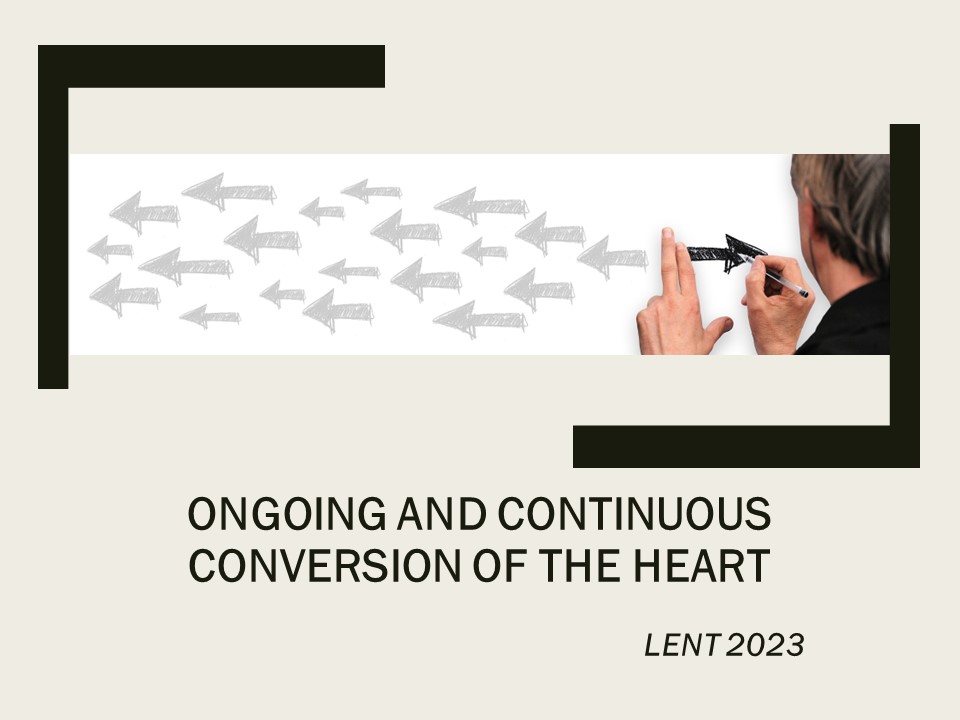
The Conversion Process: Ongoing and continuous conversion of the heart
For each week of Lent focus on one action item below that you would like to cultivate in a special way as part of your Lenten journey.
1. Make an act of reparation or a modification of behavior to show sorrow for sin.
2. Be willing to recognize and accept suffering as the consequence of separating myself from God. (Offer sufferings for the benefit of others.)
3. Commit to a plan for prayer, fasting, and almsgiving. (See: Joel 2:12-18)
4. Intentionally evangelize a lukewarm or nonbeliever.
5. Ask the Holy Spirit to make me aware of a specific moral shortcoming and for the grace to change.
6. Consciously live the Beatitudes.
7. Seek personal conversion through deeper prayer.
8. Radically commit to the Gospel life centered on the person of Jesus.
9. Savor God’s mercy, experiencing the love of God which unceasingly calls us back to Himself.
10. Accept myself as I am now and strive to reach a deeper level of conversion.
11. Journal on my spiritual journey made up of failures and falls and also made up of new beginnings, new discoveries.
12. Use St. Francis’s paraphrase of the Lord’s Prayer for meditation.
Questions for discussion or to answer in your journal.
+Explain how you plan to carry out the items you chose from the list above.
+Which of all the statements above might be most beneficial to your personal conversion?
+Which of the statements is the most challenging for you?
++++++++++++++++++++
El proceso de conversión: La conversión continua y permanente del corazón
Interrumpimos nuestra serie sobre las Prioridades Nacionales para inspirarnos en la Cuaresma. Esperamos que los recursos a continuación ayuden a todos a centrarse en la penitencia y la conversión, tan importantes en la vida de un franciscano seglar.
Gracias a la Comisión Nacional de Formación por colaborar en esta pieza.
Para cada semana de Cuaresma, concéntrese en un elemento de acción a continuación que le gustaría cultivar de una manera especial como parte de su jornada de Cuaresma.
1. Hacer un acto de reparación o una modificación de comportamiento para mostrar dolor por el pecado.
2. Estar dispuesto a reconocer y aceptar el sufrimiento como consecuencia de separarse de Dios. (Ofrezca sufrimientos en beneficio de otros).
3. Comprometerse a un plan de oración, ayuno, limosna. (Ver: Joel 2: 12-18)
4. Evangelizar intencionalmente a un tibio o no creyente.
5. Pídale al Espíritu Santo que lo haga consciente de una deficiencia moral específica y que tenga la gracia de cambiar.
6. Viva conscientemente las Bienaventuranzas.
7. Busque la conversión personal a través de una oración más profunda.
8. Comprometerse radicalmente con la vida evangélica centrada en la persona de Jesús.
9. Saborear la misericordia de Dios, experimentar el amor de Dios que incesantemente nos llama a Él.
10. Aceptarme tal como soy ahora y esforzarme por alcanzar un nivel más profundo de conversión.
11. Escribir un diario sobre mi jornada espiritual compuesto de fracasos y caídas y también compuesto de nuevos comienzos, nuevos descubrimientos.
12. Utilizar la paráfrasis de San Francisco del Padre Nuestro para la meditación.
Preguntas para platicar o para responder en su diario.
+ Explique cómo planea realizar los elementos que eligió de la lista anterior.
+ ¿Cuál de todas las declaraciones anteriores podría ser más beneficiosa para su conversión personal?
+ ¿Cuáles de las afirmaciones son las más desafiantes para usted?
Diane F. Menditto, OFSVice Minister, National Fraternity, Secular Franciscan Order USAListen – Discern – Go Forth National Theme 2022-
Category: Formation Friday
Formation Friday – Lenten Focus – February 17, 2023
Since Lent is about to begin, we interrupt our series on the National Priorities for some Lenten inspiration. We hope the resources below will help everyone to focus on penance and conversion, which is so important in the life of a Secular Franciscan.
Secular Franciscans are called to Conversion
OFS Rule: Chapter 2: Art. 7
• United by their vocation as “brothers and sisters of penance,” and motivated by the dynamic power of the gospel, let them conform their thoughts and deeds to those of Christ by means of that radical interior change that the gospel itself calls “conversion.” Human frailty makes it necessary that this conversion be carried out daily.
• On this road to renewal the sacrament of reconciliation is the privileged sign of the Father’s mercy and the source of grace.
Also see Article 13 of the General Constitutions
Conversion is symbolized as a JOURNEY of TRANSFORMATION led by the Spirit of God
• Communal experience—encouragement and witness
• On-going process, celebrated in stages with Eucharist as highpoint
• Conversion is a lifetime experience of transformation
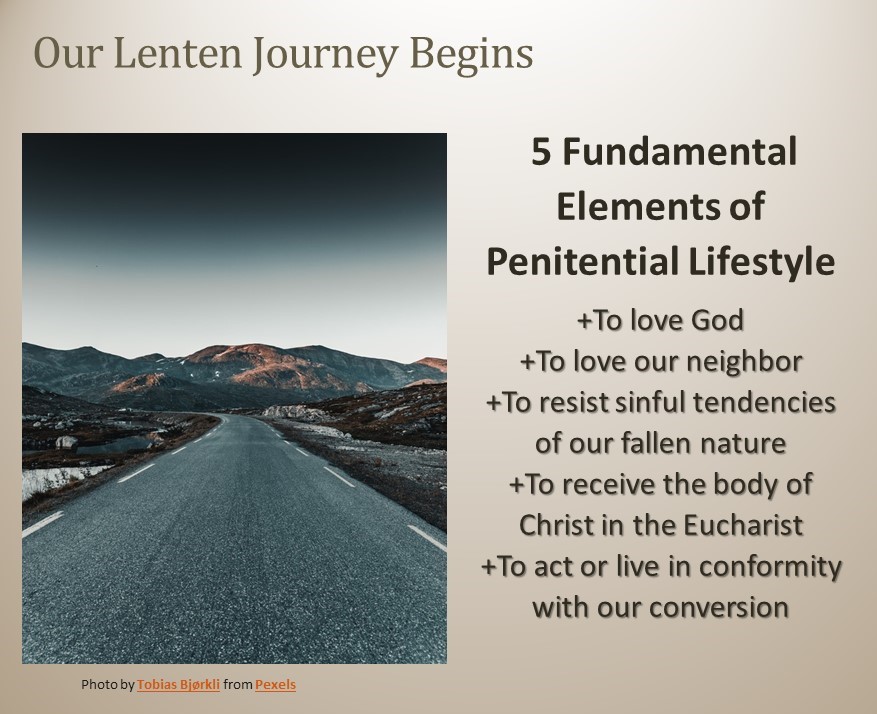
5 Fundamental Elements of Penitential Lifestyle
- To love God
- To love our neighbor
- To resist sinful tendencies of our fallen nature
- To receive the body of Christ in the Eucharist
- To act or live in conformity with our conversion
See FUN Manual -Penitence and Conversion
To discuss or to answer in your journal. How will we live our conversion?
• In what ways would you like to make progress spiritually during Lent? What do you want to improve in your relationship with God and with others?
• What is the meaning of the phrase, “that radical interior change which the gospel itself calls ‘conversion?’”
• What is the focus of the Sacrament of Reconciliation? How important is this for us as Secular Franciscans?
• After having viewed or read some of the resources below, what will you put into practice in your daily life?
Resources for Lent in English
https://weare.franciscan.university/lent/7-last-words/
From Franciscan University: The Seven Last Words (a collection of seven short videos on Forgiveness, Salvation, Relationship, Abandonment, Distress, Triumph, and Reunion.)
https://hallow.com/lent/
Many resources for Lent from Hallowhttps://www.youtube.com/watch?v=IH1CMXYPi_w&t=361s
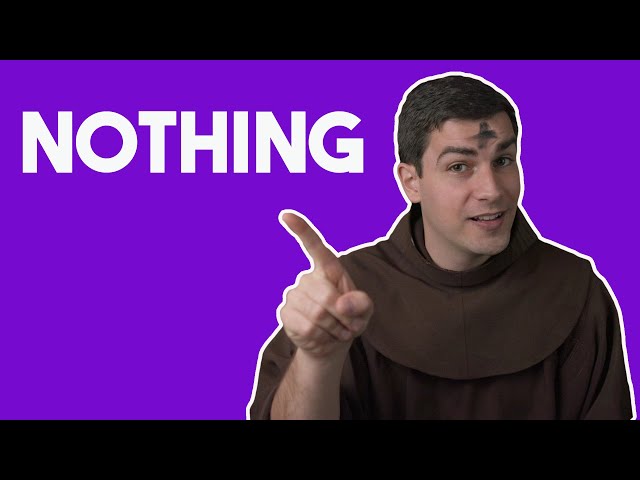
Fr. Casey Cole, OFM, “Don’t Give Up Anything for Lent”
https://www.youtube.com/results?search_query=lent+bishop+barron
A selection of videos for Lent from Bishop Robert Barron
The Way of the Franciscans: A Prayer Journey through Lent (The Way of, 5)
by Father Daniel P. Horan Horan | Nov 18, 2021
The Passion and the Cross Paperback – December 1, 2015
by Ronald Rolheiser (Author)
The Last Words of Jesus: A Meditation on Love and Suffering
by Daniel P. Horan | Dec 8, 2013
++++++++++++++++
Por favor comparta con sus fraternidades
Dado que la Cuaresma está a punto de comenzar, interrumpimos nuestra serie sobre las Prioridades Nacionales para inspirarnos en la Cuaresma. Esperamos que los recursos a continuación ayuden a todos a centrarse en la penitencia y la conversión, tan importantes en la vida de un franciscano seglar.
Los franciscanos seglares están llamados a la conversión:
Regla OFS: Capítulo 2: Art. 7 7
• Unidos por su vocación como “hermanos y hermanas de la penitencia,” y motivados por el poder dinámico del evangelio, confórmense sus pensamientos y acciones a los de Cristo mediante ese cambio interior radical que el evangelio mismo llama “la conversión.” ” La fragilidad humana hace necesario que esta conversión se realice diariamente.
• En este camino hacia la renovación, el sacramento de la reconciliación es el signo privilegiado de la misericordia del Padre y la fuente de la gracia.
Véase también el artículo 13 de las Constituciones generales.
• La conversión se simboliza como una JORNADA de TRANSFORMACIÓN dirigida por el Espíritu de Dios.
• La experiencia comunitaria: aliento y testimonio.
• El proceso continuo, celebrado en etapas con la Eucaristía como punto culminante.
• La conversión es una experiencia de transformación por toda la vida.
5 elementos fundamentales del estilo de vida penitencial
1. Amar a Dios
2. Amar a nuestro prójimo
3. Evitar las tendencias pecaminosas de nuestra naturaleza caída.
4. Recibir el cuerpo de Cristo en la Eucaristía.
5. Actuar o vivir de conformidad con nuestra conversión.
Ver el manual FUN –“Penitence and Conversion”Para platicar o contestar en su diario. ¿Cómo viviremos nuestra conversión? (Para reflexionar y discutir)
• ¿En qué planea trabajar espiritualmente durante la Cuaresma? ¿Qué quiere mejorar en su relación con Dios y con los demás?
• ¿Cuál es el significado de la frase, “ese cambio interior radical que el mismo evangelio llama ‘conversión’?”
• ¿Cuál es el enfoque del Sacramento de la Reconciliación? ¿Qué importancia tiene esto para nosotros como franciscanos seglares?
• Después de haber visto o leído algunos de los recursos a continuación, ¿qué pondrá en práctica en su vida diaria?
Recursos en español para la cuaresma:
https://www.youtube.com/results?search_query=recursos+franciscanos+para+cuaresma
Varios videos con tema de cuaresma para los franciscanos
https://www.centrodelapostoladocatolico.org/recursos-de-cuaresma-y-pascua.html
Centro del apostolado católico (gran variedad de recursos)
Varios libros para cuaresma disponibles en Kindle
http://franciscanos.org/frandp/menup.html
Escritos de San Francisco, Sta. Clara, y otros. Artículos y recursos sobre asuntos franciscanos.
https://www.youtube.com/watch?v=s86iZbcA3uk
Los inicios de la Orden Franciscana
https://www.youtube.com/watch?v=Q5Kuzbz_D-E
Contexto de la teología franciscana
https://ciofs.info/es/library/official-documents/
Documentos de la orden (Regla, constituciones generales, etc.)
https://www.amazon.com/Los-Franciscanos-Seglares-invitaci%C3%B3n-Franciscana-ebook/dp/B01CEV085O
Los Franciscanos Seglares: Espíritu, Historia y Vocación: Una invitación a examinar la vida evangélica de la Orden Franciscana Seglar en la Iglesia y en el mundo. (Edición en español) Kindle Edition
Diane F. Menditto, OFSVice Minister, National Fraternity, Secular Franciscan Order USAListen – Discern – Go Forth National Theme 2022-2025

Formation Friday February 10, 2023
At our National Chapter in October 2022, the National Fraternity Council decided that the priorities for 2022-2025 will be Vocations, Communications, and Relationships. For the next several weeks, Formation Friday will explore each of the priorities.
Communications: Part 1
Prepared by Layna Maher, OFS, Chair, National Formation CommissionThis week Formation Friday is taking a look at communication from our perspective as Catholics and Secular Franciscans.
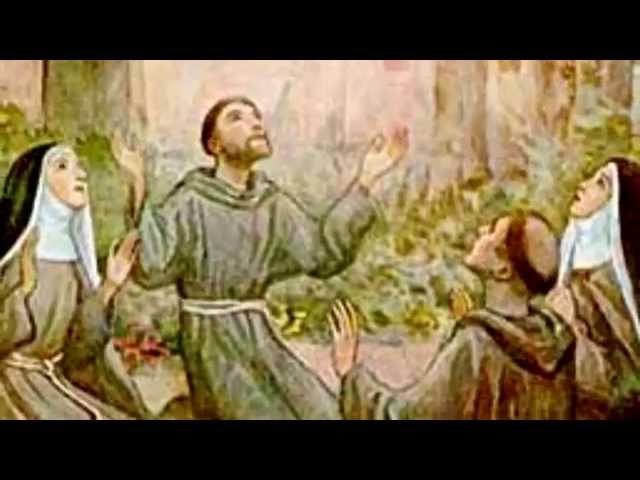
As Franciscans, we are called to share the Good News by the way we live and communicate with others. We first look to the way St. Francis lived as described to us by Thomas of Celano in The Life of Saint Francis.
The brothers who lived with him know
that daily, constantly, talk of Jesus was always on his lips,
sweet and pleasant Ez 33:32 conversations about Him,
kind words full of love.
Out of the fullness of the heart his mouth spoke. Mt 12:34
So the spring of radiant love that filled his heart within
gushed forth.
He was always with Jesus:
Jesus in his heart,
Jesus in his mouth,
Jesus in his ears,
Jesus in his eyes,
Jesus in his hands,
he bore Jesus always in his whole body.
Jesus and St. Francis are perfect models of gentleness. Jesus teaches us that gentleness reconciles and heals. St. Francis teaches us that gentleness opens the possibility for something radical and positive and holy. As Secular Franciscans we follow in the footsteps of St. Francis following Jesus. When we do this and live our Rule, we live with gentleness rooted in humility.
We also look to the Holy Spirit as a model of gentleness. During a 2017 visit to a parish in Rome, Pope Francis said, “The language of the Holy Spirit is sweet, and the Church calls him the ‘sweet guest of the soul’ because he is sweet and gives us sweetness. And respect. He always respects others. He teaches us to respect others.”
Gently and humbly seeking first to understand, then to be understood helps us to be respectful and see others as a gift of the Lord. As Franciscans, we open our hearts to be filled with the same radiant love that filled the heart of St. Francis. When our hearts are full, others will hear Jesus from the words of our mouths and see Jesus in the work of our hands.
From the OFS Rule: Article 13. As the Father sees in every person the features of his Son, the firstborn of many brothers and sisters, so the Secular Franciscans with a gentle and courteous spirit accept all people as a gift of the Lord and an image of Christ. A sense of community will make them joyful and ready to place themselves on an equal basis with all people, especially with the lowly for whom they shall strive to create conditions of life worthy of people redeemed by Christ.
Discuss with your fraternity or a prayer partner or comment in your journal.
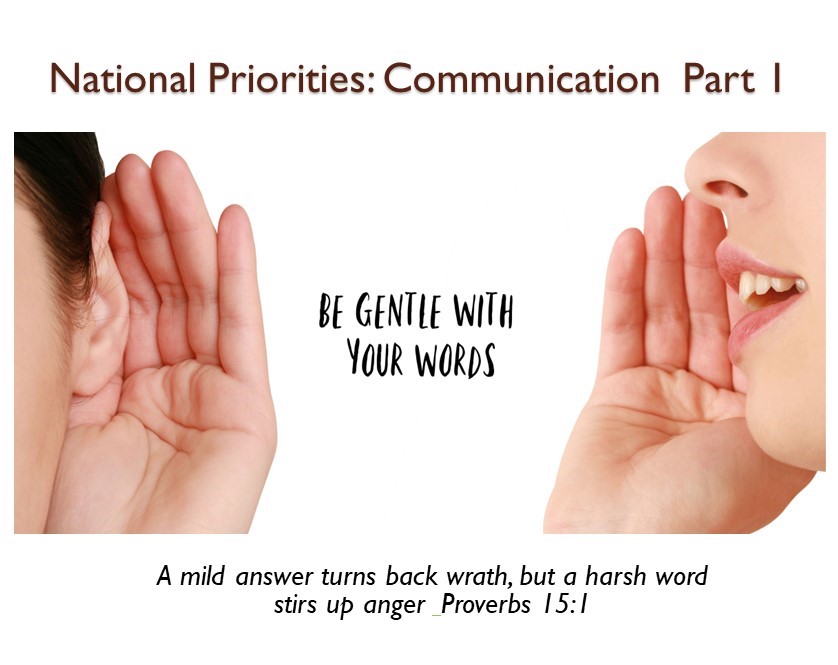
Proverbs 15:1 A mild answer turns back wrath, but a harsh word stirs up anger
+ Reflect on your attitude and actions when you encounter someone with a different opinion or position. Is it an attitude of gentleness, or of wrath?
+ How do you seek to encounter Christ in those you do not agree with?
+ Think of a time you may not have reacted with gentleness to another. What could you have done differently? Is there an opportunity for reconciliation?
++++++++++++++++++++
Por favor compartir con su fraternidad local
En nuestro Capítulo Nacional en octubre de 2022, el Consejo Nacional de Fraternidad decidió que las prioridades para 2022-2025 serán Vocaciones, Comunicaciones y Relaciones. Durante las próximas semanas, el Formation Friday analizará cada una de las prioridades.
Comunicaciones: Parte 1
Preparado por Layna Maher, OFS, Presidenta, Comisión Nacional de FormaciónEsta semana, el Formation Friday analiza la comunicación desde nuestra perspectiva como católicos y franciscanos seglares.
Como franciscanos, estamos llamados a compartir la Buena Nueva a través de la forma en que vivimos y nos comunicamos con los demás. Primero miramos la forma en que vivió San Francisco como nos la describe Tomás de Celano en La vida de San Francisco.
FA:ED , vol. 1, 283 (En inglés)
Los hermanos que vivían con él saben
que diariamente, constantemente, hablar de Jesús estaba siempre en sus labios,
dulces y agradables Ez 33:32 conversaciones acerca de Él,
amables palabras llenas de amor.
De la plenitud del corazón habló su boca. Mateo 12:34
Así que el manantial de amor radiante que llenó su corazón dentro
brotó.
Siempre estuvo con Jesús:
Jesús en su corazón,
Jesús en su boca,
Jesús en sus oídos,
Jesús en sus ojos,
Jesús en sus manos,
llevó siempre a Jesús en todo su cuerpo.
Jesús y San Francisco son modelos perfectos de mansedumbre. Jesús nos enseña que la mansedumbre reconcilia y sana. San Francisco nos enseña que la mansedumbre abre la posibilidad de algo radical, positivo y santo. Como Franciscanos Seglares seguimos los pasos de San Francisco siguiendo a Jesús. Cuando hacemos esto y vivimos nuestra Regla, vivimos con mansedumbre enraizada en la humildad.
También miramos al Espíritu Santo como un modelo de mansedumbre. Durante una visita a una parroquia en Roma en 2017, el Papa Francisco dijo: “El lenguaje del Espíritu Santo es dulce, y la Iglesia lo llama el ‘dulce huésped del alma’ porque es dulce y nos da dulzura. Y respeto. Siempre respeta a los demás. Él nos enseña a respetar a los demás”.
Buscando con delicadeza y humildad a comprender primero y luego ser comprendidos nos ayuda a ser respetuosos y ver a los demás como un don del Señor. Como franciscanos, abrimos nuestros corazones para que se llenen del mismo amor radiante que llenó el corazón de San Francisco. Cuando nuestros corazones estén llenos, otros escucharán a Jesús de las palabras de nuestra boca y verán a Jesús en la obra de nuestras manos.
De la Regla OFS : Artículo 13. De la misma manera que el Padre ve en cada uno de los hombres los rasgos de su Hijo, Primogénito de muchos hermanos22, los Franciscanos seglares acojan a todos los hombres con ánimo humilde y cortés, como don del Señor23 e imagen de Cristo.
El sentido de fraternidad les hará felices de colocarse a la par de todos los hombres, especialmente con los más humildes, para los cuales se esforzarán en crear condiciones de vida dignas de criaturas redimidas por Cristo24.
Para platicar con su fraternidad o un compañero de oración o comentar en su diario.
Proverbios 15:1 La suave respuesta hace retroceder la ira, pero la palabra áspera hace subir la ira
+ Reflexione sobre su actitud y acciones cuando se encuentra con alguien que tiene una opinión o posición diferente a la suya. ¿Es su actitud una de mansedumbre o de ira?
+ ¿Cómo intenta encontrar a Cristo en aquellos con los que no está de acuerdo?
+ Piense en un momento en el que quizás no haya reaccionado con delicadeza a otro. ¿Qué podría haber hecho diferente? ¿Hay una oportunidad para la reconciliación?
Diane F. Menditto, OFSVice Minister, National Fraternity, Secular Franciscan Order USAListen – Discern – Go Forth National Theme 2022-2025
FORMATION FRIDAY – Vocations, Communications, Relationships: How do we strengthen and maintain our vocations? Pt.3 – Feb. 3, 2023
Vocations, Communications, Relationships: How do we strengthen and maintain our vocation? (Part 3)
At our National Chapter in October 2022, the National Fraternity Council decided that the priorities for 2022-2025 will be Vocations, Communications, and Relationships. For the next several weeks, Formation Friday will take a look at each of the priorities.
For those of us who are newly professed and for those of us who are long-professed, attention to our vocation does not stop at the moment of profession. This special gift we have been given, Profession in the Secular Franciscan Order, needs to be nurtured and cared for throughout our lives as Franciscans.
We are all responsible for keeping our vocations strong. Initial formation should not be the last time we think deeply about the Franciscan Charism and all that it means to our lives as Secular Franciscans. Our Constitutions are specific about the need for Ongoing Formation—also called Continuing or Permanent Formation. Take note of what the General Constitutions expect will be the content of our ongoing formation programs:
CONTINUING FORMATION – ARTICLE 44 GC
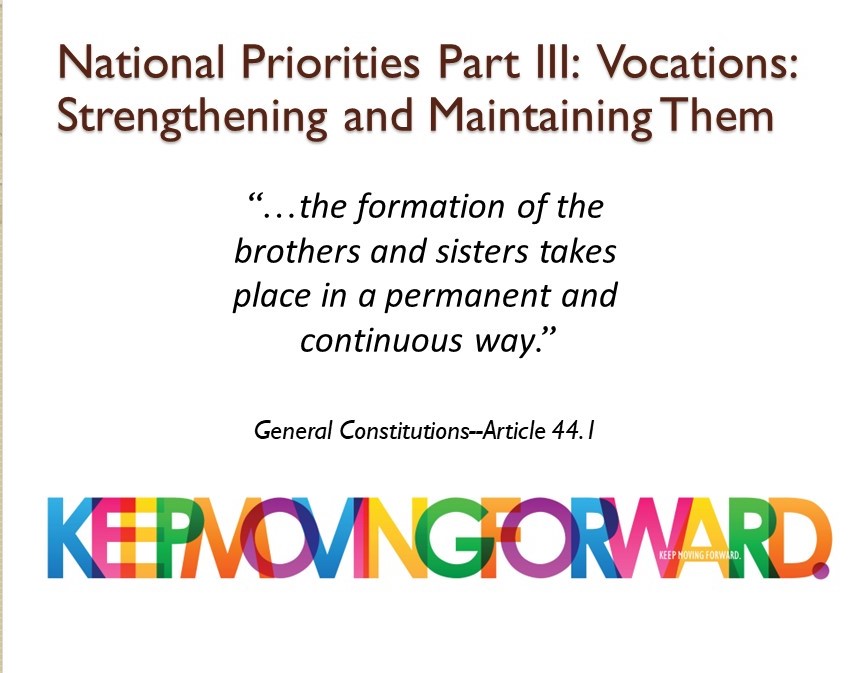
1. Begun by the preceding stages, the formation of the brothers and sisters takes place in a permanent and continuous way. It should be understood as an aid in the conversion of each and every one and in the fulfillment of their proper mission in the Church and in society.
2. The Fraternity has the duty to give special attention to the formation of the newly professed and of the temporarily professed, to help them become fully mature in their vocation and develop a true sense of belonging.
3. Ongoing formation – accomplished by means of courses, gatherings, and the sharing of experience – aims to assist the brothers and sisters:
— Rule: Article 4 in listening to and meditating on the Word of God, “going from Gospel to life and from life to Gospel,”
— in reflecting on events in the Church and in society in the light of faith and with the help of the documents of the teaching Church, consequently taking consistent positions;
— in discerning and deepening the Franciscan vocation by studying the writings of Saint Francis, Saint Clare and Franciscan authors.
There are four aspects to ongoing formation
- Franciscan topics (our governing documents; writings of Francis and Clare; writings by Franciscan authors)
- Contemporary topics (How we live our lives as Secular Franciscans; writings of Catholic authors; documents like Laudato Sì; The Joy of the Gospel etc.)
- Prayer (Franciscan prayer life; praying the Scriptures; learning about the Scriptures)
- Teaching about the Catholic Church
Here are some suggestions for ongoing formation resources:
· Franciscan Intellectual Tradition video lectures
https://franciscantradition.org/resources/video-clips· Custodians of the Tradition (Excellent) https://franciscantradition.org/resources/custodians-of-the-tradition
· The writings of and about Francis and Clare https://franciscantradition.org/early-sources
· Metanoia videos by Fr. Dave Pivonka, TOR.
https://thewildgooseisloose.com/metanoia· CD Contents from the FUN Manual
https://www.secularfranciscansusa.org/fun-cd-contents/· Ongoing formation resources on our website (including Formation Fridays)
https://www.secularfranciscansusa.org/ongoing-formation-resources/· Gospel Life of St. Francis from St. Bonaventure University FREE DOWNLOAD WITH VIDEOS
https://www.secularfranciscansusa.org/2022/08/06/gospel-life-of-st-francis-handbook-available-for-free-digital-download/· Videos of excellent keynote talks given at the 2022 Quinquennial
https://www.secularfranciscansusa.org/updates-from-the-q-august-3rd-through-7th-2022/
Suggestions for discussion in a group, with a prayer partner, or to comment on in your journal.+How does the ongoing formation program in your local fraternity follow what is requested in the General Constitutions? Is it focused on Franciscan/Gospel/Church themes? Why or why not?
+How is the ongoing formation program carried out in your fraternity? Here are some possibilities. Which ones can be used on a rotating basis?
+A talk at the gathering (by fraternity member, spiritual assistant, or guest speaker)
+A talk followed by small group discussions followed by sharing with the entire group
+A presentation or a reading selection followed by discussion with a partner
+View a video (formation team prepares a few questions given out beforehand). Questions are discussed in small groups or with a partner after viewing the video.
+Members read a short scripture passage at home. Make a list of 3 main ideas. Some of the readings are shared at the gathering along with the ideas the person has listed.
+Take a look at the links provided above. What looks interesting for your fraternity? Make suggestions to your formation team.
++++++++++++++++++++++++++++
Vocaciones, Comunicaciones, Relaciones: ¿Cómo fortalecemos y mantenemos nuestra vocación? (Parte 3)
En nuestro Capítulo Nacional en octubre de 2022, el Consejo Nacional decidió que las prioridades para 2022-2025 serán Vocaciones, Comunicaciones y Relaciones. Durante las próximas semanas, Formation Friday analizará cada una de las prioridades.
Para los que somos nuevos profesos y para los que somos de larga profesión, la atención a nuestra vocación no se detiene en el momento de la profesión. Este don especial que se nos ha dado, la Profesión en la Orden Franciscana Seglar, necesita ser nutrido y cuidado a lo largo de nuestras vidas como franciscanos.
Todos somos responsables de mantener fuertes nuestras vocaciones. La formación inicial no debe ser la última vez que reflexionemos profundamente sobre el carisma franciscano y todo lo que significa para nuestras vidas como franciscanos seglares. Nuestras Constituciones son específicas sobre la necesidad de la Formación Permanente, también llamada Formación Continua o Permanente. Toma nota de lo que las Constituciones Generales esperan que sea el contenido de nuestros programas de formación permanente:
La formación permanente
Art. 44 CCGG
1. Iniciada en las etapas precedentes, la formación de los hermanos se realiza de modo permanente y continuo. Es una ayuda para la conversión de todos y cada uno y para el cumplimiento de la propia misión en la Iglesia y en la sociedad.
2. La Fraternidad tiene el deber de dedicar especial atención a la formación de los neoprofesos y de los profesos temporales, para ayudarles a madurar su vocación y arraigar el sentido de pertenencia.
3. La formación permanente, también mediante cursos, encuentros, intercambio de experiencias, tiene como finalidad ayudar a todos los hermanos:
– Regla: Artículo 4. a escuchar y meditar la Palabra de Dios, “pasando del Evangelio a la vida y de la vida al Evangelio”;
– a reflexionar, iluminados por la fe y ayudados por los documentos del Magisterio, sobre los acontecimientos de la Iglesia y de la sociedad, tomando consiguientemente posiciones coherentes;
– a actualizar y profundizar la vocación franciscana estudiando los escritos de San Francisco, Santa Clara y otros autores franciscanos.
Hay cuatro aspectos en la formación permanente
• Temas franciscanos (nuestros documentos rectores; escritos de Francisco y Clara; escritos de autores franciscanos)
• Temas contemporáneos (Cómo vivimos nuestras vidas como Franciscanos Seglares; escritos de autores católicos; documentos como Laudato Sì; La Alegría del Evangelio, etc.)
• Oración (vida de oración franciscana; rezar las Escrituras; aprender sobre las Escrituras)
• Enseñanza sobre la Iglesia Católica
Aquí hay algunas sugerencias para los recursos de formación continua en español:
Franciscanos.org (Compendio de información)
http://franciscanos.org/frandp/menup.html
Nuestros documentos oficiales en español
https://ciofs.info/es/library/official-documents/
Otros documentos y circulares de la CIOFS
https://ciofs.info/es/library/documents/
Formation Fridays (Cada uno tiene su traducción en español.)
https://www.secularfranciscansusa.org/ongoing-formation-resources/#12045c7b95e91f19c
Reflexión (video)
https://www.youtube.com/watch?v=9D4Eb-zHl1s
Fratelli Tutti (Capítulo 1) video
https://www.youtube.com/watch?v=Ty_hQ6eMAQA
Fratelli Tutti (Capítulo II) Video
https://www.youtube.com/watch?v=Qi71uTYUCtc
Fratelli Tutti (Capítulo III) Video
https://www.youtube.com/watch?v=kdaf1ssqn-0
Sugerencias para platicar en grupo, con un compañero de oración o para comentar en su diario.
+¿Cómo sigue el programa de formación permanente en su fraternidad local lo que piden las Constituciones Generales? ¿Está enfocado en temas franciscanos/evangélicos/de la iglesia? ¿Por qué sí o por qué no?
+¿Cómo se lleva a cabo el programa de formación permanente en su fraternidad? Aquí siguen algunas posibilidades. ¿Cuáles se pueden utilizar de forma rotativa?
+Una charla en la reunión (por un miembro de la fraternidad, asistente espiritual u orador invitado)
+Una charla seguida de debates en grupos pequeños seguidos de compartir con todo el grupo
+Una presentación o una selección de lectura seguida de una discusión con un compañero
+Ver un video (el equipo de formación prepara algunas preguntas dadas de antemano). Las preguntas se discuten en grupos pequeños o con un compañero después de ver el video.
+Los miembros leen un breve pasaje de las Escrituras en casa. Haz una lista de 3 ideas principales. Algunas de las lecturas se comparten en la reunión junto con las ideas que la persona ha enumerado.
+Eche un vistazo a los enlaces proporcionados arriba. ¿Cuáles parecen interesantes para su fraternidad? Haga sugerencias a su equipo de formación.
Diane F. Menditto, OFSVice Minister, National Fraternity, Secular Franciscan Order USAListen – Discern – Go Forth National Theme 2022-2025


FORMATION FRIDAY – Vocations, Communications, Relationships: How do we recognize a vocation and call it forth? (Part 2) – JAN. 27, 2023
Vocations, Communications, Relationships: How do we recognize a vocation and call it forth? (Part 2)
At our National Chapter in October 2022, the National Fraternity Council decided that the priorities for 2022-2025 will be Vocations, Communications, and Relationships. For the next several weeks, Formation Friday will take a look at each of the priorities.
There are certain characteristics that can help us to recognize a vocation to the Secular Franciscan Order (Material for this portion is taken from the FUN Manual, and The Franciscan Journey.)
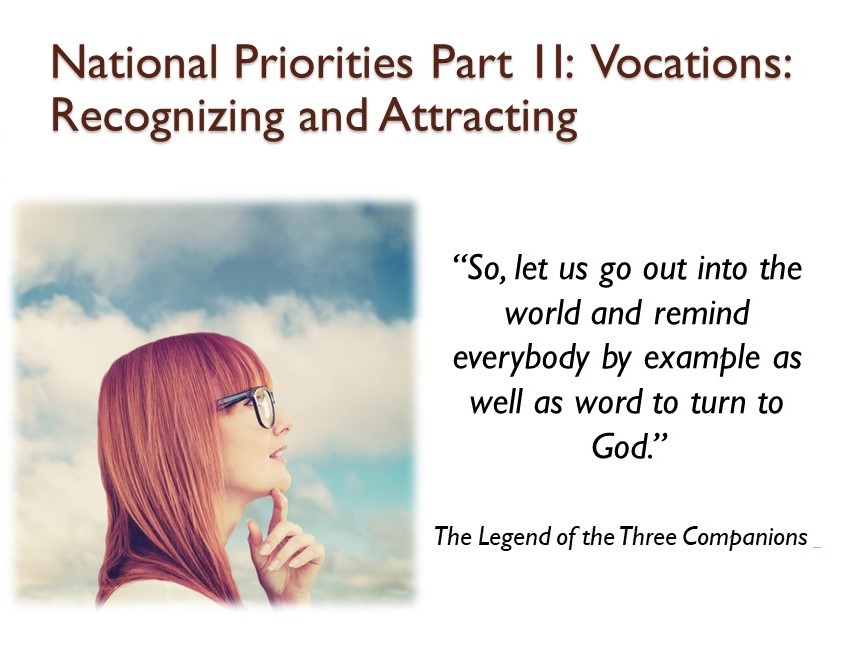
“So, let us go out into the world and remind everybody by example as well as word to turn to God.” St. Francis—The Legend of the Three Companions FA:ED, vol. 2, p. 62
In the Franciscan Journey, pp. 15-116, we find the signs that a person MAY have a vocation to the Secular Franciscan Order. On pp. 17-18 the signs that a vocation may not be present are listed. Here we repeat the affirmative signs:
They are practicing Catholics and wish to deepen their faith commitment; Have a personal faith-relationship with Jesus; Desire to follow Jesus and his Gospel; Recognize that we are all imperfect sinners
Have concern and compassion for others; Are willing to have dialogue in discussions
Are service oriented but not dominating; Enjoy learning from others; Have good listening skills/communication skills; Are willing to grow as a person; Are able to deal with life issues; Are willing to collaborate and share creative ideas.
We cannot know what God has planted in the hearts of our brothers and sisters. But, we can reach out to them to help them recognize their specific vocation. Our General Constitutions exhort us to promote vocations in Article 45.1, .2.
Here are some suggestions for personal and fraternity outreach and promotion of vocations:
· Wear your TAU! Some of the most interesting conversations arise when folks ask about that “T” you are wearing. Wearing the TAU also helps us to remember that our example is probably the most powerful outreach to those who are searching.
· Let others know about the good work your fraternity is doing. Write an article for your parish newsletter or diocesan magazine; ask for parish and community collaboration on your projects; participate in activities that include all ages in the parish community; don’t hesitate to mention the Order and your fraternity.
· Check out the Vocations Toolkit available on our national website: https://www.secularfranciscansusa.org/guidelines-forms-other-resources/#6111d4a7af3d4b84b
Here you will find: Prayer resources; the “Come and See” brochure in English, Spanish, and Korean; Outline for a “Come and See” session in 3 languages; Come and See Digests (brief materials on key topics); “Come and See” PowerPoint presentation with notes and talking points.
· You can also ask the National Formation Commission for other ideas and help in implementing any outreach you wish to try.
Questions for discussion or to answer in your journal:
+ How did you come to recognize your vocation? Was there a special person who influenced you?
+ Have you ever recognized a vocation to the OFS in someone else? How did you approach it with them?
+ What is one thing you would say to people who are searching for their (specific) personal vocation?
+ What suggestions could you make to your fraternity to help promote vocations?
++++++++++++++++++++++++++++
Por favor comparta con su fraternidad local
Vocaciones, Comunicaciones, Relaciones: Cómo reconocer una vocación e invocarla (Parte 2)
En nuestro Capítulo Nacional en octubre de 2022, el Consejo Nacional decidió que las prioridades para 2022-2025 serán Vocaciones, Comunicaciones y Relaciones interpersonales. Durante las próximas semanas, Formation Friday analizará cada una de las prioridades.
Hay ciertas características que pueden ayudarnos a reconocer una vocación a la Orden Franciscana Seglar (El material para esta parte está tomado del Manual FUN y La jornada franciscana).
“Entonces, salgamos al mundo y recordemos a todos con el ejemplo y la palabra que se vuelvan a Dios”. San Francisco: la leyenda de los tres compañeros http://franciscanos.org/fuentes/leyendatrescom.html
En la jornada franciscana, pp. 15-116, encontramos las señales de que una persona PUEDE tener una vocación a la Orden Franciscana Seglar. En las págs. 17-18 se enumeran los signos de que una vocación puede no estar presente. Aquí repetimos los signos afirmativos:
Ser católico practicante y desear profundizar su compromiso de fe; Tener una relación personal de fe con Jesús; Deseo de seguir a Jesús y su Evangelio ; Reconocer que todos somos pecadores imperfectos; Tener preocupación y compasión por los demás; Estar dispuesto a dialogar en las discusiones; Estar orientado al servicio pero no dominante; Disfrutar aprendiendo de los demás; Tener buenas habilidades de escucha/habilidades de comunicación; Están dispuestos a crecer como persona; Son capaces de lidiar con los problemas de la vida; Están dispuestos a colaborar y compartir ideas creativas.
No podemos saber lo que Dios ha plantado en el corazón de nuestros hermanos y hermanas. Pero podemos acercarnos a ellos para ayudarles a reconocer su vocación específica. Nuestras Constituciones Generales nos exhortan a promover las vocaciones en el artículo 45.1, .2.
He aquí algunas sugerencias para la promoción personal y fraterna de las vocaciones:
- ¡Lleve su TAU! Algunas de las conversaciones más interesantes surgen cuando la gente pregunta sobre esa “T” que uno lleva puesta. Usar la TAU también nos ayuda a recordar que nuestro ejemplo es probablemente el alcance más poderoso para aquellos que están buscando.
- Dejar que otros sepan sobre el buen trabajo que está haciendo su fraternidad. Escriba un artículo para el boletín de su parroquia o revista diocesana; pida la colaboración parroquial y comunitaria en sus proyectos; participar en actividades que incluyen todas las edades en la comunidad parroquial; no dudar en mencionar la Orden y su fraternidad.
- Consulte el kit de herramientas de vocaciones disponible en nuestro sitio web nacional: https://www.secularfranciscansusa.org/guidelines-forms-other-resources/#6111d4a7af3d4b84b
Aquí encontrará: Recursos de oración; el folleto “Ven y verás” en inglés, español y coreano; Esquema para una sesión de “Ven y Verás” en 3 idiomas; “Come and See Digests” (materiales breves en inglés sobre temas clave); Presentación de PowerPoint “Ven y verás” con notas y puntos de conversación.
- También puede pedirle a la Comisión Nacional de Formación otras ideas y ayuda para implementar cualquier alcance que desee intentar.
Preguntas para platicar o responder en su diario:
+ ¿Cómo llegó a reconocer su vocación? ¿Hubo una persona especial que le influyó?
+ ¿Alguna vez ha reconocido en otra persona una vocación a la OFS? ¿Cómo lo abordó con ellos?
+ ¿Qué es lo que le diría a las personas que están buscando su vocación personal (específica)?
+ ¿Qué sugerencias podría hacer a su fraternidad para ayudar a promover las vocaciones?
Diane F. Menditto, OFSVice Minister, National Fraternity, Secular Franciscan Order USAListen – Discern – Go Forth National Theme 2022-2025