That First Kiss
(This article originally appeared in the TAU-USA Winter 2026 Issue #118)
By Fr. Christopher Panagoplos, T.O.R. • National Spiritual Assistant
In his writings and throughout his life, St. Francis exemplifies that true faith must be expressed through concrete actions. That first kiss, to the leper, and then to and from the Christ of the cross of San Damiano, revealed humility, love, peace, and service to others. Francis stressed the commitment to “observe (putting words to actions) the holy Gospel” as our rule and life.
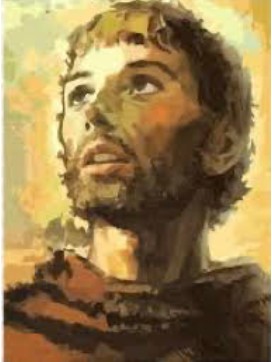 That first kiss began a living relationship with God. It led to practical, compassionate action: to see Christ in the faces of the sick and the poor, to embrace the marginalized, serving the least among us with compassion and humility. That first kiss, as a sign of faith, made a tangible embrace of suffering humanity. Faith requires a transformative journey in one’s life, and Francis models that for us. It means actively doing what Jesus did, not just talking about it.
The kiss of simplicity and detachment brings spiritual richness, not possessions. It simplifies one’s life to focus on God and others. Francis’ writings advocate for poverty and simplicity, believing that material possessions detract from one’s relationship with all of creation.
The kiss of peacemaking and reconciliation is the active pursuit of living the Beatitudes, engaging opposition peacefully and respectfully, regardless of personal, external suffering. It’s the action of sowing love where there is hatred, pardon where there is injury that encapsulates and embodies truth more powerfully than mere speech.
The kiss of penance and sacrifice is self-denial in action when united to Christ’s passion, allowing God to work through one’s own sacrifice. All of life opened to Francis in the simple gesture of the kiss, not just the privileged life he had protected. He stepped away from his family inheritance of both wealth and attitudes. The kiss disclosed Francis’ healing of his past. The kiss invigorated his vocation towards living his faith in the world. The kiss was a holy moment. God’s grace in action!
The intimate union of the kiss revealed Francis’ realization that all humanity, all creation, is beautiful. Everyone and everything are in the hands of Divine care and purpose. The kiss extinguishes judgments about others. It engages us to accompany the other, and allows us to understand the depth of the gift of God’s bountiful grace.
Let faith be the living relationship with Christ, compelling us to live a counter-cultural way of living out the Gospel in every encounter and aspect of our lives. Let us turn away from our old ways and embrace all of creation with a holy kiss, that makes all persons as our brothers and sisters, even bodily death, as our sister. Let us be humble before God, reflecting God’s own “sublime humility” in the Eucharist.
https://www.secularfranciscansusa.org/2026/03/that-first-kiss/
Integrating Faith and Action in Our Daily Lives
(This article originally appeared in the TAU-USA Winter 2026 Issue #118)
By Diane Menditto, OFS • National Vice Minister
As Secular Franciscans, we are called not only to profess our faith but to exemplify it in our daily lives. Our Rule reminds us that our vocation is rooted in Baptism and strengthened at Profession, where the Holy Spirit empowers us to proclaim Christ by both word and example. This integration of faith and action is demonstrated through the fruits of the Spirit, our commitment to the Rule, and our personal witness.
The Fruits of the Spirit as Daily Witness
St. Paul reminds us: “By their fruits you will know them” (Matt 7:16). Joy, peace, patience, kindness, generosity, faithfulness, gentleness, and self-control (Gal. 5:22–23) are visible signs of the Spirit at work in us. When we live our Rule faithfully, these fruits blossom and become the way others encounter Christ. Joy is the enduring awareness of God’s mercy. Patience allows us to listen and nurture others rather than control them. Self-control helps us self-edit when we are angry. In this way, daily conversion becomes a proclamation of the Gospel.
Who Do We Say We Are?
Articles 4 – 10 of our Rule remind us that we are:
+Followers of the Gospel (Art. 4)
+Seekers of Christ (Art. 5)
+Witnesses and instruments of His mission (Art. 6)
+Penitential people seeking daily conversion (Art. 7)
+Prayerful and contemplative (Art. 8)
+Givers of ourselves (Art. 9)
+Witnesses to the poor and crucified Christ, even in difficulties (Art. 10)
These articles guide us so that we move from Gospel to life and life to the Gospel. They challenge us to risk living differently, to see Christ in those who seem unlovable, and to proclaim His mission through both speech and silence. Daily conversion, prayer, and self-emptying generosity are the hallmarks of our Franciscan identity.
Living Detachment and Justice
Articles 11–18 extend this vision outward, calling us to be detached from possessions and power (Art. 11), pure of heart (Art. 12), and accepting of others (Art. 13). We are summoned to build a fraternal and evangelical world (Art. 14), promote justice (Art. 15), and share in the creation and redemption of the human community (Art. 16). As peacemakers (Arts. 17 and 19) and lovers of all creation (Art. 18), we embody Francis’ vision of universal kinship. Detachment here is not only from material goods but from personal agendas, allowing us to listen with empathy. Justice is rooted in dialogue and the dignity of every person. Stewardship of creation flows naturally from our love of the Creator.
But What Do You Do?
When asked, our answer must reflect both identity and action. We are peacemakers who listen rather than sow discord. We care for creation as stewards of God’s gifts. We stand with the poor, not only serving but working to improve their lives. We cultivate relationships, welcome the stranger, and live simply, detached from possessions and recognition. We are generous, joyful, kind, gentle, and merciful, supporting the mission of the Church and evangelizing through example. In short, we bring our baptismal commitment to life with a Franciscan flavor, consciously promising to live the Gospel as St. Francis did.
Integrating Faith and Action
Faith without action can become sterile; action without faith can be self-serving. Our Rule, nourished by the gifts and fruits of the Spirit, integrates the two.
 To integrate faith and action is to allow the Spirit to soften our hearts, to plant seeds in us, to nourish them through prayer and conversion, and to let them bear fruit in Franciscan service, justice, and joy. In this way, our daily lives become a proclamation of the Gospel, a rebuilding of the Church, and a living testimony that faith and action are inseparable.
https://www.secularfranciscansusa.org/2026/03/integrating-faith-and-action-in-our-daily-lives/