OFS Rule #3 – Adapting St. Francis’ Rule to the needs and expectations of the Holy Church in the conditions of changing times
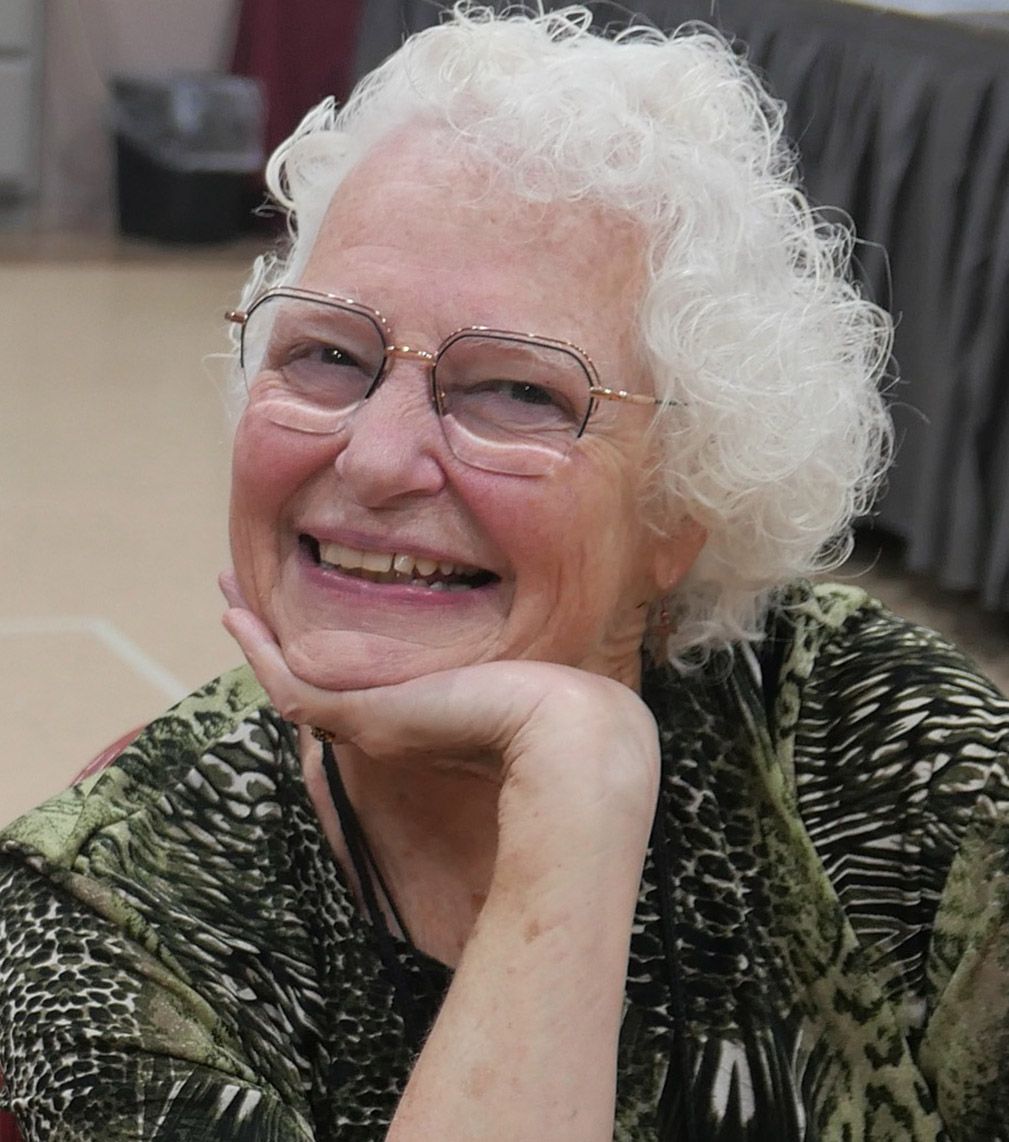
Susan Ronan, OFS
By Susan Ronan, OFS
National Executive Council Secretary
It is appropriate that Rule 3 addressing the changing conditions of our world follows Rule #2. Kathleen Molaro’s article in Voices of Gospel Living last month included a reflection on our Order’s description as an “organic union.”
When I began my Franciscan journey 27 years ago (including my four years of Initial Formation), our Formation Director spent a lot of time delving into each article of the OFS Rule. It became clear that the other five Inquirers had totally different perspectives from mine. We all came from different life experiences.
I’ve been blessed to have served many years on the St. Elizabeth of Hungary Region’s Executive Council and had the opportunity to get to know my OFS brothers and sisters in this little corner of the United States. It didn’t take long to learn that the lifestyles blessings and challenges of the people on Cape Cod, Massachusetts, were different from those in Plattsburgh, New York. The past three years on the NEC have certainly opened my eyes and heart to the blessings and challenges experienced by many of you in the rest of the United States…and the rest of our Secular Franciscan world.
I wonder how St. Francis would propose to change our Rule if he were with us today? I bet he’d keep it as it is because every word of our Rule is so important…especially the last line, “It’s interpretation belongs to the Holy See and its application will be made by the General Constitutions and particular statutes.”
Rule #3 is so important because it encompasses every one of us under the loving protection of Holy Mother the Church.
OFS Rule Article 3
The present rule, succeeding “Memoriale Propositi” (1221) and the rules approved by the Supreme Pontiffs Nicholas IV and Leo XIII, adapts the Secular Franciscan Order to the needs and expectations of the Holy Church in the conditions of changing times. It’s interpretation belongs to the Holy See and its application will be made by the General Constitutions and particular statutes.
https://www.secularfranciscansusa.org/2025/12/adapting-to-changing-times/
Regional Roundup – Five of the 30 Regions
(This article originally appeared in the TAU-USA 116)
Regional Roundup
In this issue, five of the 30 regions are highlighted.
St. Margaret of Cortona Region
 The St. Margaret of Cortona Region covers all of Maryland and Virginia, Washington D.C., part of southeast Pennsylvania, southern Delaware, and the eastern portion of West Virginia. It includes 33 fraternities and one emerging fraternity.
Back in the early to mid-1990’s when the regions were being established in the United States, a friar suggested to the establishment team that a Secular Franciscan be chosen as the patron for this region and St. Margaret of Cortona was recommended and chosen based on her compelling life story.
The region is home to our Nation’s capital, along with many famous monuments, museums, and historical sites resulting from the early history of our country during the Revolutionary and Civil War periods.
St. Clare Region
 All of Missouri, except for the Kansas City area, southwest Illinois, Northern Arkansas, Southeast Indiana, and Memphis, Tennessee, are within St. Clare region, which has eight established fraternities and two emerging fraternities.
On October 13, 1995, the region was the 24th to be established under the regionalization efforts and was named after St. Clare of Assisi.
The St. Clare Region is very diverse, spanning from the Ozark Mountains, the Mississippi River Valley to the plains of Northern Missouri and Illinois. Centrally located in the USA, the St. Clare Region’s largest city, St. Louis, is a convenient destination for hosting National Chapters, Quinquennials, National Committee events and CNSA gatherings. The Region welcomes all these events and looks forward to hosting many more in the future. Website: www.stclareregionofs.org
Divine Mercy Region
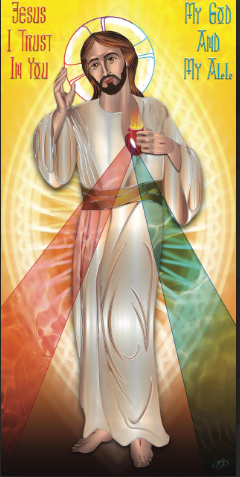 Lower Michigan (“the Mitten”) and Toledo, Ohio make up the Divine Mercy Region. It has 20 established fraternities, one emerging group, one cell, and one region sponsored group.
In October of 1993, they became the 13th established region. When the first council was formed, Divine Mercy was suggested for its name along with other suggestions, including St. Thomas More. During this time, OFS members were inspired from attending Medjugorje pilgrimages. Hence, approval for the name Divine Mercy Region was made.
Some interesting facts about the region: Geographically, lower Michigan is a peninsula, surrounded by three Great Lakes: Lake Michigan, Lake Huron, and Lake Erie.
Michigan has a long history of Franciscan presence. In the 18th century, French missionaries who accompanied explorers and settlers included Recollect Franciscans, from a reform movement within the Franciscan Order in France. In the 19th century, Capuchin friars established a more permanent presence in Michigan. The Midwest Capuchin Province of St. Joseph, based in Detroit, became a central hub for their activities. And Conventual friars have been involved in various ministries helping to spread the Franciscan ideals of simplicity, poverty, and care for creation.
Members from the region have been recognized for their participation at multiple levels within the Order, including Marie Amore, OFS, who was instrumental in the development of regionalization and multiple OFS resources, and two recipients of the National JPIC Award.
Ohana ‘O Ke Anuenue Region
 Not surprisingly, the Ohana ‘O Ke Anuenue Region, which means Family of the Rainbow, covers both the Hawaiian Islands and Guam. It includes six established fraternities: two on the island of Oahu, one on Maui, two on the Big Island of Hawaii, and one on Guam. There is also an emerging fraternity on the island of Kauai.
The region is one of the most diverse, made up of members of different ethnicities. Also, because the fraternities are on different islands; it is impossible to drive to a regional gathering. Members would need to fly with costs ranging from $200 to $1500. Thus, only the Chapter of Elections and Visitations are held in person. All other Chapters are via Zoom. Members do come together when a formation mini-series is offered inviting all to learn more about our Order.
St. Francis Region
 The St. Francis Region covers the southern third of California and includes 22 fraternities and one newly forming group.
When regionalization was occurring, the members involved were not sure if St. Francis would be allowed for a region’s name, or if it had already been taken. Since the first reply was “yes” – that St. Francis could be used, and the answer to the second concern was “no” – no one else requested it, St. Francis became the region’s name.
The region is blessed to have many cultures represented in its fraternities. Half of the fraternities are made up of members who speak languages other than English as their first language. There are seven Korean speaking fraternities, two Spanish speaking, and two Vietnamese speaking. There is also a fraternity with a majority of members who are from the Philippines and speak Tagalog.
Nine of the 21 Spanish Missions in California that were established by Franciscan friars are in St. Francis Region. Fraternities meet at three of them, and the newly forming group does, also. All four of these missions still have Franciscan friars in residence, although many others do not.
https://www.secularfranciscansusa.org/2025/11/regional-roundup-five-of-the-30-regions/