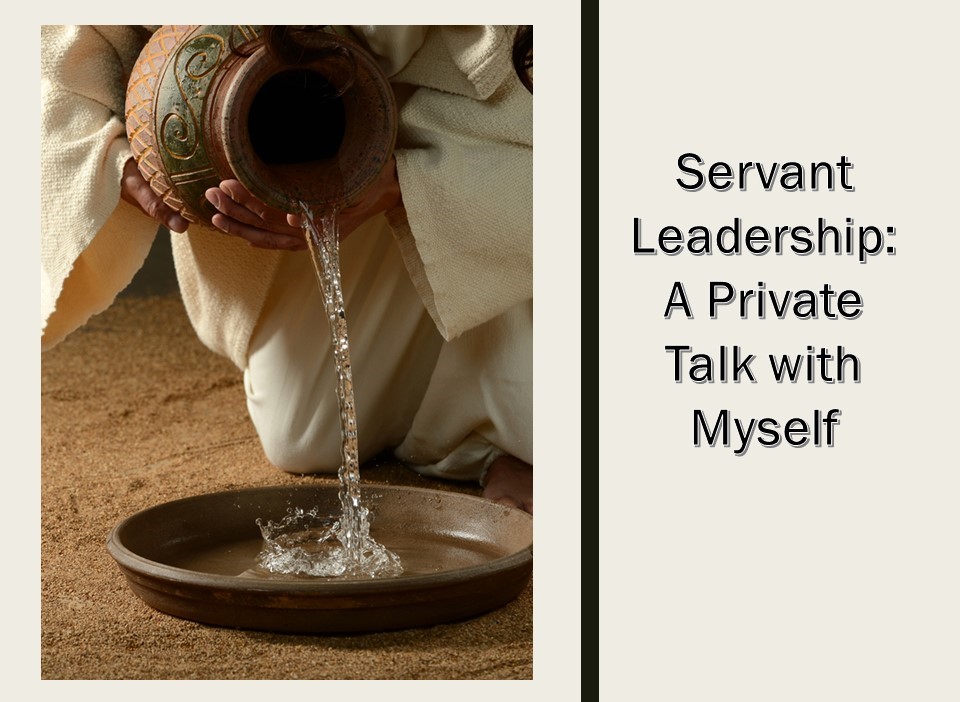
(en español abajo) Korean translation attached in a separate PDF. Please share with your local fraternity
The Handbook for Servant Leadership, published by OFS-USA in 2010, contains a wealth of information that can guide us in being or becoming excellent servant leaders. For the next few weeks we will focus on various portions of that handbook. We begin by preparing ourselves with an examination of our servant leader conscience.
A PRIVATE TALK WITH MYSELF
This private talk can be used to surface some of your inner feelings and give you an opportunity to reflect upon your own thoughts and actions. Take a few minutes to answer each question and just jot down a few words that will remind you of the thoughts and feelings that went through your head when you were responding to each question.
1. How often does my approach to another brother or sister in the fraternity result in reactions different from those I intend? Does my brother or sister seem to be put off by my approach or does he or she seem to back away from me and the situation? Why do I think this is so?
2. When I have a problem with a brother or sister in the fraternity, how often do I stop to think about my own actions and words? I may be contributing to the problem instead of to the solution. Do I need to change in this respect? How?
3. Do I tend to use labels and stereotypes as a substitute for seeking to understand? Do I look at every fraternity brother and sister as an individual with unique talents and gifts, or do I become angry because my brothers and sisters do not respond the way I think they should?
4. How do I try to solve fraternity problems? Do I always want to fix everything myself and prevent my brothers and sisters from becoming actively involved in the process of collaborative decision making?
5. Do I have a need to be in control and when things do not go according to my plans, do I have a tendency to blame my brothers and sisters in the fraternity?
6. Am I willing to talk with fraternity members about the impact their behavior has on other brothers and sisters in the fraternity? Can I share this information with constructive intent, in ways that minimize feelings of criticism and threat, and show concern for their feelings and needs? What do I need to work on here?
7. How open am I to receiving information about how my approaches affect my brothers and sisters in the fraternity? How can I increase my opportunities for this kind of learning?
8. What will I try to do differently next week and in the future in the way I relate to the brothers and sisters in my fraternity? What changes will increase my effectiveness with other fraternity members?
9. How can I use my leadership skills to become a servant leader for my fraternity?
10. What specific steps am I going to take to help my fraternity solve its problems?
For discussion in a group, with a partner, or to answer in your journal.
+ After thinking about each question above, which sets of questions did you find most challenging? Why?
+ Which sets of questions did you answer that show you are or can be effective as a servant leader? What are the characteristics that make you think this is true?
+ Which answers tell you that you have some work to do?
+ Challenge: Over the next several weeks, choose sets of questions that will help you to work on your servant leadership style and skills. Carry out any necessary changes.
+++++++++++++++++++++++++
Formación 7 de noviembre 2025 Por favor, comparta con su fraternidad local
El Manual para el Liderazgo de Servicio, publicado por OFS-USA en 2010, contiene una gran cantidad de información que puede guiarnos para ser o convertirnos en excelentes líderes de servicio. Durante las próximas semanas nos enfocaremos en varias partes de ese manual. Comenzamos preparándonos con un examen de nuestra conciencia de liderazgo de servicio.
UNA CHARLA PRIVADA CONMIGO MISMO
Esta charla privada se puede utilizar para sacar a la superficie algunos de sus sentimientos internos y darle la oportunidad de reflexionar sobre sus propios pensamientos y acciones. Tómese unos minutos para responder a cada pregunta y simplemente anote algunas palabras que le recordarán los pensamientos y sentimientos que pasaron por su mente cuando respondió a cada pregunta.
1. ¿Con qué frecuencia mi acercamiento a otro hermano o hermana en la fraternidad resulta en reacciones distintas de las que pretendo? ¿Mi hermano o hermana parece estar desanimado por mi enfoque o él o ella parece alejarse de mí y de la situación? ¿Por qué creo que esto es así?
2. Cuando tengo un problema con un hermano o hermana en la fraternidad, ¿con qué frecuencia me detengo a pensar en mis propias acciones y palabras? Puedo estar contribuyendo al problema en lugar de a la solución. ¿Necesito cambiar en este sentido? ¿Cómo?
3. ¿Tiendo a usar etiquetas y estereotipos como sustituto de tratar de entender? ¿Veo a cada hermano y hermana de la fraternidad como un individuo con talentos y dones únicos, o me enojo porque mis hermanos y hermanas no responden de la manera que creo que deberían?
4. ¿Cómo trato de resolver los problemas de la fraternidad? ¿Siempre quiero arreglar todo yo mismo y evitar que mis hermanos y hermanas se involucren activamente en el proceso de toma de decisiones colaborativa?
5. ¿Tengo la necesidad de tener el control y cuando las cosas no salen de acuerdo con mis planes, tengo una tendencia a culpar a mis hermanos y hermanas en la fraternidad?
6. ¿Estoy dispuesto a hablar con los miembros de la fraternidad sobre el impacto que su comportamiento tiene en otros hermanos y hermanas de la fraternidad? ¿Puedo compartir esta información con intención constructiva, de manera que minimice los sentimientos de crítica y amenaza, y muestre preocupación por sus sentimientos y necesidades? ¿En qué necesito trabajar aquí?
7. ¿Qué tan abierto estoy a recibir información sobre cómo mis enfoques afectan a mis hermanos y hermanas en la fraternidad? ¿Cómo puedo aumentar mis oportunidades para este tipo de aprendizaje?
8. ¿Qué trataré de hacer de manera diferente la próxima semana y en el futuro en la forma en que me relaciono con los hermanos y hermanas de mi fraternidad? ¿Qué cambios aumentarán mi efectividad con otros miembros de la fraternidad?
9. ¿Cómo puedo usar mis habilidades de liderazgo para convertirme en un líder servidor para mi fraternidad?
10. ¿Qué pasos específicos voy a tomar para ayudar a mi fraternidad a resolver sus problemas?
Para platicar en grupo, con un compañero o para responder en su diario.
+ Después de pensar en cada pregunta anterior, ¿qué conjuntos de preguntas le parecieron más desafiantes? ¿Por qué?
+ ¿Qué conjuntos de preguntas respondió que muestran que es o puede ser eficaz como líder servidor? ¿Cuáles son las características que le hacen pensar que esto es cierto?
+ ¿Qué respuestas le dicen que tiene trabajo que hacer?
+ Desafío: Durante las próximas semanas, elija conjuntos de preguntas que lo ayudarán a trabajar en su estilo y habilidades de liderazgo de servicio. Realice los cambios necesarios.
Diane F. Menditto, OFSVice Minister, National Fraternity, Secular Franciscan Order USAGo into the world and proclaim the good news.” National Theme 2025-2028
Category: Formation Friday
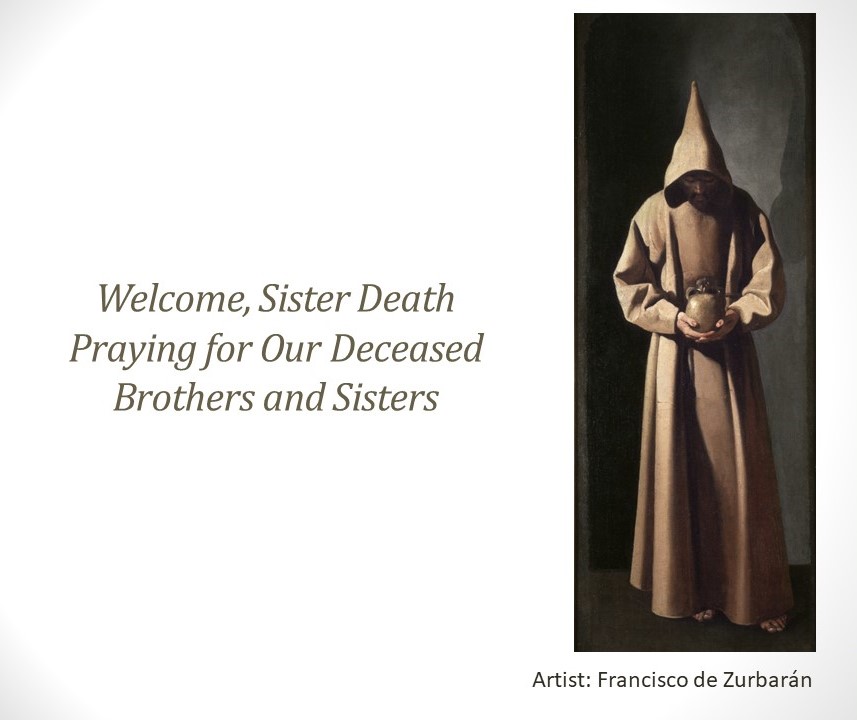
FORMATION FRIDAY – Welcome, Sister Death – October 31, 2025
(en español abajo) Korean translation attached in a separate PDF.
Please share with your local fraternityDuring the month of November, the entire Church prays for the dead. St. Francis meditated on Sister Death throughout his life. Toward the end of his earthly life, he spoke of Sister Bodily Death in the Canticle of the Creatures.
“Praised be You, my Lord, through our Sister Bodily Death, from whom no one living can escape.
Woe to those who die in mortal sin.
Blessed are those whom death will find in Your most holy will,
for the second death shall do them no harm.” [FA: ED vol 1, p. 158]
Our Rule and Constitutions ask us to remain in communion with our deceased brothers and sisters.
Rule, Article 19: Since they are immersed in the resurrection allof Christ, which gives true meaning to Sister Death, let them serenely tend toward the ultimate encounter with the Father.
Rule, Article 24: It should adopt appropriate means for growth in Franciscan and ecclesial life and encourage everyone to a life of fraternity42. This communion continues with deceased brothers and sisters through prayer for them.
GC, Article 27.2: Secular Franciscans should commit themselves to create in their environment and, above all, in their fraternities, a climate of faith and hope so that “Sister Death” may be regarded as a passage to the Father, and all may prepare themselves with serenity.
There is a tradition in the Catholic Church dating back to Pope Clement XII in 1736 who encouraged all Catholics to pray Psalm 130, also known as the “De Profundis” followed by the short prayer, “Eternal rest grant unto them, Oh Lord,…” for all of our deceased brothers and sisters in Christ.
Psalm 130 “De profundis clamavi ad te, Domine…”
I
Out of the depths I call to you, LORD; 2Lord, hear my cry! May your ears be attentive to my cry for mercy.
3If you, LORD, keep account of sins, Lord, who can stand? 4But with you is forgiveness and so you are revered.
II
5I wait for the LORD, my soul waits and I hope for his word.c 6My soul looks for the Lord more than sentinels for daybreak.
More than sentinels for daybreak, 7let Israel hope in the LORD, For with the LORD is mercy, with him is plenteous redemption, 8And he will redeem Israel from all its sins.
To ponder and discuss with a prayer partner or in fraternity throughout the month of November:
+How do you remember in prayer the deceased members of your family?
+How does your fraternity (local, regional, and national) remember our deceased members?
+Share some thoughts on how your local fraternity might celebrate a Rite of Remembrance for your deceased members.
Challenge: This month, pray the De Profundis (Psalm 130) for all those who have died, especially those who have no one to pray for them.
Formación 31 de octubre 2025 Por favor, compartir con la fraternidad local.
Durante el mes de noviembre toda la Iglesia ora por los difuntos. San Francisco meditó sobre la Hermana Muerte durante toda su vida. Hacia el final de su vida terrena habló de la Hermana Muerte Corporal en el Cántico de las Criaturas.
“12Loado seas, mi Señor, por nuestra hermana la muerte corporal,
de la cual ningún hombre viviente puede escapar.13¡Ay de aquellos que mueran en pecado mortal!:
bienaventurados aquellos a quienes encuentre en tu santísima voluntad,
porque la muerte segunda no les hará mal.Nuestra Regla y Constituciones nos piden permanecer en comunión con nuestros hermanos y hermanas fallecidos.
Regla, Artículo 19: Insertos en la resurrección de Jesucristo, que da su verdadero sentido a la Hermana Muerte, se encaminen con serenidad al encuentro definitivo con el Padre.
Regla, Artículo 24: Para incrementar la comunión entre los miembros, el Consejo organice reuniones periódicas y encuentros frecuentes, incluso con otros grupos franciscanos, especialmente de jóvenes, adoptando los medios más adecuados para el crecimiento en la vida franciscana y eclesial, estimulando a todos a la vida de Fraternidad42.
Esta comunión se prolonga con los hermanos difuntos, ofreciendo sufragios por sus almas43.
GGCC, Artículo 27.2: Los franciscanos seglares comprométanse a crear en sus ambientes, y sobre todo en las Fraternidades, un clima de fe y de esperanza, para que “la hermana muerte” sea esperada como paso hacia el Padre y para que todos puedan prepararse con serenidad.
Hay una tradición en la Iglesia Católica que se remonta al Papa Clemente XII en 1736, quien animó a todos los católicos a rezar el Salmo 130, también conocido como “De Profundis”, seguido de la breve oración: “Concédeles el descanso eterno, oh Señor,… ”por todos nuestros hermanos y hermanas en Cristo fallecidos.
Psalm 130 “De profundis clamavi ad te, Domine…”
I
“Desde lo más profundo te invoco, Señor, ¡Señor, oye mi voz! Estén tus oídos atentos al clamor de mi plegaria.
Si tienes en cuenta las culpas, Señor, ¿quién podrá subsistir? Pero en ti se encuentra el perdón, para que seas temido.II
Mi alma espera en el Señor, y yo confío en su palabra. Mi alma espera al Señor, más que el centinela la aurora.
Como el centinela espera la aurora, espere Israel al Señor, porque en él se encuentra la misericordia y la redención en abundancia: él redimirá a Israel de todos sus pecados.”Para reflexionar y discutir con un compañero de oración o en fraternidad durante todo el mes de noviembre:
+¿Cómo recuerda en oración a los miembros fallecidos de su familia?
+¿Cómo recuerda su fraternidad (local, regional y nacional) a nuestros miembros fallecidos?
+Comparta algunas ideas sobre cómo su fraternidad local podría celebrar un Rito de Recuerdo de sus miembros fallecidos.
Desafío: Este mes, rece el De Profundis (Salmo 130) por todos los que han muerto, especialmente aquellos que no tienen a nadie que ore por ellos.
Diane F. Menditto, OFSVice Minister, National Fraternity, Secular Franciscan Order USAGo into the world and proclaim the good news.” National Theme 2025-2028
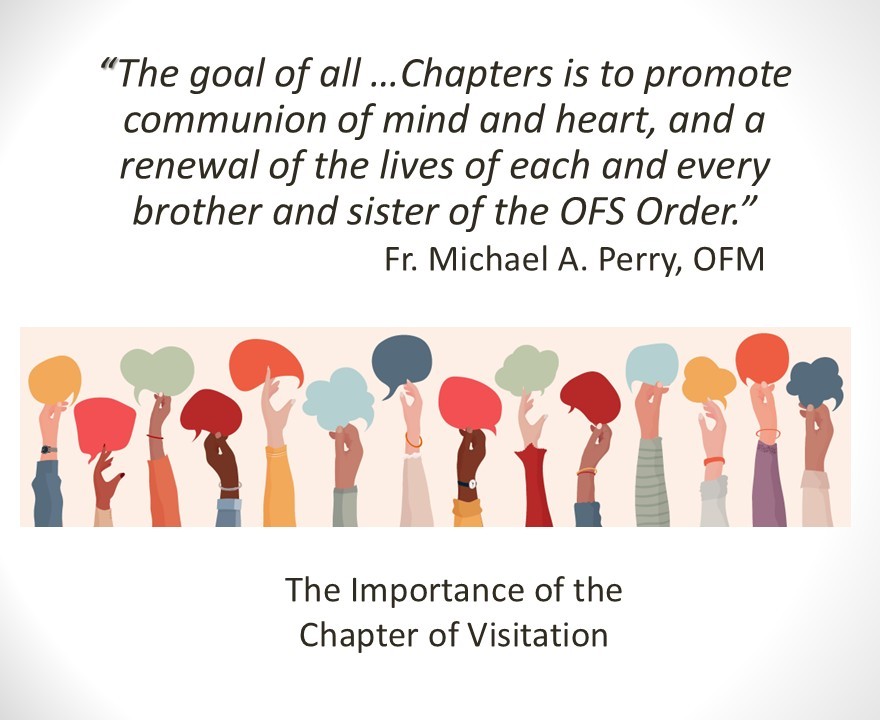
FORMATION FRIDAY – When we Gather in Chapter for Fraternal & Pastoral Visitations – October 24, 2025
(En español abajo) Korean translation attached in a separate PDF
When We Gather in Chapter for the Fraternal and Pastoral VisitationIn the USA, Regional Chapters are held each year and have a profound effect on that region’s members. On the regional level, elections and visitations take place every three years. On the national level, elections also take place every three years, but the visitation by the higher level (CIOFS) takes place only every six years.
“The goal of all …Chapters is to promote communion of mind and heart, and a renewal of the lives of each and every brother and sister of the OFS Order. Speaking about renewal, it is a long aand difficult process that makes serious demands of us: the demand to return to the source of our vocation, the priorities and essential elements of our
gospel way of life that, over the course of time can become less clear and, in the extreme, no longer serve to animate and set direction for our Franciscan lives.” (Br. Michael A. Perry, OFM, former General Minister of the Order of Friars Minor, at the General Chapter of the Secular Franciscan Order in 2021.)
As you can see in what Br. Michael said, the Chapter is not only for business, although that is also important. But, probably the most important part of the gathering is fraternity and ongoing formation. National Chapters (and Regional Chapters) occur on a three-year cycle. On the regional level, a visitation by the higher fraternity is usually requested by the Regional Minister in the year following elections. The National Executive Council will then schedule the visitation according to the availability of the Minister (or her delegate) and the National Spiritual Assistant who will conduct the visit.
Did you know that…
…That the earliest Rules of our order, right up to the promulgation of the Rule of 1978 and the Constitutions of 1990 (updated in 2000 and 2001), required that the visitor be a friar alone? (You can read about this in the Handbook for Spiritual Assistance—updated in 2012)
…That our present-day Rule in Article 26 and our Constitutions in Articles 92 and 94 give us important insight into the Fraternal and Pastoral Visit?
- “The purpose of both the pastoral and fraternal visits is to revive the evangelical Franciscan spirit, to assure fidelity to the charism and to the Rule, to offer help to fraternity life, to reinforce the bond of the unity of the Order, and to promote its most effective insertion into the Franciscan family and the Church.” (Constitutions: Article 92-1)
- “The fraternal visit is a moment of communion, an expression of the service and concrete interest of the secular leaders at the various levels, so that the fraternity may grow and be faithful to its vocation.” (Constitutions: Article 94-1)
- “Among the various initiatives to achieve the purpose of the visit, the visitor will give special attention to:
+the validity of the formation, both initial and permanent;
+the relations entertained with other fraternities at the different levels, with Franciscan youth, and with the
entire Franciscan family.
+the observance of the directives and of the guidelines of the International Council of the SFO and of the other
councils;
+the presence in the local Church.” (Article 94-2)
- “The visitor will (also) check the report of the previous financial review or verification of the financial and property management of the Council, the register of the accounts and every document pertaining to the property of the fraternity…” (Article 94-3)
…That one of the duties of the fraternity minister at each level is “to request, with the consent of the council, the
pastoral and fraternal visits, at least once every three years.”? (Article 51-2) In the case of visitations of Regions,
the National Fraternity often contacts the Regional Ministers to schedule visitations.
…That your Regional Minister and council prepare ahead of time for this visitation? Executive councils prepare for the Fraternal and Pastoral visitation for many months. They fill out pre-visitation questionnaires, prepare notebooks with paperwork and various reports that the visitors will want to see. (When a local fraternity has a visitation, the local council also has to fill out paperwork and prepare ahead of time!)
…That the National Visitors will meet with the Regional Executive Council on the night before they meet with the Regional Fraternity? At that time, the visitors will examine the regional records and discuss with the Regional Exec all aspects of life in your region. During the meeting with the entire Regional Fraternity council on the following day, after business is concluded, the visitors will ask the Regional Exec to leave the room so that a free and frank discussion can be had with all the local ministers and Spiritual Assistants who attend.
For discussion or to answer in your journal:
+Have you attended a National or Regional Chapter? What was your impression?
+Talk to someone who has attended your regional chapter and ask them their impressions.
+If you could attend your Regional Chapter this year, what questions would you ask the National visitors? What questions would you ask the Regional Executive Council?
+Could you explain to a non-Secular Franciscan what the different levels of the Order are? (All four are mentioned in this article.)
+++++++++++++++++++++++++++++++++
Formación 24 octubre 2025
Cuando nos reunimos en capítulo para la visita fraterna y pastoral
En los Estados Unidos, los capítulos regionales se celebran cada año y tienen un profundo efecto en los miembros de esa región. A nivel regional, las elecciones y las visitas tienen lugar cada tres años. A nivel nacional, las elecciones también se celebran cada tres años, pero la visita del nivel superior (CIOFS) solo tiene lugar cada seis años.
«El objetivo de todos los capítulos es promover la comunión de mente y corazón, y la renovación de la vida de todos y cada uno de los hermanos y hermanas de la Orden OFS. Hablando de renovación, se trata de un proceso largo y difícil que nos exige mucho: la exigencia de volver a la fuente de nuestra vocación, a las prioridades y a los elementos esenciales de nuestro estilo de vida evangélico que, con el paso del tiempo, pueden perder claridad y, en casos extremos, dejar de servir para animar y orientar nuestra vida franciscana». (Fray Michael A. Perry, OFM, exministro general de la Orden de los Hermanos Menores, en el Capítulo General de la Orden Franciscana Seglar en 2021.)
Como se puede ver en las palabras del fray Michael, el Capítulo no es solo para tratar asuntos, aunque eso también es importante. Pero, probablemente, la parte más importante de la reunión es la fraternidad y la formación permanente. Los Capítulos Nacionales (y los Capítulos Regionales) se celebran cada tres años. A nivel regional, el Ministro Regional suele solicitar una visita de la fraternidad superior en el año siguiente a las elecciones. A continuación, el Consejo Ejecutivo Nacional programa la visita en función de la disponibilidad del Ministro (o su delegado) y del Asistente Espiritual Nacional que la llevarán a cabo.
¿Sabías que…
…las primeras Reglas de nuestra orden, hasta la promulgación de la Regla de 1978 y las Constituciones de 1990 (actualizadas en 2000 y 2001), exigían que el visitante fuera un fraile solo? (Puedes leer sobre esto en el Manual de Asistencia Espiritual, actualizado en 2012)
…que nuestra Regla actual, en el artículo 26, y nuestras Constituciones, en los artículos 92 y 94, nos dan una visión importante de la visita fraterna y pastoral?
· «El objetivo de las visitas pastorales y fraternas es revivir el espíritu evangélico franciscano, asegurar la fidelidad al carisma y a la Regla, ofrecer ayuda a la vida fraterna, reforzar el vínculo de la unidad de la Orden y promover su inserción más eficaz en la familia franciscana y en la Iglesia» (Constituciones: Artículo 92-1).
· «La visita fraterna es un momento de comunión, una expresión del servicio y del interés concreto de los líderes seculares en los distintos niveles, para que la fraternidad pueda crecer y ser fiel a su vocación» (Constituciones: Artículo 94-1).
· «Entre las diversas iniciativas para alcanzar el objetivo de la visita, el visitador prestará especial atención a:
+la validez de la formación, tanto inicial como permanente;
+las relaciones mantenidas con otras fraternidades en los distintos niveles, con la juventud franciscana y con
toda la familia franciscana.
+el cumplimiento de las directrices y orientaciones del Consejo Internacional de la OFS y de los demás
consejos;
+la presencia en la Iglesia local». (Artículo 94-2)
· «El visitador (también) comprobará el informe de la anterior revisión o verificación financiera y patrimonial del Consejo, el registro de las cuentas y todos los documentos relativos a los bienes de la fraternidad…»
(Artículo 94-3)
…Que una de las funciones del ministro de la fraternidad en cada nivel es «solicitar, con el consentimiento del consejo, las visitas pastorales y fraternas, al menos una vez cada tres años»? (Artículo 51-2) En el caso de las visitas a las regiones,
la Fraternidad Nacional suele ponerse en contacto con los ministros regionales para programar las visitas.
…¿Que el ministro regional y su consejo preparan con antelación esta visita? Los consejos ejecutivos se preparan durante muchos meses para la visita fraternal y pastoral. Rellenan cuestionarios previos a la visita, preparan cuadernos con la documentación y diversos informes que los visitantes querrán ver. (Cuando una fraternidad local recibe una visita, el consejo local también tiene que rellenar la documentación y prepararse con antelación).
…¿Que los visitantes nacionales se reunirán con el consejo ejecutivo regional la noche antes de reunirse con la fraternidad regional? En ese momento, los visitantes examinarán los registros regionales y discutirán con el ejecutivo regional todos los aspectos de la vida en su región. Durante la reunión con todo el consejo de la fraternidad regional al día siguiente, una vez concluidos los asuntos, los visitantes pedirán al ejecutivo regional que abandone la sala para poder mantener una discusión libre y franca con todos los ministros locales y asistentes espirituales que asistan.
Para debatir o responder en su diario:
+¿Ha asistido a un capítulo nacional o regional? ¿Cuál fue su impresión?
+Hable con alguien que haya asistido a su capítulo regional y pídale sus impresiones.
+Si pudiera asistir a su capítulo regional este año, ¿qué preguntas haría a los visitantes nacionales? ¿Qué preguntas haría al consejo ejecutivo regional?
+¿Podría explicar a un no franciscano seglar cuáles son los diferentes niveles de la Orden? (Los cuatro se mencionan en este artículo).
Diane F. Menditto, OFSVice Minister, National Fraternity, Secular Franciscan Order USAGo into the world and proclaim the good news.” National Theme 2025-2028
Formation Friday – Evangelization & Evangelist – October 17, 2025
(en español abajo) Korean translation attached in separate PDF.
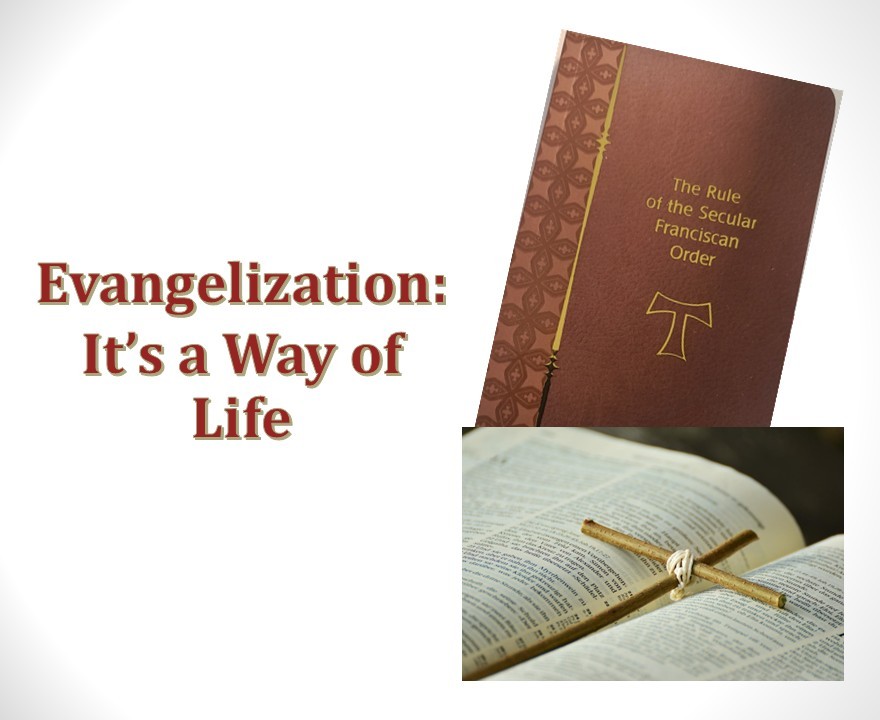
Evangelization and Evangelist
Last week we presented the new 2025-2028 National Theme, “Go into the world and proclaim the good news.” (Mk 16:15). This week, we answer a question that is implied in that theme. “Define for us as Secular Franciscans the words “evangelize” and “evangelist.”
For us as Roman Catholics and Secular Franciscans, the words evangelize and evangelist carry rich spiritual and practical meaning, deeply rooted in both the Gospel and the Franciscan tradition. To evangelize is to share the Good News; it means to proclaim the Gospel — the life, death, and resurrection of Jesus Christ — in word and deed. For a Secular Franciscan, this is not limited to preaching or formal teaching. It’s a way of life. As we have said many times, as Secular Franciscans, it is not only what we do that defines us, it is who we are.”
– Living the Gospel–Evangelization, begins with personal witness. A quote attributed to St. Francis (which he did not actually say in these words) is, “Preach the Gospel at all times. When necessary, use words.” Many of us believe that the “quote” came about more from observation of the way he preached and lived rather that what he actually said on the topic.
Personal witness encompasses:
+Our daily actions — kindness, humility, care for creation, solidarity with the poor — we become a living sermon.
+Creative Outreach: Whether we’re designing flyers, preparing formation lessons, or assembling gift bags for fraternity outreach, we’re evangelizing by making the Gospel visible, tangible, and accessible.
+Joyful Presence: Evangelizing as a Franciscan means radiating joy, simplicity, and peace — inviting others into a deeper relationship with Christ and with others through our presence.
The person who evangelizes—Evangelist — A Bearer of the Gospel— An evangelist is someone who actively brings the Good News to others. In the Catholic tradition, this includes the four Gospel writers — Matthew, Mark, Luke, and John — but it also applies to anyone who shares Christ with others.
For a Secular Franciscan, being an evangelist means:
+ Being a bridge between the Church and the world, especially in secular spaces — workplaces, neighborhoods, social media, and community events.
+Translating faith into action, integrating spiritual values into practical initiatives as called for in our Rule.
+Accompanying others in their spiritual journey, especially through formation, reflection, and compassionate listening.
In short, evangelizing as a Secular Franciscan is less about loud proclamation and more about quiet transformation — making the Gospel visible through beauty, service, and love. You’re not just telling people about Christ; you’re showing them what it looks like when Christ lives in someone.
For Discussion or to Answer in your journal.
+Read article 4 of our Rule. What does it mean to “go from Gospel to life and life to the Gospel?”
+How do you personally witness to the Gospel in your daily life?
+What are some ways that we can spread the good news of the Gospel as a fraternity?
+Why is it sometimes difficult to “be a bridge” between the Church and the world?Formación 17 de octubre 2025
Evangelización y evangelizador
La semana pasada presentamos el nuevo tema nacional para 2025-2028: «Id por todo el mundo y proclamad la buena nueva» (Mc 16, 15). Esta semana respondemos a una pregunta que se desprende de ese tema: «Defina para nosotros, como franciscanos seglares, las palabras evangelizar y evangelizador».
Para nosotros, como católicos romanos y franciscanos seglares, las palabras evangelizar y evangelizador tienen un rico significado espiritual y práctico, profundamente arraigado tanto en el Evangelio como en la tradición franciscana. Evangelizar es compartir la Buena Nueva; significa anunciar el Evangelio —la vida, muerte y resurrección de Jesucristo— con palabras y obras. Para un franciscano seglar, esto no se limita a la predicación o la enseñanza formal. Es una forma de vida. Como hemos dicho muchas veces, como franciscanos seglares, no es solo lo que hacemos lo que nos define, sino quiénes somos».
– Vivir el Evangelio: la evangelización comienza con el testimonio personal. Una cita atribuida a San Francisco (que en realidad él no dijo con estas palabras) dice: «Predica el Evangelio en todo momento. Cuando sea necesario, utiliza palabras». Muchos de nosotros creemos que la «cita» surgió más bien de la observación de la forma en que predicaba y vivía, más que de lo que realmente dijo sobre el tema.
El testimonio personal abarca:
+Nuestras acciones cotidianas —bondad, humildad, cuidado de la creación, solidaridad con los pobres— nos convierten en un sermón viviente.
+Divulgación creativa: Ya sea diseñando folletos, preparando lecciones de formación o preparando bolsas de regalo para la divulgación de la fraternidad, evangelizamos haciendo que el Evangelio sea visible, tangible y accesible.
+Presencia alegre: Evangelizar como franciscanos significa irradiar alegría, sencillez y paz, invitando a otros a una relación más profunda con Cristo y con los demás a través de nuestra presencia.
Para un franciscano seglar, ser evangelizador significa:
+ Ser un puente entre la Iglesia y el mundo, especialmente en los espacios seculares: lugares de trabajo, vecindarios, redes sociales y eventos comunitarios.
+ Traducir la fe en acción, integrando los valores espirituales en iniciativas prácticas, tal y como lo exige nuestra Regla.
+ Acompañar a los demás en su camino espiritual, especialmente a través de la formación, la reflexión y la escucha compasiva.
En resumen, evangelizar como franciscano seglar no consiste tanto en proclamar en voz alta como en transformar silenciosamente, haciendo visible el Evangelio a través de la belleza, el servicio y el amor. No se trata solo de hablar a las personas sobre Cristo, sino de mostrarles cómo es cuando Cristo vive en alguien.
Para debatir o responder en tu diario.
+Lea el artículo 4 de nuestra Regla. ¿Qué significa «pasar del Evangelio a la vida y de la vida al Evangelio»?
+¿Cómo da usted testimonio del Evangelio en su vida cotidiana?
+¿De qué maneras podemos difundir la buena nueva del Evangelio como fraternidad?
+¿Por qué a veces es difícil «ser un puente» entre la Iglesia y el mundo?
Diane F. Menditto, OFSVice Minister, National Fraternity, Secular Franciscan Order USAGo into the world and proclaim the good news.” National Theme 2025-2028
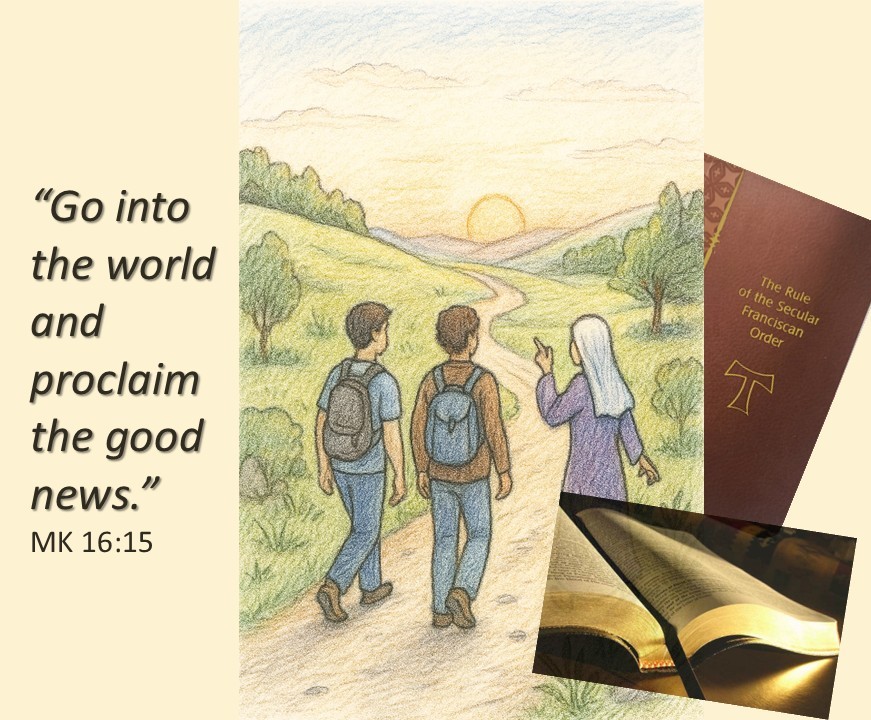
FORMATION FRIDAY – Reflection on the National Theme: “Go into the world and proclaim the Good News.” (Mk 16:15) October 10, 2025
(en español abajo) Korean translation attached in a separate PDFReflection on the National Theme: “Go into the world and proclaim the Good News.” (Mk 16:15)At the OFS USA National Chapter held recently in Maryland, it was decided that the national theme for 2025-2028 will be “Go into the world and proclaim the Good News.” The National Priority for the same time period will be “Living the Gospel.”This week we give a broad overview of how the theme and priority line up with our Rule. Over the next three years, we will spotlight various aspects of both.As Secular Franciscans, we are invited to live the Gospel in our daily lives, embodying the teachings of Christ and St. Francis of Assisi. This theme encourages us to reflect on how we can actively engage in evangelization and witness to the Gospel through our actions and words.Building Relationships: The OFS Rule emphasizes the importance of building relationships based on love and respect. Article 13 of the Rule states, “As the Father sees in every person the features of his Son, the firstborn of many brothers and sisters, so the Secular Franciscans with a gentle and courteous spirit accept all people as a gift of the Lord and an image of Christ.” By fostering genuine connections with others, we create opportunities to share the Good News and invite others to experience the love of Christ.Engaging and Inspiring Others to Seek God: Article 6 of the Rule calls us to “go forth as witnesses and instruments of the Church’s mission among people, proclaiming Christ by their life and words.” Our lives should be a testament to our faith, inspiring others to seek God and explore their own spiritual journeys. Through our actions, we can demonstrate the transformative power of the Gospel and encourage others to embrace a life of faith.Forming Ourselves: The Rule also emphasizes the importance of ongoing formation and personal growth. Article 7 states, “United by their vocation as ‘brothers and sisters of penance,’ and motivated by the dynamic power of the Gospel, let them conform their thoughts and deeds to those of Christ by means of that radical interior change which the Gospel itself calls ‘conversion.'” By continually forming ourselves, with the help of the Spirit, in the teachings of Christ and the example of St. Francis, we become better equipped to share the Good News with authenticity and conviction.Attracting Others to Our Way of Life: Our way of life as Secular Franciscans should be attractive to others, drawing them to the beauty of the Gospel. Article 16 of the Rule encourages us to “esteem work both as a gift and as a sharing in the creation, redemption, and service of the human community.” By integrating our faith into our daily activities and demonstrating the joy and fulfillment that comes from living the Gospel, we can attract others to our way of life and inspire them to follow Christ.Rebuilding the Church: St. Francis was called to “rebuild my Church,” and this call extends to us as well. Article 14 of the Rule reminds us that “Secular Franciscans should devote themselves especially to careful reading of the gospel, going from gospel to life and life to the gospel.” By living out the Gospel in our communities and participating in the life of the Church, we contribute to its renewal and growth.Involved in the Activities and Challenges of the World: As Secular Franciscans, we are called to be actively involved in the world, addressing its challenges with faith and hope. Article 15 of the Rule states, “Let them individually and collectively be in the forefront in promoting justice by the testimony of their human lives and their courageous initiatives.” By integrating faith and action in our daily lives, nurturing hope, and sowing seeds of transformation, we can make a positive impact on the world and bring the Good News to those in need.The theme “Go into the world and proclaim the Good News” invites us to live out our vocation as Secular Franciscans with renewed zeal and commitment. By building relationships, engaging and inspiring others, forming ourselves with the help of the Holy Spirit, attracting others to our way of life, rebuilding the Church, and being involved in the activities and challenges of the world, we can effectively proclaim the Good News and fulfill our mission as followers of Christ and St. Francis.Inspired by the National Priorities and Theme task force. Other research was assisted by Microsoft Copilot.For discussion or to answer in your journal+Re-read the items listed above supporting our national theme. How can you and your fraternity carry outthese aspects of our theme and Rule?+Which other articles of our Rule encourage us to “go into the world and proclaim the Good News?”+Challenge: After discussion with your fraternity, suggest ideas for living the gospel and evangelizing others.Formación 10 de octubre 2025Reflexión sobre el tema nacional: «Vaya por todo el mundo y proclame la Buena Nueva» (Mc 16, 15).En el Capítulo Nacional de la OFS de EE. UU., celebrado recientemente en Maryland, se decidió que el tema nacional para 2025-2028 será «Id por todo el mundo y proclamad la Buena Nueva». La prioridad nacional para el mismo período será «Vivir el Evangelio». Esta semana ofrecemos una visión general de cómo el tema y la prioridad se alinean con nuestra Regla. Durante los próximos tres años, destacaremos diversos aspectos de ambos.Como franciscanos seglares, estamos invitados a vivir el Evangelio en nuestra vida cotidiana, encarnando las enseñanzas de Cristo y de San Francisco de Asís. Este tema nos anima a reflexionar sobre cómo podemos participar activamente en la evangelización y dar testimonio del Evangelio a través de nuestras acciones y palabras.Construir relaciones: La Regla de la OFS enfatiza la importancia de construir relaciones basadas en el amor y el respeto. El artículo 13 de la Regla dice: «Como el Padre ve en cada persona los rasgos de su Hijo, primogénito de muchos hermanos y hermanas, así los franciscanos seglares, con espíritu amable y cortés, aceptan a todas las personas como un don del Señor y una imagen de Cristo». Al fomentar conexiones genuinas con los demás, creamos oportunidades para compartir la Buena Nueva e invitamos a otros a experimentar el amor de Cristo.Involucrar e inspirar a otros a buscar a Dios: El artículo 6 de la Regla nos llama a «salir como testigos e instrumentos de la misión de la Iglesia entre los hombres, anunciando a Cristo con la vida y con las palabras». Nuestras vidas deben ser un testimonio de nuestra fe, inspirando a otros a buscar a Dios y a explorar sus propios caminos espirituales. A través de nuestras acciones, podemos demostrar el poder transformador del Evangelio y animar a otros a abrazar una vida de fe.Formarnos a nosotros mismos: La Regla también enfatiza la importancia de la formación continua y el crecimiento personal. El artículo 7 establece: «Unidos por su vocación de «hermanos y hermanas de penitencia» y motivados por el poder dinámico del Evangelio, que conformen sus pensamientos y acciones a los de Cristo mediante ese cambio interior radical que el Evangelio mismo llama «conversión»». Al formarnos continuamente, con la ayuda del Espíritu, en las enseñanzas de Cristo y el ejemplo de San Francisco, nos equipamos mejor para compartir la Buena Nueva con autenticidad y convicción.Atraer a otros a nuestro estilo de vida: Nuestro estilo de vida como franciscanos seglares debe ser atractivo para los demás, atrayéndolos a la belleza del Evangelio. El artículo 19 de la Regla nos anima a «estimar el trabajo como un don y como participación en la creación, la redención y el servicio de la comunidad humana». Al integrar nuestra fe en nuestras actividades diarias y demostrar la alegría y la plenitud que proviene de vivir el Evangelio, podemos atraer a otros a nuestro estilo de vida e inspirarlos a seguir a Cristo.Reconstruir la Iglesia: San Francisco fue llamado a «reconstruir mi Iglesia», y esta llamada se extiende también a nosotros. El artículo 4 de la Regla nos recuerda que «los franciscanos seglares deben dedicarse especialmente a la lectura atenta del Evangelio, pasando del Evangelio a la vida y de la vida al Evangelio». Al vivir el Evangelio en nuestras comunidades y participar en la vida de la Iglesia, contribuimos a su renovación y crecimiento.Implicados en las actividades y los retos del mundo: Como franciscanos seglares, estamos llamados a implicarnos activamente en el mundo, abordando sus retos con fe y esperanza. El artículo 15 de la Regla establece: «Que, individual y colectivamente, estén en primera línea en la promoción de la justicia mediante el testimonio de sus vidas humanas y sus valientes iniciativas». Al integrar la fe y la acción en nuestra vida cotidiana, alimentando la esperanza y sembrando las semillas de la transformación, podemos tener un impacto positivo en el mundo y llevar la Buena Nueva a los necesitados.El tema «Id por el mundo y proclamad la Buena Nueva» nos invita a vivir nuestra vocación como franciscanos seglares con renovado celo y compromiso. Al construir relaciones, involucrar e inspirar a otros, formarnos con la ayuda del Espíritu Santo, atraer a otros a nuestro estilo de vida, reconstruir la Iglesia y participar en las actividades y desafíos del mundo, podemos proclamar eficazmente la Buena Nueva y cumplir nuestra misión como seguidores de Cristo y San Francisco.Inspirado por el grupo de trabajo sobre Prioridades y Temas Nacionales. Otras investigaciones contaron con la ayuda de Microsoft Copilot.Para debatir o responder en tu diario+Vuelva a leer los puntos mencionados anteriormente que respaldan nuestro tema nacional. ¿Cómo pueden usted y su fraternidad llevar a cabo estos aspectos de nuestro tema y nuestra Regla?+¿Qué otros artículos de nuestra Regla nos animan a «salir al mundo y proclamar la Buena Nueva»?+Reto: Después de debatirlo con su fraternidad, sugiera ideas para vivir el Evangelio y evangelizar a los demás.Diane F. Menditto, OFSVice Minister, National Fraternity, Secular Franciscan Order USAListen – Discern – Go Forth National Theme 2022-2025