Open post

FORMATION FRIDAY – The Admonitions XIV and XVI – June 24, 2022

The Admonitions: XIV and XVI
The Admonitions: FA:ED, vol. 1, p. 128
 
…these twenty-eight teachings of Francis offer insights into his biblical thought and the ways in which he translated them into the ordinary experiences of daily life.”
 
[Admonition XIV: Poverty of Spirit] FA:ED, vol. 1, p. 133
1Blessed are the poor in spirit, for theirs is the kingdom of heaven. Mt 5:3
2There are many who, while insisting on prayers and obligations, inflict many abstinences and punishments upon their bodies. 3But they are immediately offended and disturbed about a single word which seems to be harmful to their bodies or about something which might be taken away from them. 4These people are not poor in spirit, for someone who is truly poor one who is truly poor in spirit hates himself and loves those who strike him on the cheek. Mt 5:39
 
From our Rule
Article 11. Trusting in the Father, Christ chose for himself and his mother a poor and humble life19, even though he valued created things attentively and lovingly. Let the Secular Franciscans seek a proper spirit of detachment from temporal goods by simplifying their own material needs. Let them be mindful that according to the gospel they are stewards of the goods received for the benefit of God’s children.
Thus, in the spirit of “the Beatitudes”, and as pilgrims and strangers on their way to the home of the Father, they should strive to purify their hearts from every tendency and yearning for possession and power20.
 
[Admonition XVI: Cleanness of Heart] FA:ED, vol. 1, p. 134
1Blessed are the clean in heart, for they will see God. Mt 5:8
2The truly clean of heart are those who look down upon earthly things, seek those of heaven, and, with a clean heart and spirit, never cease adoring and seeing the Lord God living and true.
 
From our Rule
Article 12. Witnessing to the good yet to come and obliged to acquire purity of heart because of the vocation they have embraced, they should set themselves free to love God and their brothers and sisters21.
 
Please read and think about Admonitions 14 and 16 and the articles of our Rule that correspond to them.
The questions are for discussion in fraternity, with a prayer partner, or to comment on in your journal.
+What does it mean to you to be “pilgrim and a stranger?”
+How does understanding this attitude about life help us to understand what it is to be “poor in spirit?”
+In our Rule we are asked to “set ourselves free to love God and our brothers and sisters.” How does this lead us to be “clean of heart?”
+What possessions or attitudes might be holding you back from truly adoring God.
+How can we open our hearts to the Holy Spirit to ask for conversion in this area?
 
++++++++++++++++++++++++++++++++++++++++++
 
Las admoniciones (Por favor, comparta con su fraternidad.)
 
“…estas veintiocho enseñanzas de Francisco ofrecen información sobre su pensamiento bíblico y las formas en que las tradujo a las experiencias ordinarias de la vida diaria.”
 
[Admoniciones: Cap. XIV: De la pobreza de espíritu]
1Bienaventurados los pobres de espíritu, porque de ellos es el reino de los cielos (Mt 5,3). 2Hay muchos que, perseverando en oraciones y oficios, hacen muchas abstinencias y mortificaciones corporales, 3pero, por una sola palabra que les parezca injuriosa para sus cuerpos o por alguna cosa que se les quite, escandalizados enseguida se perturban. 4Estos no son pobres de espíritu, porque quien es de verdad pobre de espíritu, se odia a sí mismo y ama a aquellos que lo golpean en la mejilla (cf. Mt 5,39).
 
De nuestra regla: Artículo 11
Cristo, confiado en el Padre, aún apreciando atenta y amorosamente las realidades creadas, eligió para Sí y para su Madre una vida pobre y humilde19; del mismo modo, los Franciscanos seglares han de buscar en el desapego y en el uso una justa relación con los bienes terrenos, simplificando las propias exigencias materiales; sean conscientes, en conformidad con el Evangelio, de ser administradores de los bienes recibidos, en favor de los hijos de Dios.
Así, en el espíritu de las “Bienaventuranzas”, esfuércense en purificar el corazón de toda tendencia y avidez de posesión y de dominio, como “peregrinos y forasteros” en el camino hacia la casa del Padre20.
 
[Admoniciones: Cap. XVI: De la limpieza del corazón]
1Bienaventurados los limpios de corazón, porque ellos verán a Dios (Mt 5,8). 2Son verdaderamente limpios de corazón quienes desprecian las cosas terrenas, buscan las celestiales y no dejan nunca de adorar y ver, con corazón y alma limpios, al Señor Dios vivo y verdadero.
 
De nuestra regla: Artículo 12
Testigos de los bienes futuros y comprometidos con la vocación abrazada a la adquisición de la pureza de corazón, se harán libres para el amor de Dios y de los hermanos21.
 
Por favor, lea y reflexione sobre las Admoniciones 14 y 16 y los artículos de nuestra Regla que les corresponden.
 
Las preguntas son para platicar en fraternidad, con un compañero de oración o para comentarlas en su diario.
 
+¿Qué significa para usted ser “peregrino y forastero”?
+¿Cómo nos ayuda esta actitud ante la vida a entender lo que es ser “pobre de espíritu?”
+En nuestra Regla se nos pide que “nos hagamos libres para el amor de Dios y de los hermanos.” ¿Cómo nos lleva esto a ser “limpios de corazón?”
+Qué posesiones o actitudes podrían estar impidiéndole adorar verdaderamente a Dios.
+¿Cómo podemos abrir nuestro corazón al Espíritu Santo para pedir conversión en esta área?
 
 
Diane F. Menditto, OFS

Chair, National Formation Commission

Formation Director, Our Lady of the Angels Region
Formation Director, St. Francis Fraternity, Hackensack, NJ
 
Open post

FORMATION FRIDAY – Documents of the Secular Franciscan Order – June 17,2022

Please share with your local fraternity

Documents of the Secular Franciscan Order

Over the last several months, the National Formation Commission has received a number of questions about why we have a Rule, Constitutions, and Statutes. These questions bring out some very important points that will help us to better understand our way of life and what we promise at our profession.

  • + Do we have one Rule or 26 “rules” to follow?

Religious orders and institutes follow the charism of their founders. Generally, the founder writes or inspires the Rule of a particular community. The intention of a Rule is that the members of the order will have the inspiration of the founder to live by when he or she is no longer among them. The Rules of religious communities, although requiring approval by the Holy See, are general, most of the time without the specifics that will be necessary to govern a religious community and to live out the Rule authentically.

“The word ‘rule’ (Latin: regula, Greek: kanon) literally means a standard by which something can be tested. In the case of religious or secular institutes it establishes the spiritual foundation and identity of the community. It is the norm which all the other documentation of the institutes – constitutions, statutes, etc. – are measured. Approbation of rules for religious and secular institutes in the Church is reserved to the Holy See.” (See Michael Higgins, TOR, “Importance of Familiarization with the Documents of the Secular Franciscan Order.”)

A Rule is not a list or set of “rules” but the outline of a plan or way of life to help us live out the vision of the founder which is put forth in 26 articles.

  • +Why do we have Constitutions? What is the relationship between the Rule and Constitutions?

The Constitutions (also approved by the Holy See) are much more specific about the way the Rule should be interpreted and carried out. Here is an explanation by Fr. Lester Bach, OFM Cap., in the Franciscan Journey p. 106:

“The SFO (OFS) Constitutions contain comments on the Rule and insights for understanding the Rule. The Constitutions point out structures to help the Rule come alive in community life. The Constitutions spell out things like canonical procedures and structural developments. They deal with issues of lukewarm members and the role of the servant leaders
of fraternity life (councils). The Constitutions present ways and means to deal with issues that may arise in fraternity life. In a sense, the Constitutions become a wide-ranging commentary on the secular Franciscan rule and life.”

  • +What are National Statutes?

Article 29.3 of the General Constitutions call for each national fraternity to develop its own statutes. “National Statutes should indicate the criteria for the organization of the OFS in the nation. The application of these criteria is left to the prudent judgement of those responsible for the Fraternities concerned and of the National Council.” National Statutes are not approved by the Holy See but must be approved by the council of the higher level. (CIOFS) The statutes of a particular country take into account the culture and customs of that country and add further particulars to what is laid out in the Constitutions. Statutes may be more restrictive than the Constitutions, but not less restrictive.

Every member should have access to the Rule, Constitutions, and Statutes. You may order the Essential Documents book from Smoky Valley Printing (Order form often appears in the TAU newsletter.) You may also find our documents in their latest translations on our national website and on the CIOFS website.

OFS Governing Documents: https://www.secularfranciscansusa.org/ongoing-formation-resources/#38871d71653d8dcec

Official Documents of the OFS https://ciofs.info/library/official-documents/

Questions for discussion or to answer in your journal:

  1. +When was the last time you read our Rule and Constitutions? Please take some time to read them: Choose two or three areas to focus on in the next week. Continue this practice until you have read both documents completely.
  2. +List some of the items that stood out to you as you were completing the above “labor of love.”
  3. +How does your fraternity use the Rule and Constitutions for ongoing formation? Make a list of ideas for their use and submit it to your local council or fraternity formation team.
  4. +Resolve to pray one article of the Rule each day!

+++++++++++++++++++++++++++++++++++++

Formation Friday 17 de junio de 2022 Por favor comparta con su fraternidad local

Documentos de la Orden Franciscana Seglar

En los últimos meses, la Comisión Nacional de Formación ha recibido una serie de preguntas sobre por qué tenemos una Regla, Constituciones y Estatutos. Estas preguntas resaltan algunos puntos muy importantes que nos ayudarán a comprender mejor nuestra forma de vida y lo que prometemos en nuestra profesión.

+ ¿Tenemos una Regla o 26 “reglas” a seguir?

Las órdenes e institutos religiosos siguen el carisma de sus fundadores. Generalmente, el fundador escribe o inspira la Regla de una determinada comunidad. La intención de una Regla es que los miembros de la orden tengan la inspiración del fundador para vivir cuando él o ella ya no esté entre ellos. Las Reglas de las comunidades religiosas, aunque requieren la aprobación de la Santa Sede, son generales, la mayoría de las veces sin las especificidades que serán necesarias para gobernar una comunidad religiosa y vivir auténticamente la Regla.

“La palabra ‘regla’ (latín: regula , griego: kanon ) literalmente significa un estándar por el cual algo puede ser probado. En el caso de institutos religiosos o seglares establece el fundamento espiritual y la identidad de la comunidad. Es la norma por la que se mide toda la demás documentación de los institutos – constituciones, estatutos, etc. La aprobación de las normas para los institutos religiosos y seglares de la Iglesia está reservada a la Santa Sede”. (Ver Michael Higgins, TOR, “Importancia de la familiarización con los documentos de la Orden Franciscana Seglar”).

Una Regla no es una lista o un conjunto de “reglas,” sino el esquema de un plan o forma de vida para ayudarnos a vivir la visión del fundador que se presenta en 26 artículos.

+ ¿Por qué tenemos Constituciones? ¿Cuál es la relación entre la Regla y las Constituciones?

Las Constituciones (también aprobadas por la Santa Sede) son mucho más específicas sobre la forma en que debe interpretarse y llevarse a cabo la Regla. Aquí hay una explicación del P. Lester Bach, OFM Cap., en La jornada franciscana p. 106:

“Las Constituciones OFS (OFS) contienen comentarios sobre la Regla e ideas para comprender la Regla. Las Constituciones señalan estructuras para ayudar a que la Regla cobre vida en la vida comunitaria. Las Constituciones explican cosas como procedimientos canónicos y desarrollos estructurales. Se ocupan de cuestiones de los miembros tibios y el papel de los líderes servidores de la vida de la fraternidad (consejos). Las Constituciones presentan formas y medios para tratar los problemas que pueden surgir en la vida de la fraternidad. En cierto sentido, las Constituciones se convierten en un amplio comentario sobre la vida franciscana seglar. regla y vida.”

+ ¿Qué son los Estatutos Nacionales?

El artículo 29.3 de las Constituciones Generales llama a cada fraternidad nacional a desarrollar sus propios estatutos. “Los Estatutos nacionales deben indicar los criterios de organización de la OFS en la nación. La aplicación de estos criterios se deja al prudente juicio de los Responsables de las Fraternidades interesadas y del Consejo nacional.” Los Estatutos Nacionales no son aprobados por la Santa Sede sino que deben ser aprobados por el consejo del nivel superior. (CIOFS) Los estatutos de un país en particular tienen en cuenta la cultura y las costumbres de ese país y añaden más detalles a lo dispuesto en las Constituciones. Los Estatutos pueden ser más restrictivos que las Constituciones, pero no menos restrictivos.

Todo miembro debe tener acceso a la Regla, Constituciones y Estatutos. Puede solicitar el libro Documentos esenciales de Smoky Valley Printing (el formulario de pedido suele aparecer en el boletín de TAU). También puede encontrar nuestros documentos en sus últimas traducciones en nuestro sitio web nacional y en el sitio web de CIOFS.

Documentos rectores de la OFS : https://www.secularfranciscansusa.org/ongoing-formation-resources/#38871d71653d8dcec

Documentos Oficiales de la OFS: https://ciofs.info/es/library/official-documents/

Preguntas para discutir o responder en tu diario:

+¿Cuándo fue la última vez que leyó nuestra Regla y Constituciones? Tómese un tiempo para leerlos: elija dos o tres áreas en las que concentrarse la próxima semana. Continúe con esta práctica hasta que haya leído ambos documentos por completo.

+ Enumere algunos de los elementos que se destacaron para usted mientras completaba el “trabajo de amor” anterior.

+¿Cómo utiliza su fraternidad la Regla y las Constituciones para la formación permanente? Haga una lista de ideas para su uso y envíela a su consejo local o al equipo de formación de la fraternidad.

+ ¡Resuelva rezar un artículo de la Regla cada día!


Diane F. Menditto, OFS

Chair, National Formation Commission

Formation Director, Our Lady of the Angels Region
Formation Director, St. Francis Fraternity, Hackensack, NJ
 
Open post

FORMATION FRIDAY – IN HONOR OF THE BLESSED TRINITY: FRANCISCANS & the TRINITY

Please share with your local fraternities


Franciscan life focuses on the Trinity. Francis saw that God is so generous that his love not only flows among the persons of the Trinity, it overflows to us. And we participate in the life of the Trinity. We might even say that the Trinity is the first “fraternity.”

Trinitarian spirituality colors our Franciscan Spirit. The Trinity models what love does best – it makes us one! It is through Jesus that St. Francis came to recognize the role of the Trinity in his life. Relationship is at the heart of the Trinity. Our relationship with people, God and all of creation is at the heart of Franciscan life. Our call to be respectful and reverent to all people and all of creation comes from the Trinity.

“Since Francis understands that the Holy Spirit is the source of power and inspiration that opens our hearts to relationship with the Father (and the Trinity), Francis pursues a vital relationship with all three Persons of the Most Holy Trinity, that are distinguishable but never separate and to whom he turns because singularly they transform him, in order for him to live his relationship of love in the heart of the Life, the perfect Trinity and simple Unity of God to the fullest.”


“Francis’s most common expression for God is “Perfect Trinity and Simple Unity,” and this is the reality Francis charges all his family to recognize and hold dear in all they do.” (See FUN Manual “St. Francis and His Approach to Divinity”)


The life of the Trinity as presented in the OFS Rule.

God is not a solitary God, haughty and distant, always the “judge.” The Rule shows us “God-in-Family,” “God-Communion of Persons,” in their own relationships, in their action with people, hence a God near to them, God-Emmanuel, God-with-us.


The FATHER is LOVE. He gives us his own Son (OFS Rule, Article 4). He is mercy in the face of our weakness; he gives us the grace of strength (OFS Rule, Article 7). In every person, the Father sees the features of his Son (OFS Rule, Article 13). The Father calls all people to build a more fraternal and evangelical world which proclaims his kingdom (OFS Rule, Article 14), and all creation bears the imprint of the Most High (OFS Rule, Article 18).

The SON JESUS CHRIST is the GIFT of the Father and becomes for all people the WAY to the Father, their LIFE, their TRUTH. Therefore, Christ must be the inspiration and center of their life (Article 4). Christ has risen and lives and works in our brothers and sisters (Article 5). He makes us members of his Body, the Church (Article 6).

The HOLY SPIRIT is TRUTH and opens the Rule. Already the first line speaks of the Spirit’s action. The Holy Spirit gives rise to spiritual families in the Church (OFS Rule, Article 1); calls the faithful to follow Christ (Article 1); prompts them to strive for the perfection of charity (Article 2); and introduces them to the Truth (Article 4).

[Guidelines for Initial Formation p. 39]

Questions for discussion or to answer in your journal

+ Read the articles of the Rule mentioned above. How do they apply to your life as a Secular Franciscan?

+ Give some examples of Francis’s devotion to the Trinity in his writings and in how he prayed. (To read the writings of St. Francis visit: https://franciscantradition.org/early-sources#francis-the-saint

+ How does your life demonstrate a devotion to the Blessed Trinity?


+++++++++++++++++++++++++

Formation Friday 10 de junio de 2022
En Honor a la Santísima Trinidad: Los Franciscanos y la Trinidad
Por favor comparta con sus fraternidades locales

La vida franciscana se centra en la Trinidad. Francisco vio que Dios es tan generoso que su amor no sólo fluye entre las personas de la Trinidad, sino que se desborda hacia nosotros. Y participamos de la vida de la Trinidad. Incluso podríamos decir que la Trinidad es la primera “fraternidad.”

La espiritualidad trinitaria tiñe nuestro espíritu franciscano. La Trinidad modela lo que el amor mejor hace: ¡nos hace uno! Es a través de Jesús que San Francisco llegó a reconocer el papel de la Trinidad en su vida. La relación está en el corazón de la Trinidad. Nuestra relación con las personas, Dios, y toda la creación está al corazón de la vida franciscana. Nuestro llamado a ser respetuosos y reverentes con todas las personas y toda la creación proviene de la Trinidad.

“Dado que Francisco entiende que el Espíritu Santo es la fuente de poder e inspiración que abre nuestros corazones a la relación con el Padre (y la Trinidad), Francisco busca una relación vital con las tres Personas de la Santísima Trinidad, que son distinguibles, pero nunca separados y a los que se vuelve porque singularmente lo transforman, para que viva en plenitud su relación de amor en el corazón de la Vida, Trinidad perfecta y Unidad sencilla de Dios.”

“La expresión más común de Francisco para Dios es “Trinidad Perfecta y Unidad Simple,” y esta es la realidad que

Francisco exhorta que toda su familia reconozca y aprecie en todo lo que hacen ”. (Ver Manual FUN “San Francisco y Su Acercamiento a la Divinidad”)

La vida de la Trinidad tal como se presenta en la Regla OFS.

Dios no es un Dios solitario, altivo y distante, siempre el “juez.” La Regla nos muestra “Dios-en-Familia,” “Dios-Comunión de las Personas,” en sus propias relaciones, en su acción con las personas, por tanto, un Dios cercano a ellas, Dios-Emmanuel, Dios-con-nosotros.

El PADRE es AMOR. Él nos da a su propio Hijo (Regla OFS, Artículo 4). Él es misericordia ante nuestra debilidad; nos da la gracia de la fuerza (Regla OFS, artículo 7). En cada persona, el Padre ve los rasgos de su Hijo (Regla OFS, artículo 13). El Padre llama a todos los hombres a construir un mundo más fraterno y evangélico que proclame su reino (Regla OFS, artículo 14), y toda la creación lleva la huella del Altísimo (Regla OFS, artículo 18).

El HIJO JESUCRISTO es el DON del Padre, y se convierte para todos los hombres en CAMINO al Padre, en su VIDA, en su VERDAD. Por tanto, Cristo debe ser la inspiración y el centro de su vida (artículo 4). Cristo ha resucitado y vive y obra en nuestros hermanos y hermanas (artículo 5). Él nos hace miembros de su Cuerpo, la Iglesia (artículo 6).

El ESPÍRITU SANTO es VERDAD y abre la Regla. Ya la primera línea habla de la acción del Espíritu. El Espíritu Santo suscita familias espirituales en la Iglesia (Regla OFS, artículo 1); llama a los fieles a seguir a Cristo (artículo 1); los impulsa a esforzarse por la perfección de la caridad (artículo 2); y los introduce en la Verdad (artículo 4).

[Orientaciones para la Formación Inicial]

Preguntas para platicar o para responder en su diario

+ Lea los artículos de la Regla antes mencionados. ¿Cómo se aplican a su vida como franciscano seglar?

+ Dar algunos ejemplos de la devoción de Francisco a la Trinidad en sus escritos y en su forma de orar. (Para leer los escritos de San Francisco, visite: http://franciscanos.org/frandp/menup.html

+ ¿Cómo demuestra su vida una devoción a la Santísima Trinidad?


Diane F. Menditto, OFS

Chair, National Formation Commission

Formation Director, Our Lady of the Angels Region
Formation Director, St. Francis Fraternity, Hackensack, NJ
 
Open post

FORMATION FRIDAY – The Fruits of the Spirit exemplified in our Rule – June 3, 2022

In Honor of the Holy Spirit, we repeat our post from January 2022


The Fruits of the Spirit exemplified in our Rule

When we are baptized we receive the gifts of the Holy Spirit. These gifts are strengthened at our Confirmation. When we are professed as Secular Franciscans, we further strengthen our Baptismal Promises. As a result of the gifts of the Spirit (wisdom, understanding, counsel, fortitude, knowledge, piety, and fear of the Lord), we are able to demonstrate the fruits of the Spirit (love, joy, peace, patience, kindness, goodness, long-suffering, mildness, faith, modesty, self-restraint, and chastity.) By living our rule, we hope to exemplify these fruits in everything we do in our daily lives.

Our Rule

— Spells out the way the Spirit wishes us to do God’s will

— Tells us how God desires us to live
Faithfulness to the Rule and Constitutions help us to build up God’s Kingdom (as we are called to do through our Baptism).


For your consideration—the Fruits of the Spirit and our Rule

First of all—Articles 4, 14 and 19 ask us to be open to the action of the Holy Spirit

Love: Articles 5, 13, and 18
+We are asked to encounter the living person of Christ in one another and to be mindful that all creatures bear the “imprint of the Most High.”

Joy: Articles 13 and 19
+We are reminded that a sense of community makes us joyful and that we are “Messengers of perfect joy in every circumstance…”

Peace: Articles 17 and 19
+We are reminded that we are “bearers of peace” and that we should “cultivate peace.”

Patience: Articles 7 and 10
+We seek conversion each day (metanoia) as we place ourselves in the hands of the Father.

Kindness: Articles 13 and 14
+With a “gentle and courteous spirit” we accept “all people as a gift of the Lord and an image of Christ.”

Goodness: Articles 13 and 14
+ “Secular Franciscans, together with all people of good will, are called to build a more fraternal and evangelical world…”

Long-suffering: Articles 10 and 19
+ We follow the “poor and crucified Christ, witness to him even in difficulties and persecutions.”

Mildness: Articles 9 and 11
+We live in the “spirit of the Beatitudes.”

Faith: Articles 4, 5, 10 and 14
+We express our faith in Jesus: “Christ, the gift of the Father’s love, is the way to him, the truth into which the Holy Spirit leads us, and the life which he has come to give abundantly.”

Modesty: Article 11
+We “purify our hearts from every teandency and yearning for possession and power.”

Self-restraint: Article 11, 12
+We “acquire purity of heart” in order to “set ourselves free” in order to “love God and our brothers and sisters.”

Chastity: Articles 6, 12
+We follow the teachings of the Church, “…devote themselves energetically to living in full communion with the pope, bishops, and priests,…”

For discussion or to answer in your journal:

+When people look at you, which fruits of the Holy Spirit are evident? Give an example.
+How does our Rule help you to demonstrate these fruits of the Spirit?
+Which of the fruits of the Spirit are difficult for you to manifest? Can you pinpoint why that might be?

+++++++++++++++++

Los frutos del Espíritu ejemplificados en nuestra Regla

Cuando somos bautizados recibimos los dones del Espíritu Santo. Estos dones se fortalecen en nuestra Confirmación. Cuando profesamos como franciscanos seglares, fortalecemos aún más nuestras promesas bautismales. Como resultado de los dones del Espíritu (sabiduría, entendimiento, consejo, fortaleza, conocimiento, piedad y temor del Señor), podemos demostrar los frutos del Espíritu (amor, gozo, paz, paciencia, bondad, bondad, longanimidad, apacibilidad, fe, modestia, dominio propio y castidad.) Al vivir nuestra regla, esperamos ejemplificar estos frutos en todo lo que hacemos en nuestra vida diaria.


Nuestra Regla:

· Explica la forma en que el Espíritu desea que hagamos la voluntad de Dios.

· Nos dice cómo Dios desea que vivamos

· La fidelidad a la Regla y las Constituciones nos ayuda a construir el Reino de Dios (como estamos llamados a hacer a través de nuestro Bautismo).

Para su consideración: los frutos del espíritu y nuestra regla

En primer lugar, los artículos 4, 14 y 19 nos piden que estemos abiertos a la acción del Espíritu Santo.

El Amor: artículos 5, 13 y 18

+ Se nos pide que encontremos a la persona viva de Cristo en los demás y que tengamos presente que todas las criaturas llevan la “huella del Altísimo”.


El Gozo: artículos 13 y 19

+ Se nos recuerda que el sentido de comunidad nos alegra y que somos “Mensajeros de la alegría perfecta en toda circunstancia …”


La Paz: artículos 17 y 19

+ Se nos recuerda que somos “portadores de paz” y que debemos “cultivar la paz”.


La Paciencia: artículos 7 y 10

+ Buscamos la conversión cada día (metanoia) al ponernos en las manos del Padre.


La Benignidad: artículos 13 y 14

+ Con un “espíritu amable y cortés” aceptamos “a todas las personas como un don del Señor y una imagen de Cristo”.


La Bondad: artículos 13 y 14

+ “Los franciscanos seglares, junto con todas las personas de buena voluntad, estamos llamados a construir un mundo más fraterno y evangélico…”


La Longanimidad: artículos 10 y 19

+ Seguimos al “Cristo pobre y crucificado, testimoniamos de él incluso en las dificultades y persecuciones”.

La Mansedumbre: artículos 9 y 11

+ Vivimos en el “espíritu de las Bienaventuranzas”.


La Fe: artículos 4, 5, 10 y 14

+ Expresamos nuestra fe en Jesús: “Cristo, don del amor del Padre, es el camino hacia él, la verdad a la que nos conduce el Espíritu Santo y la vida que ha venido a dar en abundancia”.


La Modestia: artículo 11

+ “Purificamos nuestro corazón de toda tendencia y anhelo de posesión y poder”.


La Continencia: artículos 11, 12

+ “Adquirimos pureza de corazón” para “liberarnos” para “amar a Dios ya nuestros hermanos”.


La Castidad: artículos 6, 12

+ Seguimos las enseñanzas de la Iglesia, “… se dedican con energía a vivir en plena comunión con el Papa, los obispos y los sacerdotes …”


Para discusión o para responder en su diario:

+ Cuando la gente te mira, ¿qué frutos del Espíritu Santo son evidentes? Dar un ejemplo.

+ ¿Cómo le ayuda nuestra Regla a demostrar estos frutos del Espíritu?

+ ¿Cuáles de los frutos del Espíritu le resultan difíciles de manifestar? ¿Puede señalar por qué podría ser eso?


Diane F. Menditto, OFS

Chair, National Formation Commission

Formation Director, Our Lady of the Angels Region
Formation Director, St. Francis Fraternity, Hackensack, NJ
Open post

FORMATION FRIDAY – What Makes OFS Different from Other Catholics? – Our Relationship to the Founder – (Part 5) May 27, 2022

This week we look at Our Relationship to our Founder

Our knowledge of and relationship to our founder is an important part of our lives as Franciscans. We trace the founding of our Order to one of the greatest of the Church’s saints who sets the example for us. As a matter of fact, at our profession, we promise to live the gospel by following in the footsteps of St. Francis. (See Rite of Profession quoted in week #1.) We are blessed to have writings by St. Francis to rely on to ensure that we remain faithful to the Franciscan charism. Reading his prayers and letters gives us years of material for meditation and imitation and makes clear the path we are to follow.

There are some 30 writings known to have been composed by St. Francis or which have been reliably attributed to him. These constitute a real treasure for Franciscans. By comparison, only four writings by Francis’s contemporary St. Dominic, founder of the Dominicans, survive. The writings of St. Francis offer Secular Franciscans an opportunity to encounter him personally. They let St. Francis speak for himself.

Over the course of one’s life as a Secular Franciscan, there is time to read everything written by St. Francis, but to begin, consider the five documents listed below. Each of these, along with a brief and informative introduction, can be accessed in the three-volume set Early Documents or at the Franciscan Intellectual Tradition website, https://franciscantradition.org/ .

  • The Prayer Before the Crucifix — This simple and short prayer for conversion is Francis’s plea for God’s mercy to “enlighten the darkness” of his heart and to give him the spiritual gifts necessary to obey God’s command FA:ED, vol. 1, p. 40
  • The Earlier Exhortation (The first version of the Letter to the Faithful) serves as the Prologue to the Secular Franciscan Rule of 1978. Addressed to the Brothers and Sisters of Penance, it offers a form of life Francis intended for the lay penitents associated with his movement. Earlier Exhortation: FA:ED, vol. 1, p. 41
  • A Letter to a Minister reveals how important mercy and minority were to Francis and presents his own idea of servant leadership. FA:ED, vol. 1, p. 97
  • The Admonitions are a collection of undated writings by St. Francis that are a window on how Francis understood the gospel life and how he viewed life in fraternity. FA:ED, vol. 1, p. 128
  • A Letter to Brother Leo presents Francis as an intimate and caring brother. There is no way of knowing the circumstances Francis refers to—specifically, a conversation between him and Leo along the road—but there is no mistaking Francis’s love and compassion. FA:ED, vol. 1, p. 122
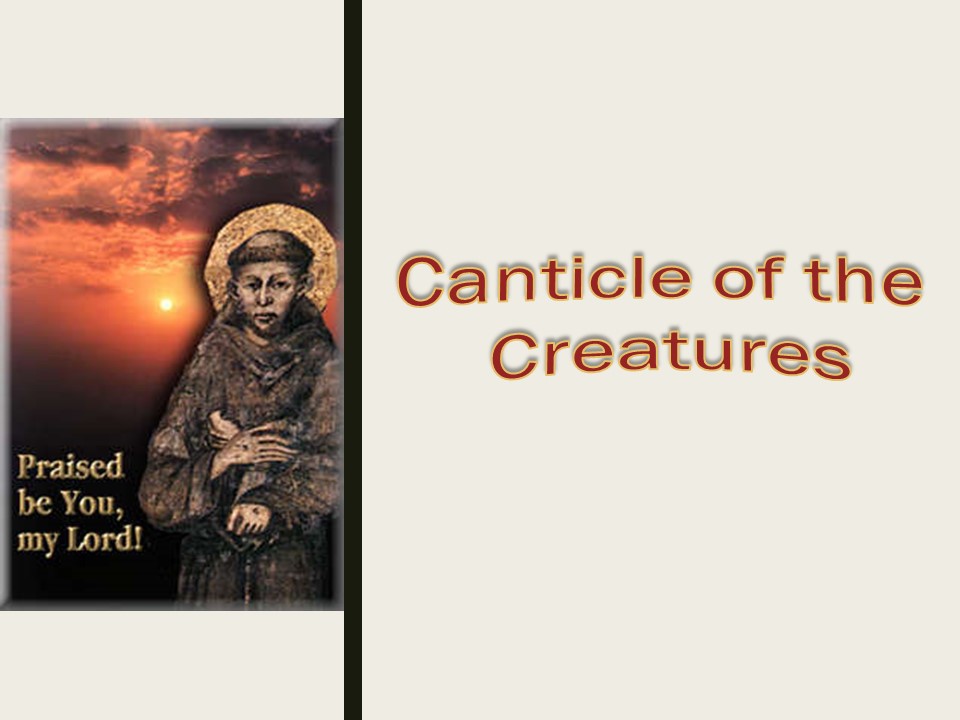
  • The Canticle of Brother Sun is Francis’s great poem of praise to God through his creatures. It makes explicit the connection between Francis and nature (kinship with creation) and establishes Francis as a poet and troubadour of God. CA:ED, p. 391

An irony of our time is that the writing most associated with St. Francis is one he never wrote: the “Prayer of St. Francis,” also called the “Peace Prayer (“Lord, make me an instrument of your peace…”) likely originated in France around 1912, first appearing in a spiritual magazine published in Paris. Although devout, these words were never uttered by Francis and should not eclipse his authentic prayers. Similarly, many sayings attributed to Francis (e.g., “Preach the gospel; if necessary, use words.”) are not found in the documents. The authoritative sources will yield a trove of inspiring quotations more trustworthy and meaningful than those erroneously attributed to him on internet pages and elsewhere.

Along with being thoroughly familiar with our Rule of Life and with the Gospels, we should also know about and internalize the life and writings of St. Francis. In this way, the Franciscan charism becomes firmly implanted in our minds and hearts, and we are more easily able to live out our vocation as Secular Franciscans.

Thank you to National Formation Commission member, Justin Carisio, OFS, for his collaboration on this post.

To discuss or to answer in your journal.

  • +Why do you suppose the writings of the founder of an order would be of great assistance to his or her followers? Please explain.
  • +Please read some or all of the readings referenced above.
  • –Note what touched you.
  • –What did you read that will strengthen your vocation? Why?
  • –Which one would you choose to share with your fraternity? How would you present it?

+++++++++++++++++++++++

Formation Friday 27 de mayo de 2022 Comparta con su fraternidad local
¿Qué diferencia a los franciscanos seglares de otros católicos? (Parte cinco)

Esta semana analizamos Nuestra relación con nuestro Fundador

Nuestro conocimiento y relación con nuestro fundador es una parte importante de nuestras vidas como franciscanos. Remontamos la fundación de nuestra Orden a uno de los más grandes santos de la Iglesia que nos da el ejemplo. De hecho, en nuestra profesión prometemos vivir el evangelio siguiendo los pasos de San Francisco. (Ver Rito de Profesión citado en la semana #1.) Tenemos la bendición de tener escritos de San Francisco en los que confiar para asegurarnos de permanecer fieles al carisma franciscano. La lectura de sus oraciones y cartas nos da muchos años de material para la meditación y la imitación y nos aclara el camino que debemos seguir.

Hay unos 30 escritos que se sabe que fueron compuestos por San Francisco o que se le han atribuido de manera confiable. Estos constituyen un verdadero tesoro para los franciscanos. En comparación, solo sobreviven cuatro escritos de Santo Domingo, contemporáneo de Francisco, fundador de los dominicos. Los escritos de San Francisco ofrecen a los franciscanos seglares la oportunidad de encontrarlo personalmente. Dejaron que San Francisco hablara por sí mismo.

A lo largo de la vida de uno como franciscano seglar, hay tiempo para leer todo lo escrito por San Francisco, pero para comenzar, considere los cinco documentos que se enumeran a continuación. Se puede acceder a cada uno de estos, junto con una introducción breve e informativa, en el conjunto de tres volúmenes Documentos tempranos o en el sitio web, http://franciscanos.org/

La Oración Ante el Crucifijo — Esta sencilla y breve oración por la conversión es la súplica de Francisco pidiendo la misericordia de Dios para que “ilumine las tinieblas” de su corazón y le dé los dones espirituales necesarios para obedecer el mandato de Dios. Oración ante el Crucifijo de San Damián

La Exhortación anterior (la primera versión de la Carta a los Fieles) sirve como Prólogo a la Regla Franciscana Seglar de 1978. Dirigida a los Hermanos y Hermanas de la Penitencia, ofrece una forma de vida que Francisco pretendía para los laicos penitentes asociados con su movimienot. Carta a los Fieles I [CtaF1]

Una carta a un ministro revela cuán importantes fueron la misericordia y la minoridad para Francisco y presenta su propia idea de liderazgo de servicio. Carta a un Ministro

Las Admoniciones son una colección de escritos sin fecha de San Francisco que son una ventana a cómo Francisco entendía la vida evangélica y cómo veía la vida en fraternidad. Admoniciones A Admoniciones B

Una carta a fray León presenta a Francisco como un hermano íntimo y solidario. No hay forma de saber las circunstancias a las que se refiere Francis, específicamente, una conversación entre él y Leo en el camino, pero no hay duda del amor y la compasión de Francis. Carta a fray León

El Cántico del Hermano Sol es de Francisco gran poema de alabanza a Dios a través de sus criaturas. Hace explícita la conexión entre Francisco y la naturaleza (parentesco con la creación) y establece a Francisco como poeta y trovador de Dios. Cántico del Hermano Sol

Una ironía de nuestro tiempo es que el escrito que más se asocia con San Francisco es uno que nunca escribió: la “Oración de San Francisco”, también llamada “Oración de paz” (“Señor, hazme un instrumento de tu paz…”). Probablemente se originó en Francia alrededor de 1912, apareciendo por primera vez en una revista espiritual publicada en París. Aunque devotas, estas palabras nunca fueron pronunciadas por Francisco y no deben eclipsar sus oraciones auténticas. De manera similar, muchos dichos atribuidos a Francisco (p. ej., “Predica el evangelio; si es necesario, usa palabras”) no se encuentran en los documentos. Las fuentes autorizadas brindarán un tesoro de citas inspiradoras más confiables y significativas que las que se le atribuyen erróneamente en las páginas de Internet y en otros lugares.

Además de estar profundamente familiarizados con nuestra Regla de Vida y con los Evangelios, también debemos conocer e interiorizar la vida y los escritos de San Francisco. De esta manera, el carisma franciscano se implanta firmemente en nuestras mentes y corazones, y podemos vivir más fácilmente nuestra vocación como franciscanos seglares.

Gracias al miembro de la Comisión Nacional de Formación, Justin Carisio, OFS, por su colaboración en esta publicación.

Para platicar o responder en tu diario.

+¿Por qué supone que los escritos del fundador de una orden serían de gran ayuda para sus seguidores?
–Por favor explique.

+ Lea algunas o todas las lecturas mencionadas anteriormente.
–Fíjese en lo que le impresionó.
–¿Qué leyó que fortalezca su vocación? ¿Por qué?
–¿Cuál elegiría para compartir con su fraternidad? ¿Cómo lo presentaría?


Diane F. Menditto, OFS

Chair, National Formation Commission

Formation Director, Our Lady of the Angels Region
Formation Director, St. Francis Fraternity, Hackensack, NJ
 
Scroll to top
Juan de Padilla