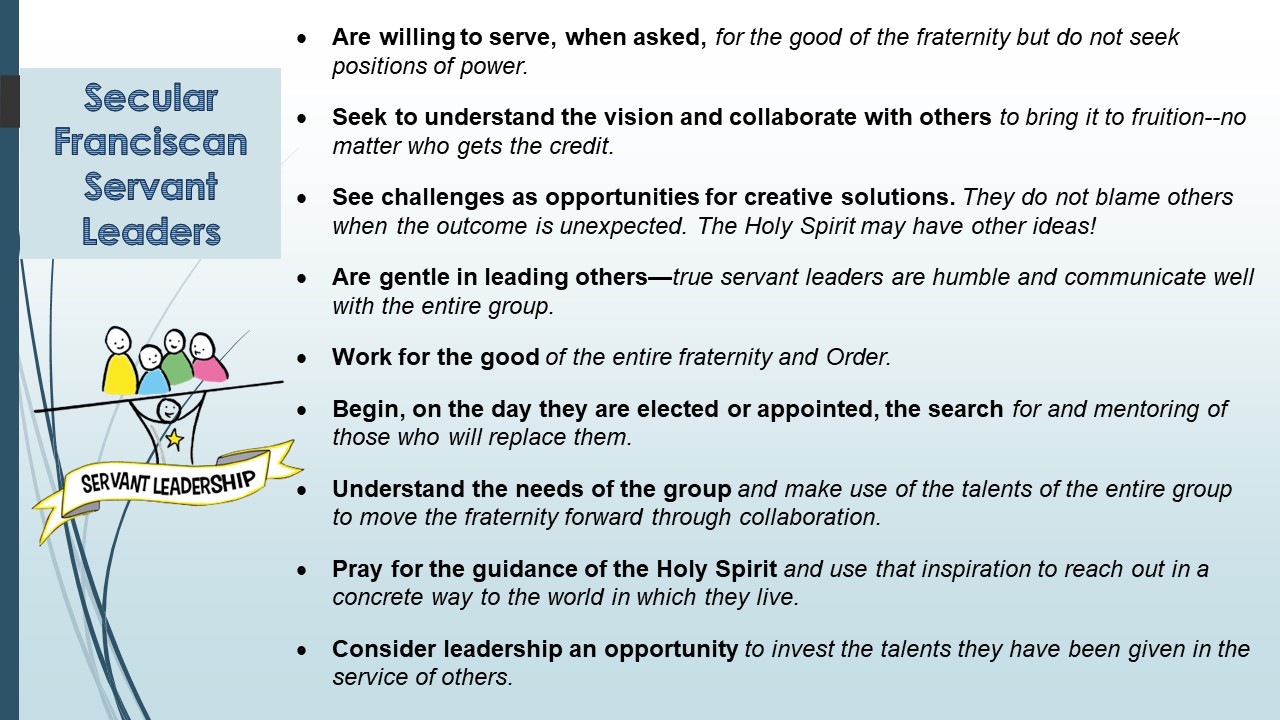
This month we have been focusing on Servant Leadership. Today we offer the characteristics of good servant leaders (in no particular order). You may be able to add to the list based on the qualities you have observed in the excellent servant leaders you know.
Secular Franciscan Servant Leaders:
· Love the Order and are willing to serve, when asked, for the good of the fraternity but do not seek positions of power. Have enthusiasm for living the Rule.
- Seek to understand the vision and collaborate with others to bring it to fruition–no matter who gets the credit.
- See challenges as opportunities for creative solutions. They do not blame others when the outcome is unexpected. The Holy Spirit may have other ideas!
- Are gentle in leading others—true servant leaders are humble and communicate well with the entire group.
- Work for the good of the entire fraternity and Order.
- Begin, on the day they are elected or appointed, their search for and mentoring of those who will replace them.
- Understand the needs of the group and make use of the talents of the entire group to move the fraternity forward through collaboration.
- Pray for the guidance of the Holy Spirit and use that inspiration to reach out in a concrete way to the world in which they live and serve.
- Consider leadership an opportunity to invest the talents they have been given in the service of others.
- Are generous with their time and willing to make time in their lives to serve.
- Have life experience both in the Order and in the world that can be offered to the fraternity.
- Are willing to listen to others—to ask for and act on input from their brothers and sisters.
Questions for discussion in fraternity, with a partner, or in your journal.
+Think of servant leaders you have known. Which of these characteristics do you see in them?
+Which of these characteristics do you see in yourself?
+Which characteristics do you think you could develop in order to become a servant leader?
+If you presently hold office, which of the above characteristics can you improve in yourself?
+Challenge: This week, read Mt 25:14-30 and consider the talents and abilities God has given you. How will you invest them to serve your fraternity and the Order?+++++++++++++++++++++++++++++++++++++
22 de septiembre de 2023 Comparta con su fraternidad local.
Este mes nos hemos centrado en el Liderazgo de Servicio. Hoy ofrecemos las características de los buenos líderes servidores (sin ningún orden en particular). Es posible que usted pueda ampliar la lista basándose en las cualidades que haya observado en los excelentes líderes servidores que conoce.
Líderes Servidores Franciscanos Seglares:
- Aman la Orden y están dispuestos a servir, cuando se les solicite, por el bien de la fraternidad, pero no busquen posiciones de poder. Tienen entusiasmo por vivir la Regla.
- Tratan de comprender la visión y colaborar con otros para hacerla realidad, sin importar quién se lleve el crédito.
- Ven los desafíos como oportunidades para soluciones creativas. No culpan a los demás cuando el resultado es inesperado. ¡El Espíritu Santo puede tener otras ideas!
- Son gentiles al liderar a otros; los verdaderos líderes servidores son humildes y se comunican bien con todo el grupo.
- Trabajan por el bien de toda la fraternidad y la Orden.
- Inician, el día de su elección o nombramiento, la búsqueda y tutoría de quienes los sustituirán.
- Comprenden las necesidades del grupo y hacen uso de los talentos de todo el grupo para hacer avanzar la fraternidad a través de la colaboración.
- Oran por la guía del Espíritu Santo y usan esa inspiración para llegar de manera concreta al mundo en el que viven y sirven.
- Consideran el liderazgo como una oportunidad para invertir los talentos que se les han otorgado al servicio de los demás.
- Son generosos con su tiempo y están dispuestos a dedicarlo en sus vidas para servir.
- Tienen experiencia de vida tanto en la Orden como en el mundo que pueda ofrecerse a la fraternidad.
- Están dispuestos a escuchar a los demás, a pedir y actuar en función de las aportaciones de sus hermanos y hermanas.
Preguntas para discutir en fraternidad, con un compañero o en su diario.
+Piense en los líderes servidores que ha conocido. ¿Cuáles de estas características ve en ellos?
+¿Cuáles de estas características ve en usted mismo?
+¿Qué características cree que podría desarrollar para convertirse en un líder servidor?
+Si actualmente ocupa un cargo, ¿cuáles de las características anteriores puede mejorar en si mismo?+ Desafío : esta semana, lea Mt 25:14-30 y considere los talentos y habilidades que Dios le ha dado. ¿Cómo los invertirá para servir a su fraternidad y a la Orden?
Diane F. Menditto, OFSVice Minister, National Fraternity, Secular Franciscan Order USAListen – Discern – Go Forth National Theme 2022-2025
Category: Formation Friday
Formation Friday – The Stigmata of St. Francis – Sept. 15th
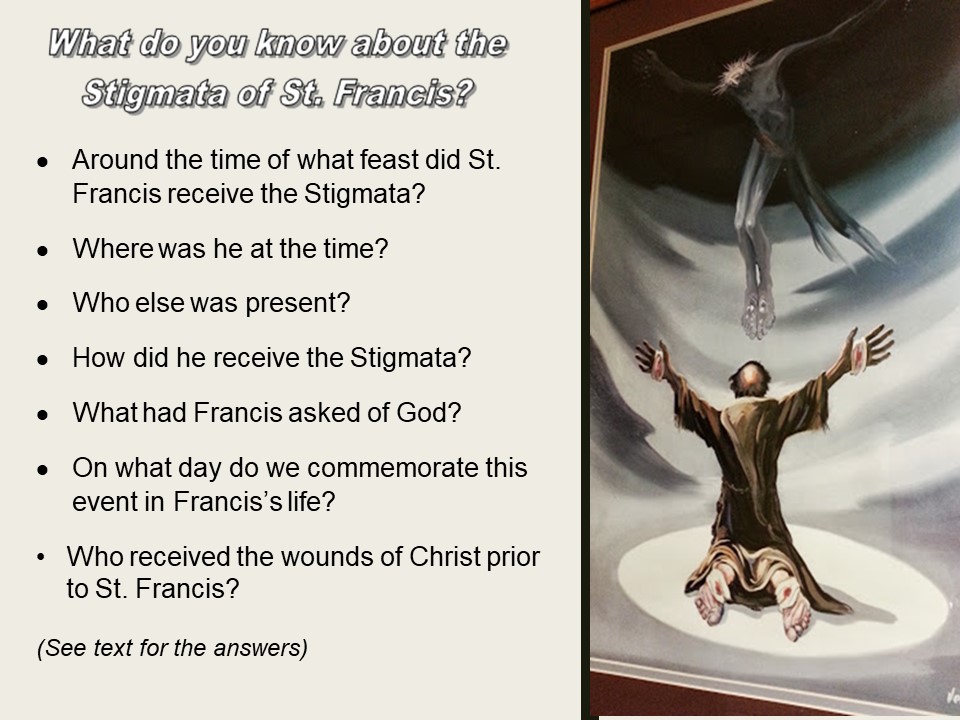
Formation Friday, September 15, 2023 (En español abajo)The Stigmata of St. Francis September 15th+ St. Francis received the Stigmata around the feast of the Triumph of the Holy Cross in September of 1224–two years before his death.+He was praying on Mt. La Verna preparing for the feast of St. Michael the Archangel. Brother Leo was nearby.+While praying, He asked God for two things. One, to let him experience the suffering Christ endured on the Holy Cross and two, for him to experience the love in which He did it.+ Shortly thereafter, Francis saw a Seraph with six wings. (Seraphs are angels of the highest order who are closest to God and most passionate in praising Him.) Between the wings was the image of a crucified man. When the vision disappeared, Francis was marked with the wounds of Christ. (St. Francis’s encounter with the Seraph and his passion in praising the Father has caused the Franciscan Order to be called the Seraphic Order and Francis our Seraphic Father.+ We celebrate the Feast of the Stigmata on September 17th+ St. Francis is the first person in recorded Christian history to receive the Stigmata.The Stigmata: Inspiration for our spiritual lives as FranciscansThe marks in our lives:–What does it mean to be marked?–What marks us in our lives?–As Catholics, how are we marked?–How do the things that mark us, help us to move forward in our spiritual lives?Now, Gaze at the Cross:–As we gaze at the wounds of Christ, what comes to mind?–As we consider what Jesus suffered for us, how do we respond?–As we contemplate Jesus’s willingness to die for us, what are we willing to do for our brothers and sisters?–As we imitate Jesus in our lives, how are we willing to use our lives in the service of others?Prayer to the Five Wounds of the Lord prayed by St. Clare of AssisiPrayer of Pope St. John Paul II (On a visit to Mt. La Verna in 1983)O St Francis, stigmatized on La Verna, the world longs for you, that icon of the crucified Jesus.It has need of your heart, open to God and to others; of your bare, wounded feet, of your pierced hands raised in supplication.It longs for your voice so frail yet forceful with the power of the Gospel.Francis, help the people of this age to recognize the evil of sin and to seek purification from it in penance.Help them to become free from the very structures of sin that oppress today’s society.Rekindle in the consciousness of those in government an urgent need for peace between nations and peoples.Instill in young people your freshness of life that is capable of withstanding the snares of the many cultures of death.To those injured by every type of evil teach, O Francis, the joy of being able to forgive.To all those crucified by suffering, hunger and war, reopen the doors of hope. Amen.+++++++++++++++++++++++Los estigmas de San Francisco+ San Francisco recibió los estigmas en torno a la fiesta del Triunfo de la Santa Cruz en septiembre de 1224, dos años antes de su muerte.+ Estaba orando en el monte La Verna preparándose para la fiesta de San Miguel Arcángel. El hermano Leo estaba cerca.+ Mientras oraba, le pidió a Dios dos cosas. Una, dejarle experimentar el sufrimiento que Cristo soportó en la Santa Cruz y dos, que experimentara el amor en el que lo hizo.+ Poco después, Francisco vio un Serafín con seis alas. (Los serafines son ángeles del orden más alto que están más cerca de Dios y más apasionados en alabarlo.) Entre las alas estaba la imagen de un hombre crucificado. Cuando la visión desapareció, Francisco quedó marcado con las llagas de Cristo. (El encuentro de San Francisco con el Serafín y su pasión por alabar al Padre ha hecho que la Orden Franciscana sea llamada Orden Seráfica y Francisco nuestro Seráfico Padre.+ Celebramos la Fiesta de los Estigmas el 17 de septiembre+ San Francisco es la primera persona en la historia cristiana registrada en recibir los estigmas.Los estigmas: inspiración para nuestra vida espiritual como franciscanosLas marcas en nuestras vidas:-¿Qué significa estar marcado?-¿Qué nos marca en nuestra vida?-Como católicos, ¿cómo estamos marcados?– ¿Cómo nos ayudan las cosas que nos marcan a avanzar en nuestra vida espiritual?Ahora, mirar la cruz:– Al contemplar las heridas de Cristo, ¿qué nos viene a la mente?-Al considerar lo que Jesús sufrió por nosotros, ¿cómo respondemos?-Al contemplar la disposición de Jesús a morir por nosotros, ¿qué estamos dispuestos a hacer por nuestros hermanos y hermanas?-Al imitar a Jesús en nuestra vida, ¿cómo estamos dispuestos a usar nuestra vida al servicio de los demás?Oración a las cinco llagas del Señor–oración de santa Clara de Asís (en inglés)Oración del Papa San Juan Pablo II (En una visita al Monte La Verna en 1983)Oh, San Francisco, estigmatizado en La Verna, el mundo te anhela, ese icono de Jesús crucificado.Necesita tu corazón, abierto a Dios ya los demás; de tus pies descalzos y heridos, de tus manos traspasadas alzadas en súplica.Anhela tu voz tan frágil pero contundente con el poder del Evangelio.Francisco, ayuda a la gente de esta época a reconocer la maldad del pecado y a buscar la purificación de él en la penitencia.Ayúdalos a liberarse de las mismas estructuras del pecado que oprimen a la sociedad actual.Reavivar en la conciencia de los gobernantes una urgente necesidad de paz entre naciones y pueblos.Inculca en los jóvenes tu frescura de vida que es capaz de resistir las trampas de las muchas culturas de la muerte.A los heridos por todo tipo de mal, enséñales, oh Francisco, la alegría de poder perdonar.A todos los crucificados por el sufrimiento, el hambre y la guerra, reabre las puertas de la esperanza. Amén.Diane F. Menditto, OFSVice Minister, National Fraternity, Secular Franciscan Order USAListen – Discern – Go Forth National Theme 2022-2025
Formation Friday – Handbook for Servant Leadership – September 8, 2023
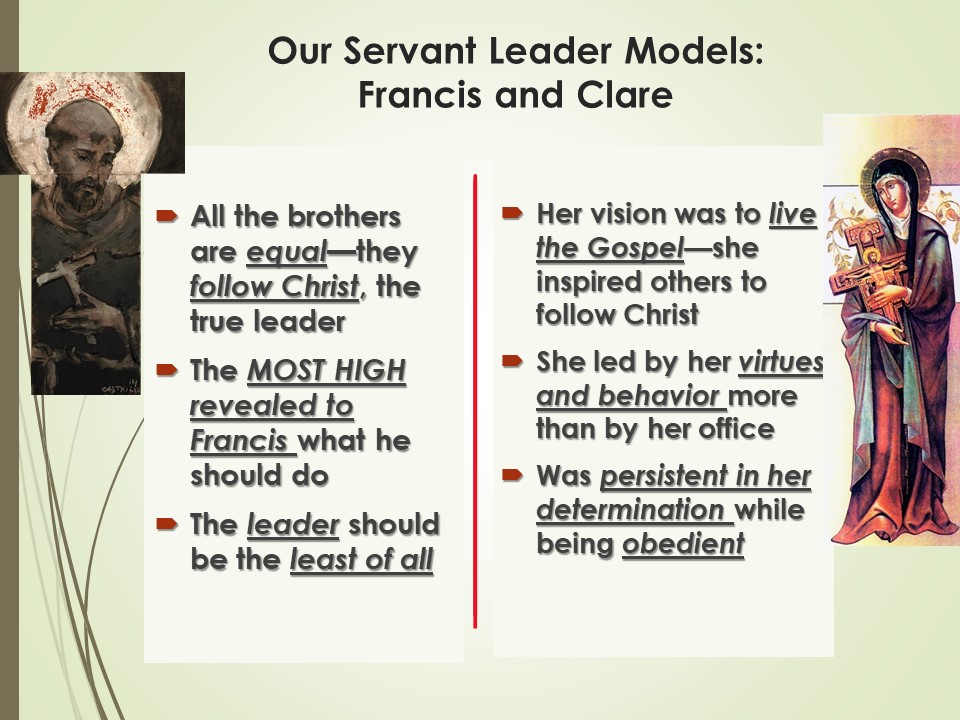
The Handbook for Servant Leadership, published by OFS-USA in 2010, contains a wealth of information that can guide us in being or becoming excellent servant leaders. For the next few weeks we will focus on various portions of that handbook. This week we are inspired by our models: Jesus, Francis and Clare. (See Handbook for Secular Franciscan Servant Leadership pp. 4-7)
Jesus as a leader: points to ponder
· Jesus tells us that “no pupil outranks his teacher” (Matthew 10:24).
o If we want to be followers, we must deny ourselves, take up our cross and follow (Luke 9 23).
o Through his strong appeal and quiet persuasion, he enlisted others in his mission.
· He was patient and attempted to foster collaboration among the disciples, binding them together through love and the Spirit.
· He prepared them to carry out his work.
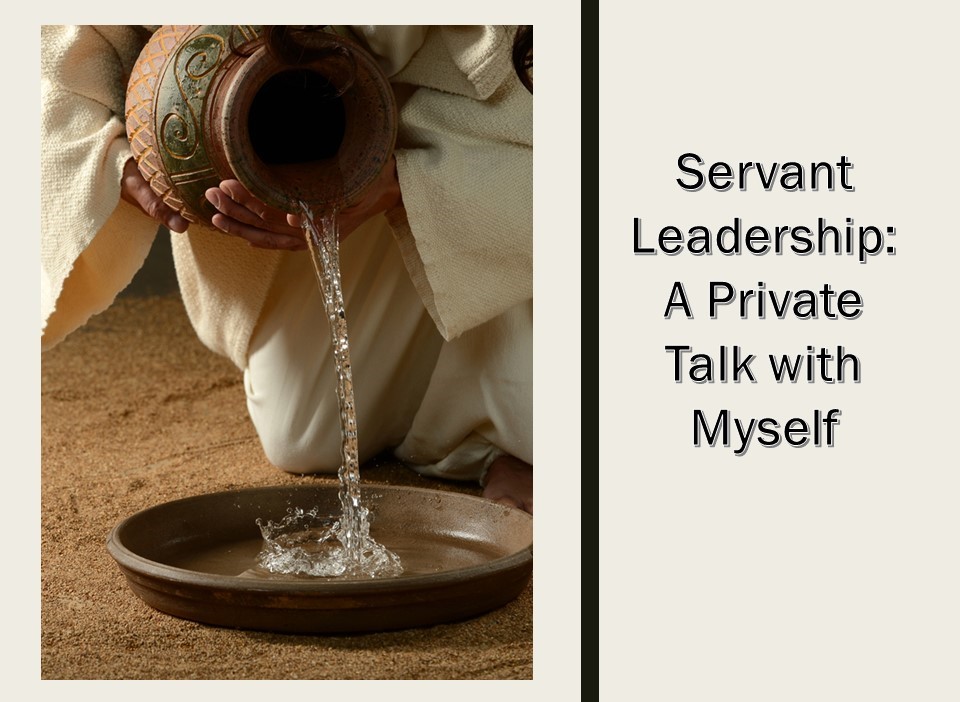
· He taught them the meaning of servant leadership. After washing their feet, he said, “What I just did was to give you an example: as I have done, so you must do” (John 13:15).
· He makes it clear that true leadership is grounded in love, which results in service
· Jesus did not have the whole future planned. He gave Peter and the Apostles the keys to the kingdom, allowing the Church to unfold through the leadership of committed people.
St. Francis as a servant leader: Points to ponder
· “And after the Lord gave me some brothers, no one showed me what I had to do, but the Most High Himself revealed to me that I should live according to the pattern of the Holy Gospel.” (The Testament of St. Francis FA:ED Vol 1 124 )
o The brothers are all equal. Everyone follows Jesus.
o The leader is the servant of all—washes the feet of the others.
· “We must never desire to be above others, but, instead, we must be servants and subject to every human creature for God’s sake.” (Later Admonition and Exhortation To the Brothers and Sisters of Penance FA: ED Vol 1 48)
· “Let no one be called superior but let everyone in general be called a lesser brother. And let one wash the feet of the other.” (St. Francis of Assisi, The Earlier Rule, VI:3-4).
· “Let the one to whom obedience has been entrusted and who is considered the greater be the lesser and the servant of the other brothers.”(St. Francis of Assisi, Later Admonition and Exhortation, FA:ED Vol 1 42)
· “I did not come to be served, but to serve, says the Lord. Let those who are placed over others boast about that position as much as they would if they were assigned the duty of washing the feet of their brothers.” (Admonition #4 FA:ED Vol 1 130)
St. Clare as a servant leader: Points to ponder
· “Let whoever is elected reflect upon the kind of burden she has undertaken on herself and to Whom she must render an account of the flock committed to her. Let her also strive to preside over the others more by her virtues and holy behavior than by her office, so that, moved by her example, the sisters may obey her more out of love than out of fear.” CA:ED, 114 (Form of Life)
· Clare never hesitated to work right alongside the sisters taking some of the more distasteful tasks for herself.
Questions for discussion in a group or with a partner or to answer in your journal:
+After reading the quotes above, what stands out to you as the leadership style of Jesus, Francis, and Clare?
+As a present or future servant leader, why is it important that we “wash the feet” of others?
+Which of the quotes above presents the greatest challenge to you?
+Challenge: This week take each of the quotes above to prayer. Ask the Holy Spirit to strengthen your skills as a present or future servant leader. Think about the service you can provide to your fraternity and to the Order.
++++++++++++++++++++++++++++++++++++++++++++++++++++++++++++
8 de septiembre de 2023 Por favor comparta con su fraternidad local.
El Manual para el liderazgo de servicio, publicado por OFS-USA en 2010, contiene una gran cantidad de información que puede guiarnos para ser o convertirnos en excelentes líderes servidores. Durante las próximas semanas nos enfocaremos en varias partes de ese manual. Esta semana nos inspiramos en nuestros modelos: Jesús, Francisco y Clara. (Ver Manual para el Liderazgo de Servicio Franciscano Seglar, págs. 4-7 en inglés)Jesús como líder: puntos para reflexionar
- Jesús nos dice que “ningún alumno supera en rango a su maestro” (Mateo 10:24).
- Si queremos ser seguidores, debemos negarnos a nosotros mismos, tomar nuestra cruz y seguir (Lucas 9, 23).
- Mediante su fuerte llamamiento y su silenciosa persuasión, consiguió que otros se unieran a su misión.
- Fue paciente e intentó fomentar la colaboración entre los discípulos, uniéndolos mediante el amor y el Espíritu.
- Los preparó para realizar su obra.
- Les enseñó el significado del liderazgo de servicio. Después de lavarles los pies, dijo: “Lo que acabo de hacer es darles ejemplo: como yo he hecho, así también ustedes hagan” (Juan 13:15).
- Deja claro que el verdadero liderazgo se basa en el amor, que resulta en servicio.
- Jesús no tenía todo el futuro planeado. Le dio a Pedro y a los Apóstoles las llaves del reino, permitiendo que la Iglesia se desarrollara a través del liderazgo de personas comprometidas.
San Francisco como líder servidor: puntos para reflexionar
- “Y después que el Señor me dio algunos hermanos, nadie me mostró lo que tenía que hacer, sino que el Altísimo mismo me reveló que debía vivir según el modelo del Santo Evangelio”. (El Testamento de San Francisco)
- Los hermanos son todos iguales. Todos siguen a Jesús.
- El líder es el servidor de todos: lava los pies de los demás.
- “Nunca debemos desear estar por encima de los demás, sino que debemos ser servidores y sujetos a toda criatura humana por amor de Dios”. (Admonición y exhortación posterior a los hermanos y hermanas de la Penitencia)
- “Nadie sea llamado superior, sino que todos, en general, sean llamados hermano menor. Y que uno lave los pies del otro”. (San Francisco de Asís, La Regla anterior, VI:3-4).
- “Aquel a quien se ha confiado la obediencia y es considerado mayor, sea el menor y el servidor de los demás hermanos.” ( San Francisco de Asís, Admonición y exhortación posteriores)
- “No vine a ser servido, sino a servir, dice el Señor. Que los que están por encima de los demás se jacten de esa posición tanto como lo harían si se les asignara el deber de lavar los pies de sus hermanos”. (Admonición #4)
Santa Clara como líder servidora : puntos para reflexionar
· “Quien sea elegida reflexione sobre el tipo de carga que ha asumido sobre sí misma y a quién debe rendir cuentas del rebaño que le ha sido encomendado. Procure también presidir a las demás más con sus virtudes y santa conducta que con su oficio, para que, movidas por su ejemplo, las hermanas la obedezcan más por amor que por temor”. (Forma de vida)
· Clare nunca dudó en trabajar junto a las hermanas, encargándose ella misma de algunas de las tareas más desagradables.
Preguntas para discutir en grupo o con un compañero o para responder en su diario:
+Después de leer las citas anteriores, ¿qué destaca para usted como el estilo de liderazgo de Jesús, Francisco y Clara?
+Como líder servidor actual o futuro, ¿por qué es importante que “lavemos los pies” de los demás?
+¿Cuál de las citas anteriores presenta el mayor desafío para usted?
+Desafío: Esta semana lleve cada una de las citas anteriores a la oración. Pídale al Espíritu Santo que fortalezca sus habilidades como líder servidor actual o futuro. Piense en el servicio que puede prestar a su fraternidad y a la Orden.
Diane F. Menditto, OFSVice Minister, National Fraternity, Secular Franciscan Order USAListen – Discern – Go Forth National Theme 2022-2025
Formation Friday – Handbook for Servant Leadership – September 1, 2023
The Handbook for Servant Leadership, published by OFS-USA in 2010, contains a wealth of information
that can guide us in being or becoming excellent servant leaders. For the next few weeks we will
focus on various portions of that handbook. We begin by preparing ourselves with an examination of
our servant leader conscience.A PRIVATE TALK WITH MYSELF
This private talk can be used to surface some of your inner feelings and give you an opportunity to
reflect upon your own thoughts and actions. Take a few minutes to answer each question and just jot
down a few words that will remind you of the thoughts and feelings that went through your head when
you were responding to each question.1. How often does my approach to another brother or sister in the fraternity result in reactions
different from those I intend? Does my brother or sister seem to be put off by my approach or does
he or she seem to back away from me and the situation? Why do I think this is so?2. When I have a problem with a brother or sister in the fraternity, how often do I stop to think
about my own actions and words? I may be contributing to the problem instead of to the solution. Do
I need to change in this respect? How?3. Do I tend to use labels and stereotypes as a substitute for seeking to understand? Do I look at
every fraternity brother and sister as an individual with unique talents and gifts, or do I become
angry because my brothers and sisters do not respond the way I think they should?4. How do I try to solve fraternity problems? Do I always want to fix everything myself and prevent
my brothers and sisters from becoming actively involved in the process of collaborative decision
making?5. Do I have a need to be in control and when things do not go according to my plans, do I have a
tendency to blame my brothers and sisters in the fraternity?6. Am I willing to talk with fraternity members about the impact their behavior has on other
brothers and sisters in the fraternity? Can I share this information with constructive intent, in
ways that minimize feelings of criticism and threat, and show concern for their feelings and needs?
What do I need to work on here?7. How open am I to receiving information about how my approaches affect my brothers and sisters in
the fraternity? How can I increase my opportunities for this kind of learning?8. What will I try to do differently next week and in the future in the way I relate to the
brothers and sisters in my fraternity? What changes will increase my effectiveness with other
fraternity members?9. How can I use my leadership skills to become a servant leader for my fraternity?
10. What specific steps am I going to take to help my fraternity solve its problems?For discussion in a group, with a partner, or to answer in your journal.
+ After thinking about each question above, which sets of questions did you find most challenging?
Why?
+ Which sets of questions did you answer that show you are or can be effective as a servant leader?
What are the characteristics that make you think this is true?
+ Which answers tell you that you have some work to do?
+ Challenge: Over the next several weeks, choose sets of questions that will help you to work on
your servant leadership style and skills. Carry out any necessary changes.+++++++++++++++++++++++++
1 de septiembre de 2023 Por favor, comparta con su fraternidad local
El Manual para el Liderazgo de Servicio, publicado por OFS-USA en 2010, contiene una gran cantidad
de información que puede guiarnos para ser o convertirnos en excelentes líderes de servicio.
Durante las próximas semanas nos enfocaremos en varias partes de ese manual. Comenzamos
preparándonos con un examen de nuestra conciencia de liderazgo de servicio.UNA CHARLA PRIVADA CONMIGO MISMO
Esta charla privada se puede utilizar para sacar a la superficie algunos de sus sentimientos
internos y darle la oportunidad de reflexionar sobre sus propios pensamientos y acciones. Tómese
unos minutos para responder a cada pregunta y simplemente anote algunas palabras que le recordarán
los pensamientos y sentimientos que pasaron por su mente cuando respondió a cada pregunta.1. ¿Con qué frecuencia mi acercamiento a otro hermano o hermana en la fraternidad resulta en
reacciones distintas de las que pretendo? ¿Mi hermano o hermana parece estar desanimado por mi
enfoque o él o ella parece alejarse de mí y de la situación? ¿Por qué creo que esto es así?2. Cuando tengo un problema con un hermano o hermana en la fraternidad, ¿con qué frecuencia me
detengo a pensar en mis propias acciones y palabras? Puedo estar contribuyendo al problema en lugar
de a la solución. ¿Necesito cambiar en este sentido? ¿Cómo?3. ¿Tiendo a usar etiquetas y estereotipos como sustituto de tratar de entender? ¿Veo a cada
hermano y hermana de la fraternidad como un individuo con talentos y dones únicos, o me enojo
porque mis hermanos y hermanas no responden de la manera que creo que deberían?4. ¿Cómo trato de resolver los problemas de la fraternidad? ¿Siempre quiero arreglar todo yo mismo
y evitar que mis hermanos y hermanas se involucren activamente en el proceso de toma de decisiones
colaborativa?5. ¿Tengo la necesidad de tener el control y cuando las cosas no salen de acuerdo con mis planes,
tengo una tendencia a culpar a mis hermanos y hermanas en la fraternidad?6. ¿Estoy dispuesto a hablar con los miembros de la fraternidad sobre el impacto que su
comportamiento tiene en otros hermanos y hermanas de la fraternidad? ¿Puedo compartir esta
información con intención constructiva, de manera que minimice los sentimientos de crítica y
amenaza, y muestre preocupación por sus sentimientos y necesidades? ¿En qué necesito trabajar aquí?7. ¿Qué tan abierto estoy a recibir información sobre cómo mis enfoques afectan a mis hermanos y
hermanas en la fraternidad? ¿Cómo puedo aumentar mis oportunidades para este tipo de aprendizaje?8. ¿Qué trataré de hacer de manera diferente la próxima semana y en el futuro en la forma en que me
relaciono con los hermanos y hermanas de mi fraternidad? ¿Qué cambios aumentarán mi efectividad con
otros miembros de la fraternidad?9. ¿Cómo puedo usar mis habilidades de liderazgo para convertirme en un líder servidor para mi
fraternidad?10. ¿Qué pasos específicos voy a tomar para ayudar a mi fraternidad a resolver sus problemas?
Para platicar en grupo, con un compañero o para responder en su diario.
+ Después de pensar en cada pregunta anterior, ¿qué conjuntos de preguntas le parecieron más
desafiantes?
¿Por qué?
+ ¿Qué conjuntos de preguntas respondió que muestran que es o puede ser eficaz como líder servidor?
¿Cuáles son las características que le hacen pensar que esto es cierto?
+ ¿Qué respuestas le dicen que tiene trabajo que hacer?
+ Desafío: Durante las próximas semanas, elija conjuntos de preguntas que lo ayudarán a trabajar en
su estilo y
habilidades de liderazgo de servicio. Realice los cambios necesarios.Diane F. Menditto, OFSVice Minister, National Fraternity, Secular Franciscan Order USAListen – Discern – Go Forth National Theme 2022-2025
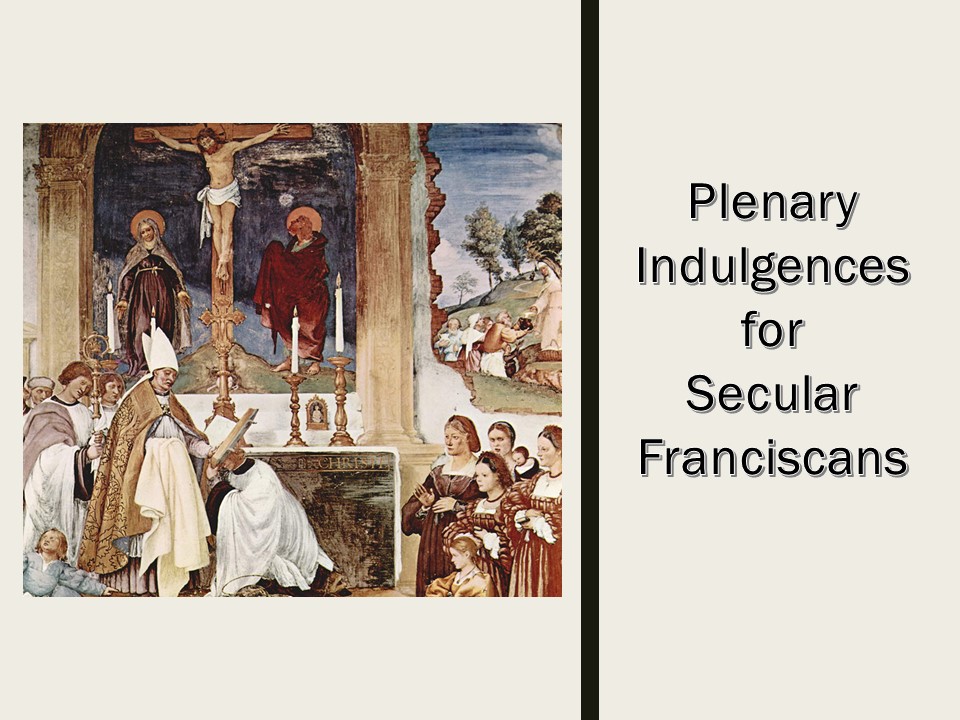
Formation Friday – Indulgences – August 25, 2023
Indulgences
A few weeks ago on August 2, many of us made the effort to visit a Franciscan church or our parish church to obtain the Porziuncola Indulgence. Did you know that as Secular Franciscans, we are eligible to receive a number of other indulgences? We thank Timothy Suspanic, OFS, from St. Kateri Tekawitha Region, for calling this to our attention. He gave us some background information and a list of indulgences special to the Secular Franciscan Order. (The Porziuncola indulgence is not on the list because it is open to everyone, not just OFS.)
Background: “Back in 1967 Pope Paul VI abolished all indulgences prior to that year and published a new Enchiridion (a precise reference book) of Indulgences with all those prayers and works indulgenced from that time forward. He also provided that if any Order, Congregation, Society had their own special indulgences, they should be requested anew. In 1972, the predecessor Council to the Presidency of the International Council requested them and they are in full force and effect to this day.”
Following are the request from the Presidency and the response listing the feast days on which we, as OFS, can receive a Plenary Indulgence:
Holy Father,
The Interobediental General Council (Prior name of the Presidency) of the Secular Third Order of Saint Francis of Assisi (OFS) humbly asks for a revision of the indulgences given by the Holy See to the members of the Secular Third Order, in accordance with the norms of the Apostolic Constitution «Indulgentiarum doctrina» of January 1, 1967, n. 14.
January 22, 1972 (Response received)
The Sacred Penitentiary, by virtue of the special and explicit faculties given by the Holy Father, benignly concedes a plenary Indulgence to the members mentioned above (OFS members), provided they make or renew, at least privately, their promise to observe faithfully the Statutes of their association [ In other words: To obtain the plenary indulgence, the members of the [SFO] OFS should renew their Promise of Evangelical Life (Profession of the [SFO] OFS Rule) in addition to confession, communion and prayer for the intentions of the Pope.]
1. on the day of their admission and of their profession, and at the conclusion of an official visitation;
2. on the feast-days of the Immaculate Conception of the Blessed Virgin Mary; Saint Francis of Assisi; Saint Louis, King; Saint Elizabeth; Blessed Luchesius; Saint Clare; Saint Margaret of Cortona and all the Saints of the Three Orders of Saint Francis.
The present decision will be in force immediately and perpetually, without any time limit. Anything to the contrary notwithstanding. Signed In name of his Eminency by G. Sessolo, Regent; M. Venturi, Secretary
Blessed Luchesius: April 28 Memorial;
Saint Margaret of Cortona: May 16 Feast;
Saint Clare: August 11 Feast;
Saint Louis, King: August 25 Feast;
Saint Francis of Assisi: October 4 Solemnity;
Saint Elizabeth: November 17 Feast;
All the Saints of the Three Orders of Saint Francis: November 29 Feast;
Immaculate Conception of the Blessed Virgin Mary: December 8 Solemnity
If you are interested in reading more about indulgences see:
https://www.scd.org/fatima100/plenary-indulgenceThis is a PDF of the entire 75-page Enchiridion (very interesting!)
http://www.freecatholicebooks.com/books/indulgences.pdf
Questions for discussion or to answer in your journal.
+Were you aware of the indulgences available to us as Secular Franciscans?
+Did you take advantage of the opportunity to receive the Porziuncola Indulgence? Why or why not?
+Of the Indulgences listed above, which ones do you plan to take advantage of?
++++++++++++++++++++++++++++++++++++++++++++++++++
25 de agosto de 2023 Comparta con su fraternidad local
indulgencias
Hace unas semanas, el 2 de agosto, muchos de nosotros hicimos el esfuerzo de visitar una iglesia franciscana o nuestra parroquia para obtener la Indulgencia de la Porciúncula. ¿Sabía que, como franciscanos seglares, somos elegibles para recibir otras indulgencias? Agradecemos a Timothy Suspanic , OFS, de la región de St. Kateri Tekawitha, por llamarnos la atención sobre esto. Nos dio algunos antecedentes y una lista de indulgencias especiales para la Orden Franciscana Seglar. (La indulgencia de la Porciúncula no está en la lista porque está abierta a todos, no solo a OFS).
Antecedentes: “En 1967, el Papa Pablo VI abolió todas las indulgencias anteriores a ese año y publicó un nuevo Enchiridion (un libro de referencia preciso) de Indulgencias con todas aquellas oraciones y obras indulgenciadas desde ese momento en adelante. También dispuso que si alguna Orden, Congregación, Sociedad tuviera sus propias indulgencias especiales, se deberían pedir de nuevo. En 1972, el Consejo predecesor a la Presidencia del Consejo Internacional los solicitó y están en pleno vigor y efecto hasta el día de hoy”.
A continuación se encuentra la solicitud de la Presidencia y la respuesta que enumera los días festivos en los que nosotros, como OFS, podemos recibir una indulgencia plenaria:
Padre Santo,
El Consejo General Interobediencial (nombre anterior de la Presidencia) de la Tercera Orden Seglar de San Francisco de Asís (OFS) pide humildemente la revisión de las indulgencias concedidas por la Santa Sede a los miembros de la Tercera Orden Seglar, de acuerdo con las normas de la Constitución Apostólica «Indulgentiarum doctrina» del 10 de enero de 1967, n. 14
22 de enero de 1972 (Respuesta recibida)
La Sagrada Penitenciaría, en virtud de las facultades especiales y explícitas dadas por el Santo Padre, concede benignamente una Indulgencia plenaria a los miembros antes mencionados (miembros de la OFS), siempre que hagan o renueven, al menos en privado, su promesa de observar fielmente los Estatutos. de su asociación [ En otras palabras: Para obtener la indulgencia plenaria, los miembros de la [OFS] OFS deben renovar su Promesa de Vida Evangélica (Profesión de la [OFS] Regla OFS) además de la confesión, comunión y oración por las intenciones del Papa.]
1. en el día de su admisión y de su profesión, y al final de una visita oficial;
2. en las fiestas de la Inmaculada Concepción de la Santísima Virgen María; San Francisco de Asís; San Luis, Rey; Santa Isabel; Beato Luchesio ; Santa Clara; Santa Margarita de Cortona y todos los Santos de las Tres Órdenes de San Francisco.
La presente decisión tendrá vigencia inmediata y perpetua, sin límite de tiempo. No obstante cualquier disposición en contrario. Firmado en nombre de Su Eminencia por G. Sessolo , Regente; M. Venturi, Secretario
Beato Luchesius : Memoria del 28 de abril;
Santa Margarita de Cortona: Fiesta del 16 de mayo;
Santa Clara: Fiesta del 11 de agosto;
San Luis, Rey: 25 de Agosto Fiesta;
San Francisco de Asís: 4 de octubre Solemnidad;
Santa Isabel: Fiesta del 17 de noviembre;
Todos los Santos de las Tres Órdenes de San Francisco: 29 de noviembre Fiesta;
Inmaculada Concepción de la Santísima Virgen María: Solemnidad del 8 de diciembre
Si está interesado en leer más sobre las indulgencias , consulte:
Este PDF es de todo el Enchiridion en español (¡muy interesante!)
https://www.santateresadejesus.com/wp-content/uploads/Manual-de-Indulgencias.pdf
Preguntas para debatir o para responder en tu diario.
+¿Estaba al tanto de las indulgencias disponibles para nosotros como franciscanos seglares?
+¿Aprovechaste la oportunidad de recibir la Indulgencia de la Porciúncula? ¿Por qué o por qué no?
+De las indulgencias enumeradas anteriormente, ¿cuáles piensa aprovechar?
Diane F. Menditto, OFSVice Minister, National Fraternity, Secular Franciscan Order USAListen – Discern – Go Forth National Theme 2022-2025
