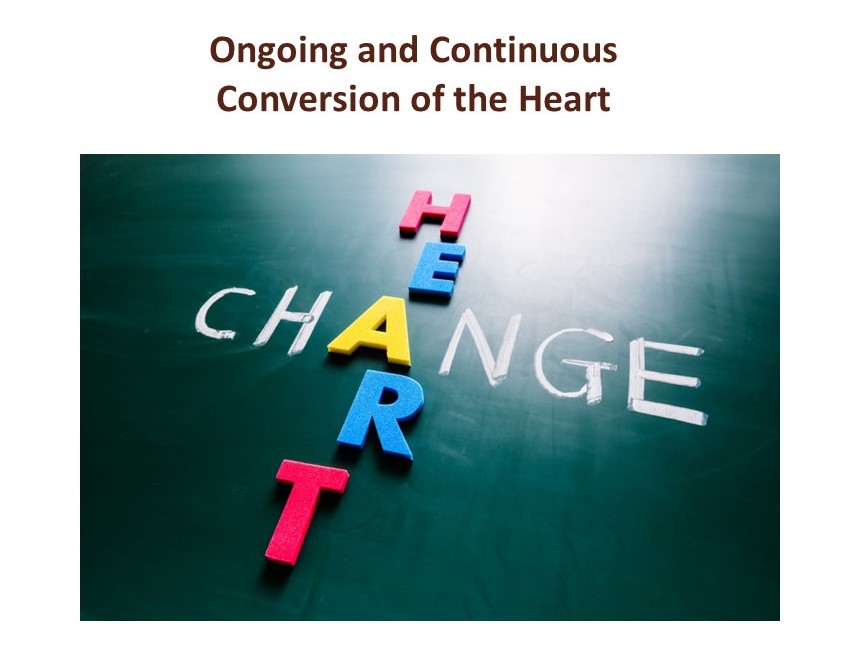
We have interrupted our series on the Rule with commentary for some Lenten inspiration. We publish the resources below each year in hopes that they will help everyone to focus on penance and conversion, so important in the life of a Secular Franciscan.
Thank you to the National Formation Commission for collaborating on this piece.
The Conversion Process: Ongoing and continuous conversion of the heart
For each week of Lent focus on one action item below that you would like to cultivate in a special way as part of your Lenten journey.
1. Make an act of reparation or a modification of behavior to show sorrow for sin.
2. Be willing to recognize and accept suffering as the consequence of separating myself from God. (Offer sufferings for the benefit of others.)
3. Commit to a plan for prayer, fasting, almsgiving. (See: Joel 2:12-18)
4. Intentionally evangelize a lukewarm or nonbeliever.
5. Ask the Holy Spirit to make me aware of a specific moral shortcoming and for the grace to change.
6. Consciously live the Beatitudes.
7. Seek personal conversion through deeper prayer.
8. Radically commit to the Gospel life centered on the person of Jesus.
9. Savor God’s mercy, experiencing the love of God which unceasingly calls us back to Himself.
10. Accept myself as I am now and strive to reach a deeper level of conversion.
11. Journal on my spiritual journey made up of failures and falls and also made up of new beginnings, new discoveries.
12. Use St. Francis’s paraphrase of the Lord’s Prayer for meditation.
https://www.franciscantradition.org/francis-of-assisi-early-documents/the-saint/writings-of-francis/the-undated-writings/a-prayer-inspired-by-the-our-father/174-fa-ed-1-page-158
Questions for discussion or to answer in your journal.
+Explain how you plan to carry out the items you chose from the list above.
+Which of all the statements above might be most beneficial to your personal conversion?
+Which of the statements are the most challenging for you?
++++++++++++++++++++
Formación 9 de febrero, 2024 (Por favor compartir con la fraternidad local)
El proceso de conversión: La conversión continua y permanente del corazón
Interrumpimos nuestra serie sobre la Regla y el comentario para inspirarnos en la Cuaresma. Esperamos que los recursos a continuación que publicamos cada año ayuden a todos a centrarse en la penitencia y la conversión, tan importantes en la vida de un franciscano seglar.
Gracias a la Comisión Nacional de Formación por colaborar en esta pieza.
Para cada semana de Cuaresma, concéntrese en un elemento de acción a continuación que le gustaría cultivar de una manera especial como parte de su jornada de Cuaresma.
1. Hacer un acto de reparación o una modificación de comportamiento para mostrar dolor por el pecado.
2. Estar dispuesto a reconocer y aceptar el sufrimiento como consecuencia de separarse de Dios. (Ofrezca sufrimientos en beneficio de otros).
3. Comprometerse a un plan de oración, ayuno, limosna. (Ver: Joel 2: 12-18)
4. Evangelizar intencionalmente a un tibio o no creyente.
5. Pídale al Espíritu Santo que lo haga consciente de una deficiencia moral específica y que tenga la gracia de cambiar.
6. Viva conscientemente las Bienaventuranzas.
7. Busque la conversión personal a través de una oración más profunda.
8. Comprometerse radicalmente con la vida evangélica centrada en la persona de Jesús.
9. Saborear la misericordia de Dios, experimentar el amor de Dios que incesantemente nos llama a Él.
10. Aceptarme tal como soy ahora y esforzarme por alcanzar un nivel más profundo de conversión.
11. Escribir un diario sobre mi jornada espiritual compuesto de fracasos y caídas y también compuesto de nuevos comienzos, nuevos descubrimientos.
12. Utilizar la paráfrasis de San Francisco del Padre Nuestro para la meditación.
http://franciscanos.org/esfa/exppn.html
Preguntas para platicar o para responder en su diario.
+ Explique cómo planea realizar los elementos que eligió de la lista anterior.
+ ¿Cuál de todas las declaraciones anteriores podría ser más beneficiosa para su conversión personal?
+ ¿Cuáles de las afirmaciones son las más desafiantes para usted?
Diane F. Menditto, OFSVice Minister, National Fraternity, Secular Franciscan Order USAListen – Discern – Go Forth National Theme 2022-2025form
Category: Formation Friday

Formation Friday – Rule of OFS, Chapter 2, Arts 4-5, – February 2, 2024
The OFS-USA National Fraternity has recently published “From Gospel to Life,” the OFS Rule with Commentary. This occasional series highlights the Prologue (See November 17th and 24th) and the articles of the Rule, the commentary, and questions based on this publication for fraternity discussion. You may order “Gospel to Life” at this link: https://www.secularfranciscansusa.org/wp-content/uploads/Order-Form_October_2023rev.pdf
Rule of the Secular Franciscan Order
Chapter 2 Articles 4-5Article 4: The rule and life of the Secular Franciscans is this: to observe the gospel of our Lord Jesus Christ by following the example of Saint Francis of Assisi, who made Christ the inspiration and the center of his life with God and people.6
Christ the gift of the Father’s love, is the way to him, the truth into which the Holy Spirit leads us, and the life which he has come to give abundantly.7
Secular Franciscans should devote themselves especially to careful reading of the gospel, going from gospel to life and life to the gospel.8
Article 5: Secular Franciscans, therefore, should seek to encounter the living and active person of Christ in their brothers and sisters, in Sacred Scripture, in the Church, and in liturgical activity. The faith of Saint Francis, who often said, “I see nothing bodily of the Most High Son of God in this world except his most holy body and blood,”9 should be the inspiration and pattern of their eucharistic life.
Commentary:
The second chapter of the rule is a thorough and detailed description of the Secular Franciscan way of life. The first part (4–6) gives the meaning of the gospel in the Franciscan tradition. Then conversion and worship are explained as the necessary preconditions for achieving this gospel life (7–8). Finally, 9–19 describe the manner of sharing the Good News of Jesus Christ by how the Secular Franciscans live (10–14) and what they do (15–19). In the light of Scripture and the teachings of Vatican II, this chapter is envisioned as a program for evangelization: how we ourselves are evangelized after the manner of Francis and secondly how we evangelize others.
Article 4: Summarizes the heart of the rule: the very core of the gospel life in intimate union with Christ, or, in the words of St. Paul, “the life I live now is not my own; Christ is living in me” (Gal 3:20). And so, the Secular Franciscan, alive with the spirit of Francis, knows and experiences the Lord Jesus intensely, binding one’s own person with the person of Christ.
Article 5. As the process develops, then the Secular Franciscan seeks out the living and active person of Christ in all spheres of life: liturgical activity (especially the Eucharist), Scripture, Church, and one another (5). Since the sacrificial union with Christ is the most intense and comprehensive experience of his real presence, the celebration becomes the key encounter, as patterned by Francis himself.
For discussion with a partner, in a group, or to comment on in your journal:
+Re-read article 4 and the commentary:
–How is Jesus the “inspiration and center of your life?”
–Explain the meaning of “going from gospel to life and life to the gospel.”
–Challenge yourself to read a portion of the gospel each day—perhaps the gospel of the daily mass. After some time, reflect on how it has influenced your daily life. Has it changed you at all? Why or why not?
+Re-read article 5 and the commentary:
–When do you find it most difficult to see the “living and active person of Christ” in your brothers and sisters? How do you deal with this?
–What is your relationship with the Eucharist? (The answer to this may require much prayer and silence before the Blessed Sacrament.)
Formación 2 de febrero, 2024 Por favor, comparta con su fraternidad local
La Fraternidad Nacional OFS-USA ha publicado recientemente “Del Evangelio a la Vida”, la Regla de la OFS con comentario. (Publicada en inglés y español) Esta serie ocasional que destacará el Prólogo (véase 17 y 24 de noviembre) y varios artículos de la Regla, el comentario y las preguntas para la discusión de la fraternidad. Se puede pedir “Evangelio a la vida” en español en este enlace:
https://www.secularfranciscansusa.org/wp-content/uploads/Order-Form_October_2023rev.pdf
Artículo 4: La Regla y la vida de los Franciscanos seglares es ésta: guardar el santo Evangelio de nuestro Señor Jesucristo siguiendo el ejemplo de San Francisco de Asís, que hizo de Cristo el inspirador y centro de su vida con Dios y con los hombres6.
Cristo, don del amor del Padre, es el camino hacia Él, es la verdad en la cual nos introduce el Espíritu Santo, es la vida que Él ha venido a dar abundantemente7.
Los Franciscanos seglares dedíquense asiduamente a la lectura del Evangelio, pasando del Evangelio a la vida y de la vida al Evangelio8.
Artículo 5: Los Franciscanos seglares, pues, busquen la persona viviente y operante de Cristo en los hermanos, en la Sagrada Escritura, en la Iglesia y en las acciones litúrgicas. La fe de San Francisco que dictó estas palabras: “En este mundo nada veo corporalmente del mismo Altísimo Hijo de Dios sino su santísimo cuerpo y sangre,”9 sea para ellos inspiración y guía de su vida eucarística.
Comentario
El segundo capítulo de la regla es una descripción completa y detallada del modo de vida de los franciscanos seglares. La primera parte (4-6) da el significado del evangelio en la tradición franciscana. Luego, la conversión y la adoración se explican como las condiciones previas necesarias para lograr esta vida evangélica (7–8). Finalmente, 9–19 describen la manera de compartir la Buena Nueva de Jesucristo por cómo viven los franciscanos seglares (10–14) y lo que hacen (15– 19). A la luz de las Escrituras y las enseñanzas del Vaticano II, este capítulo se concibe como un programa para la evangelización: cómo nosotros mismos somos evangelizados a la manera de Francisco y, en segundo lugar, cómo evangelizamos a los demás.
El artículo 4 resume el corazón de la regla: el núcleo mismo de la vida evangélica en unión íntima con Cristo, o, en las palabras de San Pablo, «la vida que vivo ahora no es la mía; Cristo vive en mí» (Gál 3,20). Y así, el franciscano seglar, vivo del espíritu de Francisco, conoce y experimenta intensamente al Señor Jesús, vinculando la propia persona con la persona de Cristo.
Artículo 5: A medida que se desarrolla el proceso, el franciscano seglar busca a la persona viva y activa de Cristo en todas las esferas de la vida: la actividad litúrgica (especialmente la Eucaristía), la Escritura, la Iglesia y entre sí (5). Dado que la unión sacrificial con Cristo es la experiencia más intensa y completa de su presencia real, la celebración se convierte en el encuentro clave, como lo modeló el mismo Francisco.
Para discutir con un compañero, en un grupo o para comentar en su diario:
+Vuelva a leer el artículo 4 y el comentario:
–¿Cómo es Jesús la “inspiración y el centro de su vida”?
–Explique el significado de “pasar del evangelio a la vida y de la vida al evangelio”.
–Desafíese a leer una porción del evangelio cada día, tal vez el evangelio de la misa del día. Después de un tiempo, reflexione sobre cómo ha influido en su vida diaria. ¿Le ha cambiado en algo? ¿Por qué sí o por qué no?
+Releer el artículo 5 y el comentario:
–¿Cuándo le resulta más difícil ver la “persona viva y activa de Cristo” en sus hermanos y hermanas? ¿Cómo trata con esto?
–¿Cuál es su relación con la Eucaristía? (La respuesta a esta pregunta puede requerir mucha oración y silencio ante el Santísimo Sacramento).
Diane F. Menditto, OFSVice Minister, National Fraternity, Secular Franciscan Order USAListen – Discern – Go Forth National Theme 2022-2025
Formation Friday – From Gospel to Life” – January 26, 2024
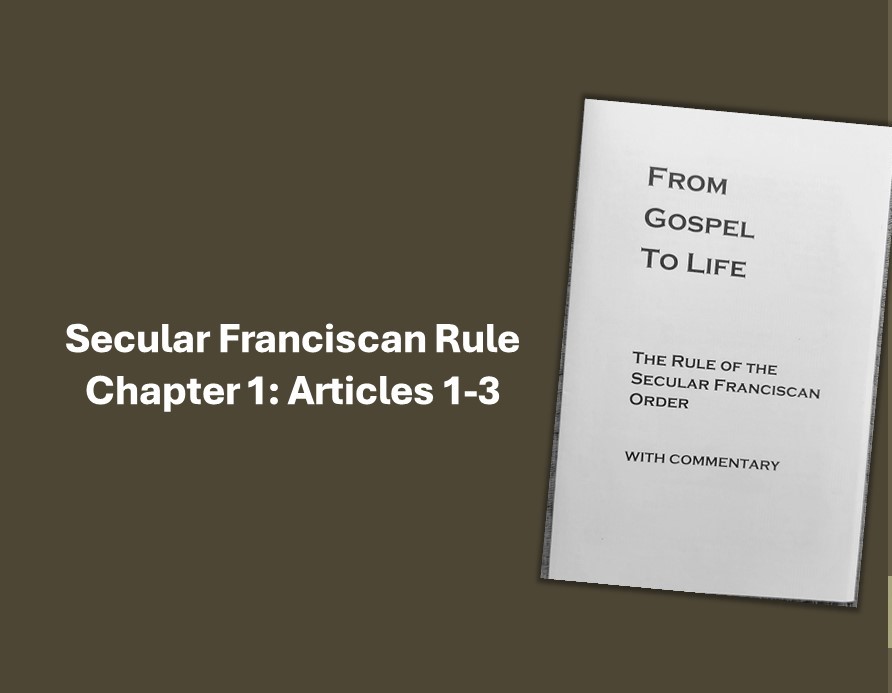
The OFS-USA National Fraternity has recently published “From Gospel to Life,” the OFS Rule with Commentary. This occasional series highlights the Prologue (See November 17th and 24th) and the articles of the Rule, the commentary, and questions based on this publication for fraternity discussion. You may order “Gospel to Life” at this link: https://www.secularfranciscansusa.org/wp-content/uploads/Order-Form_October_2023rev.pdf
Rule of the Secular Franciscan Order
Chapter 1 Articles 1-3Article 1: The Franciscan family, as one among many spiritual families raised up by the Holy Spirit in the Church, unites all members of the people of God – laity, religious, and priests – who recognize that they are called to follow Christ in the footsteps of St. Francis of Assisi.
In various ways and forms but in life-giving union with each other, they intend to make present the charism of their common Seraphic Father in the life and mission of the Church.
Article 2- The Secular Franciscan Order holds a special place in this family circle. It is an organic union of all Catholic fraternities scattered throughout the world and open to every group of the faithful. In these fraternities the brothers and sisters, led by the Spirit, strive for perfect charity in their own secular state. By their profession they pledge themselves to live the gospel in the manner of St. Francis by means of this rule approved by the Church.
Article 3: The present rule, succeeding “Memoriale propositi” (1221) and the rules approved by the Supreme Pontiffs Nicholas IV and Leo XIII, adapts the Secular Franciscan Order to the needs and expectations of the Holy Church in the conditions of changing times. Its interpretation belongs to the Holy See and its application will be made by the General Constitutions and particular statutes.
Commentary
Article 1– This first chapter details the place of the Secular Franciscan Order in the Church, the Franciscan Family, and in the history of the Order itself.
The first paragraph shows how the Franciscan Family, as one of the many spiritual families in the Church, is united with all the people of God by the call of the Holy Spirit and the following of Jesus Christ. Still, in addition to this, the way of Francis gives the Franciscan Family, with its common charism but varied expressions, a distinctive cast, as it strives for holiness and binds together the laity, religious, and clergy in the life and mission of the Church.
Article 2- The second paragraph identifies the Secular Franciscan Order as a vital part of the whole family of Francis and points out its special secular character. It also stresses that all the necessary prerequisites are present to make it an official Order within the Catholic Church.
Article 3- The continuity with past rules, its influence in today’s world, and its approval by the Church are discussed in this third paragraph. This rule is the fourth expression in eight centuries. It makes the unchanging principles of Franciscan gospel living applicable and relevant today. The leaders of the Church constantly guide this movement from gospel to life.
For discussion with a partner, small group, or to comment on in your journal:
+As a professed member (or candidate) in the Secular Franciscan Order, in what ways do you feel that you are a member of the Franciscan Family?
+What is “special” about being a Secular Franciscan?
+What is the significance of the Rule in YOUR life as a Secular Franciscan? Give examples.
Formación 26 de enero, 2024 Por favor, comparta con su fraternidad local
La Fraternidad Nacional OFS-USA ha publicado recientemente “Del Evangelio a la Vida”, la Regla de la OFS con comentario. (Publicada en inglés y español) Esta serie ocasional que destacará el Prólogo (véase 17 y 24 de noviembre) y varios artículos de la Regla, el comentario y las preguntas para la discusión de la fraternidad. Se puede pedir “Evangelio a la vida” en español en este enlace:
https://www.secularfranciscansusa.org/wp-content/uploads/Order-Form_October_2023rev.pdf
Regla de la Orden franciscana seglar
Capítulo 1: Artículos 1-3
Artículo 1- Entre las familias espirituales, suscitadas por el Espíritu Santo en la Iglesia2, la familia Franciscana comprende a todos aquellos miembros del Pueblo de Dios, laicos, religiosos y sacerdotes, que se sienten llamados al seguimiento de Cristo, tras las huellas de San Francisco de Asís3. En maneras y formas diversas, pero en recíproca comunión vital, todos ellos se proponen hacer presente el carisma del común Seráfico Padre en la vida y en la misión de la Iglesia4.
Artículo 2- En el seno de dicha familia, tiene un puesto peculiar la Orden Franciscana Seglar, la cual se configura como una unión orgánica de todas las fraternidades católicas esparcidas por el mundo entero y abiertas a todo grupo de fieles, en las cuales los hermanos y las hermanas, impulsados por el Espíritu a alcanzar la perfección de la caridad en su estado seglar, se comprometen con la Profesión a vivir el Evangelio a la manera de San Francisco con la ayuda de la presente Regla confirmada por la Iglesia5.
Artículo 3- Esta Regla, después del “Memoriale propositi” (1221) y de las Reglas aprobadas por los Sumos Pontífices Nicolás IV y León XIII, adapta la Orden Franciscana Seglar a las exigencias y a las esperanzas de la santa Iglesia, en las nuevas condiciones de los tiempos. Su interpretación corresponde a la Santa Sede y su aplicación será hecha por las Constituciones Generales y los Estatutos particulares.
Comentario
Artículo 1– Este primer capítulo detalla el lugar de la Orden Franciscana Seglar en la Iglesia, la Familia Franciscana y en la historia de la Orden misma.
El primer párrafo muestra cómo la Familia Franciscana, como una de las muchas familias espirituales de la Iglesia, está unida a todo el pueblo de Dios por el llamado del Espíritu Santo y el seguimiento de Jesucristo. Sin embargo, además de esto, el camino de Francisco da a la Familia Franciscana, con su carisma común pero con variadas expresiones, un molde distintivo, ya que se esfuerza por la santidad y une a los laicos, religiosos y clérigos en la vida y misión de la Iglesia
Artículo 2– El segundo párrafo identifica a la Orden Franciscana Seglar como una parte vital de toda la familia de Francisco y señala su carácter secular especial. También destaca que están presentes todos los requisitos previos necesarios para que sea una Orden oficial dentro de la Iglesia Católica.
Artículo 3- La continuidad con las normas pasadas, su influencia en el mundo actual y su aprobación por la Iglesia se tratan en este tercer párrafo. Esta regla es la cuarta expresión en ocho siglos. Hace que los principios inmutables de vivir el evangelio franciscano sean aplicables y relevantes hoy. Los líderes de la Iglesia guían constantemente este movimiento del evangelio a la vida.
Para discutir con un compañero, en un grupo pequeño, o para comentar en su diario:
+Como miembro profeso (o candidato) de la Orden Franciscana Seglar, ¿de qué manera se siente miembro de la familia franciscana?
+¿Qué tiene de “especial” ser franciscano seglar?
+¿Cuál es el significado de la Regla en SU vida como franciscano seglar? Dar ejemplos.
Diane F. Menditto, OFSVice Minister, National Fraternity, Secular Franciscan Order USAListen – Discern – Go Forth National Theme 2022-2025
Formation Friday, Focus on the Admonitions – January 19, 2024
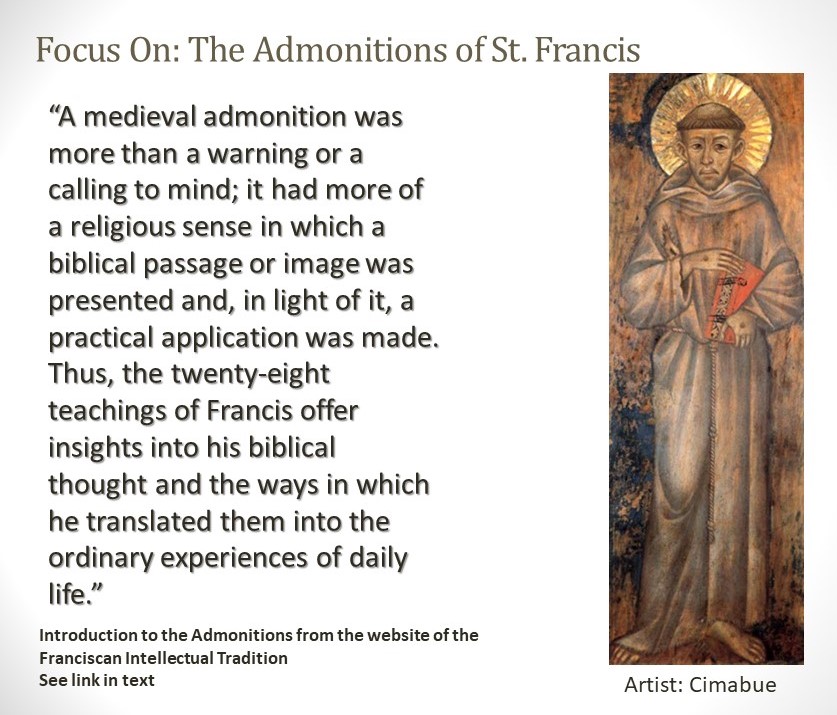
Focus on the Admonitions (#2 and #3)
https://franciscantradition.org/francis-of-assisi-early-documents/the-saint/writings-of-francis/the-undated-writings/the-admonitions/145-fa-ed-1-page-129[II. The Evil of Self-Will]b
1The Lord said to Adam: Eat of every tree; you may not eat, however, of the tree of the knowledge of good and evil. Gn 2:16 Gn 2:17
2He was able to eat of every tree of paradise, because he did not sin as long as he did not go against obedience. 3For that person eats of the tree of the knowledge of good who makes his will his own and, in this way, exalts himself over the good things the Lord says and does in him. 4And so, through the suggestion of the devil and the transgression of the command, it became the apple of the knowledge of evil. 5Therefore it is fitting that he suffer the punishment.
[III. Perfect Obedience]
1The Lord says in the Gospel: Whoever does not renounce all that he possesses cannot be my disciple; Lk 14:33 2and: Whoever wishes to save his life must lose it. Lk 9:24
3That person who offers himself totally to obedience in the hands of his prelate leaves all that he possesses and loses his body.a 4And whatever he does and says which he knows is not contrary to his will is true obedience, provided that what he does is good.
5And should a subject see that some things might be better and more useful for his soul than what a prelate commands, let him willingly offer such things to God as a sacrifice; and, instead, let him earnestly strive to fulfill the prelate’s wishes. 6For this is loving obedience because it pleases God and neighbor. 1 Pt 1:22
7If the prelate, however, commands something contrary to his conscience, even though he may not obey him, let him not, however, abandon him. 8And if he then suffers persecution from others, let him love them all the more for the sake of God. 1 Jn 3:15 1 Jn 3:16 9For whoever chooses to suffer persecution rather than wish to be separated from his brothers truly remains in perfect obedience because he lays down his life for his brothers. Jn 15:13 10In fact, there are many religious who, under the pretext of seeing things better than those which the prelate commands, look back, Lk 9:62 and return to the vomit Prv 26:11 of their own will. 11These people are murderers 2 Pt 2:22 and, because of their bad example, cause many to lose their souls
Questions to discuss or to comment on in your journal.
+ Come, Holy Spirit! Open my mind and heart as I contemplate Admonition II.
–As Secular Franciscans, we do not promise “obedience” as such. However, how does sacrificing our own will help us to live out our Rule?
–When do I have the most difficulty following the directives of my lawful superiors?+ Come, Holy Spirit! Open my mind and heart as I contemplate Admonition III.
–How is obedience related to simplicity and humility?
–What are some ways that I can seek to have a well-informed conscience?
–How does having trust in the Lord help me to let go of my own will?
Formación: 19 de enero de 2024
Enfoque en las admoniciones de San Francisco (Admoniciones II y III)
Cap. II: Del mal de la propia voluntad
1Dijo el Señor a Adán: Come de todo árbol, pero del árbol de la ciencia del bien y del mal no comas (cf. Gén 2,16.17). 2Podía comer de todo árbol del paraíso, porque, mientras no contravino a la obediencia, no pecó. 3Come, en efecto, del árbol de la ciencia del bien, aquel que se apropia su voluntad y se enaltece del bien que el Señor dice y obra en él; 4y así, por la sugestión del diablo y la transgresión del mandamiento, vino a ser la manzana de la ciencia del mal. 5De donde es necesario que sufra la pena.
Cap. III: De la perfecta obediencia
1Dice el Señor en el Evangelio: El que no renuncie a todo lo que posee, no puede ser discípulo mío (Lc 14,33); 2y: El que quiera salvar su vida, la perderá (Lc 9,24). 3Deja todo lo que posee y pierde su cuerpo el hombre que se ofrece a sí mismo todo entero a la obediencia en manos de su prelado. 4Y todo lo que hace y dice que él sepa que no es contra la voluntad del prelado, mientras sea bueno lo que hace, es verdadera obediencia. 5Y si alguna vez el súbdito ve cosas mejores y más útiles para su alma que aquellas que le ordena el prelado, sacrifique voluntariamente sus cosas a Dios, y aplíquese en cambio a cumplir con obras las cosas que son del prelado. 6Pues ésta es la obediencia caritativa (cf. 1 Pe 1,22), porque satisface a Dios y al prójimo.
7Pero si el prelado le ordena algo que sea contra su alma, aunque no le obedezca, sin embargo no lo abandone. 8Y si a causa de eso sufriera la persecución de algunos, ámelos más por Dios. 9Pues quien sufre la persecución antes que querer separarse de sus hermanos, verdaderamente permanece en la perfecta obediencia, porque da su vida (cf. Jn 15,13) por sus hermanos. 10Pues hay muchos religiosos que, so pretexto de que ven cosas mejores que las que les ordenan sus prelados, miran atrás (cf. Lc 9,62) y vuelven al vómito de la propia voluntad (cf. Prov 26,11; 2 Pe 2,22); 11éstos son homicidas y, a causa de sus malos ejemplos, hacen que se pierdan muchas almas.
https://www.franciscanos.org/esfa/escritossf.html#adm
Preguntas para platicar o responder en su diario
+ ¡Ven, Espíritu Santo! Abre mi mente y corazón mientras contemplo la Admonición II.
— Como franciscanos seglares, no prometemos “obediencia” como tal. Sin embargo, ¿cómo el sacrificio de nuestra propia voluntad nos ayudará a vivir nuestra Regla?
–¿Cuándo tengo más dificultades para seguir las directivas de mis superiores legales?+ ¡Ven, Espíritu Santo! Abre mi mente y mi corazón mientras contemplo la Admonición III.
— ¿Cómo se relaciona la obediencia con la sencillez y la humildad?
–¿Cuáles son algunas de las formas en las que puedo buscar para tener una conciencia bien informada?
— ¿Cómo me ayuda el tener confianza en el Señor a dejar ir mi propia voluntad?
Diane F. Menditto, OFSVice Minister, National Fraternity, Secular Franciscan Order USAListen – Discern – Go Forth National Theme 2022-2025

Formation Friday – Stigmata – January 12. 2024
As we begin 2024, we turn from Greccio to Mt. Alverna, (LaVerna) from the Crib to the Cross. This year the Franciscan family will be commemorating St. Francis’s marking with the Stigmata. Although the actual day is September 17, 1224, there will be many opportunities during this year to allow these special marks to mark our lives as Secular Franciscans. We start with an excellent synopsis compiled from the Legenda Minor of St. Bonaventure and shared with us by Deacon David and Thérèse Ream, OFS. Also included below are other resources and some introductory discussion questions.
Stigmata: September 17 (Legenda Minor of St. Bonaventure)
Two years before Francis, the faithful servant of Christ, gave his soul back to God, he was alone on the top of Mt. Alverna. There he had begun a fast of forty days in honor of the archangel Michael and was immersed more deeply than usual in the delights of heavenly contemplation. His soul became aglow with the ardor of fervent longing for heaven as he experienced within himself the operations of grace.
As he was drawn aloft through ardent longing for God one morning near the feast of the Exaltation of the Cross [September 14], and was praying on the mountainside, he saw what appeared as a seraph with six bright wings gleaming like a fire descending from the heights of heaven. As this figure approached in swift flight and came near the man of God, it appeared not only winged but also crucified. The sight of it amazed Francis and his soul experienced joy mingled with pain. He was delighted with the sight of Christ appearing to him so graciously and intimately and yet the awe-inspiring vision of Christ nailed to the cross aroused in his soul a joy of compassionate love.
When the vision vanished after a mysterious and intimate conversation, it left Francis aglow with seraphic love in his soul. Externally, however, it left marks on his body like those of the Crucified as if the impression of a seal had been left on heated wax. The figures of the nails appeared immediately on his hands and feet. The heads of the nails were inside his hands but on top of his feet with their points extending through to the opposite side. His right side too showed a blood-red wound as if it had been pierced by a lance, and blood flowed frequently from it.
Because of this new and astounding miracle unheard of in times past, Francis came down from the mountain a new man adorned with the sacred stigmata, bearing in his body the image of the Crucified not made by a craftsman in wood or stone, but fashioned in his members by the hand of the living God. [Francis was the first person in the history of Christianity to receive the sacred stigmata. The Franciscan Family celebrates the Feast of the Stigmata on September 17.]
Resources:
The Life of St. Francis by Thomas of Celano FA:ED Vol. 1 p. 263 (Chapter III)
Centenary Resources: Stigmata
https://www.secularfranciscansusa.org/centenary-resources-the-gift-of-the-stigmata/
YouTube video The Stigmata Celebration of the 800th Anniversary
https://www.youtube.com/watch?v=oO9pziU4i7Y
Questions for discussion or to answer in your journal:
+What struck you about the description given above?
+How does meditating on this great gift given to St. Francis help you to come closer to Christ?
+What puzzles or surprises you about Francis’s receiving the stigmata?
+List some incidents in Francis’s life or passages in his writings that help you to understand why God might have given Francis this gift
Formación 12 de enero, 2024 (compartir con su fraternidad local)
Al comenzar el año 2024, pasamos de Greccio al Monte Alverna, (LaVerna) del Pesebre a la Cruz. Este año la familia franciscana conmemorará la marca de San Francisco con los estigmas. Aunque el día real es el 17 de septiembre de 1224, habrá muchas oportunidades durante este año para permitir que estas marcas especiales marquen nuestras vidas como Franciscanos Seglares. Comenzamos con una excelente sinopsis compilada de la Leyenda Menor de San Buenaventura y compartida con nosotros por el Diácono David y Thérèse Ream, OFS. También se incluyen a continuación otros recursos y algunas preguntas de discusión introductorias.
Estigmas: 17 de septiembre (Legenda Menor de San Buenaventura)
Dos años antes de que Francisco, el fiel servidor de Cristo, devolviera su alma a Dios, estaba solo en la cima del monte Alverna. Allí había iniciado un ayuno de cuarenta días en honor del arcángel Miguel y se sumergió más profundamente que de costumbre en los deleites de la contemplación celestial. Su alma ardió con el ardor del ferviente anhelo del cielo al experimentar dentro de sí las operaciones de la gracia.
Mientras era arrastrado hacia lo alto por un ardiente anhelo por Dios una mañana cerca de la fiesta de la Exaltación de la Cruz [14 de septiembre], y estaba orando en la ladera de la montaña, vio lo que parecía un serafín con seis alas brillantes que brillaban como un fuego que descendía de las alturas del cielo. Cuando esta figura se acercó en rápido vuelo y se acercó al hombre de Dios, apareció no sólo alada sino también crucificada. Al verlo, Francisco quedó asombrado y su alma experimentó alegría mezclada con dolor. Estaba encantado con la visión de Cristo apareciéndose a él con tanta gracia e intimidad y, sin embargo, la visión sobrecogedora de Cristo clavado en la cruz despertó en su alma un gozo de amor compasivo.
Cuando la visión desapareció después de una conversación misteriosa e íntima, dejó a Francisco brillando con un amor seráfico en su alma. Externamente, sin embargo, dejó en su cuerpo marcas similares a las del Crucificado, como si la impresión de un sello hubiera sido dejada sobre cera caliente. Las figuras de los clavos aparecieron inmediatamente en sus manos y pies. Las cabezas de los clavos estaban dentro de sus manos pero encima de sus pies con sus puntas extendiéndose hacia el lado opuesto. Su costado derecho también mostraba una herida de color rojo sangre, como si hubiera sido atravesada por una lanza, y de ella manaba sangre con frecuencia.
A causa de este nuevo y sorprendente milagro, nunca visto en tiempos pasados, Francisco descendió de la montaña como un hombre nuevo adornado con los estigmas sagrados, llevando en su cuerpo la imagen del Crucificado, no hecha por un artesano en madera o piedra, sino modelada en sus miembros por la mano del Dios vivo. [Francisco fue la primera persona en la historia del cristianismo en recibir los estigmas sagrados. La Familia Franciscana celebra la Fiesta de los Estigmas el 17 de septiembre.]
Recursos en español:
Celano: Vida primera de San Francisco Parte segunda Capítulo 3
https://franciscanos.org/fuentes/1Cel04.html
YouTube video Los estigmas celebración del 800 Aniversario
https://www.youtube.com/watch?v=oO9pziU4i7Y
Centenario de los Estigmas de San Francisco
https://capuchinos.cl/centenario-de-los-estigmas-de-san-francisco/
Preguntas para platicar o para responder en su diario:
+¿Qué le llamó la atención de la descripción anterior?
+¿Cómo le ayuda a acercarse a Cristo meditar en este gran regalo dado a San Francisco?
+¿Qué le desconcierta o le sorprende acerca de que Francisco haya recibido los estigmas?
+Enumere algunos incidentes en la vida de Francisco o pasajes de sus escritos que le ayuden a comprender por qué Dios podría haberle dado a Francisco este don.
Diane F. Menditto, OFSVice Minister, National Fraternity, Secular Franciscan Order USAListen – Discern – Go Forth National Theme 2022-2025